REVIEW · POMPEII
Exclusive Private Tour: Explore Pompeii and the Amalfi Coast
Book on Viator →Operated by DangeloTour · Bookable on Viator
Two UNESCO sites, one private day.
This is a private 9-hour outing that strings together Pompeii and the Amalfi Coast by comfortable Mercedes van, with real-time guidance and pacing that can bend to your group. You’ll get history on foot in Pompeii, then the kind of cliff-and-sea scenery that makes you stop talking just to look.
I especially like the Pompeii portion, because you’re not just walking through ruins—you’re guided through the Forum and civic center, plus luxury homes, bath houses, and everyday stops like bakeries and wine-and-food bars. I also like the option to upgrade for a Pompeii guide with priority admission, which matters when you want to spend time inside, not waiting at the entrance.
One consideration: Pompeii time is about 2 hours 30 minutes on-site, so you’ll need comfy shoes and a bit of focus. Also, Pompeii admission tickets are not included unless you choose the guide upgrade, and meals are always on your own.
In This Review
- Key highlights worth planning around
- Why this private day works so well: UNESCO meets real pacing
- Entering Pompeii like a local: Forum life, luxury homes, and the tragic casts
- Pompeii time: how to use your 2.5 hours
- If your group doesn’t want to enter the ruins
- The Vesuvius moment that makes the story click
- Positano: quick color, steep streets, and a chance to swim
- Amalfi: cathedral time, seaside gelato, and lemon flavor
- Ravello: villas, terraces, and why artists kept coming back
- Sorrento: cliff views, narrow lanes, and an easier rhythm
- The Mercedes van setup: comfortable travel and real guidance on the road
- Price and value: what you’re paying for at $385.53 per person
- Who this tour suits best (and who should think twice)
- Should you book this Pompeii and Amalfi Coast private tour?
- FAQ
- Pickup and meeting points
- Is this tour private?
- How long is the tour?
- What does the tour include?
- Do I need a guide for Pompeii?
- Are Pompeii admission tickets included?
- What towns are on the route?
- How much time do I get at each stop?
- Are meals included?
- What should I wear or bring?
Key highlights worth planning around
- Pompeii coverage focused on real daily life: Forum landmarks, luxury homes, plaster casts of victims, and the spots Romans actually ate and drank
- Skip-the-line boost if you upgrade: Pompeii priority admission is tied to the Pompeii guide option
- A flexible, private schedule: you can spend more time on Pompeii and shorten a coast stop if needed
- Vesuvius photo moments: the volcano silhouette is built into the drive so it clicks in your head
- Choose your coast blend: Positano + Sorrento, or Amalfi + Ravello, or Amalfi + Positano, depending on what you want most
Why this private day works so well: UNESCO meets real pacing
If you’re short on time (cruise day, a packed visit to Naples, or just one day you can truly commit to), this trip is built for results. You’re not trying to do Pompeii solo by train and taxi while you’re also chasing bus schedules along the coast. Instead, you get one driver, one van, and a plan that moves smoothly—then you’re free to slow down inside Pompeii.
What makes it feel better than a standard big-group day is control. Your schedule can adjust. If your group wants extra time walking Pompeii, you can typically reduce time on the coast. If someone in your party wants a calmer coast moment, you can shape the stops so the day doesn’t feel like a checklist.
And you get the combo effect: Pompeii gives you the history. The Amalfi Coast gives you the scenery. Between them, you also drive along routes where Mt. Vesuvius is visible, which helps explain why Pompeii was preserved so dramatically in 79 AD—and why the danger is still real today.
You can also read our reviews of more private tours in Pompeii



Entering Pompeii like a local: Forum life, luxury homes, and the tragic casts
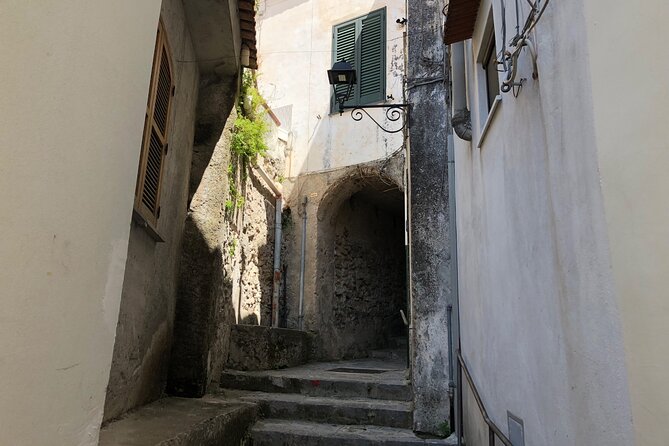
Pompeii can overwhelm you fast. Streets branch. Buildings repeat in your mind. You think you’re getting a “sense” of the city, then you move to the next block and realize you missed the story thread. This is where a guide changes everything: you walk into Pompeii with a route and context, not just a map.
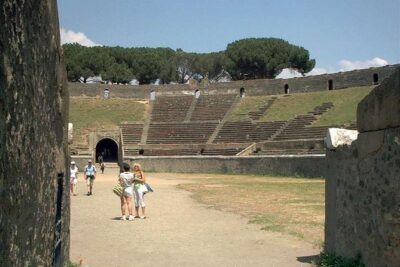
Inside Pompeii, you’ll focus on the Forum, the civic and religious center, and the administrative buildings around it. This is where the city’s power shows: the Basilica (Palace of Justice), the Temple of Apollo, the Temple of Jupiter, the Macellum market area, and even the Granaries. It’s a tour of public life—politics, religion, and commerce—so you understand what you’re looking at rather than memorizing stone labels.
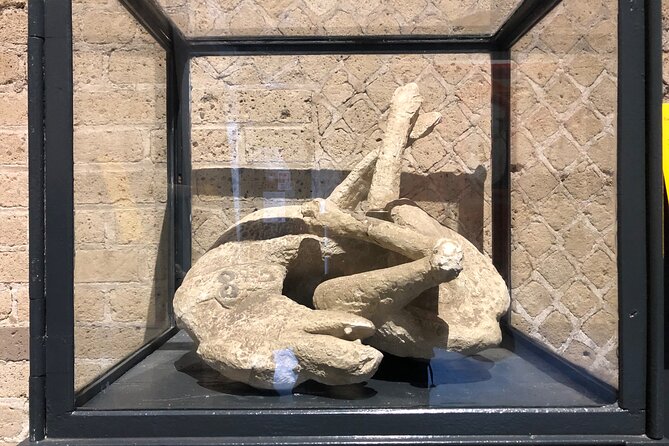
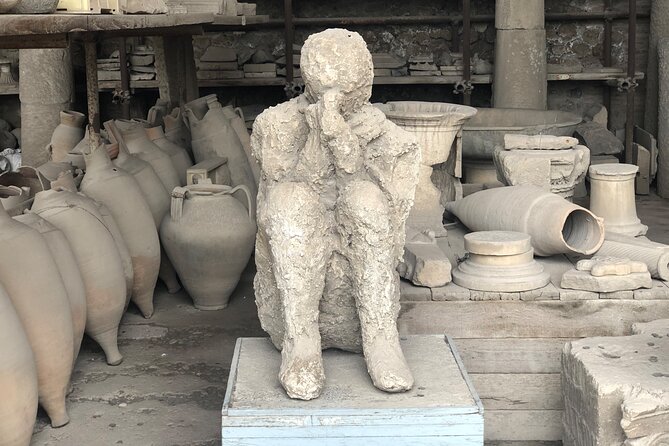
You’ll also see the plaster casts of people who died during the eruption, victims who suffocated as the eruption smothered the city. These casts hit hard because they make Pompeii feel personal, not distant. It’s not just scenery—it’s a human event you’re walking through.
Then the day shifts from public to private, because you’ll also enter luxury private homes. That’s where the mosaics and frescoes matter: you see how wealth lived inside Pompeii, including gardens and more sophisticated spaces. In a single visit, you also get the “everyday Pompeii” angle: bath houses, ancient taverns, a look at Pistrinia (bakeries), and Thermopolia—wine and food bars. That mix is huge for value, because it helps you picture what a Roman day could actually look like.
Pompeii time: how to use your 2.5 hours
Plan on the Pompeii portion lasting about 2 hours 30 minutes on-site. That’s enough to hit major highlights without sprinting, but it’s not enough to do every street at leisure. Wear comfy shoes, start with a clear mindset (public buildings first, then homes and everyday spaces), and don’t try to double-back too much.
If your group doesn’t want to enter the ruins
If someone doesn’t want to go into Pompeii, you can wait at cafés and shops just in front of the entrance. That flexibility can save the day for mixed-interest groups.
The Vesuvius moment that makes the story click
One of the best “small” elements here is the drive itself. As you travel along the coastal route, you get a chance to admire Mt. Vesuvius—the same volcano that destroyed Pompeii and Herculaneum in 79 AD. It’s still active, and seeing that silhouette makes the history feel less like a textbook.
You’ll usually get photo opportunities during the drive, so bring your camera and don’t just stare out the window at the scenery. The volcano view is a link between the ruins and the living landscape around them, and it helps you understand why Pompeii was preserved the way it was.





Positano: quick color, steep streets, and a chance to swim

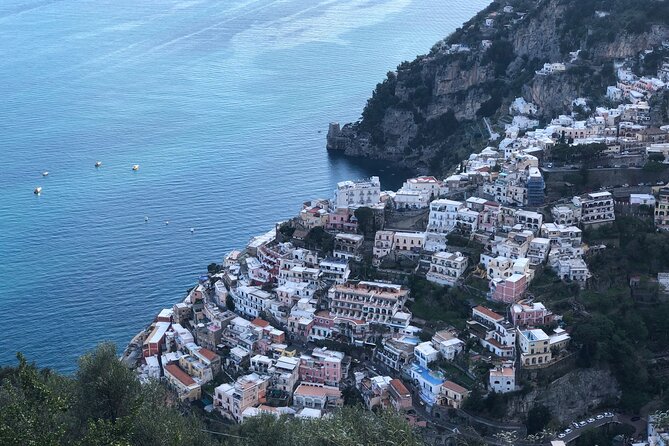
Positano is often the first Amalfi Coast town people picture. It’s also known as the Vertical Village because it climbs the slopes in dramatic layers. On this trip, you typically drive along the Amalfi road and stop for breathtaking views above the town before heading downtown.
Then you get about an hour to walk. The streets are colorful and busy with small workshops and shops—things like handmade ceramic and sandal makers, plus art galleries and ateliers with linen styles tied to Positano fashion. The beach is also close, so depending on timing you may get the chance to swim.
That hour goes fast. Treat it like a “stroll and savor” block: pick one viewpoint, do a slow walk through the alleys, and plan your shop stops rather than trying to cover everything. If you love photos, you’ll have a better time with this short stop than you would on a longer, unstructured visit—because you’re focused.
Amalfi: cathedral time, seaside gelato, and lemon flavor
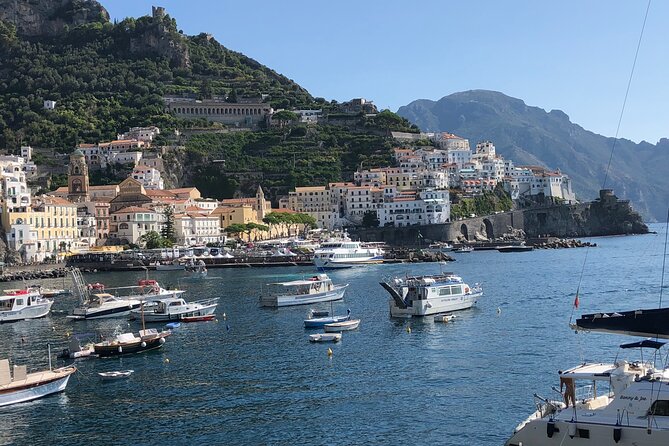
Amalfi is the name behind the whole coast. Historically, it became a major power, and today it still feels like a lively center rather than just a scenic stop.
You’ll have about an hour in Amalfi. A key highlight is the Cathedral dedicated to St. Andrew. After that, you’ll stroll through the picture-friendly alleys of the center and decide how you want to spend your time: lunch by the seashore, gelato, or the famous Delizia al Limone (Lemon Delight).
This stop tends to work well if you want something a bit more grounded than the steepest coast towns. It’s also a smart complement to Ravello, since those two together give you both seaside energy and hilltop calm.
Ravello: villas, terraces, and why artists kept coming back
Ravello is where you go when you want the Amalfi Coast to slow down a little. It’s described as charming and elegant, and it has a long artistic connection. Historical figures tied to the area include Greta Garbo, and Richard Wagner famously composed the second act of Parsifal while in Ravello.
In this tour rhythm, you’ll typically get about an hour in Ravello. The most famous experiences are Villa Rufolo and Villa Cimbrone, each with gardens and viewpoints. At Cimbrone, you’ll see the famed terrace known for its spectacular views and long, dramatic drop toward the coast.
If you don’t want to rush from garden to garden, you can also relax at cafes in the main square and watch daily life unfold. For many people, Ravello is the emotional reset of the day—the place where you remember to breathe after Pompeii and steep coastal drives.
Sorrento: cliff views, narrow lanes, and an easier rhythm
Sorrento is a useful option when you want a coast stop with strong views but a little more “walkable momentum.” You’re on a cliff above the Bay of Naples, and in the distance you can often spot Mt. Vesuvius, which ties the day’s story back together.
You get about an hour in the old town, usually with a pedestrian area where churches and noble palaces connect through narrow alleys. This is where you can shop for typical sandals and other small local goods, plus stop into shops or restaurants without feeling like you’re always fighting traffic.
Sorrento also pairs neatly with a coast visit. If you’re choosing between the steep punch of Positano and the cliff-view balance of Sorrento, it often helps to pick based on what kind of walking you want that day.
The Mercedes van setup: comfortable travel and real guidance on the road
This tour uses a deluxe Mercedes van with AC, free Wi-Fi, fresh water, and a clean, sanitized feel. That matters because the day is long. When you can cool off, charge your phone, and drink water without hassle, Pompeii and the coast feel less like a punishment.
You’re not only driven—you get live commentary onboard for context as you move between zones. There’s also a professional licensed driver-guide on the tour long, and if you add the Pompeii guide upgrade, you get a private licensed Pompeii guide and Pompeii skip-the-line tickets tied to that option.
Small-party dynamics can make a big difference here. The point isn’t headset listening; it’s conversation and explanation as you go, so you can ask direct questions and keep the story clear.
And yes—timing and coordination are part of the value. The better tours on this route don’t just rush you between spots. They help you choose what to prioritize, including when you want extra Pompeii time versus more coast walking.
Price and value: what you’re paying for at $385.53 per person
$385.53 per person for a 9-hour private day can look steep at first glance. But here’s where the value math usually works out: you’re paying for logistics control, not just sightseeing.
You’re getting:
- A private van ride with comfort features (AC, Wi-Fi, water)
- A driver-guide with live commentary
- A Pompeii experience that can include a private Pompeii guide plus priority admission, if you select the guide option
- Flexibility built into how the day is paced
The biggest reason people pay for this instead of doing it on their own is time. Pompeii is the hardest part to do well without local help. It’s easy to lose time, get turned around, or wander without understanding what you’re seeing. Priority admission (when you upgrade) is basically you buying back that time for actual ruins.
Also note: Pompeii admission tickets are not included unless you choose the guide in Pompeii option, and meals aren’t included. That means your total cost depends on whether you add the guide upgrade and how you handle lunch. Still, the day is designed so you’re not stuck figuring it out.
One more value point: demand can be high, and this kind of schedule usually needs advance planning to line up pickups smoothly.
Who this tour suits best (and who should think twice)
This works best for:
- Families or mixed groups who want Pompeii guidance but still want freedom on the coast
- People who want two UNESCO sites in one day without turning the day into a transportation puzzle
- Anyone who likes learning in context—public spaces in Pompeii, then daily life, then the coast’s culture and food stops
You might want to think twice if:
- You want to roam Pompeii for much longer than 2.5 hours
- Your idea of a great day is covering many Amalfi towns. One day is not enough to do the whole coast. This trip typically focuses on one or two villages, so choose the ones that match your mood.
Should you book this Pompeii and Amalfi Coast private tour?
I’d book it if your goal is a high-impact day that stays comfortable, avoids wasted time, and gives you Pompeii context alongside classic Amalfi views. The private setup plus the option for Pompeii priority admission is where the experience often becomes worth the money.
If you’re on the fence, use this quick decision guide:
- Choose it if you care about Pompeii’s story and want help pacing your time.
- Choose the guide upgrade if you want maximum time inside Pompeii and smoother entry.
- Choose your coast combo deliberately: Positano is color and steep charm, Amalfi is center-and-sea, Ravello is hilltop gardens and views, and Sorrento is cliff views plus shopping lanes.
FAQ
Pickup and meeting points
Yes. Pickup is available from hotels, vacation rentals, train stations, and cruise terminals/ports within the local pickup area. You need to specify your pickup place when booking.
Is this tour private?
Yes. It’s a private tour, meaning only your group participates.
How long is the tour?
The duration is about 9 hours.
What does the tour include?
The tour includes a deluxe Mercedes van with AC, free Wi-Fi, and fresh water, plus live commentaries onboard. You also have a professional licensed driver/guide for the full tour.
Do I need a guide for Pompeii?
A private licensed guide in Pompeii is included only if you select the Pompeii Guide option. Without that option, you won’t have a private Pompeii guide or Pompeii skip-the-line tickets.
Are Pompeii admission tickets included?
Pompeii admission tickets are not included unless you choose the guide upgrade in Pompeii.
What towns are on the route?
You can visit Pompeii plus one or two Amalfi Coast towns such as Positano, Amalfi, Ravello, and Sorrento, depending on the selected itinerary.
How much time do I get at each stop?
Pompeii is about 2 hours 30 minutes. Coast stops listed include about 1 hour each for Positano, Amalfi, Ravello, and Sorrento.
Are meals included?
No. Meals are not included, so lunch is something you’ll plan for on your own while in town.
What should I wear or bring?
Wear comfy shoes for walking in Pompeii, and bring sunscreen for summertime visits.