REVIEW · NAPLES
Master the Art of Naples Pizza – Hands-On Class with Tastings
Book on Viator →Operated by Do Eat Better Experience · Bookable on Viator
You can feel Naples in your hands. This Naples pizza making class guides you through a traditional Margherita or Marinara with the ingredients and technique locals actually care about. You’ll also get a starter tasting before you cook, so you’re not just watching.
I love that the class is built around real steps, not just theory—especially how dough handling and baking affect flavor. I also like the small-group feel (up to 15), which makes it easier to ask questions while you’re working. One possible drawback: the room setup can feel warm or less polished than you might expect, since some sessions run in a space without strong air conditioning.
In This Review
- Key things to know before you go
- Naples pizza making class: the part you’ll remember
- Before the dough: bruschetta, crocchè, and a drink
- Choosing your pizza: Margherita or Marinara in plain, Napolitan style
- Pizza Margherita (Napoli classic)
- Pizza Marinara (the simple one that tastes like more)
- The techniques that actually change your pizza
- What the instructors bring (Giuseppe, Mario, Antonio, Sam, Anthony)
- How long it takes and how the flow works
- Where you meet and what the room is like
- Group size: why 15 people matters for your pizza
- Price and value: is $82.82 worth it?
- Who should book this Naples pizza class
- Booking smart: confirmations, timing changes, and last-minute safety nets
- Should you book it? My call
- FAQ
- How long is the Naples pizza making class?
- What pizza will I make during the class?
- Do we eat anything before making pizza?
- What ingredients are used for the pizza?
- Is the class offered in English?
- How big is the group?
- Where does the experience start?
- Can I cancel and get a full refund?
Key things to know before you go
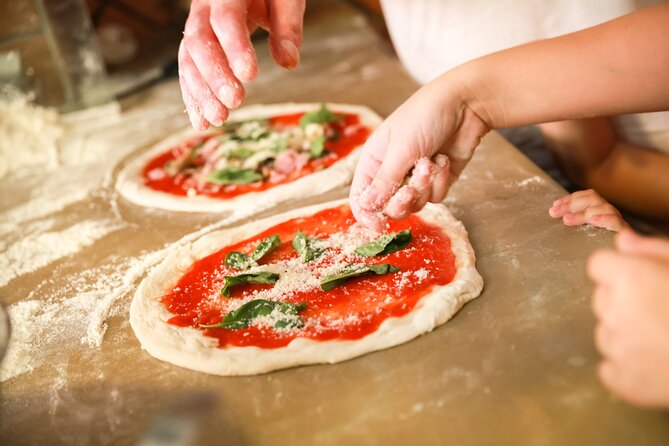
- Two pizza choices: Margherita or Marinara, both classic Napolitan styles
- You eat before you cook: bruschetta, crocchè, and a wine or beer
- Small group size: capped at 15 people for more hands-on attention
- Real ingredient focus: San Marzano tomatoes, fior di latte mozzarella, fresh basil, olive oil
- Technique emphasis: leavening and baking details are part of the lesson
- Hosts keep it fun: instructors often bring humor and interactive teaching
Naples pizza making class: the part you’ll remember
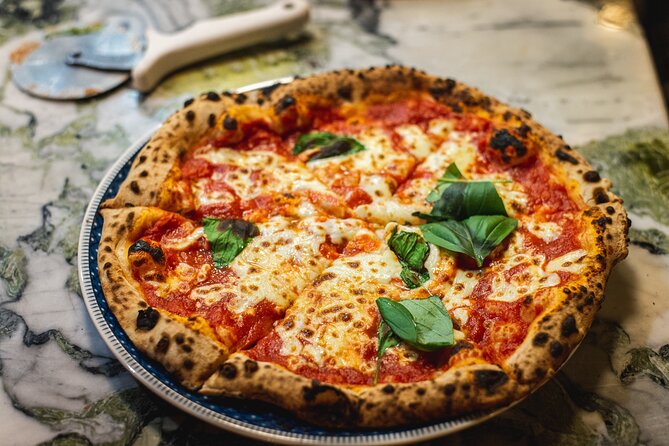
This is the kind of Naples experience that doesn’t stay in your photos. It turns into something you can practice later: shaping dough, building a simple topping, and understanding why the final bake tastes like Naples. If you’re the type who learns faster by doing, you’ll probably enjoy this more than a food talk you can’t replicate at home.
The promise here is traditional Napolitan pizza, taught by people who treat pizza like a craft. You’re choosing between Pizza Margherita and Pizza Marinara, and you’ll learn how the dough and oven moments matter as much as the ingredients.
You can also read our reviews of more tours and experiences in Naples

Before the dough: bruschetta, crocchè, and a drink
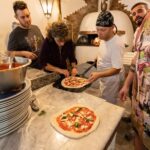
You start with an appetizer tasting before the main work. Expect bruschetta plus crocchè, paired with wine or beer. It’s a smart way to begin, because you get a sense of flavor balance right away—salty, tangy, crunchy, then ready for warm, simple pizza toppings.
This also helps with pacing. By the time you touch dough, you’re not waiting with hunger. You can focus on technique without that “I’m tired and hungry” feeling creeping in.
Choosing your pizza: Margherita or Marinara in plain, Napolitan style
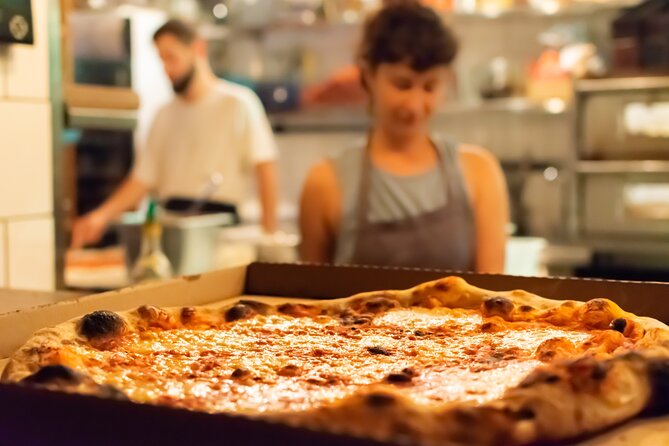
Once you’re ready, you make one of two classic pizzas:
Pizza Margherita (Napoli classic)
You’ll use San Marzano tomatoes, fior di latte mozzarella, fresh basil, salt, and extra-virgin olive oil. What makes it feel unmistakably Napolitan isn’t complicated layering—it’s the quality and how you manage the base so the flavors don’t blur together.
Pizza Marinara (the simple one that tastes like more)
Marinara is also rooted in San Marzano tomatoes and is built around a few core elements. It’s proof that “less” can be louder when the dough is right and the bake hits the right temperature.
The real value for you: you’re not just memorizing a recipe. You’re learning how those ingredients behave when handled correctly.


The techniques that actually change your pizza
A lot of pizza classes teach what to put on top. This one leans into why the process matters—especially leavening and baking. Those two steps are where homemade pizza often goes from good to “why does it taste different from Naples?”
Here’s what that means in practical terms for you:
- Leavening affects texture: the dough’s rise influences chew, softness, and how the crust behaves
- Baking affects flavor: heat and timing shape browning and aroma
- Timing matters more than you think: small differences can change the final bite
In other words, you’re learning a method, not a shortcut.
What the instructors bring (Giuseppe, Mario, Antonio, Sam, Anthony)
The class experience is strongly shaped by the host. People in the group often mention hosts by name—Giuseppe, Chef Mario, Antonio, Sam, and Anthony—and they tend to describe the teaching style as interactive and fun. Expect clear step-by-step guidance plus a sense of humor that keeps the session light even when the technique gets precise.
You can also pick up small “attention cues,” like where to focus during shaping or what to watch for before putting the pizza into the oven. Those are the moments that make you feel like you’re learning from craft, not just following instructions.
How long it takes and how the flow works
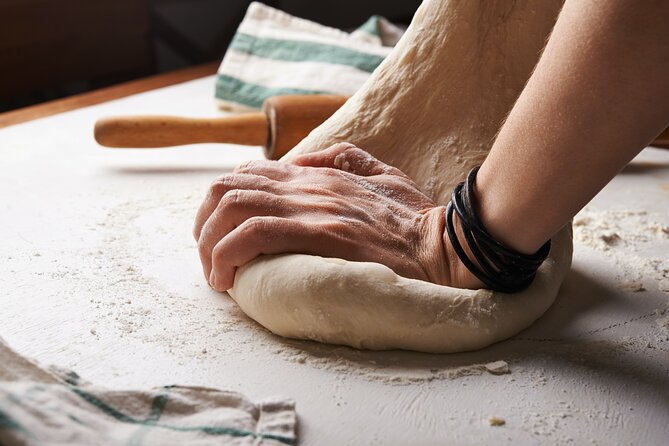
The class runs about 2 hours 30 minutes. The structure is simple and efficient: appetizer tasting first, then hands-on pizza work, and finally wrap-up back at the start point.
A key point for scheduling: you’ll want a bit of breathing room before or after. Pizza work has a momentum of its own. If you’re hopping from another activity with a strict timeline, give yourself a cushion.
One caution from real-world experience: at least one participant reported the start time being moved by about 2 hours shortly before arrival. If you’re on a tight itinerary, I’d still confirm timing the day before.
Where you meet and what the room is like
You meet at Via delle Zite, 30, 80139 Napoli, and the activity ends back at the meeting point. It’s also near public transportation, so it’s doable even if you don’t want to rely on taxis.
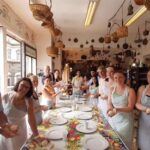
Now, the setup: some sessions feel like a straightforward downstairs training area with cool relief from the street, while others are described as more warehouse-like with folding tables and limited light. One reviewer specifically flagged no air conditioning and said it got hot during class.
So I’d plan for comfort accordingly:
- bring water
- dress for warm indoor conditions
- expect a practical working space, not a polished demo kitchen
If you’re the kind of person who needs perfect temperature control to enjoy an activity, this might not be your ideal setting. If you’re there to learn pizza, you’ll likely adapt fast.
Group size: why 15 people matters for your pizza
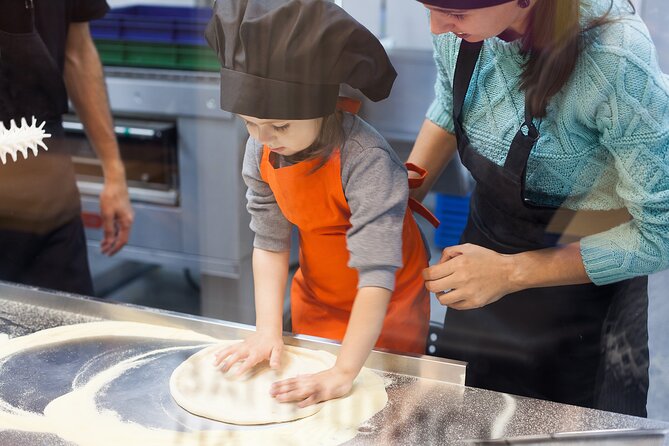
With a maximum of 15 travelers, you’re not stuck in a huge line where someone else does the hard part and you just watch. Smaller groups make it easier for the instructor to spot what needs adjusting—dough thickness, handling, and when you should pause and fix a step.
This is also why families often do well here. The class environment tends to be supportive and hands-on, including working with younger participants as long as everyone stays engaged and follows guidance.
Price and value: is $82.82 worth it?
At about $82.82 per person for roughly 2.5 hours, you’re paying for three things at once:
- ingredient-based teaching (San Marzano, mozzarella fior di latte, basil, olive oil)
- hands-on instruction tied to outcomes (leavening and baking)
- food and drink (bruschetta, crocchè, plus wine or beer)
Compared with tours that are mostly walking and sampling, the big value here is that you take home a repeatable skill set. Pizza is one of those foods where technique really matters, so learning the steps in context is more “transferable” than trying to memorize a dish you’ll only taste once.
That said, if you’re expecting a high-end kitchen experience with strong comfort features, you might feel the price more sharply. The instruction quality appears to matter most to most people, even when the room isn’t fancy.
Who should book this Naples pizza class
This is a great match if you:
- want hands-on learning in Naples, not just tasting
- like classic Italian food done with simple, correct ingredients
- enjoy interactive hosts and a relaxed group energy
- plan to cook pizza at home and want real technique, especially dough and baking
It’s also a strong option for mixed-age groups, including families, as long as everyone can follow along and help with the basics of dough handling.
If you hate warm indoor environments or expect a pristine studio kitchen, think twice or plan your comfort accordingly.
Booking smart: confirmations, timing changes, and last-minute safety nets
You receive confirmation at booking time, and you get a mobile ticket. That makes it easy to show up without extra paperwork.
One practical tip: keep an eye on your exact start time. A reported last-minute shift by about 2 hours is rare, but it’s worth building flexibility into your day.
Also, the activity has a minimum number of travelers. If it doesn’t meet that threshold, you’ll be offered another date/experience or a full refund—so don’t wait until the last moment if your schedule is fixed.
Should you book it? My call
Yes, I’d book this if your goal is to learn how Neapolitan pizza is built. The combination of hands-on dough work, real ingredient focus, and teaching that includes leavening and baking is exactly what makes this type of class worthwhile.
I’d hesitate only if you’re very sensitive to heat or you’re expecting a perfectly comfortable, upscale kitchen space. If you can handle a practical working room, this is one of those Naples activities that gives you a skill and a taste of the real city rhythm.
FAQ
How long is the Naples pizza making class?
It runs about 2 hours 30 minutes.
What pizza will I make during the class?
You make either Pizza Margherita or Pizza Marinara.
Do we eat anything before making pizza?
Yes. Before the class, you’ll taste an appetizer with bruschetta, crocchè, and a drink (wine or beer).
What ingredients are used for the pizza?
The class uses San Marzano tomatoes, fior di latte mozzarella, fresh basil, salt, and extra-virgin olive oil.
Is the class offered in English?
Yes. The experience is offered in English, and the guide may speak both English and Italian.
How big is the group?
The maximum group size is 15 travelers.
Where does the experience start?
The meeting point is Via delle Zite, 30, 80139 Napoli.
Can I cancel and get a full refund?
Yes. You can cancel up to 24 hours in advance for a full refund. If you cancel less than 24 hours before the start time, the amount paid won’t be refunded.