REVIEW · POMPEII
Pompeii Tour & Admission included in a Small Group
Book on Viator →Operated by Grand Tour Experience · Bookable on Viator
Pompeii feels like a set you can walk into. This small-group tour moves at a human pace, and the authorized guide/archaeologist style of storytelling makes the ruins feel connected to real daily life, not just stone. You also get the practical extras that matter on-site: a mobile ticket, a paper map, and a headset if crowds make it hard to hear.
The main thing to watch is the walking. Pompeii’s stone paths come with uneven ground, curbs, and stepping stones, and you’ll be on your feet for about two hours.
In This Review
- Key things I’d plan around
- What This 2-Hour Small-Group Pompeii Visit Gives You
- Starting at Villa of the Mysteries: Where Your Pompeii Story Begins
- Archaeological Park of Pompeii: Porta Marina to the Forum’s Power Centers
- Tempio di Venere, the Basilica, and Apollo: Sacred Pompeii on One Tight Route
- Tempio di Venere (Temple of Venus)
- Basilica
- Sanctuary of Apollo
- Forum – Main Square (Foro de Pompeya)
- Tempio di Giove Capitolino (Temple of Jupiter)
- Macellum, Forum Baths, and Thermopolium: Food and Routine, Not Just Ruins
- Macellum: the monumental market building
- Terme del Foro (Forum Baths)
- Thermopolium of Vetuzio Placido
- Casa del Fauno, House of the Vettii, and Via dell’Abbondanza: Homes and the Main Street
- Casa del Fauno (House of the Faun)
- House of the Vettii
- Via dell’Abbondanza (Via Dell’Abbondanza)
- Practical tip I’m glad this tour includes
- Teatro Grande: Watching the Roman Stage in Your Head
- Price and Logistics: Is $66.01 Good Value Here?
- What It’s Like With Real Guides: Pacing, Passion, and Clear Listening
- Who Should Book This Pompeii Tour, and Who Should Consider a Different Plan
- Should You Book This Pompeii Small-Group Tour?
- FAQ
- How long is the Pompeii tour?
- Is admission to Pompeii included in the price?
- What group size should I expect?
- Do I need to print a ticket?
- Will I be able to hear the guide?
- Is bottled water included?
Key things I’d plan around
- Admission ticket included so you can join at the park entrance without juggling paperwork
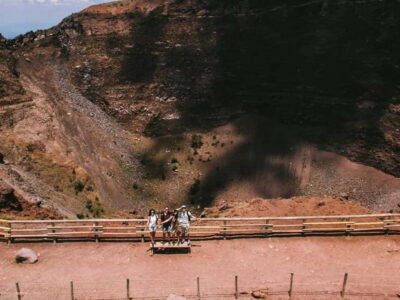
- Porta Marina start with Vesuvius in the background, which makes the story of 79 AD hit faster
- Headsets included for clear listening when the site gets busy
- Forum-area highlights and stops for daily-life details, from baths to food stalls to shops
- Seasonal openings apply for some houses, so not everything is guaranteed on every date
- Guides rotate, and names like Livio, Antonio, Riccardo, Ornella, Annalisa, and Angelo have been called out for strong teaching and pacing
What This 2-Hour Small-Group Pompeii Visit Gives You
This is a focused Pompeii experience built around the most meaningful parts of the city. You’re there for about two hours in English, with admission handled for you, so the experience stays on the ruins instead of on logistics. The tour is offered as a small group with a maximum of 15 travelers, which is a big deal at Pompeii where large crowds can turn a great visit into a push-and-pause exercise.
Another value point: you get equipment that reduces friction. A headset is provided if it’s crowded, and the guide also brings a Pompeii paper map. That may sound minor, but it’s the difference between feeling lost and actually learning what you’re looking at as you move.
Price-wise, $66.01 includes the site admission plus an authorized guide. In a place where entry fees and guided time add up quickly, this is the kind of all-in pricing that helps you avoid surprise add-ons once you’re already there. It’s also sold well in advance (it’s often booked around a month and a half ahead), which tells me you should lock in your slot if Pompeii is a must-do.
You can also read our reviews of more tours and experiences in Pompeii.

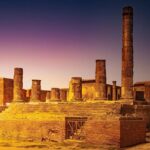
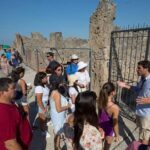
Starting at Villa of the Mysteries: Where Your Pompeii Story Begins
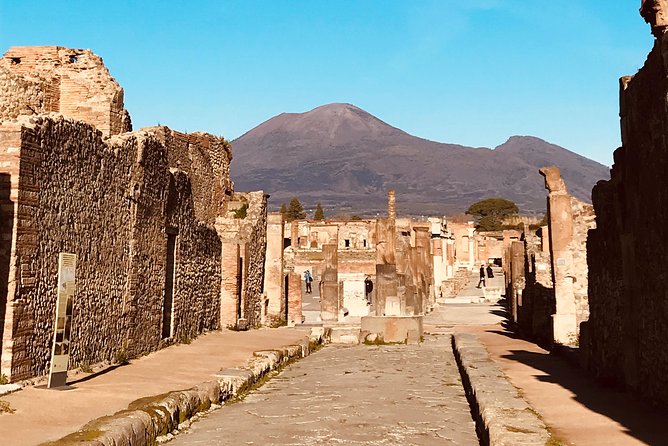
The meeting point is the Villa of the Mysteries (Via Villa dei Misteri, 2, 80045 Pompei NA, Italy). From here, the tour returns to the same meeting point, which matters if you’re trying to keep the rest of your day simple.
Why this start helps: the tour frames Pompeii’s story early, beginning with the city entrance area at Porta Marina. With Mt. Vesuvius rising in the background, the guide can connect what you’re seeing to the eruption of 79 AD without a long setup. If you’ve ever visited a museum and then wondered why the setting matters, this tour solves that by making the landscape part of the lesson, not background noise.
Archaeological Park of Pompeii: Porta Marina to the Forum’s Power Centers
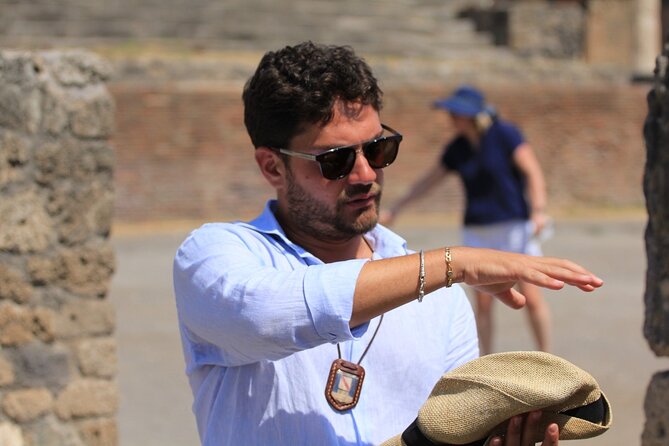
Your first stop is the Archaeological Park of Pompeii, and the entrance ticket is included. You join at the main entrance of Porta Marina, then walk into the ancient street grid the way a visitor would have moved through the city. That “walk in order” feeling is useful because Pompeii can look chaotic if you’re seeing it for the first time.
This is where the guide typically puts the biggest emphasis on the eruption narrative and on how excavations have shaped what we can see today. You’re led past key public spaces and major structures, including the Roman Forum, the Basilica, the market area, and major temples.
A highlight here is the Decumanus Maximus, Pompeii’s main east-west spine. Along this route, you visit a Roman bath area that’s described as recently reopened. That “recently reopened” detail is more than trivia. It signals that you’re not just touring the same best-known spots; you’re also seeing parts of the site that feel newly available in the visitor experience.
You’ll also get a look at houses and shops tied to daily life, including:
- Roman bath features along the Decumanus Maximus
- A domus described as recently opened
- Shop areas such as thermopolia and bakeries
This section is one of the best reasons to book a guide. Without help, it’s easy to treat Pompeii as a series of pretty buildings. With the structure of this tour, you start noticing how people would have moved, eaten, worked, worshiped, and socialized.
Tempio di Venere, the Basilica, and Apollo: Sacred Pompeii on One Tight Route
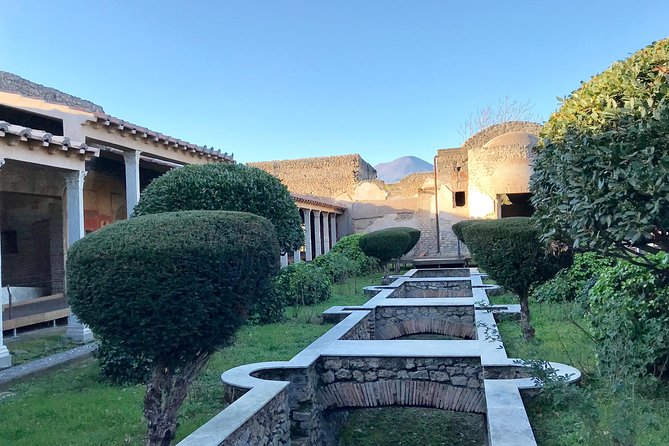
After the initial Pompeii park walk, the itinerary pivots to a cluster of religious and civic anchors. Each stop is short (about 10 minutes), which keeps you moving while still hitting the places that give Pompeii its identity.
Tempio di Venere (Temple of Venus)
You’ll pause at the Tempio di Venere, dedicated to Venus, the patron goddess of Pompeii. Even in a brief visit, this kind of stop helps you understand that Pompeii wasn’t only a marketplace city. It was a community with shared beliefs that shaped where people gathered and how they marked important moments.

Basilica
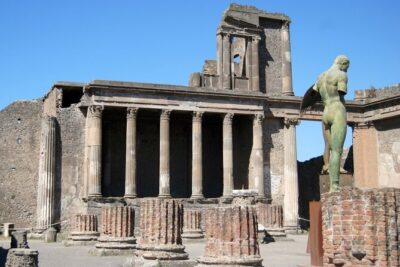
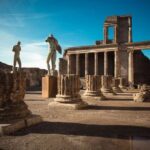
Next is the Basilica, which served as a major public building in the Forum area, used for business management and administration of justice. It’s a good stop for anyone who wonders what the Forum buildings were actually for. You’re not just looking at columns—you’re seeing the kind of “civic hub” functions that come with a large Roman town.
Sanctuary of Apollo
Then comes the Sanctuary of Apollo, positioned along the street leading from Porta Marina up toward the public heart of the city. Why that location matters: it links worship to movement. People would pass it while traveling toward civic spaces, which makes religion feel woven into everyday routines, not stuck on the edge of town.
Forum – Main Square (Foro de Pompeya)
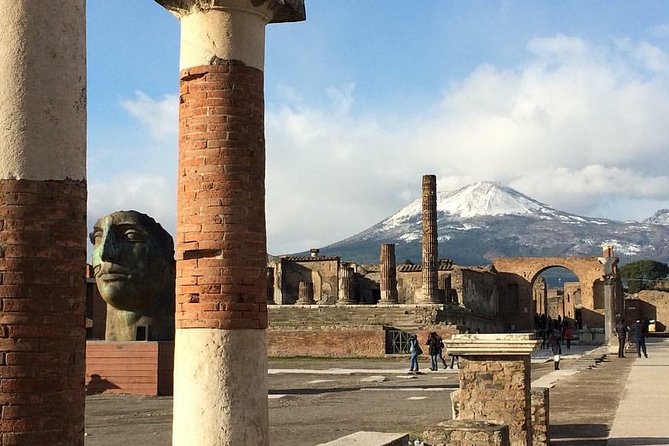
You’ll stand at the Forum, the main square representing the center of daily life. This is one of those places where a guide’s pacing can make a difference. A short stop still becomes meaningful because you know what “daily life” looks like here: civic decisions, commerce, social rhythms, and public visibility.
Tempio di Giove Capitolino (Temple of Jupiter)
Finally, you’ll reach the Temple of Jupiter, which dominates the northern side of the Forum. The view is described with Vesuvius rising behind it, and that’s a strong emotional setup for the whole visit. It’s the kind of framing that turns the eruption story from abstract history into something you can feel in the space itself.
Macellum, Forum Baths, and Thermopolium: Food and Routine, Not Just Ruins
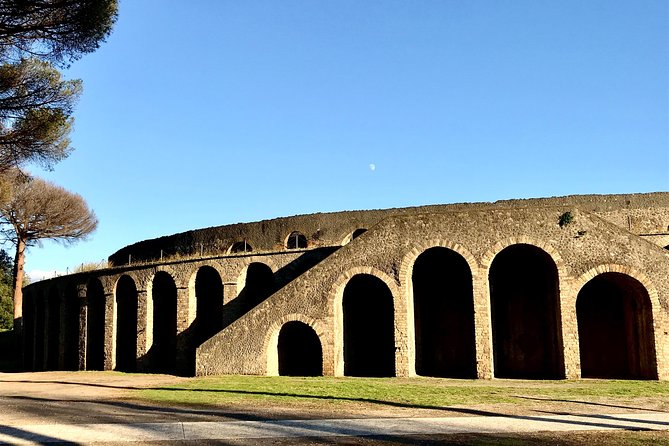
Pompeii can be sold as a tragedy. This tour balances that with daily-life details, and you can feel it in these stops.
Macellum: the monumental market building
At the Macellum, you get to see a building tied to the sale of food and daily consumer products. What I like about including the Macellum is that it gives you a concrete sense of routine: what people ate, bought, and brought home.
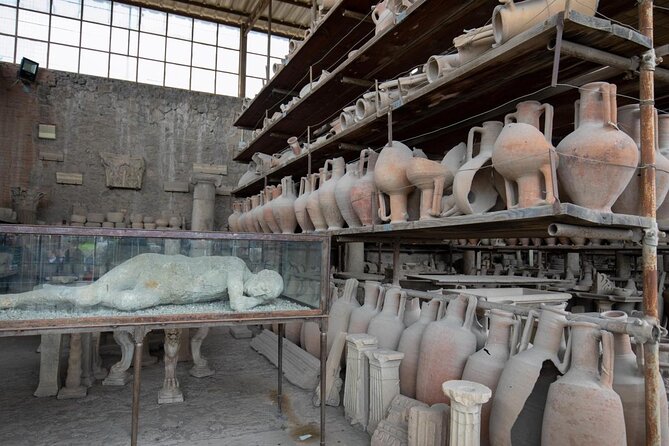
This stop also connects to archaeological method through plaster casts and the BODIES approach, described as a way to find the ancient bodies “as they were at the moment of the eruption.” Even if you only spend around 10 minutes here, it changes how you read the rest of the site. You’re not just admiring structures. You’re seeing how Pompeii became readable again through careful study.
Terme del Foro (Forum Baths)
Then comes the Forum Baths, listed as one of the best-preserved parts of the city. You also learn that the bathing spaces had separate entrances for men and women. That detail helps you picture a Roman day that included hygiene and social customs, not just politics and temples.
Because the stop is short, you won’t get lost in architectural minutiae. Instead, you walk away with a functional understanding: baths were a routine stop, and they were organized in ways that reflect daily social structure.
Thermopolium of Vetuzio Placido
Next is the Thermopolium, a kind of old diner where people could get refreshment. This is one of my favorite types of Pompeii stops because it feels like it belongs in the real world. You’re basically watching a snapshot of informal food culture from almost 2,000 years ago.
Even if the exact items aren’t described, the idea is clear: people ate fast, drank on the go, and relied on these small commercial spaces just like visitors rely on cafés today.
Casa del Fauno, House of the Vettii, and Via dell’Abbondanza: Homes and the Main Street
This portion gives you the domestic side of Pompeii, which is where the city often surprises people. Pompeii isn’t only temples and public buildings. It includes wealthy homes with art, inscriptions, and symbolism.
Casa del Fauno (House of the Faun)
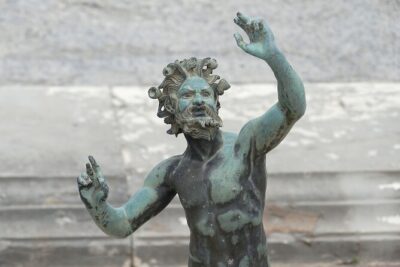
You’ll see the House of the Faun, described as one of the largest houses in Pompeii. A small but memorable detail is the Latin welcome inscription on the sidewalks bearing HAVE. That’s the kind of human touch that makes a building feel less like a relic and more like someone’s real home.
House of the Vettii
Then you’ll visit the House of the Vettii, one of the richest and most famous homes in Pompeii. It’s described as being under the protection of Priapus, god of prosperity. That’s a useful interpretive frame: you see symbolism tied to wealth, luck, and status, not just decorative walls.
One practical note: the houses mentioned are subject to seasonal openings and closings. So on some days you might get the full house experience, and on other days you may see less than the ideal version. That’s normal for Pompeii, and it’s exactly why a guided stop matters—your time is structured around what’s available.
Via dell’Abbondanza (Via Dell’Abbondanza)
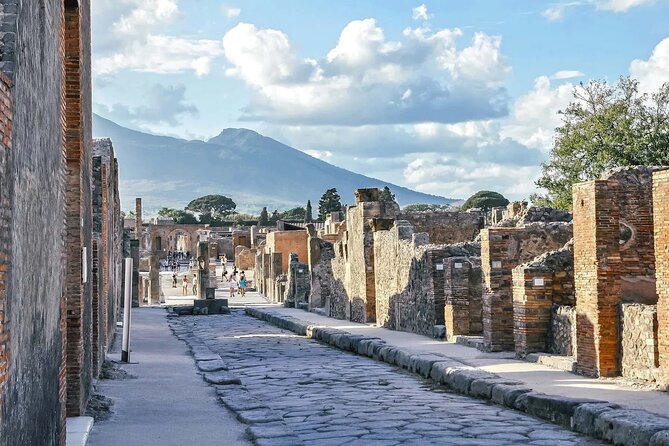
Next is Via dell’Abbondanza, Pompeii’s main street, also known as the Decumanus Maximus. This is where the tour helps you connect the dots. Streets aren’t just for walking in a straight line. They’re the timeline of the city—where commercial life and civic life meet.
Practical tip I’m glad this tour includes
You also have the paper map in your hands. Once you’re on a main street like Via dell’Abbondanza, you can better track where you are and why the guide is steering you toward certain buildings.
Teatro Grande: Watching the Roman Stage in Your Head
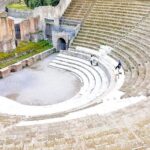
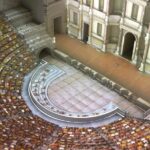
Your final highlight is Teatro Grande, the large theater. You’ll learn that it hosted performances in the Greco-Roman tradition, with comedies and tragedies.
Even though the stop is around 10 minutes, the theater is a strong closing note. It reminds you that Pompeii had entertainment, public gathering, and shared cultural events, not just survival. With the rest of the tour’s civic and domestic stops, the theater makes the city feel more complete.
Price and Logistics: Is $66.01 Good Value Here?
At $66.01 per person for about two hours, you’re paying for three things: admission, a guide/archaeologist-led experience, and on-site comfort items like headsets and a map.
What makes it good value is that it’s not a “buy your own ticket and hope for the best” style tour. The site entrance is included, and the tour is designed around a clear route through major areas. Pompeii is also a place where a good guide can save you from wandering into the wrong spots or spending too long staring at one building without context.
Two practical considerations for value:
- You’ll want to wear shoes that can handle uneven stone and curb steps. That matters because you’re paying for guided time, and it’s easiest to get the best experience when you can keep moving.
- Some houses are seasonally open, so your exact interior experiences can vary. The tour’s focus on multiple types of Pompeian life (public, sacred, food, domestic, theater) helps reduce the impact if one interior is closed.
What It’s Like With Real Guides: Pacing, Passion, and Clear Listening
One of the most praised aspects of this kind of Pompeii tour is the guide’s ability to bring the city into focus. The named guides called out include Livio, Antonio, Riccardo, Ornella, Annalisa, and Angelo, and the recurring theme is strong storytelling with clear English.
You’ll also appreciate the pacing. People who tend to have time pressure (like catching a bus or keeping a schedule) have mentioned that the guide helped them find the exit when they needed to leave early. That kind of practical care is worth its weight in gold when you’re visiting a site with fixed opening rhythms.
And if the site is crowded, the headsets are a real advantage. Clear audio lets you focus on the explanations instead of craning your neck or turning into an accidental eavesdropper.
Who Should Book This Pompeii Tour, and Who Should Consider a Different Plan
This tour is a great fit if you want:
- A small-group visit that stays efficient but not frantic
- A guided route through the Pompeii highlights that connect to 79 AD and the daily life of the city
- The comfort of a headset option and a paper map
It may be less ideal if:
- You have limited mobility or find uneven stone and curb steps difficult
- You’re hoping for a very deep technical explanation of everything, since this experience is built as a highlights walk with short stops at many locations
If you’re traveling with kids, it can still work well because the tour format keeps changing scenery and adds context that helps ruins feel like stories instead of puzzles.
Should You Book This Pompeii Small-Group Tour?
Yes, if Pompeii is high on your list and you want a guided “best of” route that doesn’t waste your time. This one is strong on value because admission is included, and it also includes the small on-site tools that make hearing and navigating easier. The mix of public spaces, sacred corners, market and food stops, baths, homes, and theater gives you a balanced Pompeii picture in about two hours.
I’d book it especially if you like learning while you walk, and if you want the eruption story framed against the setting of Vesuvius from the start. If you’re sensitive to uneven ground or think you might need more slow time, consider pairing a guided highlights visit with extra self-paced time only if your schedule allows.
FAQ
How long is the Pompeii tour?
The experience runs about 2 hours (approx.).
Is admission to Pompeii included in the price?
Yes. The admission ticket to the Archaeological Park of Pompeii is included, and you also get free admission for several listed stops.
What group size should I expect?
This is a small-group tour with a maximum of 15 travelers.
Do I need to print a ticket?
No. You get a mobile ticket.
Will I be able to hear the guide?
Headsets are included in case the site is crowded, and the tour is offered in English.
Is bottled water included?
No. Bottled water is not included.