REVIEW · NAPLES
Naples Historic Center: Traditions & Folklore Small Group Tour
Book on Viator →Operated by Claudius Tours · Bookable on Viator
Naples’ legends sound better on the street. This small-group walk through the historic center links famous sights with the beliefs and everyday habits that keep the city moving.
I like the story-first approach, especially at the Duomo and the skulls church, where faith and folklore are explained in plain, human terms. I also like that you cover a tight loop of classic Naples neighborhoods without turning it into a checklist, so you actually get time to look, pause, and take photos.
One possible drawback: while the tour is offered in English, the English level can vary a bit by guide. If you’re the kind of traveler who needs every word to land, this is worth keeping in mind—especially on a short, two-hour walk.
In This Review
- Key highlights worth planning for
- A 2-Hour Naples Walk Built for Stories, Not Checklists
- Meeting at Duomo di Napoli: Timing, Dress, and the Start Point
- First Stop: Duomo di Napoli and Saint Gennaro’s Blood Miracle
- Via Duomo Street Art Stop: San Gennaro Graffiti by Jorit
- Spaccanapoli and the Dolls Hospital: Naples’ Odd Humor Meets Tradition
- Ospedale delle Bambole: Why a Doll Hospital Fits Naples
- San Gregorio Armeno: Nativity Craftsmanship You Can See Up Close
- Via Dei Tribunali: Pizza Culture While You Walk
- Santa Maria delle Anime del Purgatorio ad Arco: The Skull Legends
- Pulcinella Statue Stop: The Meaning Behind the Character
- Santa Chiara Church: Gothic Architecture with a Calm Personality
- Port’Alba: A 17th-Century Gate at the Edge of Your Walk
- Piazza del Gesù Nuovo: The Church Wall Story That Adds Depth
- Price and Value: What $54 Buys in the Centro Storico
- Small Group Size (Max 15): The Difference You’ll Feel
- What to Watch Out For: English Clarity and Walking Pace
- Who This Tour Fits Best
- Should You Book This Naples Historic Center Tour?
- FAQ
- FAQ
- How long is the Naples Historic Center walk?
- What time does the tour start?
- Where do I meet the guide?
- Where does the tour end?
- Is the tour offered in English?
- Do I need to pay entry tickets for the stops?
- Is food included?
- Is tipping required?
- Is the group size limited?
- What should I wear to enter the Duomo?
Key highlights worth planning for

- Duomo di Napoli miracle stories around Saint Gennaro’s blood liquefaction
- Spaccanapoli street time on one of Naples’ oldest, most atmospheric lanes
- San Gregorio Armeno artisan craft viewing with nativity-scene makers
- The church of skulls folklore tied to the idea of souls of purgatory
- Pulcinella explained so the icon makes more sense than just a statue
A 2-Hour Naples Walk Built for Stories, Not Checklists
This tour is the right length for a late-afternoon start in the Centro Storico. You get enough ground covered to connect the landmarks, but not so much that you feel rushed every minute.
What makes it work is the guide’s focus. Instead of only pointing out architecture, you get the why behind Naples’ traditions—superstitions, patron-saint devotion, and the characters that show up in art and street life. I also like that the pacing includes short “look and photograph” breaks, so you’re not stuck with your phone down the whole time.
You can also read our reviews of more historical tours in Naples


Meeting at Duomo di Napoli: Timing, Dress, and the Start Point
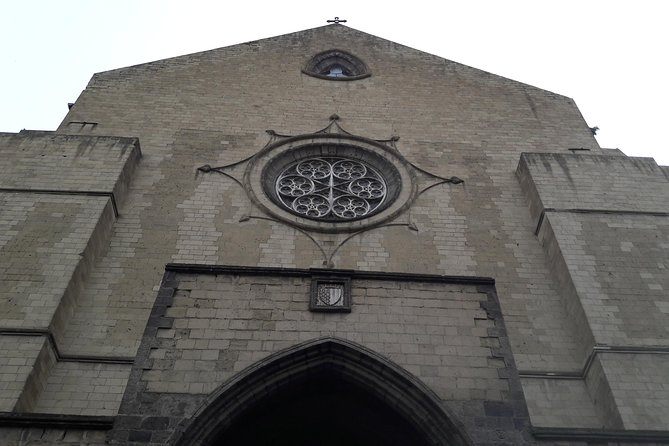
The walk begins at Duomo di Santa Maria Assunta on Via Duomo (147). The start time is 4:00 pm, which is handy because you’re touring the historic core without the full midday crush.
Two practical notes matter here. Wear comfortable walking shoes—the streets are tight and you’ll be on foot for the full loop. And plan to cover your shoulders to enter the Duomo, because that’s part of the basic dress expectation at the cathedral.
The tour is capped at 15 people and runs with an English-speaking guide. That small size helps because your questions actually fit into the flow, and you can hear the explanations without fighting over space.
First Stop: Duomo di Napoli and Saint Gennaro’s Blood Miracle
Your first big moment is inside Duomo di Napoli. This is where you hear the story that makes Saint Gennaro more than a statue in Naples—you learn about the miracle tradition of Saint Gennaro’s blood liquefaction, one of the city’s most respected events tied to faith and local identity.
Even if you know nothing about the background, the guide’s job here is to translate the meaning into something you can feel. Naples is a city where devotion isn’t just religious; it’s cultural, social, and historical. The Duomo stop is your best early anchor, because it sets the theme for everything else you see afterward.
There’s also good practical value in how the stop is timed: you get about 20 minutes there, so you can look around without feeling like you need a full half-day just for the first site.
Via Duomo Street Art Stop: San Gennaro Graffiti by Jorit
Right after the cathedral, you shift from sacred tradition to modern street expression. Along Via Duomo, you get a quick stop for street art, including the well-known San Gennaro street graffiti by Jorit.
This matters because Naples doesn’t treat the old and new like separate worlds. The same saint that shows up in religious spaces also shows up in street art. It’s a fast but smart “Naples context” stop that helps you understand why people paint local symbols so visibly.
The time here is short—around 10 minutes—but it’s enough to point out what to notice when you walk the streets later on your own.
Spaccanapoli and the Dolls Hospital: Naples’ Odd Humor Meets Tradition
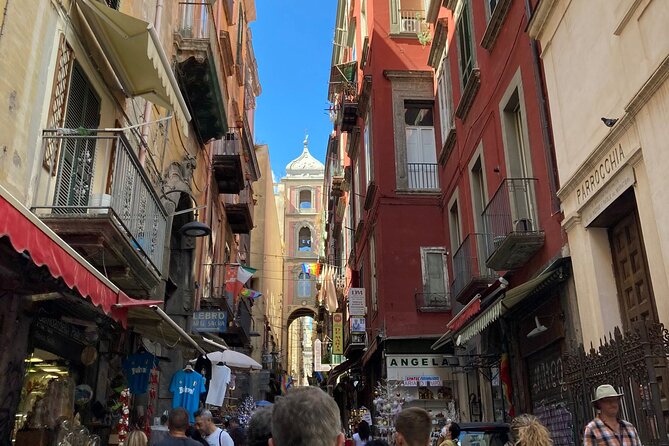
One of the best parts of the walk is the shift into Spaccanapoli, one of Naples’ oldest streets. You’ll step into narrow lanes lined with old buildings, everyday storefronts, and market energy.
Spaccanapoli is also where you notice the city’s sense of storytelling. The guide uses the street itself as a living stage: what looks like ordinary clutter is often layered with long habits and local quirks. This street stop is where the tour starts to feel like Naples, not just Naples on a map.
You also pass the Dolls Hospital area. It’s a strangely charming idea—people care for everybody, even dolls—so you get a quick burst of the city’s humor and its practical kindness.




Ospedale delle Bambole: Why a Doll Hospital Fits Naples
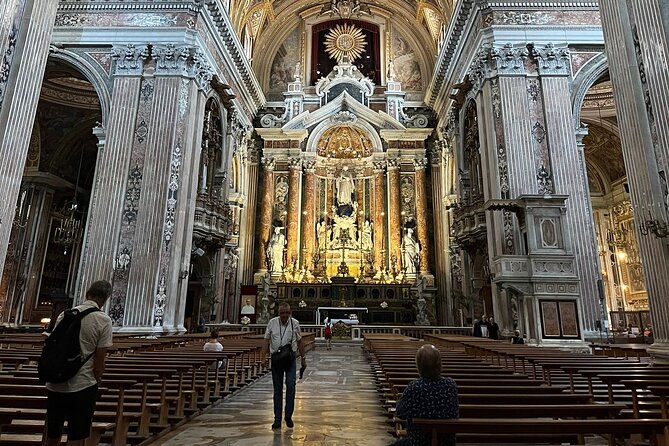
Naples has a talent for making the unusual feel normal. The Ospedale delle Bambole (Dolls Hospital) stop leans into that. You’re told the basic idea: in this part of the city, repair and care can extend even to things people might overlook elsewhere.
It’s only around 10 minutes, so don’t expect a full museum-style explanation. Instead, treat it like a signal: Naples takes daily life seriously, and it also treats eccentricity as part of normal culture.
San Gregorio Armeno: Nativity Craftsmanship You Can See Up Close
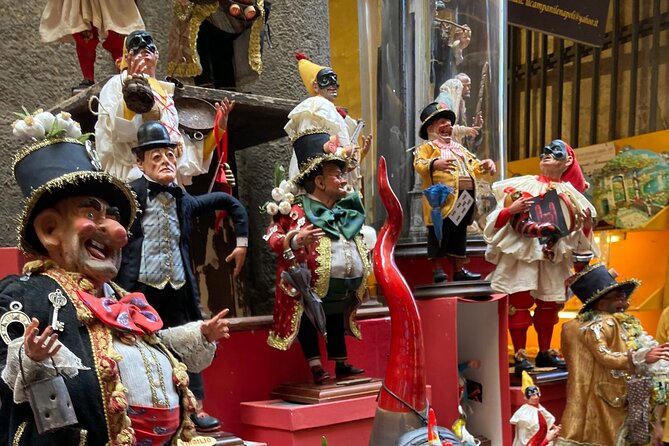
Next you move to Via San Gregorio Armeno, the famous street associated with artisan work. This is where Naples does something it’s known for worldwide: crafting detailed nativity scenes and related figures.
The best value here is observation. You get about 20 minutes, which is long enough to spot the skill behind the displays and see why this street has become a symbol of local artistic identity.
If you’re into design, folk art, or small-scale craftsmanship, this stop is a highlight. It’s also a great place to slow down because the details are the point—hands at work, materials, and the sense that this is not a one-day tourist performance.
Via Dei Tribunali: Pizza Culture While You Walk
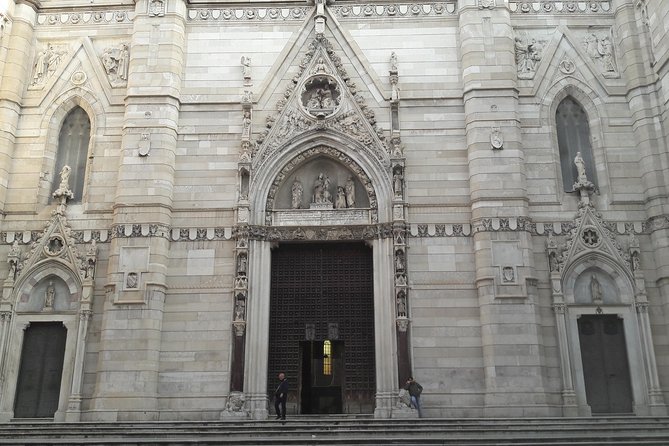
From crafts, you shift into appetite mode on Via Dei Tribunali. This is one of the streets where Naples’ pizza identity shows up in a very practical way—shops, scents, and the constant suggestion that people come here to eat.
Your time is brief—about 5 minutes—but it’s a helpful stop because it anchors Naples culture to daily habits, not just monuments. If you want, this is the part of the walk where you can decide what you want to try later, since you’ll see the area where the pizzerias cluster.
Santa Maria delle Anime del Purgatorio ad Arco: The Skull Legends
Now you enter the more mysterious side of Naples. The stop at Complesso Museale Santa Maria delle Anime del Purgatorio ad Arco is tied to the famous skull tradition often associated with the souls of purgatory.
This is one of those experiences where the building and the story work together. Even if you’re not sure what you feel about the concept, you’ll understand that Naples folklore uses stark imagery to talk about belief, memory, and the afterlife—without pretending it’s tidy.
You’ll have about 10 minutes here. That’s just enough time to grasp the legend and see the site, especially since the tour keeps moving.
Pulcinella Statue Stop: The Meaning Behind the Character
Before you move into the quieter church portion of the walk, you get a quick cultural stop: Busto di Pulcinella. The guide explains the meaning behind Pulcinella, which is important because Pulcinella isn’t just a character name—it’s a shorthand for a whole tradition of Naples identity.
Even in a short 10-minute stop, this can help your brain connect dots. After you hear how Pulcinella fits into the local culture, the city’s imagery makes more sense later as you wander independently.
Santa Chiara Church: Gothic Architecture with a Calm Personality
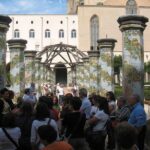
The tour then heads to Complesso Monumentale di Santa Chiara. Santa Chiara is known for its serene Gothic character—simple in feeling compared to some of the louder showpieces of the city.
This part works well because it slows you down. Instead of crowding your eyes with street life, you’re given a moment to absorb the geometry and the atmosphere inside the church complex.
You’ll get about 10 minutes here, so focus on proportions and space rather than trying to see every detail. It’s the kind of stop where a guide’s pointers help you notice what you’d otherwise miss in a quick glance.
Port’Alba: A 17th-Century Gate at the Edge of Your Walk
Next is Port’Alba, a 17th-century gate where architecture and history meet. The guide points out the building’s presence and why gates like this matter in a city that grew, shifted, and rebuilt over centuries.
This stop is short—around 5 minutes—but it’s a good “pause-and-register” moment. You’ll likely notice how the street changes around it, and how Naples keeps showing you traces of older urban life even when you’re just walking through.
Piazza del Gesù Nuovo: The Church Wall Story That Adds Depth
You end at Piazza del Gesù Nuovo, specifically the area near Gesu Nuovo Square. Here, the guide shares the history behind the front wall of the Church of Gesù Nuovo, including hidden stories that add another layer to what you’ve been learning all afternoon.
This final stop is smart because it ties the tour’s theme together: Naples isn’t only made of buildings. It’s made of the stories attached to them—who told them, why they mattered, and how people kept repeating them until they became local truth.
The tour ends right in the square area, so you can easily continue wandering on your own afterward.
Price and Value: What $54 Buys in the Centro Storico
At $54.01 per person for about two hours, this isn’t a “cheap shortcut” tour. It’s more like paying for a guide who can interpret the city fast enough to make sense out of a dense historic core.
Value comes from three places:
- You get an English-speaking guide with structured stops that connect the sights.
- Multiple listed stops are marked without extra entry cost during the walk, so you’re not stacking ticket fees on top of the price.
- The group size stays small (maximum 15), which tends to improve the quality of explanations and question time.
Also, the tour includes photo time and free time in iconic places, which is important in Naples. Streets are tight. If you rush, you miss the human details.
Small Group Size (Max 15): The Difference You’ll Feel
A cap of 15 travelers is not just a number. It affects how the tour moves through narrow spaces like Spaccanapoli and how you experience those short stops around churches and street corners.
With a smaller group, you can actually look at what the guide is pointing to instead of stepping past it while someone else blocks your view. It also makes it easier to hear the guide’s explanations without constant repetition.
If you’re traveling solo or as a couple, that size feels like the best mix: social enough to not feel awkward, small enough to keep momentum.
What to Watch Out For: English Clarity and Walking Pace
There’s one consideration worth respecting. The tour is offered in English, but the clarity of English can vary by guide. On a short, two-hour timeline, that can change how much you take in—especially for folklore-heavy stops.
If you’re the type who gets frustrated when explanations are hard to follow, it helps to go in with a flexible mindset: use the visuals, ask follow-up questions, and take notes you can later research on your phone.
Also: the tour is mostly walking. Even though each stop is brief, you should expect steady movement through the older parts of Naples.
Who This Tour Fits Best
This is a great fit if you want:
- A guided introduction to Naples’ traditions without spending a whole day
- Stops that mix major monuments (like the Duomo and Santa Chiara) with people-based culture (Pulcinella, street art, and artisan workshops)
- Explanations that focus on superstitions and local meaning, not just dates and names
It’s less ideal if you only want long museum-style time in one place, because the structure is designed for variety and quick context.
Should You Book This Naples Historic Center Tour?
I’d book it if you’re arriving in Naples and want your bearings fast—especially if your style is “stories first, then I explore more on my own.” The combination of Duomo miracle lore, Spaccanapoli street atmosphere, nativity artisans on San Gregorio Armeno, and the skull folklore stop is a strong way to understand Naples as a living culture.
I’d think twice if your top priority is a slow, deep visit to one site. This is about connections. You’ll finish with a clearer sense of the characters, beliefs, and street symbolism that make Naples feel like Naples.
FAQ
FAQ
How long is the Naples Historic Center walk?
It’s about 2 hours (approximately).
What time does the tour start?
The start time is 4:00 pm.
Where do I meet the guide?
The meeting point is Duomo di Santa Maria Assunta, Via Duomo 147, 80138 Napoli NA, Italy.
Where does the tour end?
The tour ends in Piazza del Gesù Nuovo, 80134 Napoli NA, Italy.
Is the tour offered in English?
Yes, the tour is offered in English.
Do I need to pay entry tickets for the stops?
The stops are listed with admission tickets marked as free.
Is food included?
No. Food and drinks are not included.
Is tipping required?
Tips are recommended.
Is the group size limited?
Yes. The maximum group size is 15 travelers.
What should I wear to enter the Duomo?
Wear comfortable walking shoes and cover your shoulders to enter the Duomo.