REVIEW · NAPLES
Naples panoramic tour and Monumental historic center.
Book on Viator →Operated by AmalfiTourCampania · Bookable on Viator
Naples looks best from moving angles. This panoramic day pulls you through key viewpoints and headline stops, with English commentary from your driver/guide in an air-conditioned vehicle. You get a smart mix of grand buildings, old-city corners, and a big museum hit—built for seeing a lot without spending the day stuck in lines.
I especially like the way the route builds from the sea into the hills, with stops that change your perspective fast—think Castel Sant’Elmo’s wide look over the gulf, then the coastal views from Posillipo and Lungomare Caracciolo. The second thing I like is the comfort package: bottled water, onboard WiFi, and a vehicle that keeps the day manageable when Naples weather turns humid or hot.
The main drawback to plan around: monument and museum admissions aren’t included, so your “all-in” total depends on what you choose to pay for once you’re there. Also, if you want very detailed, licensed guiding (art- and architecture-level depth), this tour can feel more like a chauffeur-style narration; for example, one passenger asked for more explanation, and the operator clarified the service is typically chauffeur-driven.
In This Review
- Key highlights to know before you go
- Why this Naples route works for first-timers
- Palazzo Reale: Royal apartments and Piazza del Plebiscito staging
- Galleria Umberto I: a free interior that tells you how Naples flows
- Castel Sant’Elmo on Vomero hill: views first, museum time second
- Posillipo and the coast road that changed the neighborhood
- Lungomare Caracciolo: sea air, long views, and a simple reset
- Piazza del Gesù Nuovo and the church cluster you can’t ignore
- The Naples National Archaeological Museum: where Pompeii and Herculaneum hit hardest
- Timing, tickets, and what to expect day-of
- Price and value: is $247.91 per person fair?
- Who this Naples panoramic tour is best for
- Should you book this Naples panoramic tour?
- FAQ
- How long is the Naples panoramic tour and Monumental historic center experience?
- Is pickup available?
- Are monument and museum tickets included?
- What’s included in the tour price?
- Is the tour only for my group?
- What happens if the weather is bad?
Key highlights to know before you go

- Castel Sant’Elmo on Vomero hill for the kind of city-wide view Naples does better than anywhere else
- Pompeii and Herculaneum artifacts at the Naples National Archaeological Museum, with major sculptures and paintings
- Galleria Umberto I as a free stop, letting you enjoy a famous interior without extra ticket math
- Posillipo and the coastal stretch for real neighborhood atmosphere and sea-breeze pacing
- Palazzo Reale (Royal Palace) as a major Naples anchor, even though admission is separate
- Chauffeur-style narration in English can be great for getting oriented, but depth varies by style
Why this Naples route works for first-timers
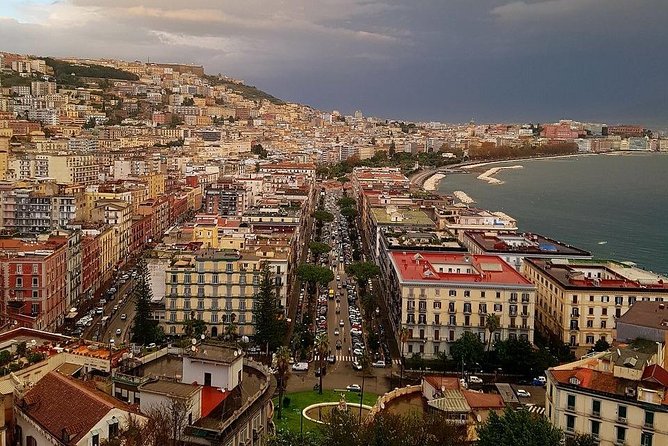
This is the kind of Naples tour that makes your day feel efficient. You’re not just hopping from photo spot to photo spot—you’re getting a guided thread through the city’s most important layers: royal power in the center, street life around Galleria Umberto I, elevation and defenses from Castel Sant’Elmo, then the coast and religious landmarks before ending with a heavyweight museum.
The vehicle format matters. Naples walking can be slow even when you don’t mean to go slow—curbs, stairs, traffic lights, and the occasional detour around busy areas. Having a car keeps you moving, and the onboard commentary helps you understand why these places sit where they do.
This tour is designed for a chunk of time—about 6 to 8 hours. In practice, that usually means: you’ll have enough time to see, listen, and take photos, but not enough time to fully “study” every building at a deep level unless you’re happy with short visits and faster museum browsing.
You can also read our reviews of more historical tours in Naples



Palazzo Reale: Royal apartments and Piazza del Plebiscito staging

Your day starts with the Palazzo Reale, set around Piazza del Plebiscito. This isn’t just a pretty facade. The palace complex is tied to the big political story of Naples—Spanish viceroys for roughly 150 years, then the Bourbon dynasty (1734 to 1861), interrupted briefly when French rule brought Giuseppe Bonaparte and Gioacchino Murat into the picture, and later the Savoys after Italian unification. In 1919 it shifted into state hands, and today it’s mainly used for museums—especially the Royal Apartments—and the national library.
Why it’s worth your time: Palazzo Reale gives you context for everything else you’ll see. Naples isn’t only churches and street corners; it also has power, ceremony, and a sense of grand state presence. Standing at the palace area helps you read the city like a map of influence.
A practical note: the palace admission is not included, so you’ll likely pay separately if you want to go inside. That’s a trade-off. If you’re on a strict schedule, you might choose a shorter exterior-and-photo moment at the start and then prioritize the museum later. If you’re a “rooms matter” person, plan your tickets early so you don’t end up deciding on the spot.
Galleria Umberto I: a free interior that tells you how Naples flows

Next comes Galleria Umberto I. It’s free to enjoy, and that’s a nice pressure release in a paid-ticket day. The gallery sits on ground that was densely urbanized as far back as the 1500s, once a tangled web of parallel streets and short alleys linked to Via Toledo, with a reputation for taverns and crime.
You don’t have to be a historian to feel why this stop works. A place like Galleria Umberto I acts like a “connector,” both physically and mentally. It helps you understand that Naples street life has always been layered—markets, back lanes, and busy routes all packed into tight space.
If you’re the type who likes architecture details, you’ll enjoy it more. If you just need a calm breather, you still get value because it’s included at no extra cost, and it breaks up the day before the more intense hill/museum portions.
Castel Sant’Elmo on Vomero hill: views first, museum time second

Then you climb into Castel Sant’Elmo, on Vomero hill near San Martino. This is a medieval castle that has been used as a museum and is known for its commanding position—about 250 meters above sea level—with wide views over the city and the gulf.
Here’s the cool part: the site evolved. It was once called Paturcium, and from the 10th century there was a church dedicated to Sant’Erasmo, which helped create the later name thread (Erasmo → Ermo → Elmo). The broader castle structure traces back to Norman defensive planning, and it’s partly built using local Neapolitan yellow tuff—the kind of material choice that makes you look harder at what you’re standing on.
What makes this stop feel different from a typical viewpoint: Castel Sant’Elmo isn’t only about looking. It also hosts a permanent museum called Naples Novecento, plus temporary exhibits and events. That means you can keep your time flexible—view first for the postcard angle, then museum time if you’re still in the mood to slow down.
Admission is not included, so decide ahead of time if you want to pay. My suggestion: if you’re museum-forward, you’ll probably feel happy spending time inside. If you’re view-forward, even a shorter visit can still pay off because the top is the point.
Posillipo and the coast road that changed the neighborhood

From the hill you head toward Posillipo, a promontory with deep roots in Greek sources and later Roman structures. You might notice the way the area carries both ancient traces and more modern living—Roman ruins near the shoreline and evidence of openings connected to a tunnel that once led to the residence associated with Publius Vedio Pollione.
A key detail I like here is the way modern infrastructure shaped the area. In modern times, Posillipo stayed relatively underdeveloped until the construction of the Via Posillipo (1812 to 1824), running along the coast from Mergellina. That’s why today it feels like a coast neighborhood rather than an out-of-the-way ruin park.
Most of what you’ll get on this stop is experience-based: seascapes, historic fragments, and the sense of how people live along the curve of the bay. Admission is free, so you’re not forced into a ticket decision just to feel the place.




Lungomare Caracciolo: sea air, long views, and a simple reset

Next is Lungomare Caracciolo, and you can treat it like a reset button. The value is straightforward: magnificent sea views and that classic Naples habit of letting the breeze slow you down.
This stop works especially well after time in car and stone. You get a chance to stand, walk a little, take photos, and breathe without committing to timed museum entry. Admission is free as well, which makes it an easy win on a day when not everything is included.
Piazza del Gesù Nuovo and the church cluster you can’t ignore

At Piazza del Gesù Nuovo, you’re in one of the city’s more meaningful religious-and-architectural groupings. The stop centers on places like the Chiesa del Gesù nuovo, and the nearby religious complex connections around Santa Chiara and other church buildings in the area. The tour information also references La Spacca Napoli, which is part of the area’s cultural nickname/spot identity.
This is a stop for people who like architecture and symbolism. Even if you don’t go inside every church, the piazza setting helps you understand Naples as a city built in layers of faith, art, and civic identity.
The catch: admissions are not included here. So if you feel church fatigue building, don’t force it. You can still use the piazza as a scenic-and-cultural pause, then save paid entry energy for the museum, where the ticket can feel like the biggest payoff.
The Naples National Archaeological Museum: where Pompeii and Herculaneum hit hardest

If there’s one part of this day that can genuinely change how you think about southern Italy, it’s Museo Archeologico Nazionale di Napoli. Admission is not included, but the museum is a major destination for a reason.
You’ll be looking at finds from Pompeii, Herculaneum, and Oplontis, plus sculptures and paintings described as unique pieces. This is the kind of collection where objects stop being background and start telling stories. The museum lets you connect what you see outdoors—ruins and Roman settings—to the craftsmanship and human details preserved in artifacts.
How long should you spend here on a tour like this? The tour schedules about 2 hours for the museum. That’s enough to see major highlights without turning your day into a marathon. If you’re a true museum person, you could spend longer on your own later in your trip. For this specific tour, the 2-hour slot is a good compromise.
If you’re deciding how much to pay for separate entries across the day, my honest ranking is: prioritize this museum if you can afford it. You’ll likely get the biggest “wow per euro” here.
Timing, tickets, and what to expect day-of
This tour is built around a flow: royal center → iconic interior stop → hill fortifications and views → coast vibes → church piazza → museum anchor. That structure helps reduce decision fatigue. You don’t have to map the city yourself.
Just be ready for this reality: several stops have separate admissions—Palazzo Reale, Castel Sant’Elmo, the Piazza del Gesù Nuovo church complex areas, and the National Archaeological Museum. Galleria Umberto I, Posillipo, and Lungomare Caracciolo are free, which helps balance the ticket load.
Also, keep your expectations realistic about guiding style. The tour includes onboard commentary in English, but the operator is associated with a chauffeur-driven format. In one case involving guide Vincenzo D. Matola, the operator response explained the service was chauffeur-driven rather than a licensed guide experience, and they noted they can help arrange a more specialized, expert licensed tour guide for an extra charge if needed. Translation: if you want very deep interpretive guiding, it’s worth asking about depth level before you go—or be clear with your guide about the kind of details you want.
A smart planning tip: Naples is a place where weather affects comfort, and this experience requires good weather. If skies are rainy or visibility is poor, you may need to adjust how much you rely on viewpoint stops like Castel Sant’Elmo.
Price and value: is $247.91 per person fair?
At about $247.91 per person for 6 to 8 hours, the price is really about what’s included: air-conditioned vehicle, bottled water, WiFi on board, and onboard English commentary, plus all fees and taxes. In other words, you’re paying to avoid the hassle of transportation and to compress multiple neighborhood shifts into one day.
What’s not included is the biggest variable cost: museum and monument entries. So the true value depends on what you personally want to pay to enter. If you plan to go inside the Royal Palace and Castel Sant’Elmo and the National Archaeological Museum, this can still be good value because you’re bundling transportation and guidance across multiple paid sites.
If you’d rather only do one paid interior, the tour can still work well—because the free stops keep the day enjoyable even when you’re skipping entries. Just recognize that the “price per ticket” math isn’t as clean if you don’t take advantage of the included museum time.
One more value factor: it’s often booked about 28 days in advance on average. If you’re traveling in peak season or you want a specific day with good weather, booking earlier helps.
Who this Naples panoramic tour is best for
I think this tour fits best if you want three things:
- A fast, structured way to see Naples without managing logistics
- A mix of viewpoints and key cultural anchors (palace, castle, museum)
- Comfort for a long day: air-conditioning, water, WiFi, and a guided flow
It’s less ideal if you need a high-detail, art-historical, room-by-room guide for every stop. In that case, ask about the level of commentary you’ll get, and consider arranging an expert licensed guide if you want that depth.
If you’re traveling in a small group, note that it’s a private tour/activity, meaning you’re touring with your group rather than a large public crowd. That usually makes questions easier and the pacing feel more controlled.
Should you book this Naples panoramic tour?
Yes, if you want a well-paced Naples primer that hits the big landmarks and ends with serious museum value at the National Archaeological Museum. The free stops along the coast and at Galleria Umberto I are a nice way to keep the day feeling light, and Castel Sant’Elmo gives you the kind of view that makes Naples click.
Hold off or ask questions first if you’re very ticket-sensitive or if you’re chasing deep, specialized guiding in every site. The tour includes English commentary, but the operator has clarified the format is often chauffeur-driven. If that matters to you, confirm the guidance depth before you pay, especially since multiple paid entries are part of the experience.
FAQ
How long is the Naples panoramic tour and Monumental historic center experience?
It runs approximately 6 to 8 hours.
Is pickup available?
Yes. Pickup is offered, and the meeting point uses a displayed cartel with your reservation name.
Are monument and museum tickets included?
No. Entering the monuments and archaeological sites is not included. The tour includes commentary on board, transportation, and general fees, but you pay admissions separately.
What’s included in the tour price?
You get an air-conditioned vehicle, bottled water, commentary on board in English, WiFi on board, and all fees and taxes.
Is the tour only for my group?
Yes. It’s listed as a private tour/activity, so only your group participates.
What happens if the weather is bad?
This experience requires good weather. If it’s canceled due to poor weather, you’ll be offered a different date or a full refund.