REVIEW · NAPLES
Neapolitan pasta homemade Cooking Lesson
Book on Viator →Operated by GRAND TOURS ITALY · Bookable on Viator
Fresh pasta starts with rolling pins. This Naples class is built around hand-rolling egg pasta and turning it into real dishes like ravioli and fettuccine. You also get local tastings while the dough rests, so the whole experience feels like Naples, not just a demo.
I really like the family-style approach: an instructor explains pasta types first, then you work the dough and fillings step by step, finishing with cooking and seasoning in two sauces. One possible drawback: at $90.76 for roughly two hours, it is not a long, slow culinary boot camp, so you should go in ready to learn fast.
In This Review
- Key things to know before you go
- What Makes This Neapolitan Pasta Lesson Feel Real in Naples
- Meeting on Via delle Zite and What the Setup Implies
- Pasta Types First: How They Frame Ravioli and Fettuccine
- The Egg Pasta Dough: Rest Time, No Machines, and Old-School Technique
- Rolling, Cutting, and Making Ravioli and Fettuccine
- Cooking the Fresh Pasta and Finishing With Two Sauces
- Lunch in a Restaurant Setting: What’s Included and What You’ll Pay Extra
- How Much Time You’ll Really Spend (and Why It’s Still Worth It)
- Tips If You Want the Best Hands-On Experience
- Who Should Book This Neapolitan Pasta Lesson in Naples
- Should You Book This Neapolitan Cooking Pasta Lesson?
- FAQ
- FAQ
- How long is the Neapolitan homemade pasta cooking lesson?
- Where does the class meet and where does it end?
- What pasta will I learn to make?
- Do they use pasta-making machines?
- What is included in lunch?
- Are any drinks included besides the first one?
- Is the class suitable for gluten intolerance?
- What is the group size?
- Is there free cancellation?
Key things to know before you go
- Hand-rolled pasta only: rolling pin, no machinery
- You make ravioli and fettuccine (and learn shapes like tagliolini and pappardelle)
- Tasting happens during dough rest: Vesuvio tomato and homemade bread are part of the flow
- Lunch is included: your homemade pasta plus wine and soda/pop
- Group size capped at 35 for a more hands-on feel
- Not recommended for gluten intolerant guests
What Makes This Neapolitan Pasta Lesson Feel Real in Naples
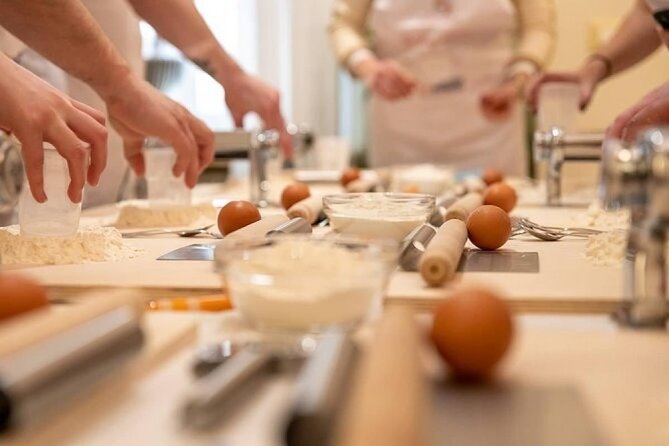
Neapolitan pasta has a specific personality. It is practical, eggy, and made to hold onto sauces instead of fighting them. In this lesson, you are not just learning a recipe on paper. You’re learning how dough behaves in your hands, how it stretches, how it relaxes while it rests, and how to roll it thin enough to cut clean shapes.
The handwork matters. When you roll with a rolling pin and avoid machinery, you feel the dough’s texture and elasticity. That alone is worth your time if you’ve only ever relied on store-bought pasta or kitchen gadgets.
And because this is based in Naples, the lesson leans into local ingredients. You’ll taste organic tomatoes from Vesuvio and homemade bread during the class, which helps you understand why the final plate tastes the way it does.
You can also read our reviews of more cooking classes in Naples


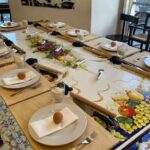
Meeting on Via delle Zite and What the Setup Implies
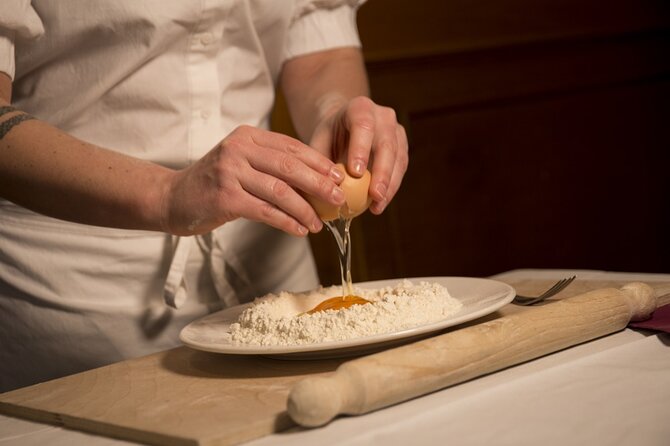
You meet at Via delle Zite, 30, 80139 Napoli NA. The activity ends back at the meeting point, so you are not dealing with a big transport shuffle halfway through.
It’s also described as near public transportation, which is helpful because Naples traffic and timing can be unpredictable. If you’re stacking this with other things that day, you can plan around it without needing a private ride.
One more practical note: the class has a maximum of 35 travelers. That is not tiny, but it’s not a massive crowd either. You should expect to be up and active rather than watching from the back row the whole time.
Pasta Types First: How They Frame Ravioli and Fettuccine
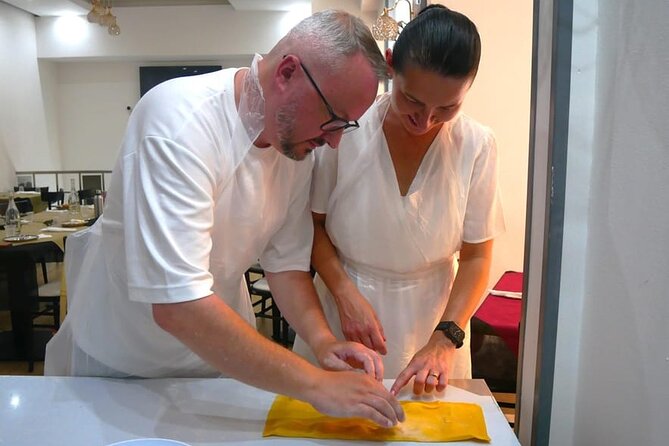
The class starts with an explanation of the difference between pasta types. That sounds basic, but it’s actually useful. Ravioli and fettuccine don’t just look different on a plate—they behave differently with sauce.
You’ll learn what changes when you move between filled pasta (ravioli) and long strands (fettuccine), and you’ll also get shown other forms like tagliolini and pappardelle. Even if you don’t leave making every shape perfectly, you’ll understand the logic behind thickness, cutting style, and how fillings and sauces interact.
This first step also helps you focus during the making stage. You know what you’re aiming for. You can tell when dough is rolling correctly and when it’s starting to fight you.
The Egg Pasta Dough: Rest Time, No Machines, and Old-School Technique
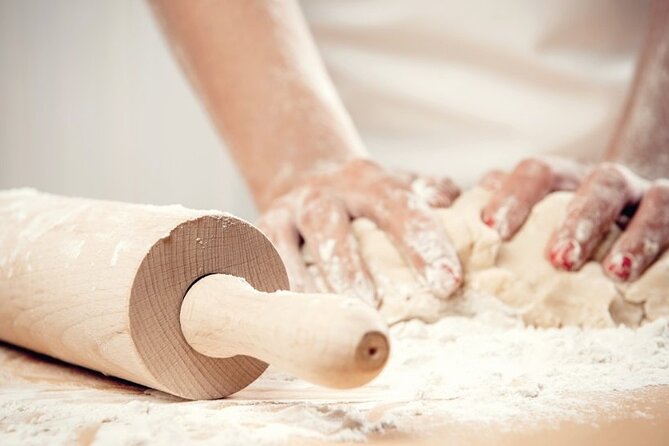
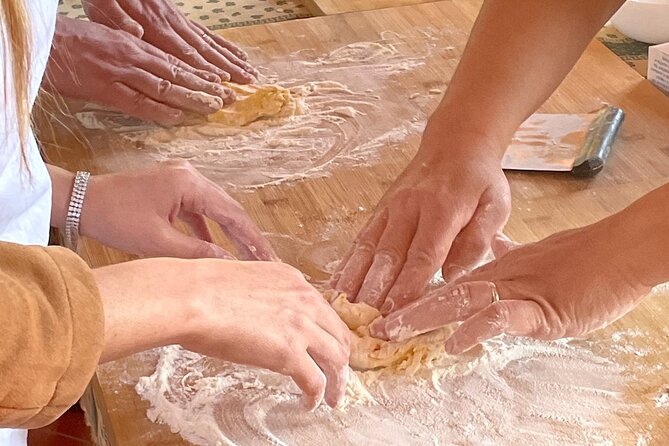
This is the heart of the experience. You’ll start making egg pasta dough using an instructor’s family recipe. The class emphasizes methods that have been lost over time, which usually means less shortcut, more feel.
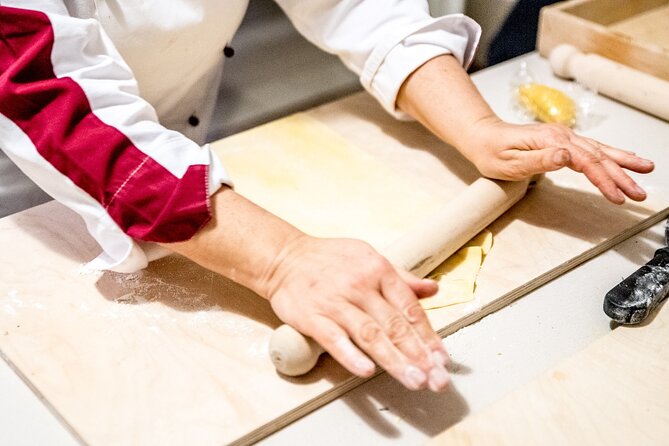
Here’s how that matters in real life: when you rely on machines, you remove a big part of learning. You can copy thickness by number or setting. With a rolling pin, you learn by attention—how the dough folds, how it springs back, and how it should feel before it goes into shaping.
Then there’s the rest period. While the dough rests, you’ll receive a local starter and also taste organic Vesuvio tomato plus homemade bread. This timing is smart. Dough needs time to relax, and you get a break that still feels connected to the cooking.
Also note: the lesson is not recommended for people who are gluten intolerant. If that’s you, you’ll want to look for a separate gluten-free option.
Rolling, Cutting, and Making Ravioli and Fettuccine
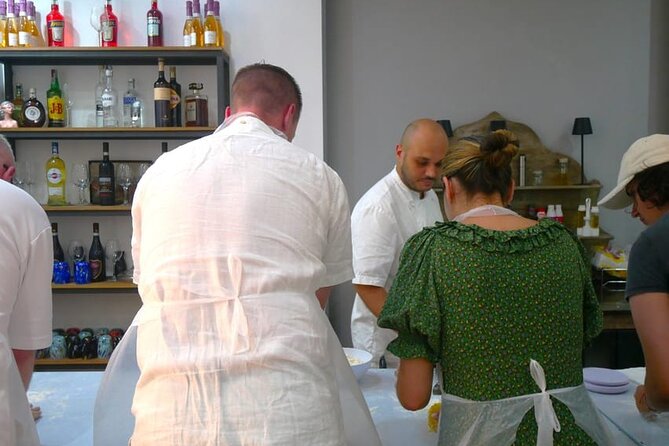
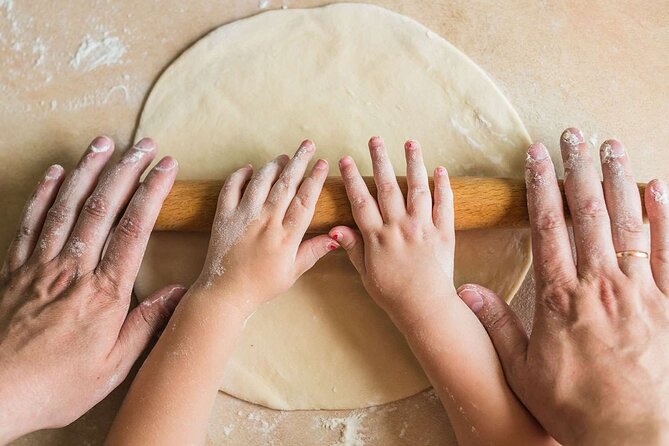
Once the dough is ready, you roll it out with a rolling pin. You’ll use traditional methods instead of machinery. This part is hands-on and it’s where you’ll see the difference between looking easy and actually making it work.
After rolling comes cutting. This lesson focuses on two main creations: fettuccine and ravioli.
- For fettuccine, you’re cutting into long, ribbon-like strands.
- For ravioli, you’re working with the idea of filling and sealing—where dough thickness and edges matter so the filling stays where it should.
Then you’ll mix the ingredients of the filling and combine it with the ravioli. The class doesn’t just tell you what to do. It shows the steps you can repeat later at home—especially how to handle dough so it doesn’t dry out or crack.
A nice bonus: even if you don’t make all shapes start to finish, you’ll be shown how to prepare tagliolini and pappardelle. That widens what you can reproduce after the class, without turning the lesson into an endless series of variations.
You can also read our reviews of more tours and experiences in Naples
Cooking the Fresh Pasta and Finishing With Two Sauces
Once your pasta is shaped, it gets cooked in water. Fresh pasta cooks fast compared to dried pasta, so you’ll get that quick feedback loop where you see results quickly. That is a morale booster. You make, you cook, you taste.
After a few minutes, it’s seasoned with two different sauces. That’s an important part of the lesson because it teaches pairing. Some sauces cling better to ribbon shapes. Others make filled pasta taste extra satisfying. Even if you have strong opinions at home, this gives you a practical way to think about matching sauce to pasta.
And yes, you’re eating what you made. Included lunch is your homemade fettuccine and ravioli, plus wine. There’s also soda/pop included.
Lunch in a Restaurant Setting: What’s Included and What You’ll Pay Extra
This class includes lunch, and it’s not a sad bread-and-cheese setup. You get your homemade fettuccine and ravioli with wine. That matters for value because cooking classes often spend most of your time making, then send you off hungry.
Based on the info here, other drinks beyond the first one are not included. So if you plan to keep ordering wine or add extras, budget accordingly.
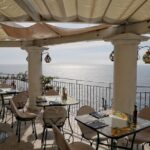
A review also mentioned that the restaurant setting is in a great area and that the food is delicious. That tracks with the overall structure: it’s a cooking class, but it also functions like an actual meal experience.
How Much Time You’ll Really Spend (and Why It’s Still Worth It)
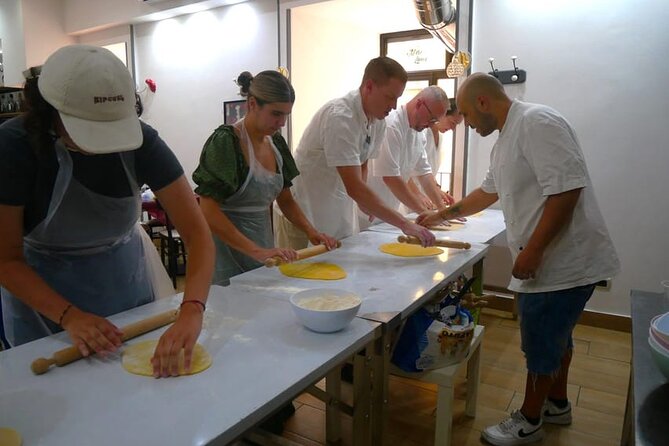
The tour duration is listed at about 2 hours. One review felt it ran closer to 1.5 hours, but the provider’s message clarified it is meant to be a 2-hour course, not 3. Either way, plan for a focused, timeboxed lesson.
Here’s the value angle: in two hours, you can’t master every technique of Italian pasta-making. But you can learn the core moves—dough, rolling, cutting, filling, cooking, and sauce finishing—so you can reproduce a version at home.
If you’re the kind of person who learns best by doing, the short timeframe is actually a plus. You’re not stuck waiting through theory for too long. You’ll get enough instruction to make progress, then you’ll leave with a practical skill set.
The $90.76 price is not a bargain, but it may be fair considering you’re paying for ingredients, instruction, and a meal with wine. If you want a guided way to make pasta without guessing, it can feel like money well spent.
If you’re already a confident cook or you’ve taken multiple cooking courses, you might find this less transformative than a longer, more technical workshop. Keep that in mind before you book.
Tips If You Want the Best Hands-On Experience
A pasta class can go two ways: either you’re actively cooking and asking questions, or you’re watching and hoping it makes sense later. You’ll get the most if you do these:
- Arrive ready to work with your hands. This is dough and flour work, not just observation.
- Pay attention during the dough rest. That’s when tastings happen, and you’ll get context about ingredient quality.
- Ask about thickness and sealing for ravioli. Those are the two skills that make or break results at home.
- Plan to taste the sauces as part of the lesson, not as an afterthought. You’re learning pairing.
Also, the instructor who receives strong praise in one review is named Daniel, and that review specifically calls out that he made pasta fun and easy with lots of useful tips. If Daniel is your instructor that day, lean into his guidance and treat the class like a Q&A when you’re stuck.
Who Should Book This Neapolitan Pasta Lesson in Naples
This fits you best if you want:
- A hands-on pasta skill you can reproduce at home
- A Naples-focused lesson with local ingredients like Vesuvio tomato
- A class that ends with a proper meal, not just samples
- A guided start if you’re new to egg pasta dough
You might want to skip or at least think carefully if:
- You need a gluten-free option (the class is not recommended for gluten intolerance)
- You want a long, multi-session course
- You already cook pasta confidently and expect advanced, detailed technique work
If you’re traveling with food lovers, this is also a solid group activity. The cap of 35 helps keep energy up, and lunch turns the class into something shared, not just instructional.
Should You Book This Neapolitan Cooking Pasta Lesson?
I’d book it if you want a practical Naples experience where you make fresh pasta from dough to plate, and you’re happy with a tight schedule. The combination of hand-rolled pasta, ingredient tastings, and included lunch with wine makes it more than a quick show.
Skip it if your main goal is a very long deep-dive course, or if gluten intolerance affects you directly. Also, if you’ve already taken several pasta classes, you may need to judge whether two hours will add enough new technique to justify the cost.
If you’re on the fence, here’s the best decision rule: if you’d feel excited using a rolling pin and learning ravioli technique in one go, this is a good match.
FAQ
FAQ
How long is the Neapolitan homemade pasta cooking lesson?
It’s about 2 hours.
Where does the class meet and where does it end?
It starts at Via delle Zite, 30, 80139 Napoli NA, Italy and ends back at the meeting point.
What pasta will I learn to make?
You’ll make homemade ravioli and fettuccine. You’ll also learn how to prepare tagliolini and pappardelle.
Do they use pasta-making machines?
No. You’ll roll the dough with a rolling pin and use traditional methods rather than machinery.
What is included in lunch?
Lunch includes your homemade fettuccine and ravioli with wine, plus soda/pop.
Are any drinks included besides the first one?
Other drinks after the first one are not included.
Is the class suitable for gluten intolerance?
It is not recommended for people who are gluten intolerant.
What is the group size?
The class has a maximum of 35 travelers.
Is there free cancellation?
Yes. You can cancel for a full refund if you cancel at least 24 hours before the experience starts.