REVIEW · NAPLES
Phlegraean Fields: Cuma Baia and Pozzuoli private excursion
Book on GetYourGuide →Operated by Askos Tours · Bookable on GetYourGuide
Volcanoes and Roman ruins in one long day. This private 8-hour trip through Campi Flegrei links extinct-volcano country with major archaeological stops, and the guide makes the sites click into place fast. I especially like the chance to see the volcanic lake of Averno and then connect it to what the Romans built around it.
One thing to watch: the order of stops can be affected by site closures. The Macellum of Pozzuoli shuts on Monday, Tuesday, Wednesday, and Friday (open Thu, Sat, Sun), Cuma shuts on Tuesday, and Baiae’s Thermal Baths and Museum shut on Monday—so check your day before you commit.
In This Review
- Key highlights you’ll remember
- Campi Flegrei: why the Phlegraean Fields feel different from central Naples
- Private transport from Naples, Sorrento, or Salerno (and why it matters)
- Pozzuoli’s former market of Puteoli and the Temple of Serapis
- The Acropolis of Cumae and the Sybil cave sanctuary
- Baiae: a Roman seaside resort with temples and underwater remnants
- Bacoli and Miseno: Piscina Mirabilis, Roman water engineering at full scale
- D’Averno, Fusaro, and Miseno: the volcanic lakes that tie everything together
- Skip-the-line and guided touring: how you get more out of limited time
- Price and logistics: does $558.97 per person feel fair?
- Who this tour fits best (and who should skip it)
- Should you book this Phlegraean Fields Cuma and Pozzuoli private excursion?
- FAQ
- How long is the Phlegraean Fields: Cuma Baia and Pozzuoli private excursion?
- Where does pickup happen for this private excursion?
- What stops and major sites are included?
- Is this a private group tour?
- What languages are offered for the live tour guide?
- Are there days when certain sites are closed?
- Is the tour wheelchair accessible?
Key highlights you’ll remember
- Volcanic lakes like D’Averno, Fusaro, and Miseno, tied to the story of Campi Flegrei
- Macellum of Pozzuoli (Temple of Serapis), including the columns with mollusc holes
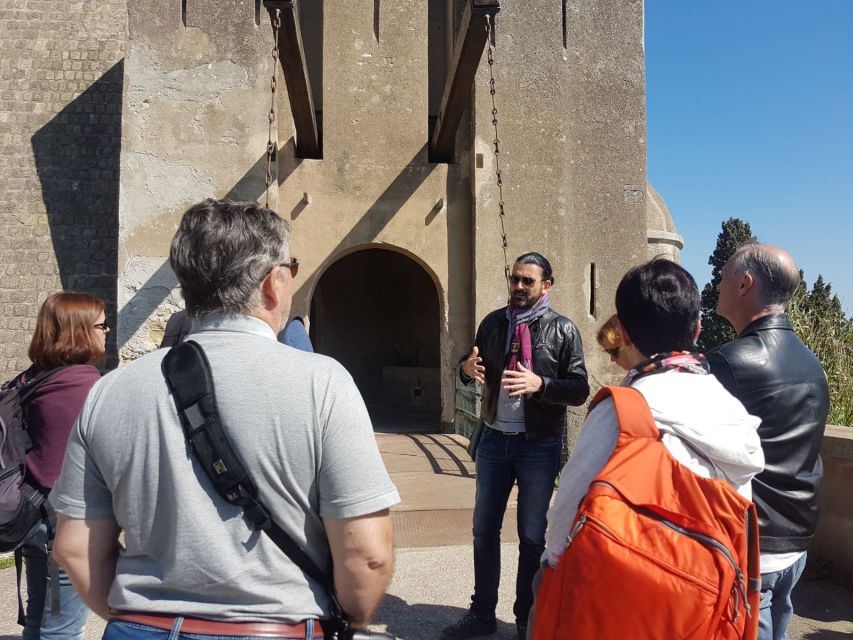
- Cumae’s Acropolis and its Sybil cave sanctuary setting on the coast
- Baiae (Roman seaside resort) with a museum inside the Aragonese fortress and temples to Venus, Diana, and Mercury
- Piscina Mirabilis at Miseno, a massive Roman cistern connected to the navy
Campi Flegrei: why the Phlegraean Fields feel different from central Naples
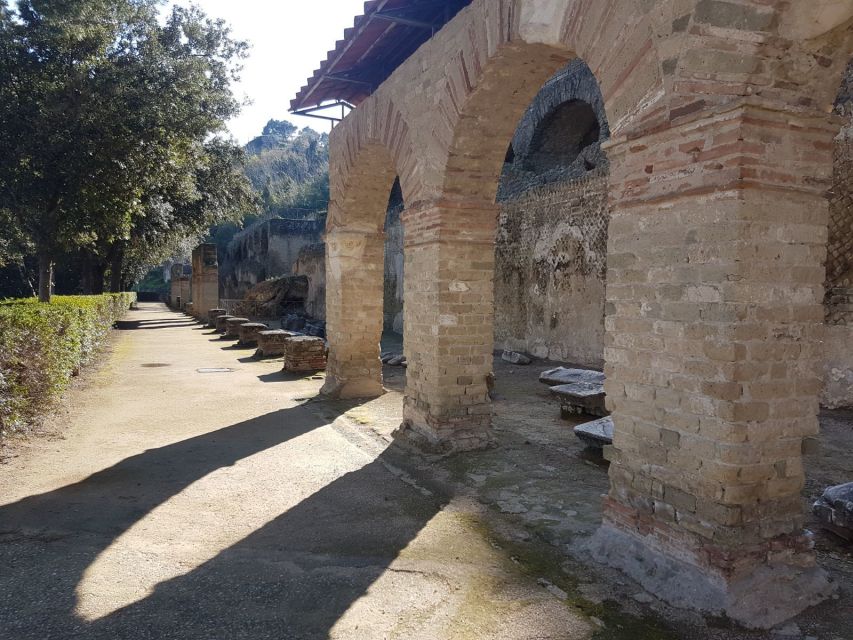
Naples is loud, fast, and full of motion. The Phlegraean Fields are different. Here, extinct and dormant volcanic activity shaped the ground around you, and the Romans took full advantage of it.
You’re not just seeing ruins; you’re seeing a place with geological “history” that keeps showing up in human history too. The tour focuses on how bradyseismic phenomena are especially notable around the Macellum of Pozzuoli, so the architecture tells you more than just what people built—it hints at how the ground behaved over time.
You can also read our reviews of more private tours in Naples

Private transport from Naples, Sorrento, or Salerno (and why it matters)
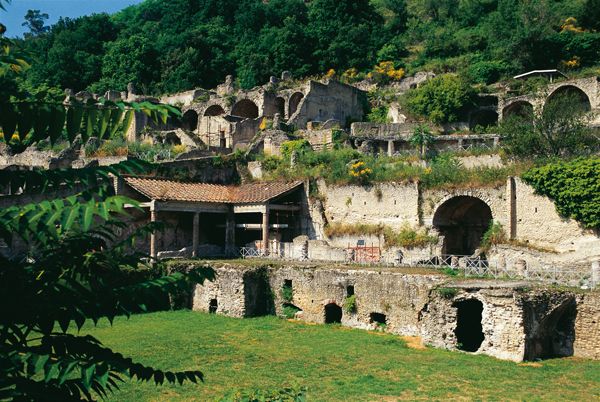
This is a private group day, with pickup from Naples, Sorrento, or Salerno and drop-off back in the same zones. You travel by Mercedes S-Class sedan, van, or minivan (depending on group size), with an English-speaking driver behind the wheel.
That matters because you’re covering a lot of ground in one day: coastal stops, inland viewpoints, and archaeological sites that are spread around the bay. A private setup also means you’re not stuck waiting on other people’s pace while you’re trying to see a specific site before it closes.
If you care about getting to each stop while it still feels relaxed, this format helps. A well-run day depends on the driving as much as the guiding—there’s a reason the driver Giovanni has been singled out for safe handling in complicated traffic, and it makes the rest of the day feel smoother.
Pozzuoli’s former market of Puteoli and the Temple of Serapis
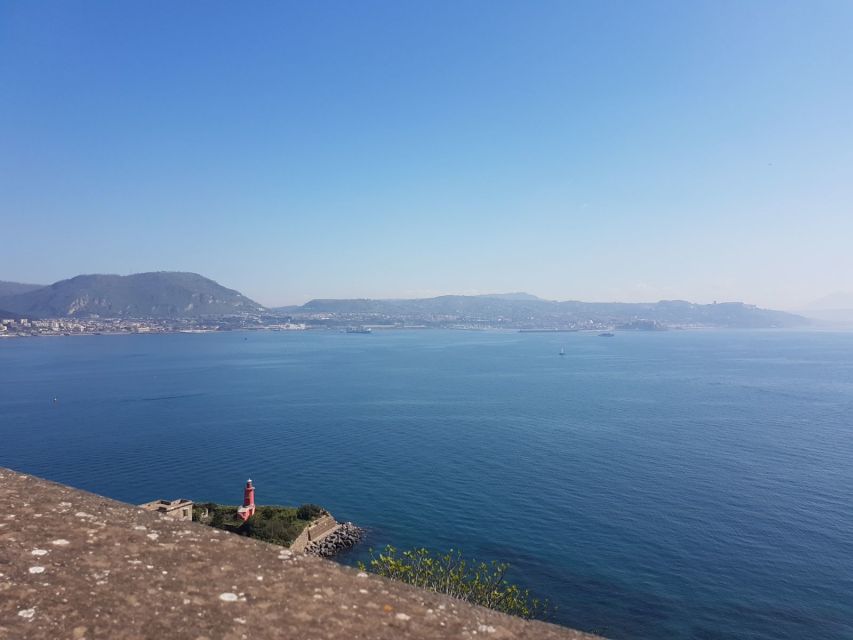
Pozzuoli is where Roman daily life gets physical. The highlight here is the Macellum Temple of Serapis, the former market of the Roman colony of Puteoli. You’ll tour it with a guide, and you’ll learn why it was excavated after the discovery of a statue of Serapis.
What makes this stop special is the way the site’s details teach you to look. The surviving columns are studded with mollusc holes, a reminder that this area’s water and coastline were part of the Roman world, not just the background scenery. You’ll likely find yourself imagining the space as a busy place rather than a museum-like ruin.
Tip for your visit: take a moment before you start looking for big “photo” angles. Once you get the hang of the site layout, the smaller marks—like those shell impressions—start to make more sense and feel less random.
The Acropolis of Cumae and the Sybil cave sanctuary
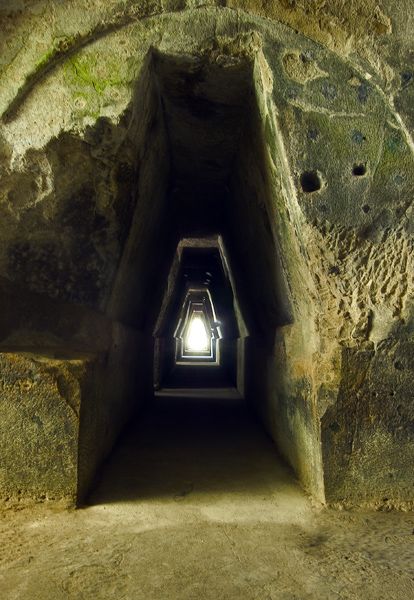
From Pozzuoli’s market, you move to Cumae’s Acropolis, perched above the sea at the ruined city of Cuma. This is an important stop in the larger story of Greek influence in the region: Cuma was founded by Euboean Greeks.
The best-known monument here is the Sybil cave sanctuary. Even if you’re not a specialist in ancient cult sites, you’ll get why it’s remembered: it links a legendary religious tradition with a real, dramatic setting—earth, rock, and the coastline all playing their parts.
Cuma is also a good example of what makes a guided visit worth it. Without context, ruins can feel like “more stones.” With the guide’s framing, you start to see how the place functioned and why people would have cared enough to build and maintain it.
One practical note: Cuma is closed on Tuesday, so if your trip lands on that day, you’ll want to plan around it.
Baiae: a Roman seaside resort with temples and underwater remnants
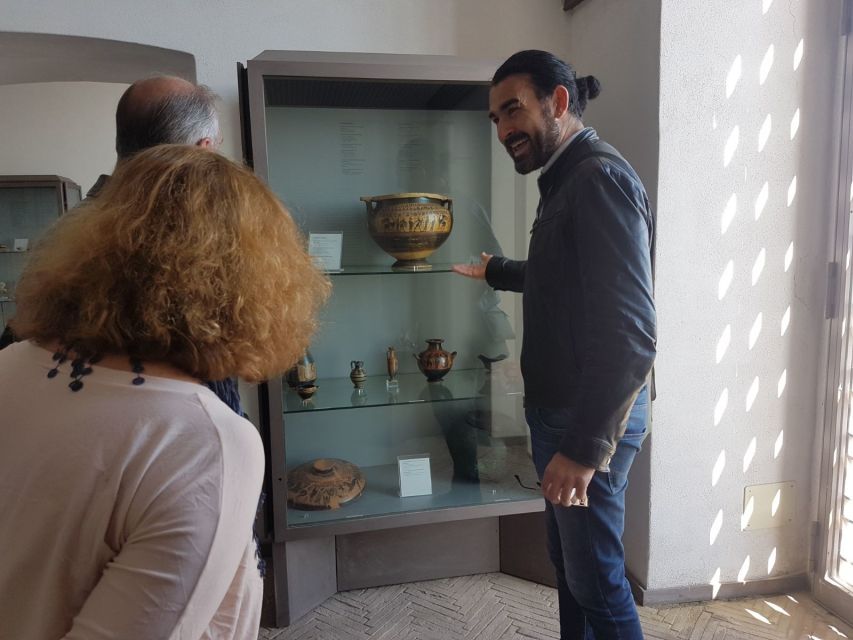
Baiae is where the day turns from “market and sanctuary” to “vacation mode.” This former Roman seaside resort is famous for its underwater parts, so what you see above ground isn’t the whole story—but it’s still striking.
You’ll visit the Archaeological Park of Baia and spend time at the museum set in the former Aragonese fortress, the Museum of the Phlegrean Fields. From there, you can connect artifacts and explanations to what remains on site.
Above the waterline, look for the remains of temples to Venus, Diana, and Mercury. These weren’t random names; they fit the Roman idea of leisure, myth, and pleasure wrapped into architecture. Baiae feels like a place built for status and ritual, not just for living.
If you’re hoping for the full thermal-baths museum experience, note that Baiae Thermal Baths and Museum are closed on Monday. The rest of the archaeological stop may still work depending on your day, but it’s worth matching your visit to what you most want to see.


Bacoli and Miseno: Piscina Mirabilis, Roman water engineering at full scale
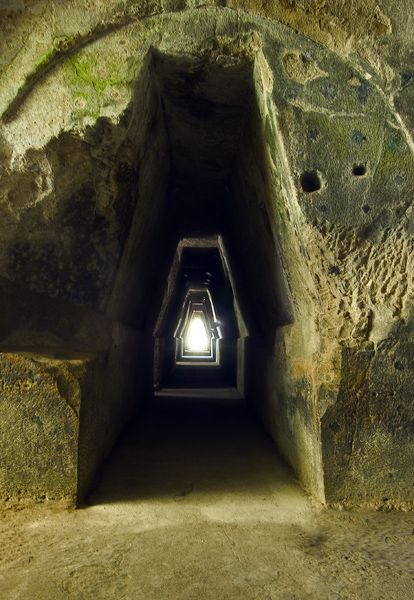
After Baiae, the itinerary typically shifts toward Bacoli and Miseno. The standout here is the Piscina Mirabilis, the enormous Roman cistern.
This is one of those stops where you’ll feel the size before you fully process it. In ancient times, Misenum (Miseno) was home to the largest base of the Roman navy, and the cistern was part of the supply system that kept that military machine running.
You don’t need technical training to appreciate it. When the guide frames it, the cistern becomes a story about logistics: water had to be stored, managed, and delivered reliably, and this structure was built for that job at scale.
If you like “how did they do it?” travel—this is your kind of hour. Even if the day already includes multiple archaeological zones, Piscina Mirabilis gives your brain a different kind of satisfaction: not just history, but engineering.
D’Averno, Fusaro, and Miseno: the volcanic lakes that tie everything together
Campi Flegrei’s volcanic lakes are more than pretty stops. They act like chapter headings across the day.
You’ll go to the volcanic lakes of D’Averno, Fusaro, and Miseno. Each one supports the region’s larger identity: a place where the ground’s activity shaped the coastline and influenced where people settled, traveled, worshiped, and built.
For me, the value here is the connection. You see how the itinerary’s “archaeology blocks” connect to the natural features that likely influenced why the Romans chose these spots in the first place. It’s a rare day where nature and built heritage don’t feel like two separate trips.
Practical tip: bring layers. Lake and coastal wind can change how long you want to stand and look, even when the sun is out.
Skip-the-line and guided touring: how you get more out of limited time
With a full day, time is your real constraint. This tour includes skip-the-line admission fees and a guide at the main stops, so you spend your energy on the sites instead of paperwork and waiting.
The guide options include Spanish, English, Italian, French, and German, and the explanations are what make the day coherent. You’ll move from Macellum details (like the Serapis story and mollusc holes) to Cumae’s Sybil sanctuary and then to Baiae’s temples and museum displays. The guidance helps you connect each stop rather than treating them like separate checkboxes.
In a well-run day, you’ll also feel the pace balanced: enough time at each place to actually see it, without turning the day into a marathon. One thing I like about how this tour is set up is that it tries to keep the “story thread” in your head as you hop between sites.
Price and logistics: does $558.97 per person feel fair?
At $558.97 per person for an 8-hour private outing, this is not a budget pick. But it isn’t random pricing either.
Here’s what you’re paying for, in plain terms:
- Private transportation (Mercedes S-Class sedan/van/minivan) with an English-speaking driver
- A live guide for the major guided segments
- Skip-the-line admission at included sites
- A full-day route that links multiple big archaeological zones and natural landmarks
If you’re traveling with someone and you’d rather pay for a smoother, less crowded day than squeeze into a group tour, the price can start to make sense. Where the value gets better is if you genuinely care about explanation—because without context, places like the Macellum and Cumae can be harder to “get.”
If you’re the type who just wants a fast walk-through with photos and minimal narration, you might decide the cost is more than you need. But if you enjoy understanding what you’re seeing, this price targets that goal.
Who this tour fits best (and who should skip it)
This excursion is a strong match if you:
- Want a single-day route that covers Pozzuoli, Cumae, and Baiae
- Like the intersection of geology + archaeology in Campi Flegrei
- Prefer private touring where the guide can keep the story on track
It’s not suitable for wheelchair users. The day involves touring archaeological sites that may have uneven surfaces and limited accessibility in places.
If you’re traveling with limited time and you want your Naples-area day to feel purposeful—this format tends to deliver.
Should you book this Phlegraean Fields Cuma and Pozzuoli private excursion?
I’d book it if your idea of a great day in Campania includes both guided archaeology and the volcanic lakes that give the region its identity. The route hits major sites—Macellum of Pozzuoli, Cumae’s Sybil sanctuary, Baiae’s underwater resort world, plus Piscina Mirabilis—and it’s structured to keep you moving through the story, not just through locations.
I’d hesitate if you’re visiting on a day when one of the key sites is closed (Cuma on Tuesday, Macellum on certain weekdays, Baiae Thermal Baths and Museum on Monday) and you can’t adjust. Also, if you hate long touring days, remember this is an 8-hour private full-day plan.
FAQ
How long is the Phlegraean Fields: Cuma Baia and Pozzuoli private excursion?
The tour lasts 8 hours.
Where does pickup happen for this private excursion?
You can choose pickup from Naples, Sorrento, or Salerno. You’ll need to provide your exact pickup details.
What stops and major sites are included?
The tour includes guided visits around Campi Flegrei, Pozzuoli (including the Macellum Temple of Serapis), Cumae, the Archaeological Park of Baia (Baiae), Bacoli, Piscina Mirabilis (Miseno), and volcanic lakes including D’Averno, Fusaro, and Miseno.
Is this a private group tour?
Yes, it’s a private group.
What languages are offered for the live tour guide?
The live guide is available in Spanish, English, Italian, French, and German.
Are there days when certain sites are closed?
Yes. The Macellum of Pozzuoli is closed on Monday, Tuesday, Wednesday, and Friday (open Thursday, Saturday, and Sunday). Cuma is closed on Tuesday. Baiae Thermal Baths and Museum are closed on Monday.
Is the tour wheelchair accessible?
No, it’s not suitable for wheelchair users.