REVIEW · NAPLES
Spanish Quarters, to discover folklore, artisans and local life
Book on Viator →Operated by Amor Vacui Napoli · Bookable on Viator
Naples changes fast in the Quartieri Spagnoli. This walk is built around local street art and neighborhood life, where characters like Maradona and Totò show up on the walls and the stories keep going past the sightseeing.
I especially like how Emanuele guides the group at a relaxed tempo while still packing in context. Two hours feels like enough to understand both the old neighborhood myths and how people live today, without turning the whole thing into a rush-fix photo stop.
One thing to consider: this is a real neighborhood walk with lots of outdoor alley time, so plan around good weather and uneven streets. If you’re the type who hates cobblestones or you need smooth sidewalks, this may be a stretch.
In This Review
- Key things to know before you go
- Why the Spanish Quarters street-art walk feels different
- Meeting on Via Toledo: timing and what to expect in practice
- The Quartieri Spagnoli lanes: reading the neighborhood like a local
- Maradona and Totò on the walls: why the guide’s context matters
- Churches and underground tunnels: old Naples, not behind glass
- Seeing local life without feeling like a spectator
- The guide experience: Emanuele’s style and language help
- Price and value: what $53.36 buys in a small-group walk
- Who should book the Spanish Quarters walk
- Quick checklist before you go
- Should you book this Spanish Quarters tour?
- FAQ
- How long is the Spanish Quarters walk?
- Where do I meet, and where does it end?
- How much does it cost?
- How many people are in the group?
- What’s included in the tour?
- What happens if the weather is poor?
Key things to know before you go
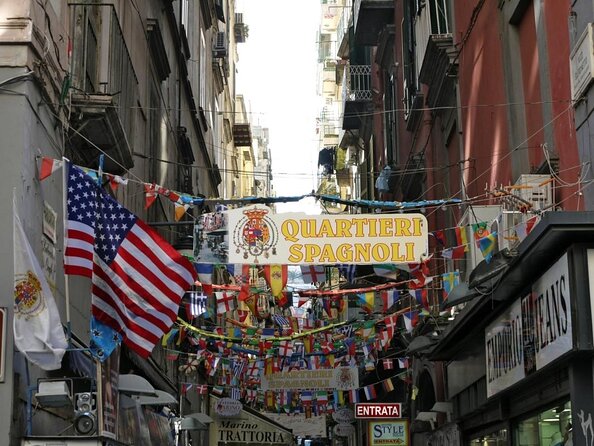
- Small group size (max 8) means more chances to ask questions and get real answers.
- Emanuele’s narration focuses on the neighborhood’s people, not just murals on a map.
- Street art as a local history tool, including references to Maradona and Totò.
- You see more than walls, with stops near historic churches and entrances to underground tunnels.
- Calm pace for a 2-hour walk, so you’re not sprinting to keep up.
- Mobile ticket for an easy start, near public transportation on Via Toledo.
Why the Spanish Quarters street-art walk feels different
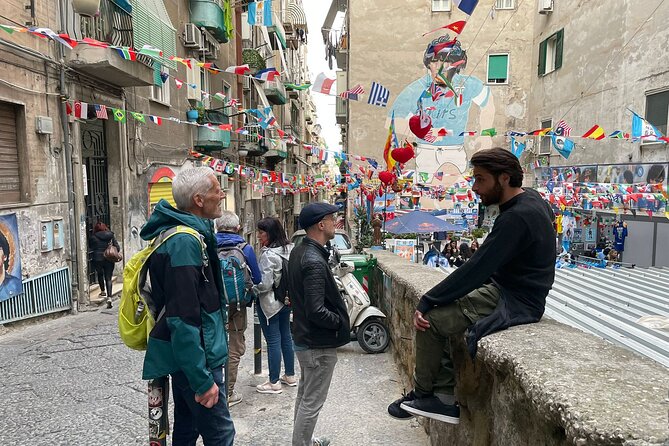
If your Naples plan is all churches and viewpoints, you’ll miss the city’s street-level brain. The Spanish Quarters, or Quartieri Spagnoli, is one of the neighborhoods where daily life and local identity show up in the open—on stoops, in alley corners, and yes, on walls covered with art.
This tour works because it treats the area like a lived-in place, not a stage set. You’re not just looking. You’re getting help reading what you see: why those images matter, how characters became symbols, and what the neighborhood remembers.
And because the group stays small—up to 8 people—the vibe stays human. You can ask questions without feeling like you’re interrupting a machine.
You can also read our reviews of more tours and experiences in Naples.


Meeting on Via Toledo: timing and what to expect in practice
You meet near Via Toledo, 366 (start), then finish back around Via Toledo. It’s an easy setup for anyone staying in central Naples, and it pairs well with the rest of your day since you’re not being pulled across town.
The walk lasts about 2 hours. That’s long enough to move through several lanes and viewpoints, but short enough that you still keep energy for dinner afterward. Since it’s outdoors most of the time, I’d plan to wear shoes you can stand in on uneven surfaces.
There’s also a simple logistics win: you’ll use a mobile ticket. That matters in cities where paper tickets can feel like extra fuss.
If you’re traveling with a service animal, the experience allows them, and the tour is listed as suitable for most people. It’s still a neighborhood on foot, so think comfort first.
The Quartieri Spagnoli lanes: reading the neighborhood like a local
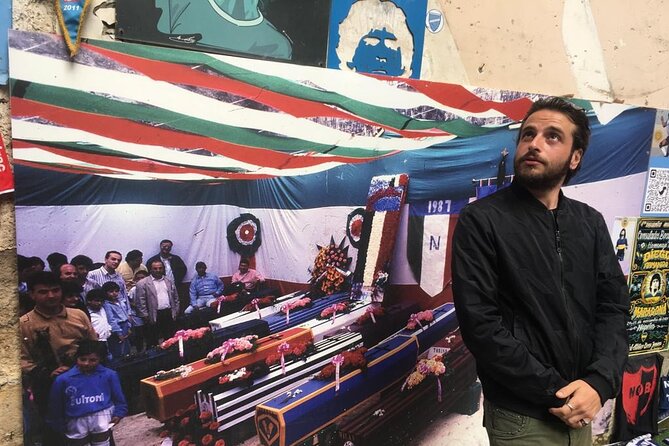
The heart of the experience is a guided walk through Quartieri Spagnoli’s tight alleys and street-life atmosphere. The description you get is straightforward: characteristic lanes, street art, and locals along the way.
What makes that more than a theme is the way the guide connects the art to places and people. You’re not shown murals as random decorations. You’re helped map them into the neighborhood’s storytelling—so when you spot an image, you know why it’s there and what it signals.
This is also the point where you start to notice how Naples keeps moving between past and present. You’ll hear history, but it’s explained as something the neighborhood carries into today’s everyday rhythm.
If you’re curious about folklore and the social fabric of Southern Italy, this type of walk is a smart use of time. It doesn’t require you to be an expert. You just follow the cues as you go.
Maradona and Totò on the walls: why the guide’s context matters
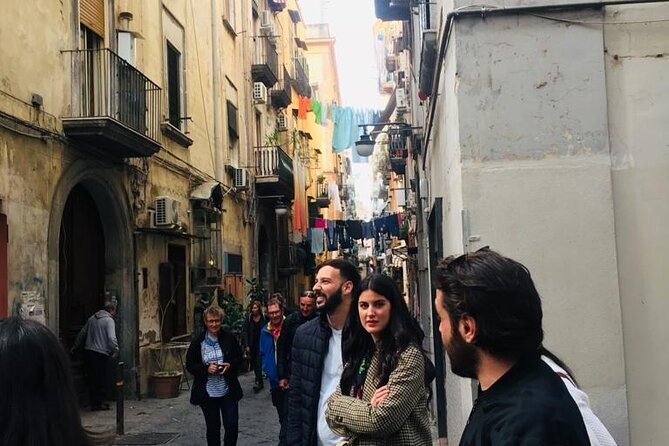
Street art can be beautiful, but in a tourist setting it often becomes background noise. Here, it’s treated like a language.
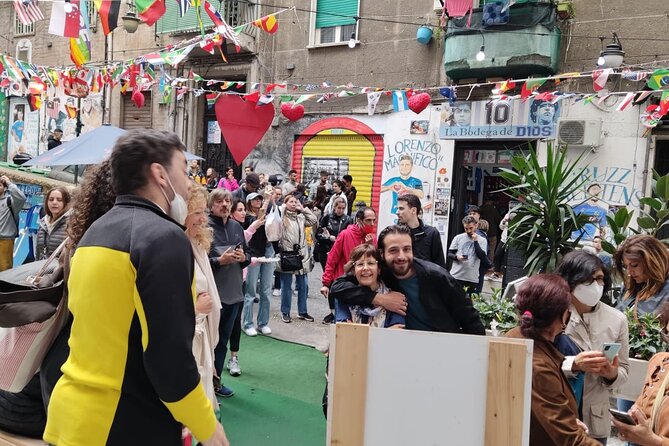
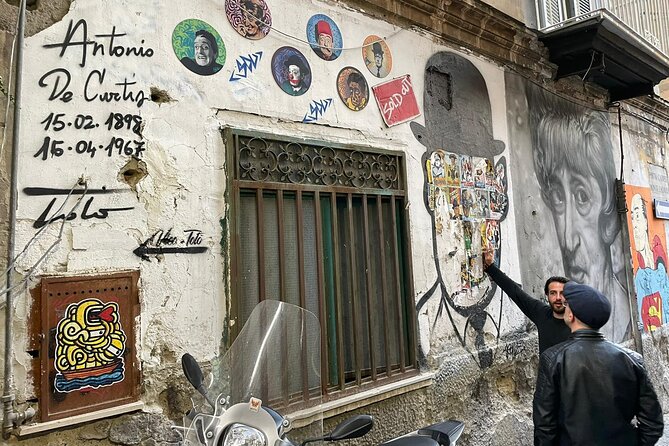
You’ll learn how major Naples figures appear in the local visual culture—specifically references to Maradona and Totò. The payoff is that you’re not just seeing famous names. You’re understanding how the neighborhood turns public icons into shared symbols.
Maradona in particular comes up not only as a football figure, but also through the lens of community meaning. That angle helps the murals feel personal instead of distant. When you hear the story behind a wall, it changes how you look at the whole area.
Totò matters too, and the tone is the same: this isn’t trivia. It’s a way to understand why Naples talks about certain characters over and over, across generations.
Churches and underground tunnels: old Naples, not behind glass
A common mistake in Naples is to treat the historic parts as separate from the everyday parts. This walk blurs that line—in a good way.
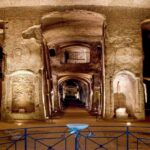
You’ll also be guided toward historic churches and toward the entrances to underground tunnels. That gives the neighborhood more depth than a standard street-art circuit. Even if you don’t go far underground, the idea of layers under the city is part of Naples’ personality.
One practical benefit: churches and tunnel-adjacent spots give you natural pauses. You can slow down, take photos if you want, and reset while the guide explains context.
The tradeoff is simple: you’re still in the alleys and you’re still walking. Plan for it. Bring water if you’re out in warmer hours, and keep your pace comfortable.


Seeing local life without feeling like a spectator
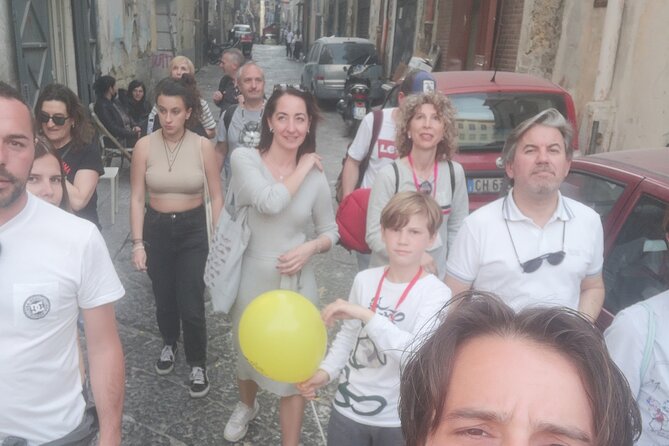
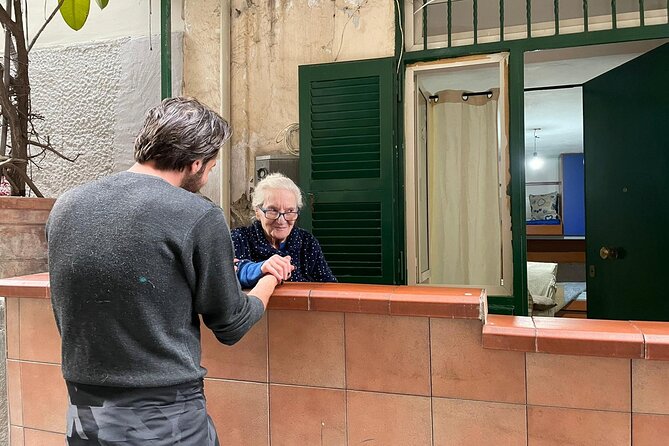
The tour is built around local realities—folklore, artisans, and daily life. You won’t be pushed into a staged shopping stop. Instead, you’re encouraged to notice how people live in the neighborhood texture.
That comes through in the way the guide talks. You’ll hear about customs and the neighborhood’s present-day character, not just legends from a textbook. The tone in the experience is consistently described as friendly and story-driven, with lots of room for questions.
This approach is the reason some people leave feeling like they understand Naples in a more personal way. When a guide explains the social side—how the neighborhood thinks and talks—it changes your whole itinerary. Dinner conversations get better. Museum visits make more sense.
And if you like tours where the guide doesn’t read from a script, this one tends to fit that preference. The pace is often described as calm and relaxing, not frantic.
The guide experience: Emanuele’s style and language help
This is a local-led walk from Amor Vacui Napoli, and the guide’s name that comes up again and again is Emanuele. Across the feedback, his style is described as joyful, sympathetic, and attentive to questions.
Language can matter a lot on neighborhood tours. Here, the guide is reported to speak Spanish very well, which can be a big help if you’re not fluent in Italian and you still want to ask real questions.
The other advantage of his approach is that it feels narrative, not lecture. You’ll get a basis for customs, plus references that connect the street art to the neighborhood’s identity. That’s the difference between collecting images and collecting meaning.
Price and value: what $53.36 buys in a small-group walk
At $53.36 per person for about 2 hours, this isn’t a budget-only tour. But it also isn’t overpriced for what you’re getting.
Here’s the value logic I see:
- You’re paying for interpretation: explaining what the street art and neighborhood symbols mean.
- You’re paying for local navigation: knowing where to look and which turns matter.
- You’re paying for small-group time: max 8 travelers means the guide can slow down and answer questions.
- You’re not just paying for walking. The guide includes an explanation of the characteristics of the Quartieri Spagnoli area.
Also, tips aren’t included, so you can decide what feels fair after the fact. That’s often how you keep the experience feeling service-focused rather than transaction-focused.
If you tried to DIY this on your own, you’d likely still see the street art—but you’d miss the connective tissue. This tour supplies that glue.
Who should book the Spanish Quarters walk
This experience is a good match if you want:
- a Naples street-level view beyond the usual monuments
- to understand how street art ties into local history and identity
- a guide who can connect characters like Maradona and Totò to neighborhood meaning
- a pace that stays calm and conversation-friendly
It’s less ideal if you want a highly structured, stop-by-stop museum-style tour where everything is indoors and timed to the minute. This is neighborhood walking first.
If you’re traveling with friends who split into two camps—one wants photos, the other wants context—this tour has a way of satisfying both. The photos have a story behind them, and the stories come with place-based cues.
Quick checklist before you go
- Wear comfortable shoes for uneven alley walking.
- Bring a layer if evening air feels cooler; you’re outside for most of the experience.
- If weather is questionable, keep your expectations flexible. The experience requires good weather.
- If you like asking questions, show up ready with a few curiosities. The guide responds well to them.
Should you book this Spanish Quarters tour?
Book it if you want Naples the way it actually talks—through streets, symbols, and people. The strongest reason to choose this tour is the combination of small-group size and a guide who connects street art to neighborhood life, including key cultural references like Maradona and Totò, plus meaningful stops near historic churches and underground tunnel entrances.
Skip it only if you hate alley walking or you’re looking for a purely formal sightseeing route. If you’re aiming for the real texture of the city, this is one of the best ways to spend two hours in Naples.
FAQ
How long is the Spanish Quarters walk?
The experience lasts about 2 hours.
Where do I meet, and where does it end?
You start at Via Toledo, 366, 80134 Napoli NA, and the tour ends at Via Toledo, Naples NA.
How much does it cost?
The price is $53.36 per person.
How many people are in the group?
The tour has a maximum of 8 travelers.
What’s included in the tour?
It includes an explanation of the characteristics of the Quartieri Spagnoli.
What happens if the weather is poor?
The experience requires good weather. If it’s canceled due to poor weather, you’ll be offered a different date or a full refund.