REVIEW · ARCHAEOLOGICAL SITE OF HERCULANEUM
2-Hour Private Tour of the Ruins of Herculaneum
Book on GetYourGuide →Operated by Leisure Italy · Bookable on GetYourGuide
Herculaneum feels like someone hit pause 2,000 years ago. This private 2-hour tour is a smart way to see how Romans lived—and how volcanic night froze it all—without wandering cluelessly. I like the expert private guide approach, and I especially like that Herculaneum is smaller than Pompeii, so you can actually absorb details.
You’ll get pulled into the real “wow” moments: mosaic floors and frescoed rooms that still look shockingly intact. The route also includes the kind of wealthy-house stop that makes the site feel less like ruins and more like a living city—especially around Villa dei Cervi.
One consideration: at $167.66 per person for a private experience, the 2-hour timing can feel short if you’re hoping for a long, slow meander.
In This Review
- Key highlights worth your time
- Herculaneum in ash: why this site feels different from Pompeii
- Getting in and setting your pace at the ticket office
- The marina and the 300 skeletons: the eruption’s human scale
- House of the Albergo gardens: quince apple trees and science you can see
- Council Hall of the Augustali and Hercules frescoes
- House of Neptune and Amphitrite: mosaics and the food-and-wine reality
- Grande Palestra (Big Gym): reading volcanic evidence like an archaeologist
- The ancient spa: mosaics from saunas, hot rooms, and cold tubs
- Villa dei Cervi: why the wealthiest houses feel so movie-like
- Price and value: is $167.66 per person a good deal?
- Who this private tour fits best (and who might want a different plan)
- Should you book this Herculaneum private tour?
Key highlights worth your time
- Skip-the-line entry with a private guide to get you past the first bottleneck fast
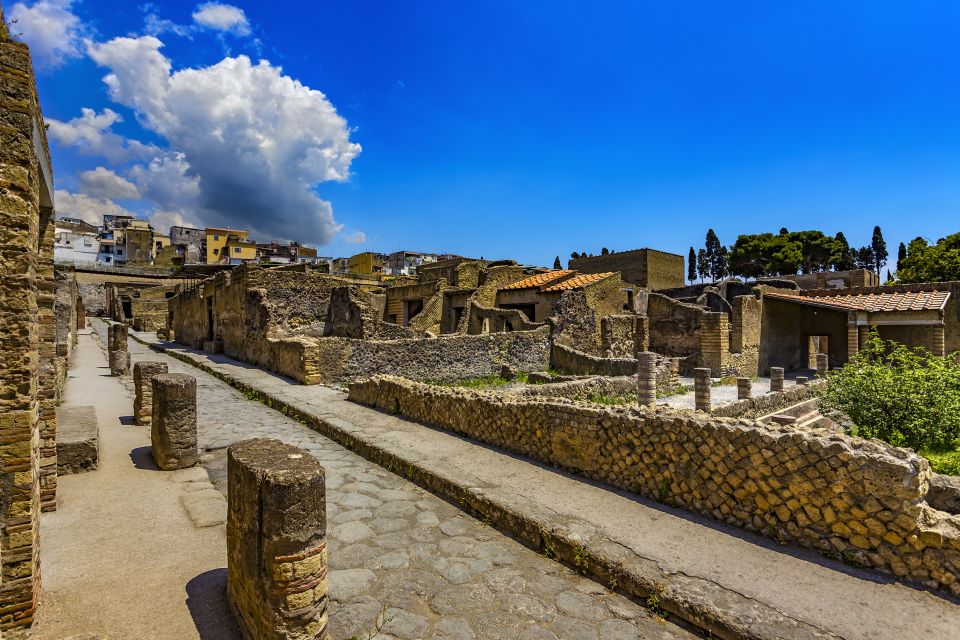
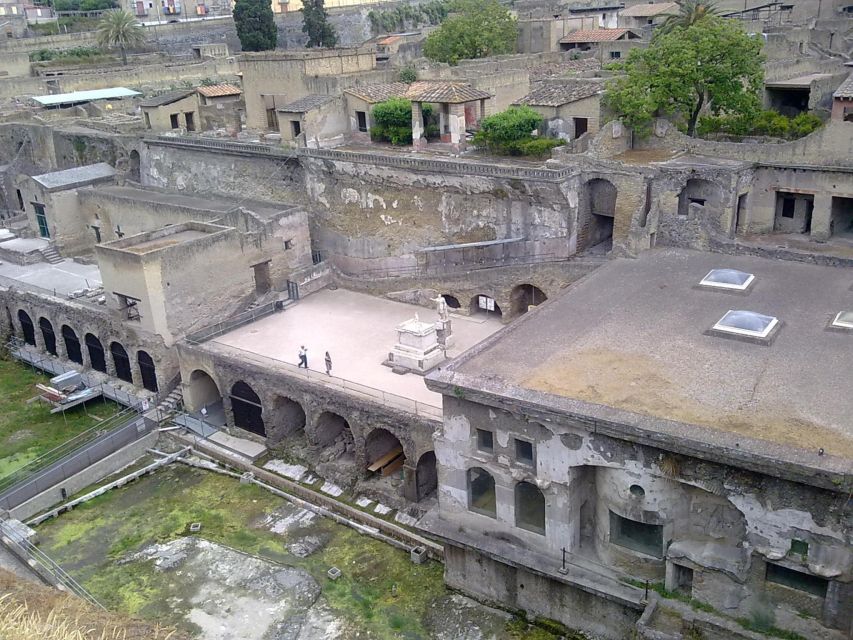
- Herculaneum’s preservation in an archaeological hole about 75 feet deep
- Marina stops with the 300 skeletons recovered after the eruption (boat displayed on weekends)
- Art and everyday life together, from frescoes of Hercules to mosaics and carbonized food/wine containers
- Grande Palestra (Big Gym) and the volcanic evidence you can almost read like a field report
- Villa dei Cervi with the best concentration of luxurious mosaics, frescoes, and statues
Herculaneum in ash: why this site feels different from Pompeii
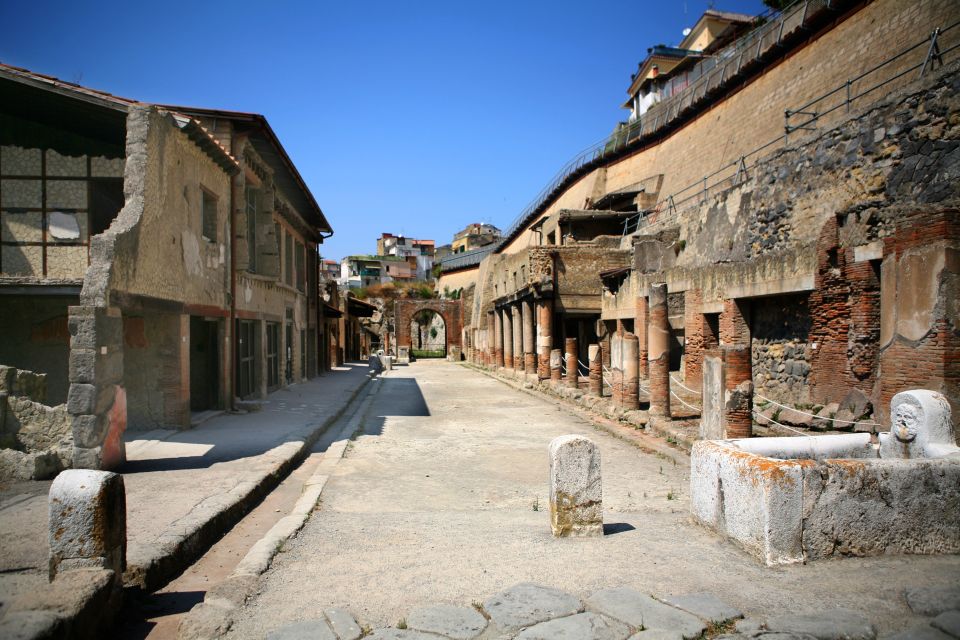
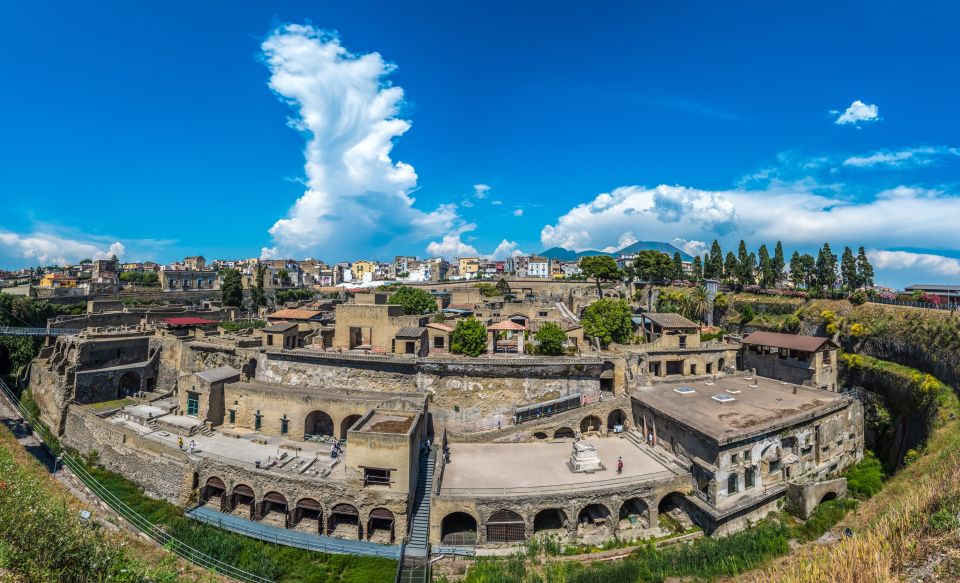
Herculaneum is often described as Pompeii’s smaller sister. That’s true, and it’s also the point. In a compact footprint, you can see housing styles, public spaces, and decorative arts without spending all your time just walking between “big moments.”
The eruption date matters: August 24, 79 AD. The town was buried under ash and rubble until the 1700s, and that long freeze explains the startling look of many structures. When your guide points out how the town sits in a deep archaeological area—about 75 feet down—it helps you understand why the site still feels eerily complete.
This tour is built for that effect. Instead of treating Herculaneum like a checklist, the guide steers you toward the places where you can connect everyday life to the moment it stopped.
You can also read our reviews of more private tours in Archaeological Site Of Herculaneum
Getting in and setting your pace at the ticket office
The meeting point is simple: the guide holds your name on a sign at the only ticket office in Herculaneum Archaeological Park. The tour also ends back at the same meeting point, so you’re not left playing map games at the end.
The biggest practical win is that this is a private group with a guide and admission included. You’re not wasting your limited time figuring out where to start or juggling ticket logistics while the site moves on without you.
Because the tour runs about 2 hours, think of it as “targeted hits.” If you’re pairing it with Pompeii, I like the idea of doing Herculaneum after you’ve seen Pompeii in the morning. You’ll be able to compare what’s similar, what’s different, and how the artists and architects of different Roman households chose to decorate.
A quick heads-up for comfort: bring comfortable shoes. The site involves walking on uneven ground, and this is not the kind of place where you want to suffer for photos.
The marina and the 300 skeletons: the eruption’s human scale
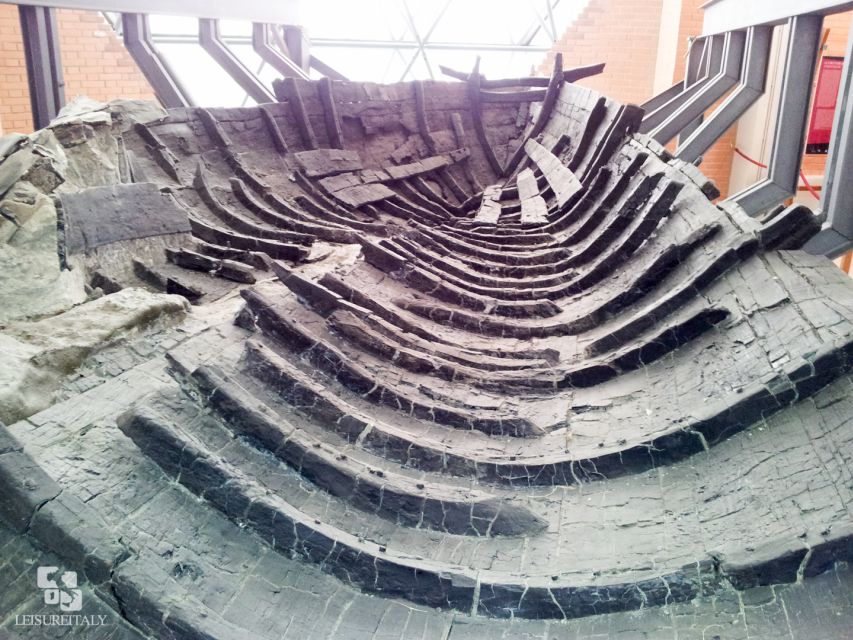
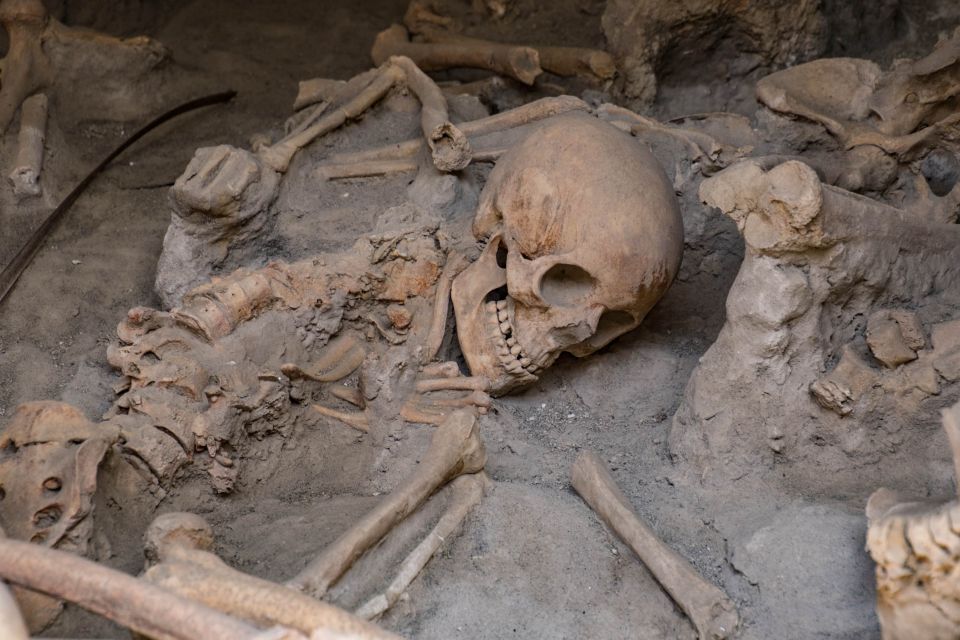
One of the most memorable parts of the experience is the area of the marina. This is where archaeologists found about 300 human skeletons, plus the presence of a boat recovered from the site (with the boat on display on weekends).
You may find this stop emotionally heavy, and that’s normal. The guide’s job here is important: you’ll get the context for what you’re seeing so it doesn’t turn into a grim photo-op. I’d come ready for a serious moment, then let the rest of the tour bring you back to the everyday details of Roman life.
Even if you’re not big on archaeology, this stop works because it ties the volcanic catastrophe to real bodies, not abstract history. It’s also one reason Herculaneum can hit harder than you expect.
House of the Albergo gardens: quince apple trees and science you can see
Next, the tour shifts from tragedy to small, specific discoveries. You’ll see the garden of the House of the Albergo, where quince apple trees have been reintroduced. The reason is wonderfully concrete: evidence of carbonized roots of the ancient fruit tree.
This is the kind of detail that makes the whole site click. You’re not only looking at architecture. You’re also seeing how archaeologists reconstruct daily life by using plant remains and then restoring them as living evidence.
The garden stop also gives you a breather from the densest concentration of rooms and decorations. In a two-hour visit, that pause matters.
Council Hall of the Augustali and Hercules frescoes
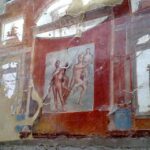
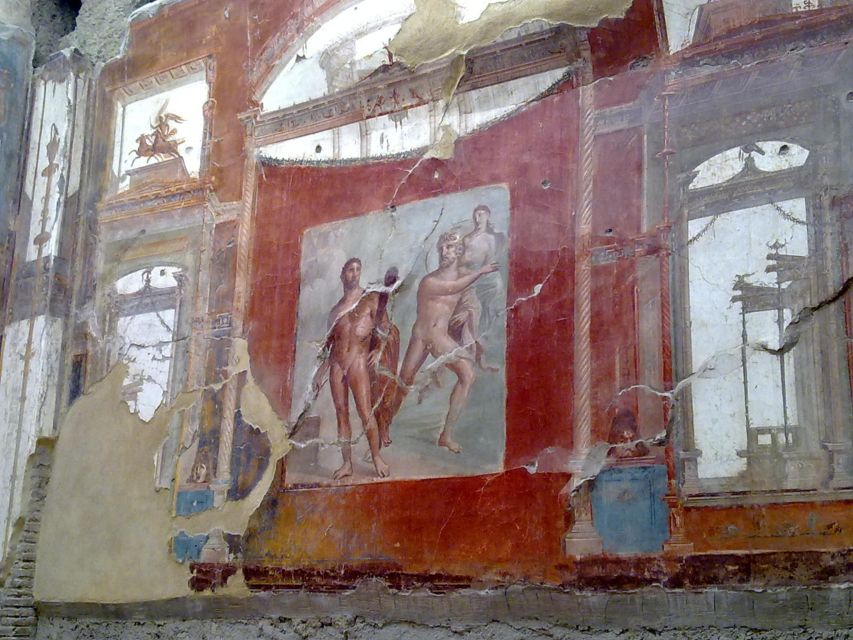
Then comes the Council Hall of the Augustali. The walls carry beautiful frescoes, including scenes depicting Hercules.
This stop is more than decorative art. It helps explain how public identity and religious mythology blended into Roman civic life. A guide makes a big difference here, because frescoes can look like pretty color unless someone points out who’s shown and why the theme mattered.
You’ll leave this section with a better sense of how the community organized itself—then you can contrast that with the private spaces you see later.
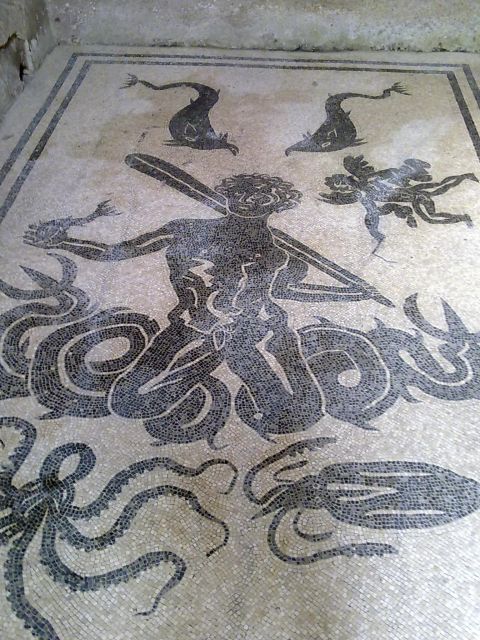
House of Neptune and Amphitrite: mosaics and the food-and-wine reality
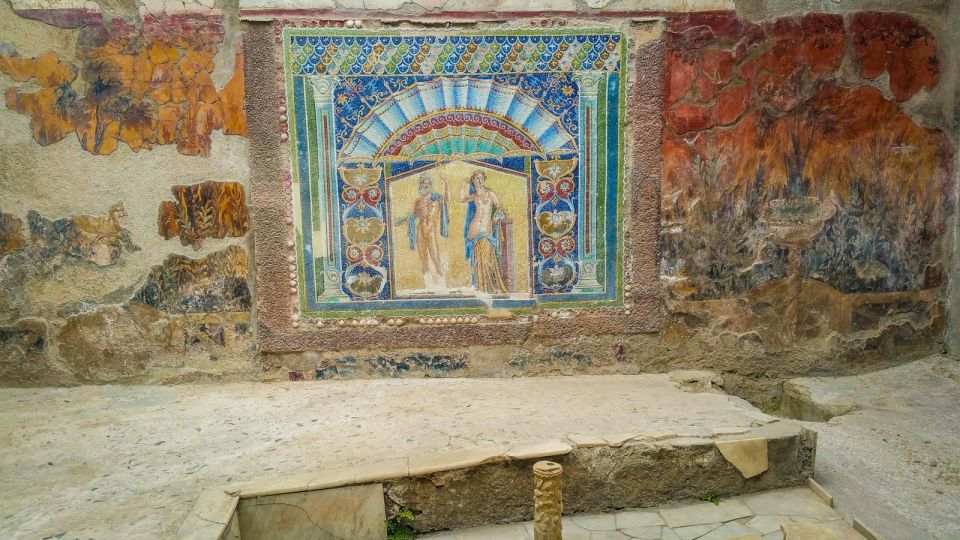
The tour includes the mosaics in the House of Neptune and Amphitrite. Roman floor art is not just for show. It often reflects social status, favorite gods, and the vibe a household wanted to project to visitors.
From there, you’ll visit the neighboring store where food and wine containers, carbonised by the volcano, still hang on the walls. That’s one of those details that makes you feel like you’re standing inside a snapshot rather than staring at something dead and finished.
This combination—grand art on floors plus everyday storage—helps you understand how Romans lived. They weren’t separating “culture” from “kitchen.” They mixed them into one continuous daily world.
Grande Palestra (Big Gym): reading volcanic evidence like an archaeologist
The Grande Palestra, often called the Big Gym, is one of the best stops if you want a physical sense of the site’s story. The tour is designed so you feel like you’re exploring volcanic evidence, not just walking past ancient walls.
Even without being a trained archaeologist, you can learn to look for patterns: where materials settled, how spaces were used, and what the eruption did to the built environment. A good guide turns that into a clear narrative so your brain doesn’t switch off halfway through.
This is also a strong section for active visitors who like structure. You’ll get a sense of Roman exercise culture and the layout of training spaces while staying grounded in what the eruption left behind.
The ancient spa: mosaics from saunas, hot rooms, and cold tubs
Next you’ll see the ancient spa, still covered with mosaics from Roman routines. The site includes areas that map to saunas/gyms, hot rooms, and cold tubs.
This is a smart stop to include in a shorter tour. Spas tell you a lot about Roman priorities: cleanliness, leisure, social rhythms, and status. And the mosaics help you see that bathing wasn’t just practical. It was styled.
If you’re the type who loves “how people actually spent time,” this part will likely be a favorite. It also works well after the Big Gym, because both spaces connect to the body and daily routines.
Villa dei Cervi: why the wealthiest houses feel so movie-like
The final major highlight is Villa dei Cervi, described as the most spectacular villa in Herculaneum. Here you’ll see luxurious mosaics, frescoes, and statues.
This stop is where the site can feel almost theatrical, because wealth shows up in materials and decoration. But it’s also a chance to understand that these villas weren’t only for living. They were statements—about taste, education, and power.
In a private tour, you can take your time here in the way you can’t in a crowded group. And because the tour runs roughly 2 hours total, your guide can build toward this finale without it feeling rushed.
Price and value: is $167.66 per person a good deal?
At $167.66 per person for a 2-hour private tour, you’re paying for a specific kind of value: direct access to an expert guide plus included admission, without line-waiting.
So what’s the value equation?
- Time value: Two hours passes fast at an archaeological site. If a guide helps you focus on the best-preserved structures and explains what you’re seeing, you squeeze more meaning out of every step.
- Admission included: You’re not paying entry separately on top of the guide fee (the tour includes it).
- Private format: Private usually means you can ask questions and get answers tied to what you’re actually looking at, instead of getting the same generic talk on a schedule.
The main trade-off is the one you should consider honestly: a private tour that feels like it runs a bit under its promise can sting, especially at this price. If what you want is a long, slow visit where you wander freely, you might prefer a self-guided approach and spend more time on your favorites.
Still, if your goal is to get the most out of Herculaneum in a short window—and you want expert interpretation—this price is easier to justify.
Who this private tour fits best (and who might want a different plan)
This is a great match for you if:
- you want expert guidance at Herculaneum’s major art-and-architecture stops
- you like the idea of seeing both public spaces (like the gym and spa) and domestic spaces (mosaics, frescoes, storage)
- you’re visiting with limited time and want a tight route
It’s also a good option if you care about language. The guide can run the tour in Spanish, English, French, or Italian, so you’re not stuck with a one-size-fits-none explanation.
Two “be practical” notes:
- Not suitable for wheelchair users or people with mobility impairments.
- No luggage or large bags are allowed, so pack light.
If those don’t work for you, you’ll want to rethink the format.
Should you book this Herculaneum private tour?
I’d book it if you want a focused, high-impact visit where a guide helps you see why Herculaneum is special: the ash-buried preservation, the human scale at the marina, and the art that still frames daily life. The stops around the House of the Albergo, the mosaics of Neptune and Amphitrite, the Big Gym, the spa, and Villa dei Cervi form a very logical story arc for a short visit.
I’d hesitate only if you already know you’ll want more than 2 hours on site, or if the steep price makes you expect a longer, slower experience. In that case, you might do better with a self-guided plan and extra time to linger.
If you’re visiting on the first Sunday of the month, entrance is free—but tickets can’t be reserved ahead of time, so entry isn’t guaranteed. For a private tour, that uncertainty can be annoying. Plan for normal days if Herculaneum is a must.
Bottom line: if you want the smartest use of limited time at one of Italy’s most unforgettable Roman wrecks, this private tour is a strong choice.