REVIEW · POMPEI CAMPANIA
Pompei and Herculaneum: Skip the Line Entry + Audioguide
Book on GetYourGuide →Operated by Pompeii Apartments · Bookable on GetYourGuide
Two Roman cities, frozen and preserved. This day trip mixes skip-the-line entry with an authorized audioguide, so you can explore at your own pace while still getting solid context. You’ll choose whether to start in Pompeii or Herculaneum, and that simple flexibility matters when you’re trying to manage crowds and energy.
I especially like that you get both sites in one stretch—Pompeii’s streets, villas, and forums, plus Herculaneum’s much better-preserved houses, mosaics, frescoes, and even wooden structures. It’s an easy way to see the dramatic contrast between the two places without cramming a bunch of museums on top of the ruins.
One drawback to think about: the Pompeii side depends on an exact voucher exchange before you use the dedicated entry line. If you show up without doing the Pompeii exchange first, you could get turned away at the wrong point of entry, even if your ticket is valid.
In This Review
- Key points worth knowing before you go
- Pompeii + Herculaneum in one 7-hour day: what the pacing really means
- Skip-the-line entry + audioguide devices: the value behind the bundle
- Starting at Pompeii: exchange your voucher, then use the Porta Marina Inferiore line
- Starting at Herculaneum: pick up the device at the Audioguide Desk
- Circumvesuviana train logistics: the easiest way to connect the two
- Audio guide tips that make the experience feel smoother
- Opening hours and last entry: when your day can get cut short
- Price and practical value: what the $100 covers, and what costs extra
- Who should book this day, and who should skip it
- The small-friction checklist that keeps your day from going wrong
- Should you book this Pompeii + Herculaneum audioguide day?
- FAQ
- How long does the Pompeii and Herculaneum experience take?
- Do I get skip-the-line entry for both sites?
- Where do I pick up the audioguide device in Herculaneum?
- Where do I exchange the voucher for Pompeii?
- Is transportation between Pompeii and Herculaneum included?
- Do I need headphones for the audioguide?
- What language options are available for the audioguide?
Key points worth knowing before you go
- Choose your start: you can begin in Pompeii or in Herculaneum and still do both in one day
- Authorized audio devices: the Pompeii audio tools are the only ones authorized for tour operators, with numbered guidance
- Dedicated Pompeii entrance: access runs through Porta Marina Inferiore (Piazza Esedra) after a specific exchange
- Hands-free or wired audio: devices work hands-free or with standard jack headphones (not included)
- Train between sites: Circumvesuviana connects Pompei Scavi Villa dei Misteri and Ercolano Scavi (tickets not included)
- ID deposit required: bring your passport or ID to hold the audioguide device
Pompeii + Herculaneum in one 7-hour day: what the pacing really means
At 7 hours, this plan is built for people who want freedom, not a rigid script. You’re not stuck following a group around narrow walkways—you use an audioguide and move when you want. That’s a big deal at these two sites, because everyone hits the same bottlenecks (long lines, busy squares, the “main streets” everyone wants first), and flexibility helps you dodge your own bad timing.
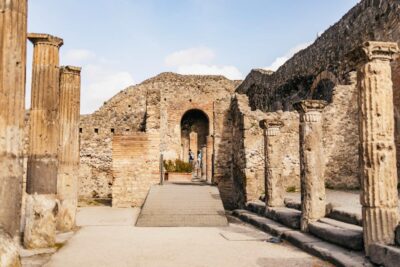
You’ll also feel the difference between the two places quickly. Pompeii is more about what the city looked like in everyday life—public spaces, neighborhoods, and the urban layout frozen by the eruption. Herculaneum is a different kind of shock: more structures survive in a way that lets you study decoration and rooms rather than only street plans. In practice, that means you can spend more time “reading” details at Herculaneum if you like close looking.
To make this work, you’ll want a basic strategy:
- Decide roughly how long you’ll spend at each site before you start moving between them.
- Don’t plan to see every single corner. These sites are large, and the audioguide will guide you to the best stops.
- Build a cushion for travel on the local train and for exchanging/collecting your devices.
You can also read our reviews of more tours and experiences in Pompei Campania


Skip-the-line entry + audioguide devices: the value behind the bundle
The headline is skip-the-line entry tickets for Pompeii and Herculaneum, plus official audioguide devices for each archaeological park. In plain terms, you get two things that reduce stress: less waiting to start exploring, and commentary that tells you what you’re actually looking at.
Why it’s good value: when you visit Pompeii and Herculaneum on your own without audio, you spend a lot of time guessing. With the audioguide, you can use the device’s numbered explanations to connect ruins to real-life context—architecture, daily activity, and what makes each area important. The Pompeii device system is also designed around numbers, so you’re not flipping around trying to match vague descriptions.
Also, these devices come with practical options. You can use them hands-free, or plug in standard jack headphones (not included). That matters if you want to walk while listening, grab photos, or keep your hands free for tickets and maps.
Important logistics note: you’ll need to return the devices before the office closes, following the parks’ schedule. If you’re a “last-minute sprint” kind of visitor, keep that in mind early—don’t save everything for the final hour.
Starting at Pompeii: exchange your voucher, then use the Porta Marina Inferiore line
If Pompeii is your first stop, you need to do one thing in the correct order: exchange your voucher at the partner office before you head to the park entrance. Your collection point is tied to the Circumvesuviana station area, and the details matter.
Here’s the flow as it’s meant to work:
- Go to the local partner office at Villa dei Misteri 1, on the first floor of the Circumvesuviana train station area, using the partner name Tempio Travel (this is where you exchange the voucher).
- Then walk to the dedicated entry line for Pompeii at Porta Marina Inferiore, located in Piazza Esedra. It’s described as a few hundred meters away.
Why I’m emphasizing this: there’s a real-world risk of arriving at the park expecting the voucher to be recognized at the entrances. If your paperwork isn’t exchanged correctly first, you may have trouble gaining entry. Your best move is to show up early enough to handle the exchange without rushing.
Once inside, Pompeii is where you’ll notice the “city made of reminders.” Think streets and neighborhood layouts, plus the public spaces and villas that show status and everyday routines. Even if you don’t consider yourself an archaeology person, the audioguide structure helps you slow down and connect the dots.
Practical tip: wear comfortable shoes. The ruins are uneven, and you’ll cover a lot of walking even in self-guided mode. Also, keep an eye on your device time—if you want a calmer visit, don’t burn your first hour purely on getting organized.
Starting at Herculaneum: pick up the device at the Audioguide Desk
If you start in Herculaneum, the process is simpler on paper: you go to the entrance of the Archaeological Park and find the Audioguide Desk to collect your reservation device.
This is the meeting approach:
- Go to the entrance of the Herculaneum archaeological park
- Look for the Audioguide Desk
- The staff will provide the device when you show your reservation confirmation
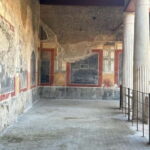
Once you’re in, Herculaneum’s selling point is preservation. The volcanic material that protected the site for centuries also preserved more of the interior life—mosaics, frescoes, and wooden structures are specifically called out in the experience details. If you like seeing rooms and decoration rather than only open street scenes, Herculaneum often delivers the bigger “how did they do this?” reactions.
You can also use the audioguide to focus your attention. Rather than trying to read every fragment, you can listen your way through the key areas and linger where the commentary tells you to look. That approach helps you avoid the most common self-guided problem: staring at ruins without knowing what matters.
Circumvesuviana train logistics: the easiest way to connect the two
You’re not getting a car transfer in this package. Transportation between Pompeii and Herculaneum is listed as not included, but it’s “easy” via Circumvesuviana.
What’s specifically noted:
- It connects Pompei Scavi Villa dei Misteri and Ercolano Scavi
- A simple change at Torre Annunziata is often needed
- Train tickets are not included
In practice, the train is the right tool here because it drops you close to each site collection point. Your main job is timing. Since you’re self-guided, a late start at either site can shrink your time at the second. Build your day so you’re not sprinting across stations while you’re still trying to enjoy the ruins.
Small “real life” advice: keep your phone charged and your ticketing apps ready, because you’ll want to confirm departure times and platform info. The ruins don’t care if your schedule slips—walking time and device return time still come at you.




Audio guide tips that make the experience feel smoother
These audioguides are authorized for the Pompeii Archaeological Park and use numbered explanations, so you can match the audio to what you’re seeing. That’s a big advantage over random blogs and DIY guesswork.
Here are the things that help most:
- Use the device like a tour script, not like background noise. When it tells you to look at something, stop and look.
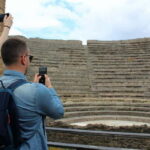
- Consider hands-free use if you plan to take photos. The device can be used without holding it, so your camera doesn’t fight your grip.
- Bring your own standard jack headphones if you want audio in a more controlled way. The listing says hands-free is possible, but headphones are not included.
You also need to bring a valid passport or ID card as a deposit for the devices. Don’t leave it in your hotel bag. And remember: the devices must be returned before the office closes, following the park schedule.
One more practical note: this package includes 2 full entrance tickets (one for each site) plus audioguide devices. Pompeii mentions that an entrance ticket called Plus is not included, so if you were hoping for an add-on experience, you’d need that separately.
Opening hours and last entry: when your day can get cut short
These sites run on seasonal schedules, and the last entry times matter more than you’d think because you’ll need time for both locations.
Pompeii opening hours:
- Oct 15–Mar 15: 09:00–17:00 (last entry 15:30)
- Mar 16–Oct 15: 09:00–19:00 (last entry 17:30)
Herculaneum opening hours:
- Oct 15–Mar 15: 09:00–17:00 (last entry 15:30)
- Mar 16–Oct 14: 09:00–19:00 (last entry 17:30)
When you plan your day, don’t assume you can simply “finish at sunset.” With a 7-hour duration and train time between sites, the practical goal is to start early enough that both places are comfortable, not rushed.
If you’re traveling in peak season, aim to be ready to go as soon as your entry window opens. If you tend to sleep late, this might not be the best fit unless you’re okay with shorter time at the second site.
Price and practical value: what the $100 covers, and what costs extra
The price is listed at $100 per person for a full-day self-guided experience with:
- Skip-the-line entry tickets (artecards) for Pompeii and Herculaneum
- Audioguide devices for both parks
- A site map
- Dedicated access at Porta Marina Inferiore for Pompeii
- Multilingual assistance at the Pompeii office
- Flexible start (you can choose where to begin)
What’s not included:
- Transportation between Pompeii and Herculaneum (Circumvesuviana recommended)
- Personal headphones
- Food and drinks
- Private transfers (available upon request)
- Entrance ticket Plus for Pompeii
So is it a good deal? In my view, yes if you value two things: saving time at the entrances and having guided context on both sites without paying for a timed tour that controls your pace. The audio devices do a lot of the “work” for you—especially because Pompeii and Herculaneum each require enough attention that a phone-only approach can be tiring.
One extra practical angle: parking is mentioned as a possible option. If it’s open and available from 01/04, you may be able to enjoy free parking (not gated) at Osteria Nonna Cherubina, Via Andolfi 46, 80045 Pompei. That can help if you’re driving, but you’d still need to follow whatever is operating that day.
Who should book this day, and who should skip it
This experience fits best if you:
- want independence and don’t want to move at group speed
- like learning through audio rather than reading every sign
- want to see both Pompeii and Herculaneum without booking separate days
- can manage logistics smoothly (especially the Pompeii voucher exchange)
It’s not suitable for:
- wheelchair users
- people over 95 years
- hearing-impaired people
If you’re in any of those categories, you’ll need a different format or a different kind of access plan.
Also, be honest with yourself: Pompeii and Herculaneum both involve lots of walking on uneven ground. Even if you’re “fine on flat city sidewalks,” these ruins can still be tougher than expected.
The small-friction checklist that keeps your day from going wrong
This is the stuff that can make the difference between a calm visit and a stressful one.
- For Pompeii: exchange your voucher at Tempio Travel in the Villa dei Misteri 1 train-station area before heading to Porta Marina Inferiore.
- For Herculaneum: go straight to the entrance Audioguide Desk and collect your device with your reservation confirmation.
- Bring your ID/passport for the device deposit.
- Plan around last entry times and return the devices before offices close.
- Bring comfortable shoes and comfortable clothes.
- Pack for audio: if you want headphones, bring standard jack headphones (not included).
And keep your expectations aligned: this is a self-guided day, so the quality depends partly on how you use the audioguide and how carefully you manage your timing between sites.
Should you book this Pompeii + Herculaneum audioguide day?
If you’re choosing between a rigid guided tour and a totally free self-guided visit, this sits in a sweet spot: you get authorized audioguides and skip-the-line access while keeping the freedom to linger.
I’d especially recommend it if you want Pompeii and Herculaneum in one day and you’re the type who learns best by listening as you walk. The audio approach tends to make Pompeii feel much more real than just looking at ruins.
I would not book it if you hate logistics or if you’re likely to arrive at Pompeii without doing the required voucher exchange. That part is the difference between a smooth entry and a wasted morning.
If you do book, treat Pompeii’s pickup steps as your top priority. Once that’s handled, the rest of your day is exactly what you want: two UNESCO sites, your pace, and a guide in your pocket.
FAQ
How long does the Pompeii and Herculaneum experience take?
The experience is listed as 7 hours. Starting times can vary, so you’ll want to check availability when you book.
Do I get skip-the-line entry for both sites?
Yes. You receive skip-the-line entry tickets (artecards) for Pompeii and Herculaneum.
Where do I pick up the audioguide device in Herculaneum?
Go to the entrance of the Archaeological Park of Herculaneum and look for the Audioguide Desk. Show your reservation confirmation to collect your device.
Where do I exchange the voucher for Pompeii?
You need to exchange the voucher at the partner office at Villa dei Misteri 1, first floor of the Circumvesuviana train station area, under the partner name Tempio Travel. Then you enter Pompeii using the dedicated line at Porta Marina Inferiore (Piazza Esedra).
Is transportation between Pompeii and Herculaneum included?
No. Transportation is not included. The recommended option is the local Circumvesuviana train, which connects Pompei Scavi Villa dei Misteri and Ercolano Scavi (often with a change at Torre Annunziata). Train tickets are not included.
Do I need headphones for the audioguide?
Personal headphones are not included. The devices can be used hands-free or with standard jack headphones (not included).
What language options are available for the audioguide?
The audioguides are available in English, Italian, Spanish, French, and German.