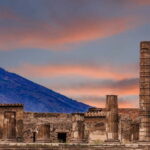
REVIEW · POMPEI CAMPANIA
Pompei: the Latest Discoveries with your Archaeologist
Book on GetYourGuide →Operated by Grand Tour Experience · Bookable on GetYourGuide
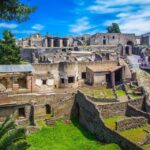
Pompeii feels different when you start at the real gate. This 2-hour, archaeologist-guided walk centers on latest discoveries and still-visible restoration work, plus a route that takes you toward the newest areas rather than just the usual highlights. I especially like the way the guide links the eruption of 79 AD to what you can see on the ground today, so the ruins stop feeling like scenery and start feeling like a lived-in city.
What I like second is the focus on houses and city blocks where detail still matters: frescoes, mosaics, and the ongoing care needed to keep them readable. The tour also moves in a small group (max around 15–17), with headsets when groups get bigger, which makes the whole thing feel more like a guided walk than a cattle-line march. One possible drawback: it is not suitable for wheelchair users, and the route sounds like a fair amount of walking at Pompeii’s uneven surfaces.
In This Review
- Key points worth knowing before you go
- Porta Marina Superiore: start at the original Roman entrance
- Pompeii with an archaeologist guide: what changes
- Latest openings and restorations you can still see (not just read about)
- Stop-by-stop: Forum, Baths, and the city’s everyday rhythm
- Quick note on time
- Casa dei Vettii: frescoes, restoration, and why the house feels special
- Nozze d’Argento and the message of house décor
- Regio V street life: Silver Weddings, Stabian Road, and facades
- Insula dei Casti Amanti: a live archaeological site (and no photos)
- Torre di Mercurio XI: the view from a Roman defending tower
- How two hours feels: crowd handling and shade strategy
- Tickets, tickets, tickets: skip-the-line meets Pompeii’s new rules
- Price and what you really get for $294.54 per group
- What to bring, and what Pompeii won’t allow
- Should you book this archaeologist-led Pompeii tour?
- FAQ
- Where is the meeting point for the tour?
- How long is the Pompeii tour?
- What’s included in the price?
- Is food or drinks included?
- Are there language options for the guided tour?
- Is photography allowed during the visit?
Key points worth knowing before you go
- Start at Porta Marina Superiore to enter Pompeii through the original Roman gate and get your bearings fast.
- Regio V is the focus, including new digs and areas opened after maintenance.
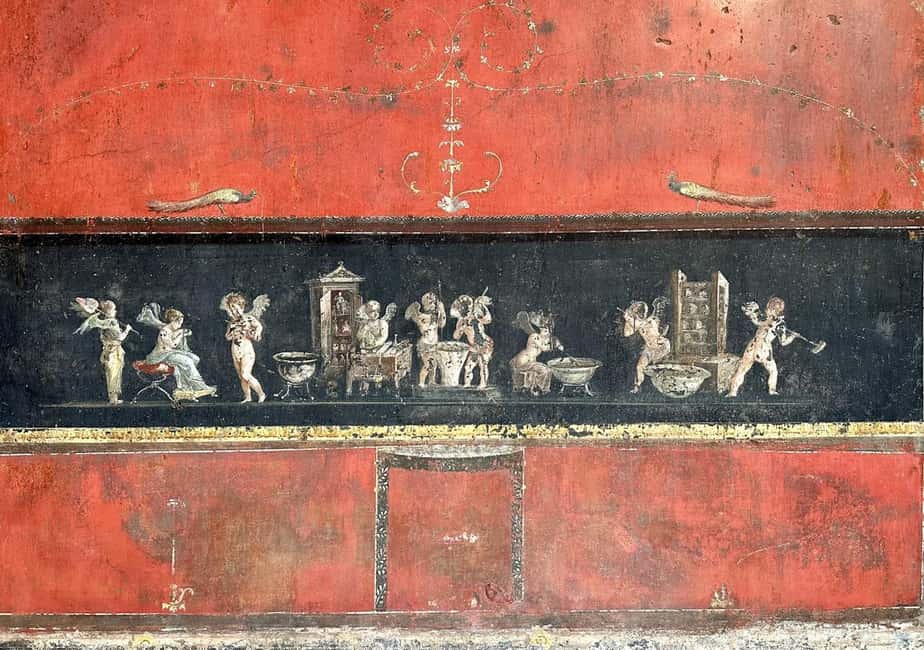
- Casa dei Vettii gets special attention for major fresco quality and a long restoration timeline (27 years, finished last year).
- Insula dei Casti Amanti is a working archaeology zone where photos or video aren’t allowed for security.
- Expect a view break at Torre di Mercurio XI, one of the defending-tower vantage points.
- Small-group pace with headsets if needed, plus an experienced guide working to keep you on track.
Porta Marina Superiore: start at the original Roman entrance
The meeting point is Porta Marina Superiore, the entrance gate to the park. That matters more than it sounds. You begin where the Romans began, so your first steps into Pompeii feel like you’re walking into a plan, not just approaching monuments. It’s also practical: you meet across the street from the park where you’ll spot Hortus Garden Bar & Restaurant, which makes the start easier when you’re arriving by train or parking nearby.
You’ll also want to arrive with enough time to settle in because Pompeii uses personal, name-linked tickets. The tour requires that your full name(s) and details are attached to the ticket, and you’ll need to bring original ID or a passport for adults and children. If you’re even slightly late, your ticket can cause delays, so I’d treat punctuality as part of getting the good experience.
You can also read our reviews of more tours and experiences in Pompei Campania.



Pompeii with an archaeologist guide: what changes
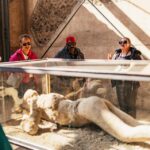
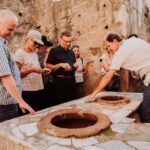
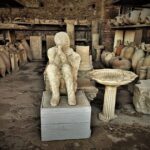
This isn’t framed as a casual highlights tour. It’s built around an expert in Pompeian archaeology, the kind of guide who can explain what you’re seeing and why it’s being handled the way it is. You’ll get an introduction to Pompeii and the eruption of Mt. Vesuvius during the season of Emperor Titus in 79 AD, including plaster casts of bodies. From there, the guide connects the larger story (tragedy, survival, city life) to the smaller things that make Pompeii feel real: street layouts, building purpose, and how residents lived and decorated their homes.
In past experiences with guides like Daniela and Sonja, the consistent theme is clear structure and strong delivery—knowledge with timing. That shows up in how you get to multiple areas in only two hours without feeling rushed. It also shows up in how the guide handles big details like fresco quality, mosaic preservation, and the meaning of different building types.
One more thing I value: the guide doesn’t just point. They explain restoration and how much is visible now. Pompeii isn’t static, and this tour treats it as an active archaeological site, not a finished museum piece.
Latest openings and restorations you can still see (not just read about)
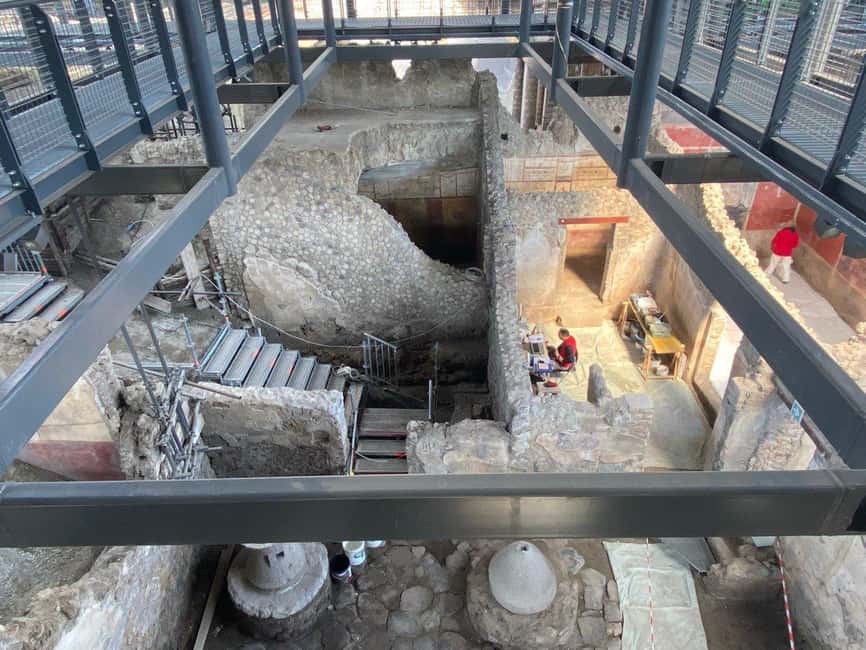
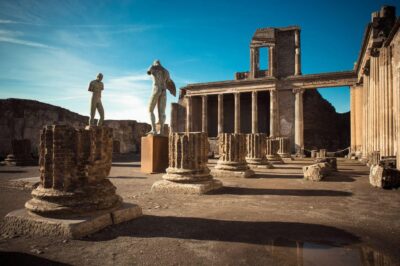
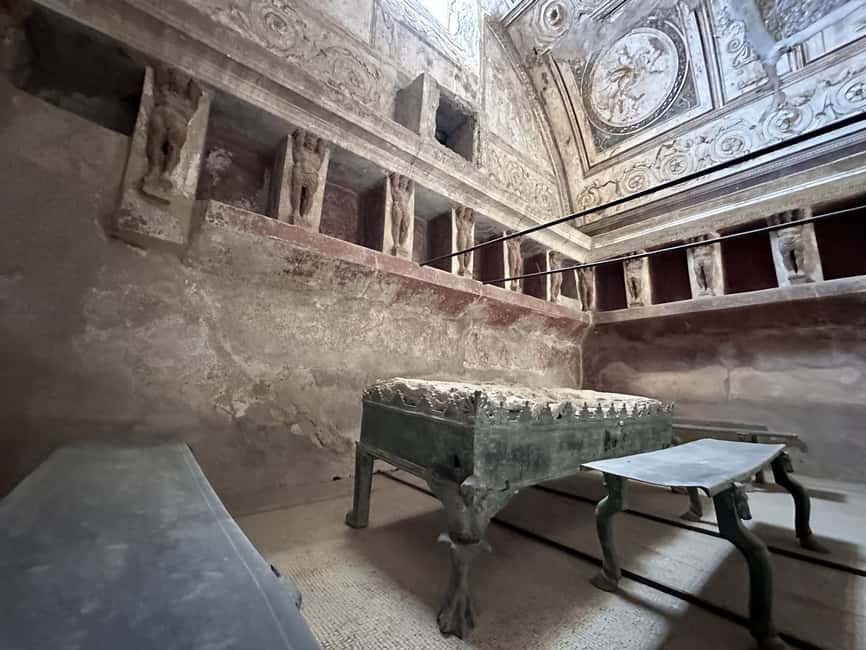
Pompeii looks frozen, but it isn’t. Part of the value here is that the tour is designed around new openings and restoration work that is still ongoing or newly visible. A key example: the Forum Bath House has recently reopened after years of maintenance. That kind of detail is exactly what makes a repeat visit (or a first visit with the right guide) feel fresh.
Another major focus area is Regio V, where the “best of the new digs” are happening. Regio V is where you’ll spend real time with houses and streets that help you understand how Pompeii was organized, not just how dramatic the tragedy was. And restoration isn’t treated as an abstract concept. You’ll see the results—especially the way surface art (frescoes and mosaics) is being kept readable while the site protects what’s underneath.
This matters because many Pompeii tours skim quickly over buildings that tourists assume are complete. Here, the emphasis is on what’s still changing—what’s newly accessible, what’s newly cleaned, and what restoration work means for what you can perceive.
Stop-by-stop: Forum, Baths, and the city’s everyday rhythm
Your walk starts with the Forum Civile di Pompei, guided, where you’ll get context about how Pompeii functioned. Think of it as the city’s “center-of-gravity” area: public life, civic identity, and the parts of town meant for movement and meetings. The guide’s early framing helps you understand what you’ll see next, so when you reach structures with artworks and preserved surfaces, you’re not just looking—you’re matching details to the story.
One of the standout pieces in this part is the Forum Bath House, recently reopened after maintenance. Baths in Roman cities weren’t just about hygiene. They were social space, routine, and status. Seeing this area now, in an officially reopened state, gives you a more accurate sense of how Pompeii’s public life would have felt.
After that, the route pushes you toward the more specialized areas of Regio V, which is where Pompeii’s personal, domestic life becomes easier to picture.
Quick note on time
Two hours at Pompeii can either feel like a lot or like a blur. This tour aims to keep it structured: you get main story context early, then you move into the houses and specific blocks where you can actually spend a minute looking instead of sprinting.
Casa dei Vettii: frescoes, restoration, and why the house feels special
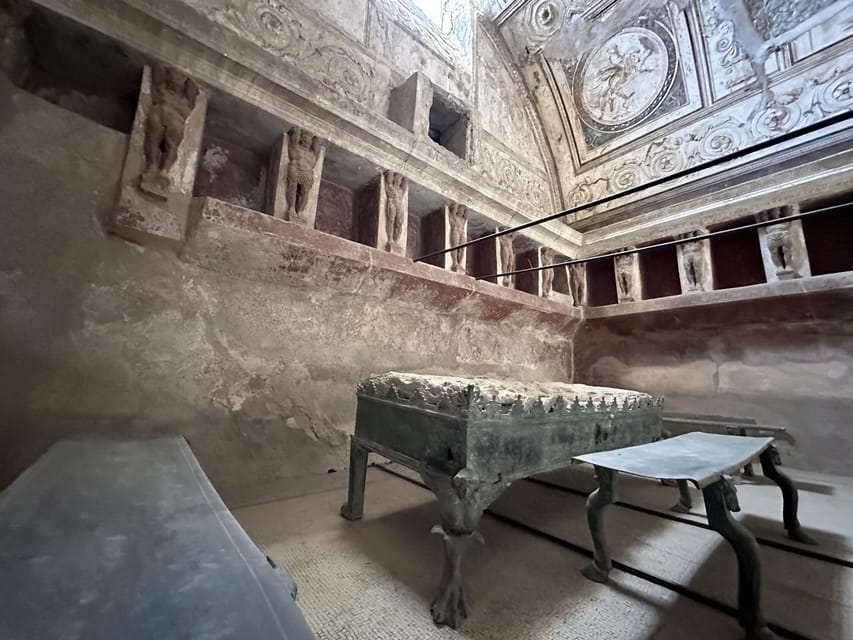
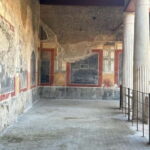
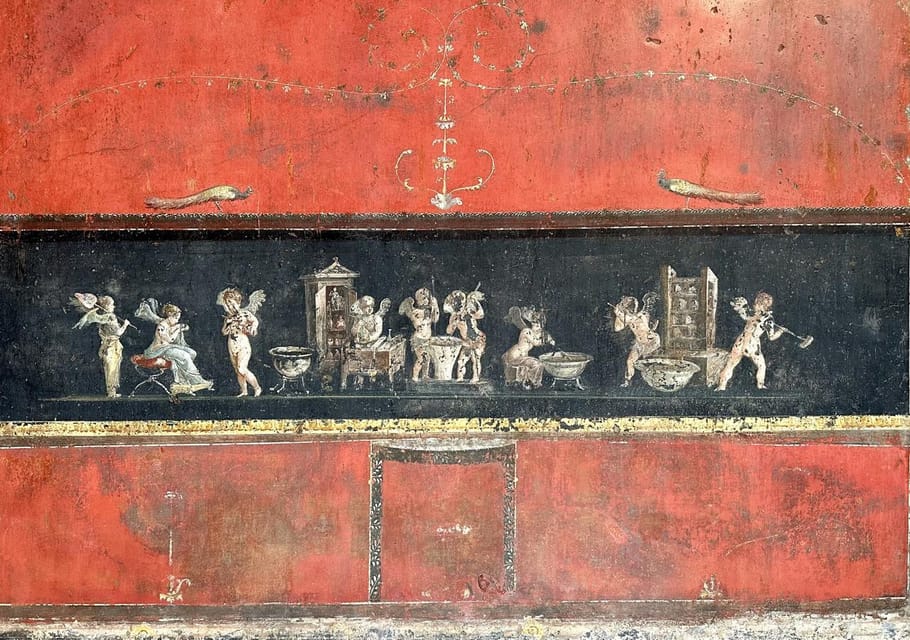
When you reach House of the Vettii, the tour becomes very visual. This is the kind of place where Pompeii’s art makes sense only when you stand close enough to appreciate it. The guide calls attention to restoration work completed after a long stretch—27 years—and notes that the house is ready for visitors now. That long restoration timeline is the reason the artwork quality stands out: you’re seeing what careful preservation can protect.
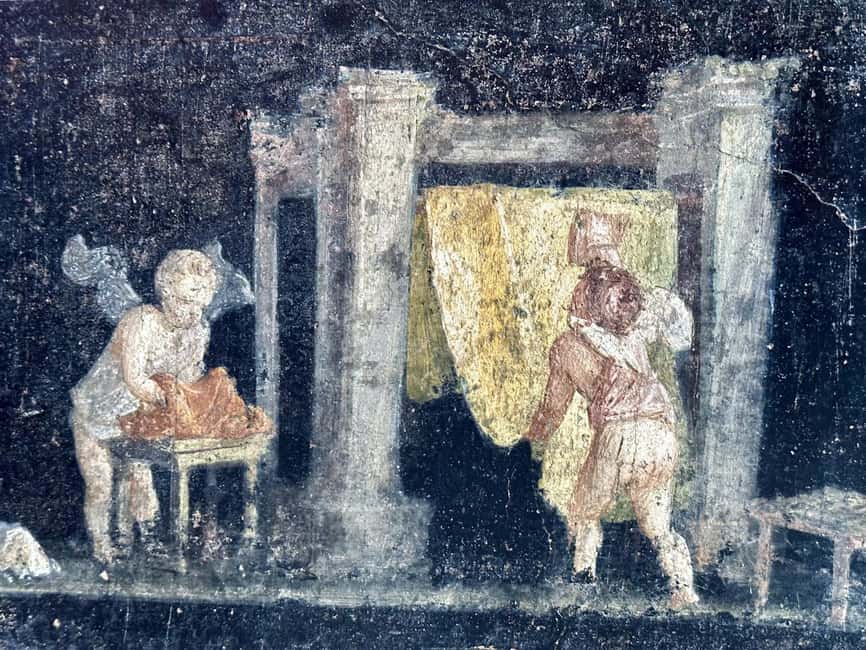
The guide also points you toward the look of Pompeii red—famous in frescos—so you can notice how color choices were used to communicate spaces and mood. You’ll likely spend time on details like fresco layout and how the art relates to the building’s rooms rather than treating it as random wall decoration.
Possible drawback? You’ll want to manage your expectations about photos. This tour includes areas where photography is restricted, and it’s better to plan for quiet observation rather than documenting every square meter.
Nozze d’Argento and the message of house décor
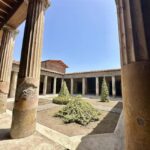
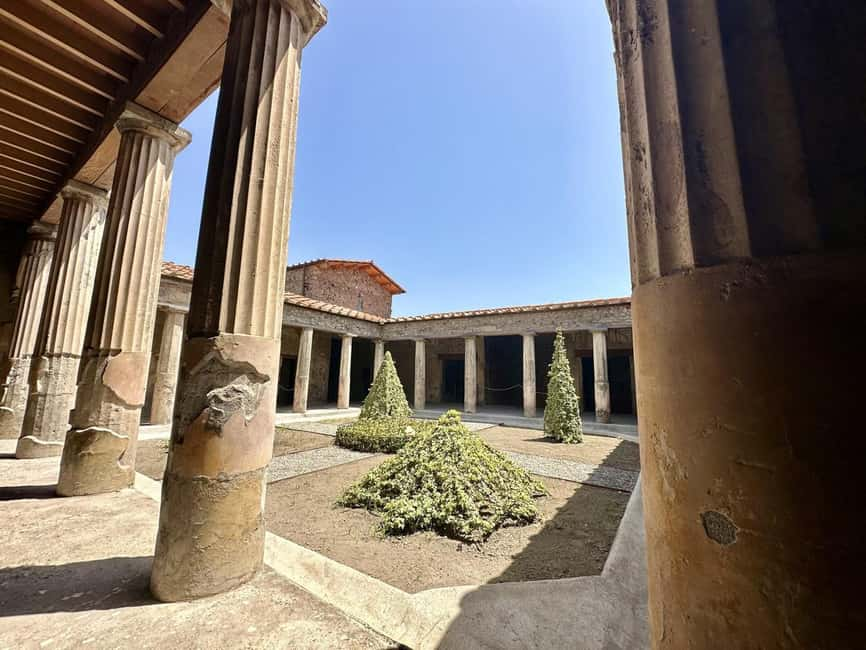
Next up is Casa delle Nozze d’Argento, guided. The name alone hints at something symbolic, and Pompeii’s houses often used art and design to communicate wealth, aspiration, and taste. Even with limited time, this stop is valuable because it continues the tour’s pattern: you’re not just moving between impressive buildings. You’re learning how household spaces express identity.
This is where I’d encourage you to slow down inside your own head. Look at how the rooms relate to each other. Notice where decoration is placed and what that likely meant for someone living there. A good archaeologist guide makes these points clear, and the pace here is designed to keep you from rushing past what matters.
Regio V street life: Silver Weddings, Stabian Road, and facades
After Casa delle Nozze d’Argento, you walk through Stabian Road, watching the facade of the house of Caecilius Iucundus. That facade stop matters because you get a sense of how the street and the home interface. Pompeii wasn’t hidden behind walls—it presented itself to pedestrians and neighbors through the street-facing parts of buildings.
This stretch also helps connect the “big picture” layout of Pompeii with the “close up” artistry you saw earlier. Public streets, private houses, and decoration all interlock. When the guide keeps that connection clear, the whole city starts to feel like a coherent place rather than disconnected sights.
Insula dei Casti Amanti: a live archaeological site (and no photos)
The standout part for many people is the tour’s Insula dei Casti Amanti stop. This is described as a live archaeological site with restaurateurs actively working on the spot. That’s a major difference from a standard visit where everything feels finished. Here, you’re seeing Pompeii as a process: excavation, conservation, and interpretation happening in real time.
Important rule: photos or video are not allowed for security. That can feel annoying if you’re used to documenting everything, but the tradeoff is worth it. You’ll get a more respectful atmosphere for the work happening there, and it’s easier to concentrate on the details the guide is pointing out.
This stop also fits the tour’s theme of “latest openings.” It’s not only about what’s new to tourists—it’s about what’s still being handled by professionals to protect the site’s future.
Torre di Mercurio XI: the view from a Roman defending tower
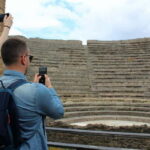
Near the end, you’ll visit Torre di Mercurio XI, guided. The tour calls it the only Roman defending tower open from which you can admire Pompeii from the top. Even if you’re not a “big view” person, this stop helps correct your perspective. From above, street direction and the logic of areas like Regio V start to click into place.
Think of it like changing scales: the houses gave you close-up detail; the tower gives you the city’s shape. If you’re building your own mental map of Pompeii, this is a smart place to do it.
How two hours feels: crowd handling and shade strategy
Pompeii can be intense—heat, crowds, and uneven ground. This tour’s small group size (max around 15–17) helps you move with less stress. Also, if the group exceeds 12, you’ll get headsets so you can hear the guide clearly without pushing close.
In hot conditions, the guide’s pacing and use of shade becomes more than a comfort issue. One of the most practical lessons from experiences with Sonja is how she handled near-40°C weather by keeping the group in shade when possible. You may not control the weather, but you can control how ready you are: wear breathable clothing, bring sun protection, and plan for slow moments where you pause instead of sprinting.
Tickets, tickets, tickets: skip-the-line meets Pompeii’s new rules
You get tickets to the archaeological park included, plus skip the ticket line. That’s a real time-saver in peak season and it reduces the risk of starting late.
The one thing you can’t ignore is Pompeii’s updated ticketing process. The park requires that your full name and surname be added to the ticket, so you’ll need to send the provider the list of participants’ full names, age, and booking code. Bring original ID or passport on the day. And yes, tickets are personal—so double-check how your names are entered.
If you’re arriving from Pompei Scavi – Villa dei Misteri by train, you’ll need to allow time for the walk to Porta Marina Superiore. Parking is listed as Parking Zeus, which you might use if you’re coming by car.
Price and what you really get for $294.54 per group
The listed price is $294.54 per group up to 1, with a maximum group size around 15–17. That sounds simple, but the value comes from what’s included: park tickets, an expert archaeology guide, and a special route designed to reach the new openings. You also get headsets if the group is bigger than 12.
In practical terms, you’re paying for three things:
- Time saved with skip-the-line entry
- Interpretation from an archaeologist-level guide, not just signage
- Route access focused on “last openings,” including spots like the reopened bath house and active excavation areas
Food and drinks are not included, so you’ll want to plan around the 2-hour duration. If you’re pairing this with a longer day in Naples or another Pompeii add-on, consider a light snack before you start.
What to bring, and what Pompeii won’t allow
Bring a passport or ID card, including for children. That’s not just a suggestion—it matches the rule that your ticket is tied to your identity. For what to wear, choose comfortable shoes with grip, because Pompeii’s surfaces can be uneven.
Rules on what’s not allowed include:
- Pets (assistance dogs allowed)
- Drones
- Skateboards
- Scooters
- Feeding animals
- Non-folding wheelchairs and electric wheelchairs
- The tour is listed as not suitable for wheelchair users
If you show up with any of the blocked items, you may have to deal with restrictions at the gate, which can derail your schedule.
Should you book this archaeologist-led Pompeii tour?
I’d book it if you want Pompeii with context and a point of view, not just photos and quick stops. The strongest reasons are the tour’s focus on latest discoveries and areas that are newly reopened or actively worked on, plus the time spent in houses where art and restoration quality can actually be appreciated.
I’d skip it (or at least rethink) if you need wheelchair access or if you’re hoping for a free-form roam-the-site day. This is a guided route with clear stops, and that’s great for most people—but it’s not designed to fit everyone’s pacing.
FAQ
Where is the meeting point for the tour?
You meet at Porta Marina Superiore, the entrance gate to Pompeii park. It’s across the street from Hortus Garden Bar & Restaurant.
How long is the Pompeii tour?
The duration is listed as 2 hours.
What’s included in the price?
The price includes tickets to the archaeological park, an expert archaeology guide, a special route to reach the new openings, headset if the group exceeds 12 people, and a small group size (max around 15–17).
Is food or drinks included?
No. Food and drinks are not included.
Are there language options for the guided tour?
Yes. The live tour guide is available in English, French, Italian, and Spanish.
Is photography allowed during the visit?
Photos or video are not allowed for Insula dei Casti Amanti due to security.