REVIEW · NAPLES
Herculaneum small group tour with an archaeologist – skip the line
Book on Viator →Operated by PompeiIn · Bookable on Viator
Ash preserved a whole town. This archaeologist-led tour of Herculaneum uses the ruins like a classroom, and you start with skip-the-line admission so you spend your time walking, not waiting.
I like that it’s built for real questions, too, with a small group and guided pace.
One of my favorite parts is how the guide connects daily Roman life to what survived in the ash: you’ll hear the stories behind rooms, decorations, and even carbonized remains. It also runs with a capped group size of up to 20 people, which makes the tour feel personal rather than rushed.
The main drawback to plan around is finding your way to the meeting point on time. I’ve seen reports of confusion when the tour ticket details were off, so give yourself a little extra buffer when you arrive.
In This Review
- Key things I’d bet on before you go
- Herculaneum Under Ash: Why This Tour Feels Different
- Small-Group Comfort and Skip-the-Line Admission
- Stop-by-Stop: The 2-Hour Route Through Herculaneum
- Casa dei Cervi
- La Terrazza di M. Nonio Balbo
- College of the Augustales
- Casa del Rilievo di Telefo
- Partem Domus lignea (Casa del Tramezzo di Legno)
- House of the Skeleton
- Central Thermae
- Casa del Salone Nero (House of the Black Hall)
- Casa Sannitica
- Casa del Bel Cortile
- House of the Grand Portal
- Why the Tour’s “Short Stops” Work Better Than You Think
- Price and Scheduling: Does $57.26 Feel Like Value?
- Practical Tips: Meeting Point, Sun, and Getting Oriented Fast
- Who Should Book This Tour (and Who Might Not)
- Should You Book This Herculaneum Archaeologist Tour?
- FAQ
- How long is the Herculaneum small group tour?
- What does the skip-the-line include?
- How many people are in the group?
- Where does the tour start and end?
- Do I need transportation tickets as part of the tour?
- Is there a mobile ticket?
- What is the price per person?
- When will I get confirmation after booking?
- What is the cancellation policy?
- Is the tour suitable for most people?
Key things I’d bet on before you go
- Skip-the-line entry means you get moving quickly at the archaeological park
- Up to 20 people keeps questions possible and explanations clear
- Carbonized and charred artifacts (including wood) get real, practical context
- Roman homes + baths + public buildings show how people lived, not just what survived
- A route packed with major villas, thermae, and domus in about two hours
Herculaneum Under Ash: Why This Tour Feels Different
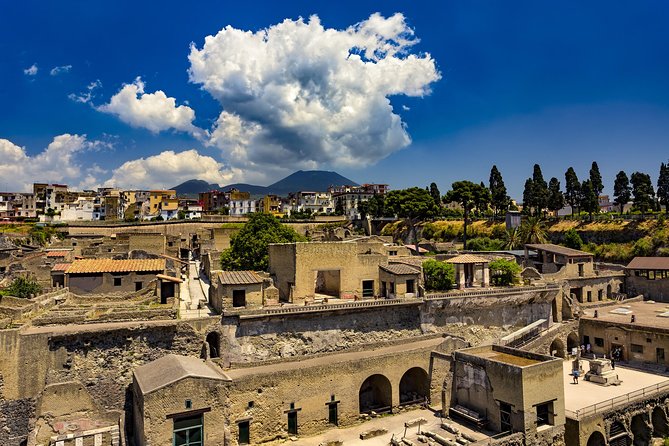
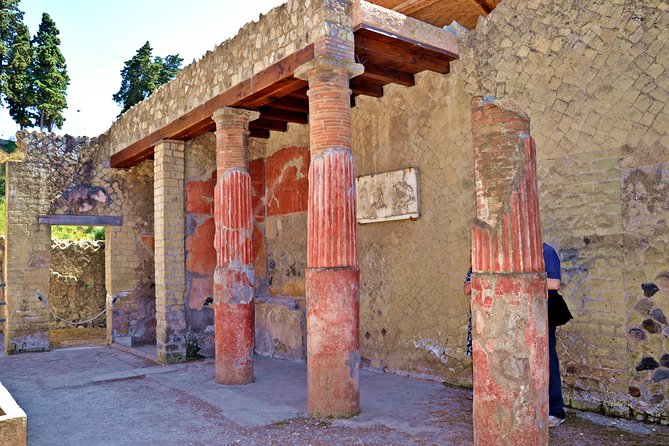
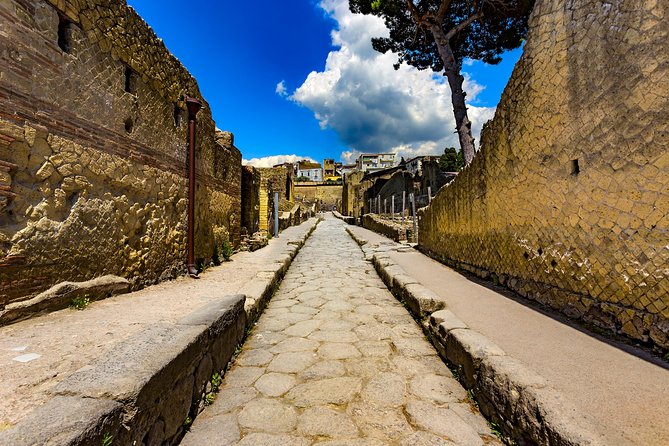
Herculaneum was buried under volcanic ash, and that’s exactly why it’s so gripping. Many sites give you walls and floor plans. Here, you also get a sense of interiors—doorways, wood details, and room layouts—that help you picture daily movement through the town.
What makes this tour especially useful is the archaeologist style of teaching. Instead of only describing what’s visible, the guide ties the buildings to how residents lived and what they faced when time got short. You’ll hear about the tough choice people had: flee or stand their ground. That framing changes how you look at everything that follows.
You can also read our reviews of more tours and experiences in Naples


Small-Group Comfort and Skip-the-Line Admission
This is listed as a 2-hour experience, and that time is a gift if you’re trying to cover multiple sights in Naples. The skip-the-line part matters more than it sounds. Admission lines can soak up an entire chunk of a short day, and here you’re paying for entry plus guidance together.
The group size cap—maximum 20—keeps the tour from becoming a headset experience. You can ask questions and get answers that actually match what you’re seeing. The pacing also works well for a place where you might otherwise feel overwhelmed by labels and scattered ruins.
You’ll use a mobile ticket, so have it ready on your phone at the start. It’s a small thing, but it saves friction once you’re at the park entrance.
Stop-by-Stop: The 2-Hour Route Through Herculaneum
The tour is organized as a sequence of key houses and public areas. Each stop is short, usually around 10 to 15 minutes, so you’ll want to stay alert and watch for details the guide points out.
Casa dei Cervi
The tour begins at Casa dei Cervi, named for marble statues of stags or deer found in the peristyle. This is a great first stop because it immediately shows how decorative features weren’t random—they signaled taste, status, and connections to wider Roman culture.
La Terrazza di M. Nonio Balbo
Next is La Terrazza di M. Nonio Balbo. M. Nonius Balbus was the city’s major benefactor, restoring and building public buildings, and his honours are recorded in a long funeral inscription. For me, this kind of inscription-based storytelling is what turns stone into a community.
If you like names and motivations behind monuments, you’ll appreciate this stop. If inscriptions are your least favorite part of archaeology, you can still enjoy it as context for why public spaces looked the way they did.



College of the Augustales
Then you’ll visit the College of the Augustales. The building is thought to connect with the cult of Emperor Augustus and possibly served as the HQ of the Collegium Augustalium (or even the local curia). This is a reminder that religion, politics, and social life were blended in Roman towns.
A drawback here is time pressure. Because each stop is short, you can’t linger long over every angle. But the guide’s explanation helps you leave with a clear idea of what this building likely represented.
Casa del Rilievo di Telefo
At Casa del Rilievo di Telefo, you’re looking at a domus that may have belonged to a leading benefactor, tied to M. Nonius Balbus. One unusual detail: it has its own private access to the adjoining Suburban Thermae to the south.
That private link matters. It hints at how some wealthy residents didn’t just enjoy baths—they could access them in a controlled, status-friendly way. You’ll start seeing class differences in everyday movement.
Partem Domus lignea (Casa del Tramezzo di Legno)
This stop highlights Partem Domus lignea – Casa del Tramezzo di Legno, important for its surviving wooden partition. Wood is often the first thing to vanish over centuries, so when it survives, it becomes a time machine.
Even if you’re not a “wood details” person, watch what the guide points at. This is the kind of find that makes the ash burial feel less like a tragedy and more like an accidental preservation system.
House of the Skeleton
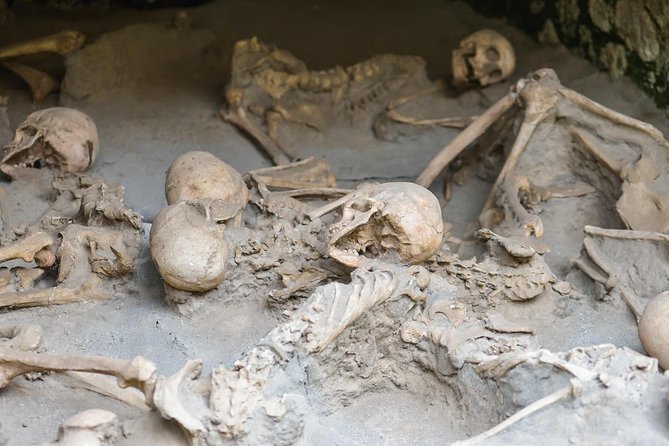
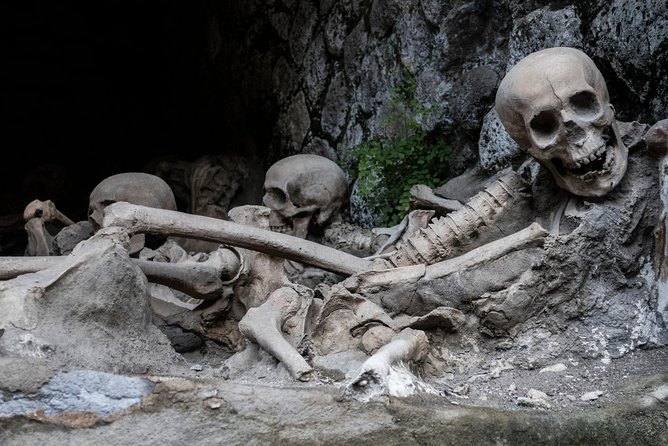
Then comes the House of the Skeleton, named after human remains found in a second-floor room in 1831. It’s one of those moments where the site turns from “architecture lesson” into “human story.”
This stop can feel heavy, and that’s normal. If you’re sensitive, you might mentally pace yourself and focus on how the guide explains the circumstances rather than fixating on the name.
Central Thermae
After that, you’ll step into Central Thermae, built around the beginning of the 1st century AD. Like many baths of the time, they were divided into men’s and women’s baths, each with separate entrances.
It’s a strong stop for understanding the town’s daily rhythm. Baths weren’t just for hygiene; they were social spaces and routine meeting points. Seeing the separation helps you grasp how privacy and social order worked in Roman life.
Casa del Salone Nero (House of the Black Hall)
Next is the Casa del Salone Nero, one of Herculaneum’s more luxurious mansions. Look for the monumental entrance where carbonised remains of the doorposts and lintel still show. It’s eerie in the best way—like the building is still mid-action.
This is also where the guide’s carbon story usually lands hardest. You may catch that theme across the tour, with explanations about what survived and why.
Casa Sannitica
Then you’ll visit Casa Sannitica, with an arrangement typical of the Samnites. The atrium leads to a gallery with Ionic columns, and the rooms show fresco decoration.
This stop helps you see variety within the town. Herculaneum isn’t just one style in one era; it reflects regional influences and evolving tastes.
Casa del Bel Cortile
At Casa del Bel Cortile, you’ll notice an original courtyard layout with a stairway and a stone balcony instead of an atrium. The design difference is small on paper, but you can feel it in how the space directs movement.
This is a good moment to take a couple of extra seconds with your eyes. It’s the kind of detail you’ll miss if you’re rushing for the next photo.
House of the Grand Portal
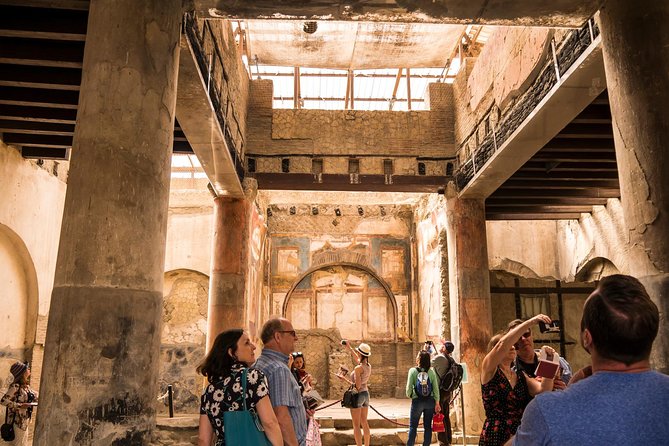
The final stop is the House of the Grand Portal, located in the central archaeological area. Expect multiple environments, colonnati, and frescoes, with charred remains of wooden parts still visible.
This ending works well because it ties luxury, decoration, and preservation together in one place. You finish with a mental map of the town: private homes, public functions, and the spaces where people gathered.
Why the Tour’s “Short Stops” Work Better Than You Think
At first, 10 minutes per stop might sound like “see it fast.” But in a site like Herculaneum, fast can be smart. You’re not trying to become a full-time archaeologist in two hours. You’re learning how to read the ruins correctly.
The archaeologist’s job is to translate survival. In many places, you’d only get fragments. Here, you can sometimes connect the fragments to function—like how a wooden partition would have separated or guided space, or how bath entrances organized daily routines.
The guide-led pace also keeps you from getting lost in details that don’t matter. You’ll hear the “why” behind the names—deer statues, benefactors, inscriptions, and the famous charred elements—so you’re not just collecting random facts.
And yes, the story about carbonised things and people tends to hit you more than you expect. It turns the ruins into a real event, not just a museum display.
Price and Scheduling: Does $57.26 Feel Like Value?
At $57.26 per person and about 2 hours, this tour is priced like a guided entry experience, not a quick walk. You’re getting two key things bundled: an archaeologist-led guide and skip-the-line admission fees.
That matters because Herculaneum visits often get squeezed by time. If you’re doing this as part of a day trip plan from the Naples area, waiting at the gate is the kind of delay that ruins momentum. Here, the plan is “get in and start learning.”
Also, it’s typically booked about 42 days in advance. That doesn’t mean you can’t book later, but it’s a sign demand exists. If your schedule is fixed, booking ahead helps you lock the times that work.
Transportation isn’t included. So if you don’t already have an easy way to reach the park, factor that cost and travel time into your day.
Practical Tips: Meeting Point, Sun, and Getting Oriented Fast
Meet at Archaeological Park of Herculaneum, Corso Resina, 187, 80056 Ercolano NA, Italy. The tour ends at the same place, which simplifies your planning.
I’d also plan for the one real-world issue that keeps showing up: getting to the correct group. Some people reported trouble because ticket info didn’t match what they expected. My advice: screenshot your confirmation, arrive early, and use the address exactly as written rather than relying on a vague label.
One more practical note from real-world experience: don’t underestimate the sun. A cap or hat is a must. The “shade hunt” gets old fast in exposed outdoor ruins.
Who Should Book This Tour (and Who Might Not)
Book this if you want guided clarity. If you like archaeology but don’t want to spend hours decoding sites on your own, this format makes sense. It’s also ideal if you’re short on time and want to hit houses, baths, and key public buildings in one smooth run.
You’ll get the most out of it if you’re curious about the human angle—how people lived, how public life worked, and what the ash preservation revealed, including carbonised details.
You might consider another option if you prefer longer independent time on-site. Because stops are concise and the route is structured, you won’t get the kind of unhurried museum-style wandering some people want.
Should You Book This Herculaneum Archaeologist Tour?
If your day includes Herculaneum and you’d rather protect time than gamble on admission lines, I think this is a strong choice. The combination of skip-the-line entry, a tight max 20-person group, and an archaeologist who connects the ruins to stories is exactly what makes it worth the money.
So I’d book it if:
- You want guided context, not just ticket access
- You like questions and explanations as you go
- You’re visiting for a few hours and need focus
I’d skip or swap tours if:
- You plan to spend most of your day outside of the structured route
- You want more time in one area rather than seeing many key stops
If you do book, come prepared to walk, arrive a little early to find your group, and bring a cap. Then let the ash-preserved details do their job.
FAQ
How long is the Herculaneum small group tour?
It runs for about 2 hours.
What does the skip-the-line include?
Skip-the-line admission fees are included.
How many people are in the group?
The tour has a maximum of 20 travelers.
Where does the tour start and end?
It starts and ends at the Archaeological Park of Herculaneum, Corso Resina, 187, 80056 Ercolano NA, Italy.
Do I need transportation tickets as part of the tour?
Transportation is not included.
Is there a mobile ticket?
Yes, the tour uses a mobile ticket.
What is the price per person?
The price is $57.26 per person.
When will I get confirmation after booking?
Confirmation is received at the time of booking.
What is the cancellation policy?
Free cancellation is available up to 24 hours in advance for a full refund.
Is the tour suitable for most people?
Most travelers can participate, and the meeting area is near public transportation.