REVIEW · POMPEI CAMPANIA
Pompeii Ruins: Virtual Tour 360° with Authorized Storyteller
Book on GetYourGuide →Operated by POMPEII DISCOVERY VIRTUAL TOUR 360° · Bookable on GetYourGuide
Pompeii feels alive in 360° in minutes. This private experience pairs a local authorized Storyteller with 3D Virtual Reality so you can “see” daily life in Pompeii before the eruption of Vesuvius in 79 A.D. It’s built for people who want more than just walls and dates.
I love how the skip-the-ticket-line setup keeps things moving, and I love that the guide stays with you while the VR adds extra layers to the same stops. One added bonus: the experience has been recognized for its educational value, including mention for an informative case study at the University of Amsterdam and appreciation by the European Parliament.
One consideration: the ruins entrance ticket is not included, so you’ll still need to plan for that extra step before you go in.
In This Review
- Key highlights worth planning around
- Why Pompeii looks different with a 360° VR headset
- What you get when the tour starts (before the story even begins)
- The Forum and Basilica: the city’s core, shown with context
- Baths, houses, and daily routines you can actually picture
- The Bakery and Large Theatre: food production and public entertainment
- Quadriporticus gladiator training and Lupanar nightlife
- How the live guide and VR work together (and why that matters)
- Price and value for a private group up to 2
- When this tour is a great fit (and when it isn’t)
- Practical prep so the VR part feels smooth
- Should you book this Pompeii 360° VR tour?
- FAQ
- What is included in the Pompeii Discovery Virtual Reality tour?
- Is the entrance ticket included?
- How many people are in the group?
- What languages are available?
- What locations inside Pompeii are covered?
- Is the tour suitable for children?
- Is it suitable for people with epilepsy?
- Can I cancel or pay later?
Key highlights worth planning around
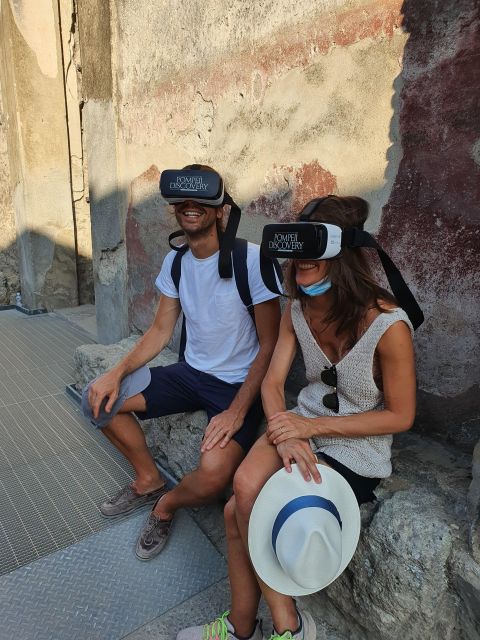
- 360° headset for each participant so the VR part isn’t just a novelty you share
- Nine named Pompeii locations shown in 3D, including the Forum, Basilica, Baths, theater, and more
- Shop activity and a theatrical moment that help the city feel like a place, not a ruin
- Gladiator training and Lupanar nightlife shown through the Quadriporticus and brothel scenes
- Guides with strong narrative skill, including Maria Novella noted for professional storytelling
Why Pompeii looks different with a 360° VR headset
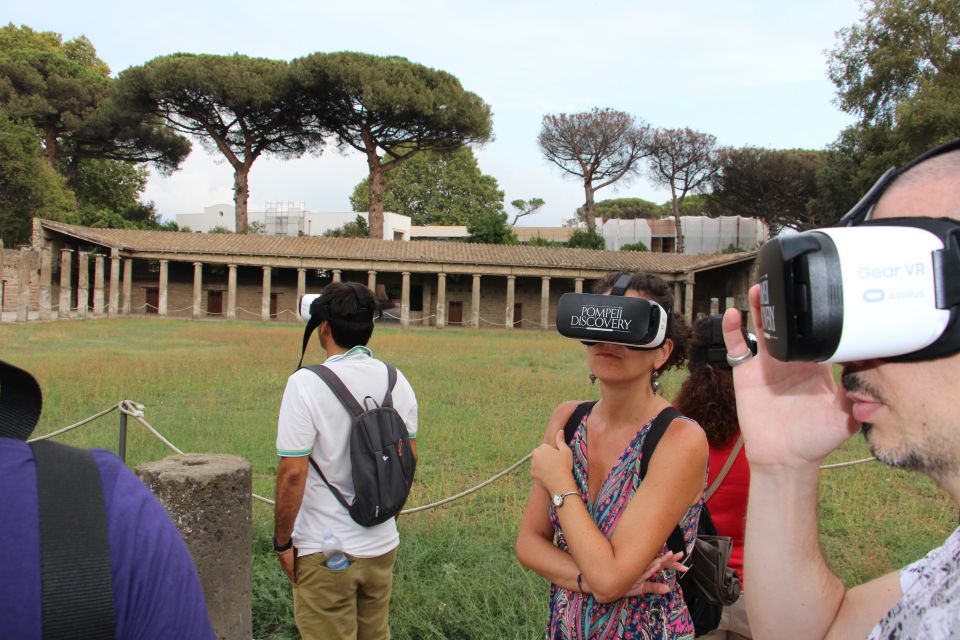
Pompeii is powerful on its own. But it can also feel like a puzzle: you’re staring at stone fragments, trying to imagine what once happened there.
This tour tackles that problem with 3D VR, guided by a live Storyteller. You focus on specific places—like the Forum or the Basilica—while the VR overlays the city’s rhythm and scale when it was still standing. The result is practical: you don’t just learn where things were. You understand what they did for everyday people.
And because the VR is tied to a local guide, it doesn’t float in the background. The headset acts like a “time machine” that supports the explanation, rather than replacing it.
You can also read our reviews of more tours and experiences in Pompei Campania.



What you get when the tour starts (before the story even begins)
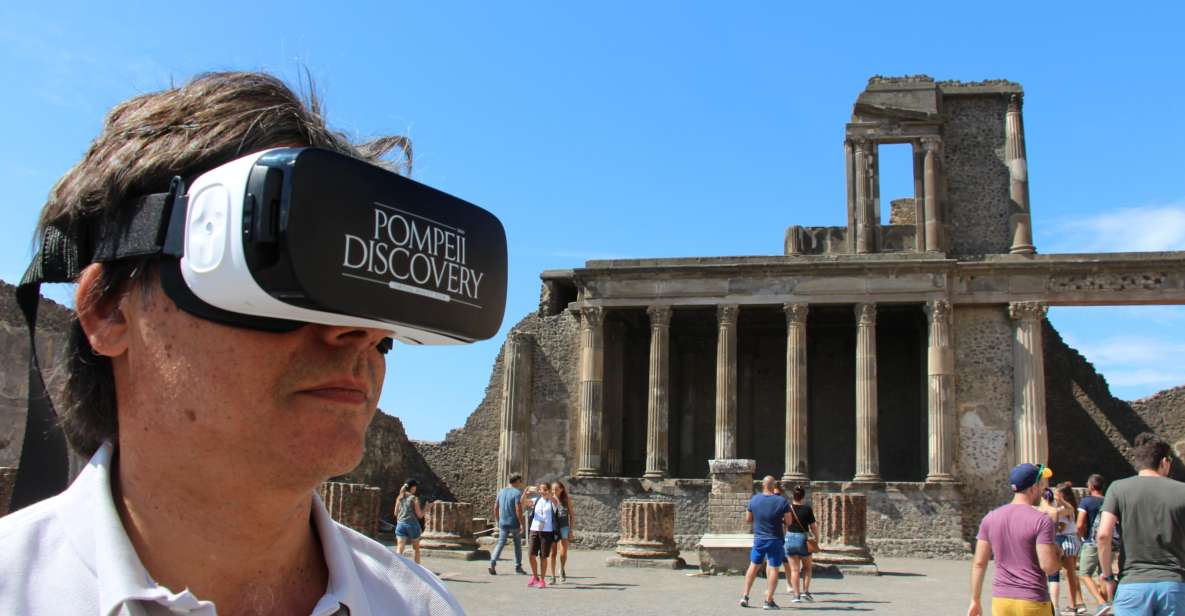
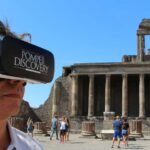
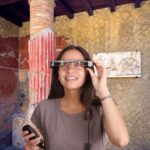
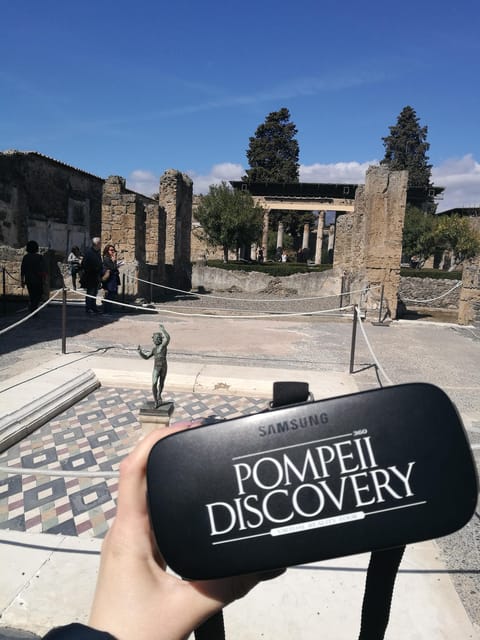
Before you see the ruins for real, the experience is set up to keep you comfortable and organized. You’ll have a live, authorized guide in either English or Italian, plus a Virtual Reality headset for each participant.
The tour is offered as a private group, with pricing listed per group up to 2 people. That matters more than it sounds. A smaller group means fewer interruptions, and you get more chance to ask questions while the guide connects the VR scenes to what you’re seeing on the ground.
Also, the experience includes a skip the ticket line benefit. That can save real time in Pompeii, where waiting can eat into your energy quickly—especially if you’re also wearing a headset during parts of the walk.
One practical note: you’ll want comfortable shoes. Some ruins walking is unavoidable, even with the VR-enhanced learning.
The Forum and Basilica: the city’s core, shown with context
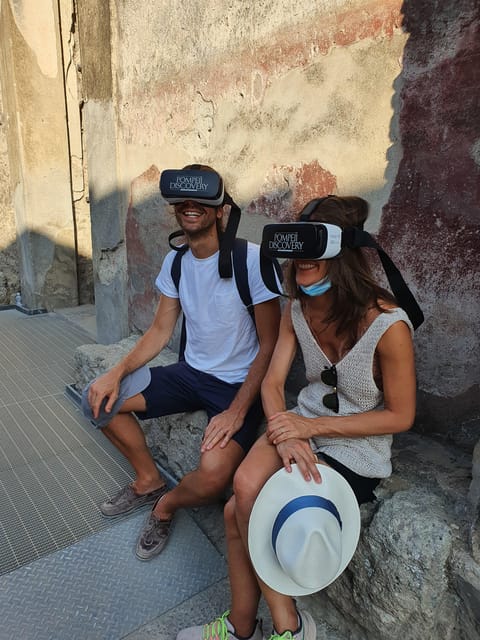
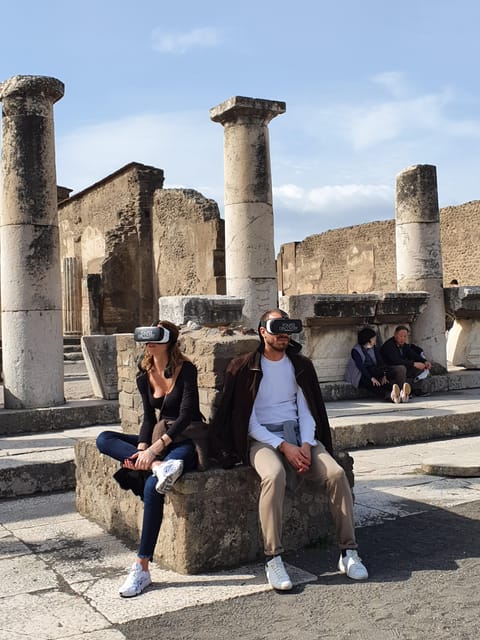
Two of the biggest anchors in this experience are the Forum and the Basilica. In Pompeii, the Forum wasn’t just a nice open area. It was the civic heartbeat: where people gathered, discussed, traded, and did the business of being a city.
With the VR, you’re not only looking at the space. You’re shown how life could play out there—helping you place yourself in the flow of daily movement. That’s the real value: you start to orient yourself faster, and the architecture stops being abstract.
The Basilica adds another layer. It’s described as an imposing center landmark, and the combination of your live guide plus VR makes it easier to grasp why it mattered. You can connect the building’s role to the kinds of activities happening in the Forum zone.
The drawback to keep in mind here: if you expect the VR to be constant nonstop, it may feel like it alternates between real ruins viewing and VR-enhanced moments. That’s not bad—it’s usually how these formats work—but it changes your pacing expectations.
Baths, houses, and daily routines you can actually picture
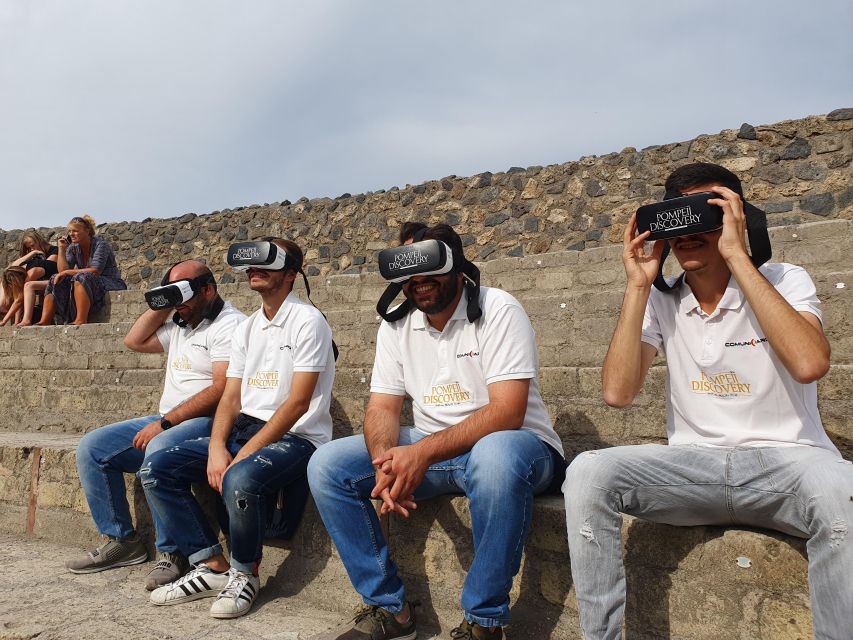
Pompeii wasn’t only temples and big monuments. It was routine life—washing, eating, working, and living with other people close by.
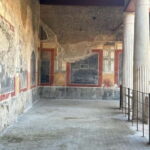
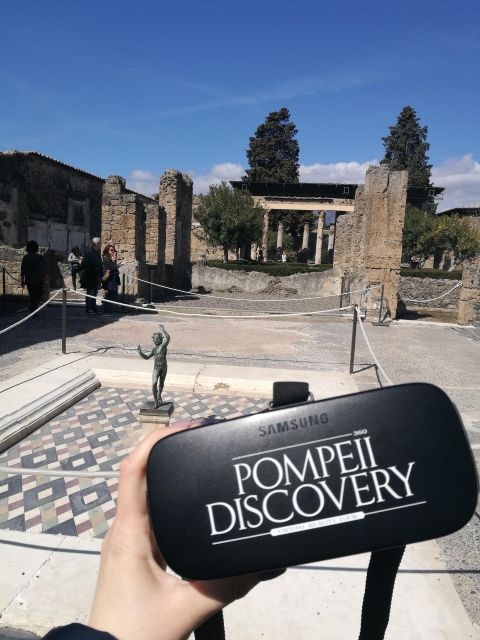
This tour includes the Baths and either the House of the Faun or the House of Menander. You’ll see how domestic spaces and everyday infrastructure shaped how people spent their days.
What I like about including houses is that they help you stop thinking of Pompeii as one uniform “museum space.” The VR doesn’t just show interiors as a concept. It helps you sense how these homes fit into the city’s bigger system—neighborhood structure, social level, and daily movement.
The choice between the House of the Faun and the House of Menander means you may not see both in one session. For planning, think of this as two flavors of the same idea: you’ll still get the domestic-life window, just through one of the key households highlighted by the experience.
The Bakery and Large Theatre: food production and public entertainment
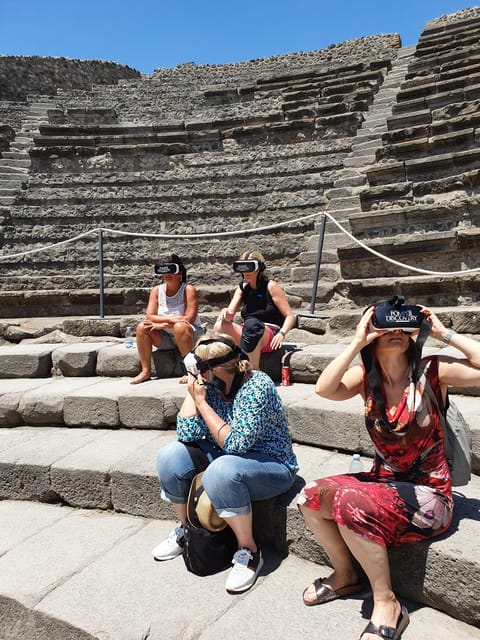
Two stops that make this tour feel grounded are the Bakery and the Large Theatre.
The Bakery represents a side of Pompeii that’s easy to overlook when you’re focused on dramatic ruins. Food supply and preparation were core to city life, and the VR component helps connect the building to its purpose. Instead of treating it like an empty structure, you can imagine the work going on around it.
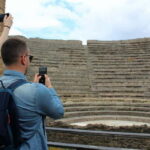
Then there’s the Large Theatre, where public life got loud. People went there to watch performances, and the tour’s VR component includes opportunities to experience a theatrical performance element. That’s one of the smartest choices in the whole plan because it turns a viewing stop into a felt experience. Even if you’re not an expert in ancient drama, you’ll understand why the theatre was a social magnet.
These two stops also balance the emotional tone of Pompeii. After learning about civic space and private homes, food and entertainment bring you back to the daily cycle.

Quadriporticus gladiator training and Lupanar nightlife
This is where the experience leans into high-impact storytelling.
The Quadriporticus is paired with the idea of gladiators’ training, so you can connect the architecture to the kind of activity it supported. The practical win here is comprehension. Instead of asking What happened here? you get a guided narrative that makes the space feel like a functional training ground.
Then comes the nightlife scene around the Lupanar, the well-known brothel area. The tour description points to experiencing nightlife both around and inside the Lupanar through VR.
Two thoughts for your planning:
- This is not a “soft” version of Pompeii. It tackles real social life, including subject matter you might prefer to handle cautiously.
- If you’re sensitive to adult themes, check whether this stop fits your comfort level before booking.
For most visitors, though, this pairing is exactly why VR works. It doesn’t just show buildings; it shows human behavior and the energy of a living city.
How the live guide and VR work together (and why that matters)
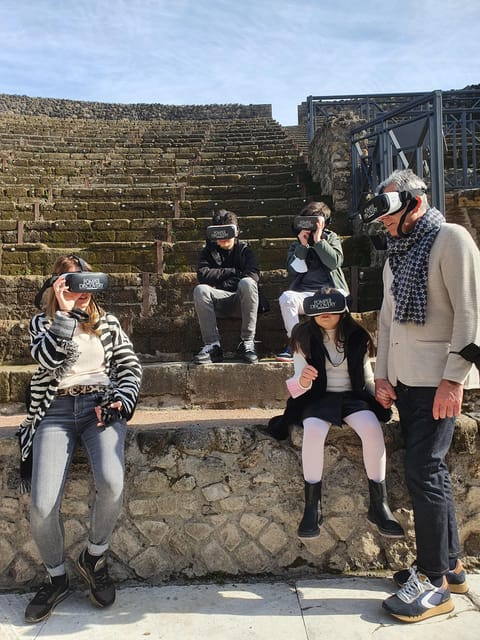
The core design here is simple: you get a live, authorized guide plus VR enhancements for the nine key sites. That combination is the difference between a standard tour and something more “usable.”
When your guide explains the Forum, the Basilica, or the theatre, the VR scenes help you build mental images quickly. When you’re standing in the ruins, you can compare what you see in VR to what’s still visible in stone. That creates a feedback loop that makes your learning stick.
One name that came up in guide praise is Maria Novella, mentioned for professional storytelling and how VR amplified the archaeological beauty and the understanding of the site. Even if you don’t get the same guide, it’s a good sign: you’re paying for narrative skill, not just a headset with pre-recorded footage.
Also, you’ll see the tour is framed around specific activities—like shop activity and a theatrical performance—rather than random “cool” visuals. That’s what keeps this from feeling like a tech demo.
Price and value for a private group up to 2
The listed price is $226.57 per group up to 2 people. That’s not cheap on paper, but value here comes from what’s included.
You’re paying for:
- a local authorized guide in your chosen language (English or Italian)
- VR headsets for each participant
- a guided VR experience covering nine major Pompeii locations
- a skip-the-ticket-line benefit
- a private group format
Entrance tickets for the ruins are not included, so factor that extra cost into your total. But even with that in mind, the pricing can feel reasonable if you want a guided VR learning experience without joining a large crowd.
If you’re traveling as a couple, this format can be a smart use of money. If you’re traveling solo, you may want to compare it to a standard guided tour cost versus the added VR value. The headset experience is the main product.
When this tour is a great fit (and when it isn’t)
This one makes sense for people who:
- want a guided explanation with added 3D context
- prefer learning through a mix of real ruins viewing and VR reenactments
- like a private-group pace instead of a fast group scramble
- are comfortable with the idea of adult-themed subject matter at the Lupanar
It’s not suitable for children under 8 years, and it’s also not suitable for people with epilepsy. If either applies, you’ll want to look for a non-VR option.
Wheelchair accessibility is listed, and you’ll still want comfortable shoes, since you’ll be moving through the ruins area.
Practical prep so the VR part feels smooth
Nothing ruins a good experience faster than basic discomfort.
Pack comfortable shoes and wear clothing you can move in. The tour includes VR headsets for participants, so you’ll also want a calm, patient mindset for taking instructions on headset use and timing. If you get motion sensitive, take a moment to think about whether VR typically feels okay for you.
If you’re bringing children, the tour notes you should have a passport or ID card for children.
Also, because entrance tickets aren’t included, I’d plan ahead so there’s no last-minute scramble right before your start time.
Should you book this Pompeii 360° VR tour?
I’d book it if you want Pompeii to feel like a place that once worked. The combination of a live authorized guide plus 360° VR for nine key locations is the big selling point, and the subject matter coverage—from civic life at the Forum to daily routines at the Baths and homes, then entertainment and nightlife—makes the city come into focus faster than a standard walk.
Skip it if you:
- don’t want VR at all (or you have a reason VR won’t suit you)
- are mainly after a purely architectural, low-emotion tour style
- haven’t budgeted for the extra ruins entrance ticket
If you’re aiming for the “how did people actually live here?” version of Pompeii, this is a strong choice—and a memorable one.
FAQ
What is included in the Pompeii Discovery Virtual Reality tour?
It includes a local authorized guide in your language, Virtual Reality headsets for each participant, and the guided VR experience through the ruins. Entrance ticket(s) to the ruins are not included.
Is the entrance ticket included?
No. You’ll need to buy the entrance ticket separately.
How many people are in the group?
It’s a private group, priced per group up to 2 people.
What languages are available?
The live tour guide is available in English and Italian.
What locations inside Pompeii are covered?
The VR highlights nine famous places: the Forum, Basilica, Baths, House of the Faun or House of Menander, the Bakery, Large Theatre, Quadriporticus, and the Lupanar.
Is the tour suitable for children?
It’s not suitable for children under 8 years old.
Is it suitable for people with epilepsy?
No, it’s listed as not suitable for people with epilepsy.
Can I cancel or pay later?
Yes. There’s free cancellation up to 24 hours in advance for a full refund, and you can reserve now and pay later.