REVIEW · NAPLES
Central Naples Bike Tour
Book on Viator →Operated by Biketour Napoli · Bookable on Viator
Naples looks different when you pedal through it. This Central Naples Bike Tour knits together major sights, port-city squares, and street-level atmosphere in about 3 hours, with an English-speaking local guide.
What I like most is the fast, bike-first way you cover real neighborhoods instead of only hitting a few photo stops. I also like that you get the essentials sorted—bicycle, helmet, and a bottle of water—so your brain stays on Naples.
The route is built for variety: grand spaces like Piazza del Plebiscito, major landmarks like Castel dell’Ovo, and art-and-façade moments such as Chiesa del Gesu Nuovo. It’s also a small group setup (up to 20), which helps when you’re navigating crowded streets with a guide who knows how to keep everyone together. Guides like Paco, Joseph, Tino, and Achille pop up in feedback for being both fun and practical.
One thing to consider: Naples traffic and the hills can make this feel like more effort than a casual stroll. If you’re nervous in busy streets, or you’re on a regular bike and not a regular cyclist, plan on it being more work than sightseeing only. Traffic and hills are part of the deal.
In This Review
- Key things to know before you ride
- Where you start and how you’ll actually move through Naples
- Piazza del Plebiscito: grand square, easy start
- Castel dell’Ovo: legends, fort walls, and ocean air
- Palazzo Reale: royal power on the facade
- Gesu Nuovo: Baroque drama you can see up close
- Riding the old city grid: Decumani and the streets that still guide you
- Via Toledo and the Spanish Quarter: shopping streets with a border-story
- Lungomare Caracciolo: sea views, ports, and a real break from stone
- Piazza del Municipio: big square, underground layers
- Price and value: what $64.10 buys you (and what costs extra)
- The ride experience: safety, stamina, and the bike you’re given
- Who this tour suits best
- Should you book the Central Naples Bike Tour?
- FAQ
- How long is the Central Naples Bike Tour?
- What’s included with the tour price?
- Are e-bikes available?
- What language is the tour offered in?
- Where is the meeting point?
- Are children allowed on the tour?
- Is there free cancellation, and does weather matter?
Key things to know before you ride

- Icon mix, not just icons: expect Piazza del Plebiscito, Castel dell’Ovo, Palazzo Reale, and Gesu Nuovo, plus the street grid that still shapes the city today.
- A guide who manages the flow: multiple guides (including Joseph and Tino) are praised for steering safely through heavy traffic.
- Expect elevation changes: the route works in Posillipo views through the Lungomare area, which can be tough on a non-e-bike.
- City streets, including tougher pavement: think cobblestones and crowded lanes more than smooth paths.
- Small group control: max 20 people helps with pacing and staying together.
Where you start and how you’ll actually move through Naples
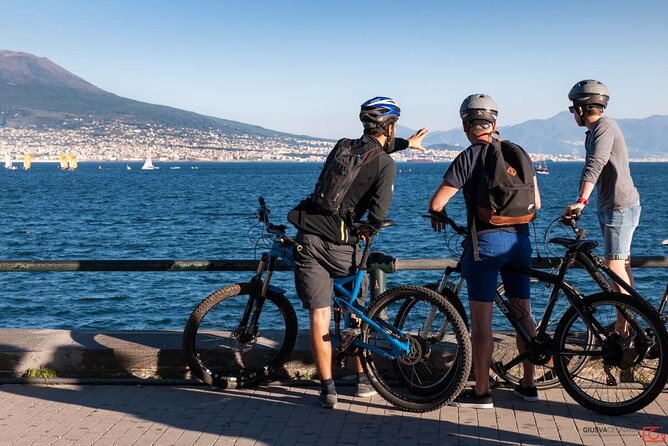
You meet at Bicycle House in Galleria Principe di Napoli, 27/28. The tour ends back at the same spot, so you don’t have to worry about getting across town afterward.
Here’s the practical reality: Naples is busy, and the tour is designed to work in that. That means you ride in real street conditions, not a closed-course fantasy. Your guide will do the heavy lifting—positioning the group, crossing at the right moments, and setting the tempo—so you can focus on seeing the city instead of “how do we get across this intersection.”
Also, this is a mobile-ticket experience. After booking, you’ll want to contact the local supplier to lock in the departure time and exact location (they’ll use your phone number on the field). One more small tip: keep your phone on and charged, since meeting in a dense area can always take a little coordination.
Finally, keep your expectations about pace grounded. The “3 hours” is a ride-and-stop flow, not just three hours of parked looking. That’s great for coverage, but it helps to show up ready to stay alert.
You can also read our reviews of more cycling tours in Naples


Piazza del Plebiscito: grand square, easy start
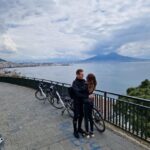
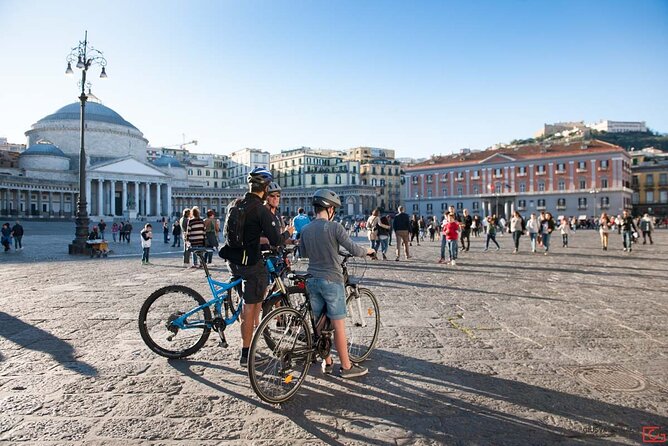
The tour begins (or early-anchors) at Piazza del Plebiscito, one of Naples’ most important squares. You only have about 10 minutes here, but it’s a smart opener: the square sits close to both the historical center and the streets that lead toward the sea.
I like this stop because it’s a quick orientation moment. Even in a short time, you get a sense of scale—Neapolitan power-and-pageantry architecture, open space for photos, and easy mental mapping before you start weaving into smaller streets.
If you’re jet-lagged or still figuring out the city, this is a good first landing spot. You don’t need a long visit to feel like you’ve stepped into the right Naples.
Castel dell’Ovo: legends, fort walls, and ocean air
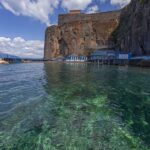
Then you roll to Castel dell’Ovo, located on the island of Megaride. It’s not just a pretty fortress stop—it’s a story machine.
The tour frames the area through multiple layers of Naples myth and power: the legend of Parthenope (the mermaid tied to the city’s origins), Cumae arrivals that helped seed the early settlement, and later waves of rulers and uses of the castle. Even the prison history comes up, including well-known political and intellectual prisoners mentioned in the tour background.
You’ll get about 20 minutes at this stop, which feels about right. You can walk a bit, soak in the sea-facing views, and understand why a spot like this mattered so much. The views also make the ride feel rewarding; you’re not just collecting buildings, you’re collecting Neapolitan angles on the bay.
Trade-offs? Fortress/exterior time can be limited by how the day’s schedule moves. If you’re the type who wants long, museum-style wandering, this is more “see and understand” than “hours and hours inside.”
Palazzo Reale: royal power on the facade
Next up is Palazzo Reale (Royal Palace). This is a short stop—around 5 minutes—but it’s packed with why palaces matter in Naples.
The tour explains that the palace grows out of Spanish-era decisions in the early 1600s, then expands and gets decorated across later centuries under different rulers. It also highlights the long span of monarchical seat-of-power from about 1600 to 1946, ending with the shift to the modern Italian state.
Even if you only have a few minutes, you’ll likely notice the big “political message” of it: who ruled, when, and how power liked to look. The facade includes statues of major dynastic figures—Roger the Norman, Frederick II of Svevia, Charles of Anjou, and others—so you’re literally reading a timeline in stone.
This is a good stop for people who like architecture with context, not just architecture-as-background.
Gesu Nuovo: Baroque drama you can see up close
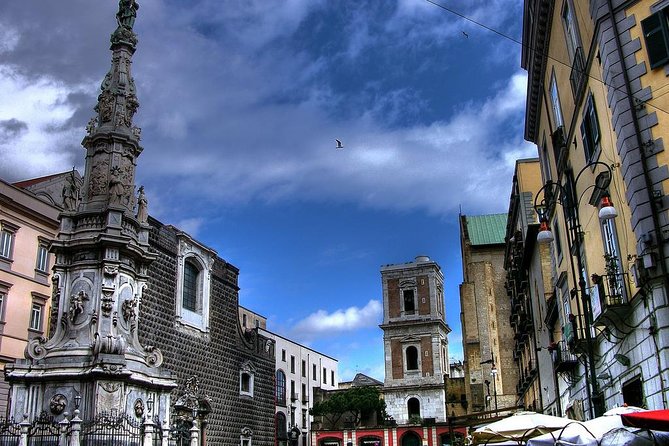
Then comes Chiesa del Gesu Nuovo, with about 5 minutes allocated. That sounds brief, but Baroque churches are built for quick impact.
The tour points you to what makes this church memorable: the distinctive façade with diamond-shaped ashlars, and the interior described as marble-rich and illusion-making—vases, flowers, festoons, and masks. It’s also tied to a conversion story: what started as a palace for Roberto Sanseverino became a Jesuit church in the 1580s.
If you only have a few minutes, choose your moment wisely. Look first at the façade details and then take in the interior once your eyes adjust. Baroque style is all about visual density and depth, so rushing blindly doesn’t help.
This stop is also a nice reset. You go from sea-and-fortress energy back to the dense, artistic core of Naples.



Riding the old city grid: Decumani and the streets that still guide you
One of the smartest parts of this tour is that it helps you understand Naples’ street logic. You’ll ride along the Decumanus Maggiore, the main east-west street of ancient Neapolis, and you’ll hear how the old Greek/Roman grid still shapes the modern city.
You’ll pass areas linked to cardini (north-south cross streets) and learn how the ancient layout maps onto today’s alleys and connections. This matters because it changes the way you wander afterward. After the tour, you’re less likely to feel lost when you pop into side streets.
The tour route also works in the modern “living city” feel: you’ll move through the kind of lanes where Naples doesn’t perform for you—it just keeps going. That’s why the Decumani segment is so valuable. It’s not only about ruins. It’s about how a layout from centuries ago shapes movement patterns, commerce, and daily life.
Via Toledo and the Spanish Quarter: shopping streets with a border-story
The tour also highlights Via Toledo, described in the route story as a major city spine—called out by writer Stendhal as one of the most populous and happy streets in the world (the tour uses that line to set the tone).
This is also where you meet the Spanish Quarter, an area built in the early 1500s tied to the city’s western boundary during Aragonese-era times. The key value here is contrast: you’re seeing Naples as a port city and fortress city, then you’re seeing Naples as a living shopping and neighborhood city.
If you like street-level energy, this is where you’ll feel it most. It’s also a reminder that Naples isn’t organized like a tidy museum route. You’ll ride through congestion and crowds, and the guide’s job becomes not just “talk” but “timing and safety.”
Lungomare Caracciolo: sea views, ports, and a real break from stone
Next comes the Lungomare Caracciolo, the waterfront stretch along the sea. This part is named through Via Caracciolo and ties together several named zones: areas like Villa Comunale, Riviera di Chiaia, and places along the coast that lead you toward Posillipo.
This is one of the best segments for your body and your brain. After dense inner-city streets, you get a long line of sea air and wide sightlines. You also get the fun effect of riding: you’re not standing still at a viewpoint—you’re moving along the coastline and letting the city reveal itself in sequence.
You’ll also get points tied to the waterfront story: areas like Borgo Marinaio and a link back to Castel dell’Ovo as you cycle past the port-side vibe.
One caution: waterfront streets can still be crowded, and the tour keeps you moving. So enjoy the views, but keep your attention on the ride.
Piazza del Municipio: big square, underground layers
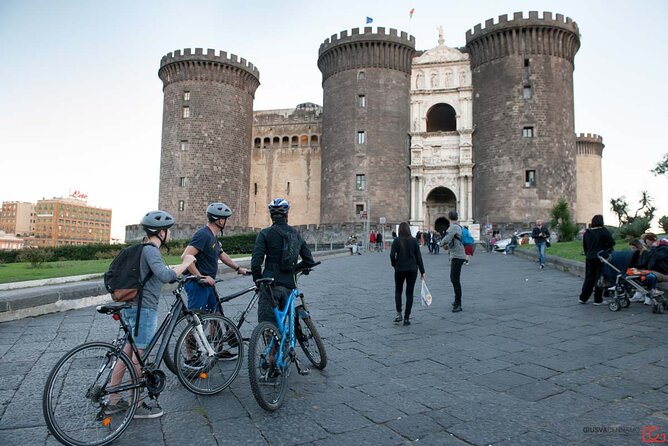
The final named stop is Piazza del Municipio—a large square near major landmarks like Maschio Angioino and the Town Hall area. You’ll also hear about the Neptune Fountain here.
What makes this stop interesting isn’t just the postcard look. The tour mentions major archaeological finds uncovered during construction of the metro lines—around 3,000 artifacts, from Roman times to later buildings, including amphorae, ships, caravels, and intact ancient walls. The tour also notes a future archaeological site that connects to a Neapolis station-museum plan.
Even with limited time, this is a high-value stop because it gives you a Naples “how it works” lesson: beneath the surface, the city is layered. You’re cycling above history that keeps getting uncovered.
If you want your last minutes to feel thoughtful, this is a good place to slow your pace for photos and a quick scan before rolling back.
Price and value: what $64.10 buys you (and what costs extra)
At $64.10 per person for about 3 hours, the value comes from the mix: a local guide, use of the bicycle and helmet, and a bottle of water.
That’s a solid deal if you don’t want to spend time figuring out bike rental rules, helmet logistics, and route mapping. And it’s even better if you’re traveling with limited days and want to cover more ground than walking.
The main potential extra cost is the e-bike option. The tour states there’s an e-bike extra fee paid on site, and one piece of feedback mentions 15€ per person for electric assistance. If you’re not an active rider, the e-bike can turn “Naples workout” into “Naples sightseeing.”
So my practical advice: decide based on your comfort with hills and city traffic. If both feel like a stretch, budget for the e-bike. If you’re comfortable and a regular cyclist, you may be fine on a standard bike.
The ride experience: safety, stamina, and the bike you’re given
Your comfort on this tour will come down to three things: traffic confidence, hill readiness, and bike condition.
Naples streets are crowded and drivers are aggressive by necessity and habit. Guides are repeatedly praised for traffic management. Names that come up include Joseph and Claudio—both highlighted for helping the group cross busy sections safely and keeping directions clear (one guide even tells riders to stay to the right to keep flow under control).
Pavement varies. You may roll over cobblestones and street textures that feel fine for a seasoned rider but can rattle an unprepared one. Add in hills—especially toward the Posillipo area—and even strong walkers might find biking a different kind of effort.
Bike quality can be a weak link. Some feedback points out helmets that weren’t in great shape and a few mechanical annoyances like brakes or seat adjustments. It doesn’t sound like a total deal-breaker for everyone, but you should be the kind of person who checks your bike quickly before you move too far. Confirm the brake feel, seat height, and that the bike feels stable once you start.
If you’re nervous: start by asking the guide to explain how they’ll manage the first busy segment. One common success pattern in the feedback is that guides coach riders early, then the group settles into rhythm.
Who this tour suits best
This bike tour is ideal for you if:
- You want a 3-hour sampling of major Naples sights with movement between them.
- You like learning how neighborhoods work, not just collecting stops.
- You can handle busy streets with an active guide leading the way.
It may be less ideal if:
- You’re intimidated by heavy traffic and chaotic crossings.
- Hills feel like a no-go on a regular bike.
- You expect museum-level time at every attraction (most stops are short).
If you’re the type who enjoys city-walking but wishes you could see more, this tour is a great bridge.
Should you book the Central Naples Bike Tour?
I’d book it if you’re trying to make the most of a limited Naples day and you want a guided route that connects squares, churches, palaces, waterfront views, and the ancient street grid. The structure works because each stop adds a different layer: power (Palazzo Reale), origin and myth (Castel dell’Ovo area), art (Gesu Nuovo), and city logic (Decumani).
But book it with eyes open. Naples cycling isn’t a quiet stroll, and you may want the e-bike if you’re not a confident hill cyclist. Also, do a quick equipment check so the ride starts smooth.
If those considerations fit your comfort level, this tour is one of the best ways to understand central Naples fast—by actually riding through it.
FAQ
How long is the Central Naples Bike Tour?
It’s approximately 3 hours.
What’s included with the tour price?
You get a local guide, bicycle and helmet, and 1 bottle of water.
Are e-bikes available?
Yes. E-bike use is available for an extra fee, paid on site.
What language is the tour offered in?
The tour is offered in English.
Where is the meeting point?
The tour starts at Bicycle House, Galleria Principe di Napoli, 27/28, 80135 Napoli NA, Italy, and it ends back at the meeting point.
Are children allowed on the tour?
Children must be accompanied by an adult.
Is there free cancellation, and does weather matter?
Free cancellation is available up to 24 hours in advance for a full refund. The tour requires good weather, and if it’s canceled due to poor weather, you’ll be offered a different date or a full refund.