REVIEW · NAPLES
From Naples: 2-Hour Herculaneum Kid-Friendly Tour
Book on GetYourGuide →Operated by Askos Tours · Bookable on GetYourGuide
A Roman town that kids can actually picture. This kid-focused Herculaneum walk uses tablets and multimedia to help children connect the dots fast, with well-preserved ruins they can explore up close. The main catch: it’s a 2-hour walking tour with no transportation, so you’ll want to come ready for steady steps inside an active archaeological site.
I like that the pacing is designed for children, not adults who can wander slowly and then ask questions later. You’ll cover major “everyday life” stops, from the thermopolium (a Roman snack/food spot) to baths and the main square, and the guide keeps things moving.
One more thing to consider: entrance is included, but Herculaneum has a free-entry twist on the first Sunday of each month, and entry can’t be guaranteed that day.
In This Review
- Key Highlights You’ll Feel Immediately
- Herculaneum Is a Rare Win for Families
- From Via dei Papiri Ercolanesi to a 2-Hour Route
- Northern Cardo, Thermopolium, and the Forum: Seeing Daily Life
- Houses Like Sets: Skeletons, Augustales, and a Temple Stop
- Neptune and Amphitrite to the Salone Nero: Walking Through Home Life
- Bakery, Gym, and the Bucks: Small Places, Big Story
- Marina Gate Terrace, Marcus Nonius Balbus, and the Beach
- Tablets, Reconstructions, and Multimedia: Why This Tour Works for Kids
- Price and Value from Naples: What You’re Actually Getting
- What This Tour Feels Like On the Ground
- Who Should Book This Kid-Friendly Herculaneum Tour
- Should You Book It?
- FAQ
- How long is the Herculaneum kid-friendly tour?
- Where does the tour start?
- Is transportation included?
- What’s included in the price?
- What is not included?
- What places will you visit during the 2 hours?
- What languages are the guides?
- Is there a free entry day at Herculaneum?
- Can I cancel or pay later?
Key Highlights You’ll Feel Immediately
- Kid-first guiding style that keeps attention on what matters
- Tablets, reconstructions, and multimedia to make buried ruins understandable
- Hands-on access to the site, with time to walk and enter key areas
- A clear 2-hour route through the northern road, homes, baths, and the beach
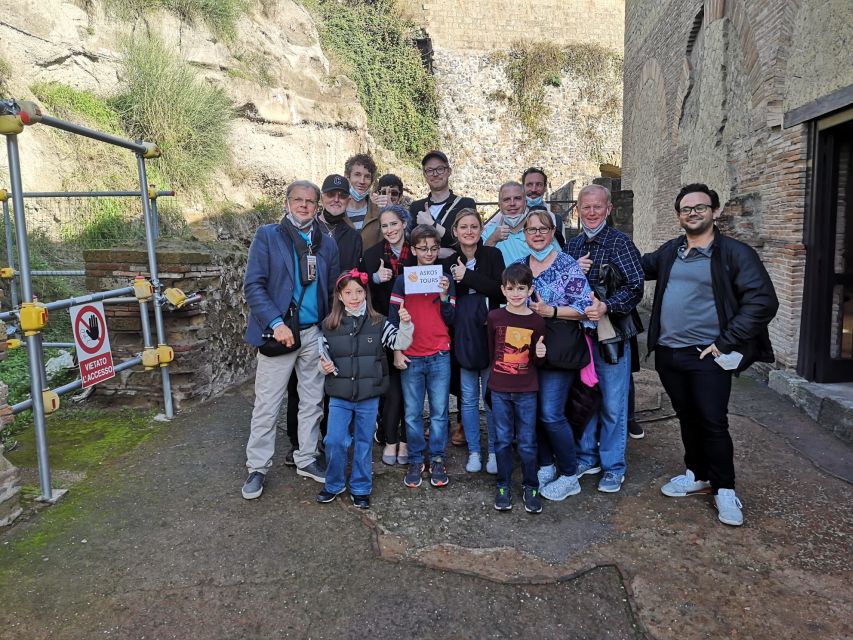
- A private group feel, so you’re not squeezed with strangers
Herculaneum Is a Rare Win for Families
Herculaneum works for kids in a way many ancient sites don’t. It’s a buried city that’s still legible as real places: rooms, streets, and everyday spaces you can walk through. When a guide sets the scene with visual tools, children stop seeing “stones” and start seeing a neighborhood.
Also, the site is well-preserved, which matters more than people expect. Kids get impatient when they can’t tell what they’re looking at. Here, you’re walking through areas where the layout still reads like a town, so explanations land quickly.
You can also read our reviews of more tours and experiences in Naples



From Via dei Papiri Ercolanesi to a 2-Hour Route
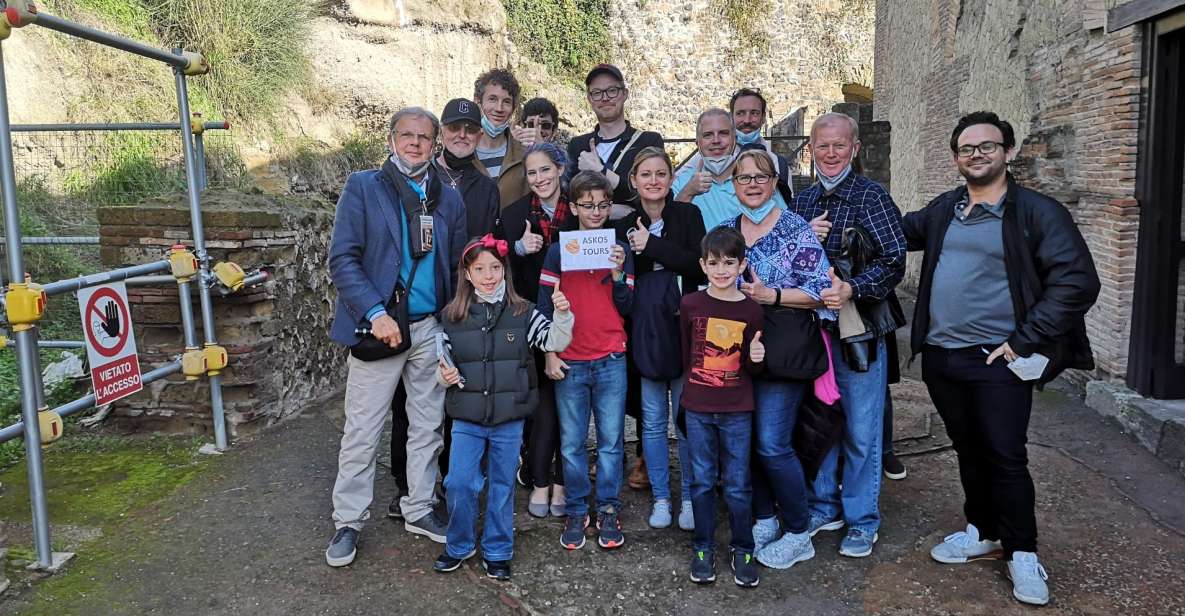
Your tour starts at the ticket office at the Herculaneum ruins, at Via dei Papiri Ercolanesi 21. The guide meets you there holding a sign with your name, then you head into the site for about two hours on foot.
Because there’s no transportation, the route is planned for a family-friendly pace rather than long transfers. That’s a plus if you want a single focused outing, not half a day spent commuting.
The walk also means you should think about comfort up front: water, sunscreen, and shoes you trust on uneven stone. This is the kind of tour where staying upright and comfortable helps you enjoy everything else.
Northern Cardo, Thermopolium, and the Forum: Seeing Daily Life
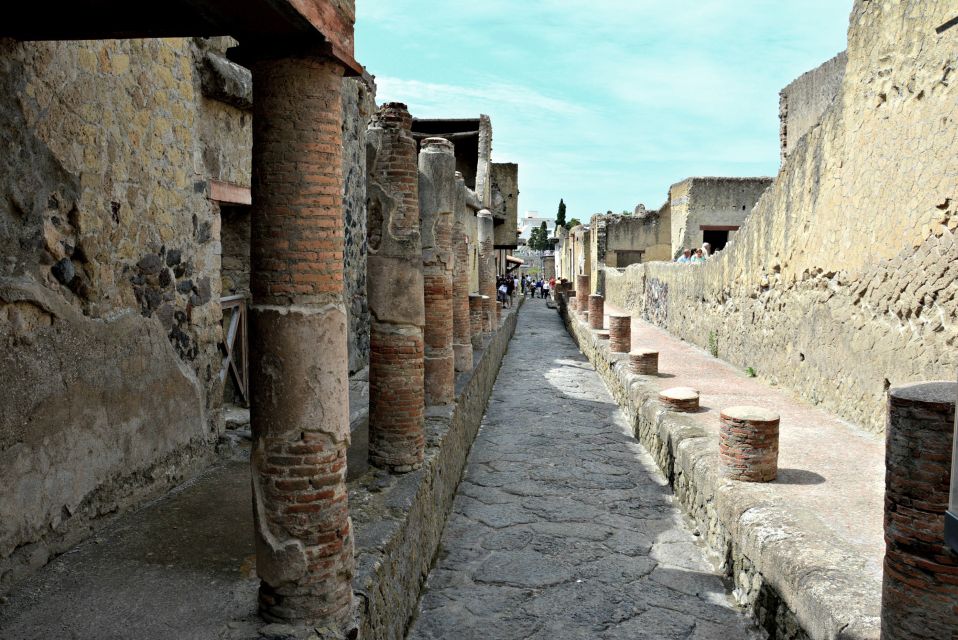
One of the first big “wow, it’s a real street” moments comes on the Northern Cardo, the north-south road. It’s a strong anchor for the tour because it gives kids a mental map. Instead of random stops, you get a sense of how people moved through the town.
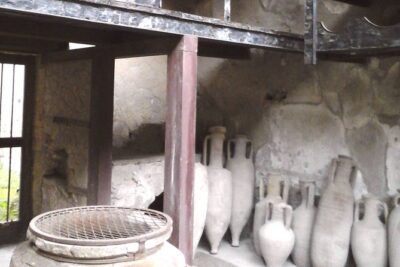
From there, the route swings into everyday spaces, including the thermopolium. You can think of it as a Roman food counter, a place built for quick meals and regular traffic. Kids usually connect to this kind of stop because it feels like the “snack break” of the ancient world.
You’ll also pass by the men’s thermal bath area and the forum, the main square. Even if your children don’t know Roman politics, the guide can frame these places as social hubs—where people met, talked, and got on with the day. For families, that’s the difference between a lecture and an actual story you can walk through.
What to watch for: this section is where you’ll move from “structure viewing” into more names and categories. The multimedia tools are there for a reason, so if you see your kids glaze over, let the guide know. The point is to keep the information child-sized.
Houses Like Sets: Skeletons, Augustales, and a Temple Stop
Next comes one of the stops most families remember: the House of the Skeletons. It’s exactly the kind of location that grabs kids, not just because it’s dramatic, but because it prompts clear questions. A good guide turns that curiosity into understanding—who the people were, what the site reveals, and why the layout matters.
Then you’ll visit the Sacellum of the Augustales, which is the religious stop tied to the Augustales. For kids, temples can feel abstract if you only explain the name. But when you connect it to how communities gathered and showed identity, it becomes more than a backdrop.
This part of the tour also helps with pacing. After the emotional intensity of the skeleton-related areas, the Augustales stop gives you a structured “pause point” where the guide can reset attention and steer the group through another layer of life in Herculaneum.
Small practical note: if your child is sensitive to more intense visual material, mention it early so the guide can adjust explanations and keep the pace gentle.
Neptune and Amphitrite to the Salone Nero: Walking Through Home Life
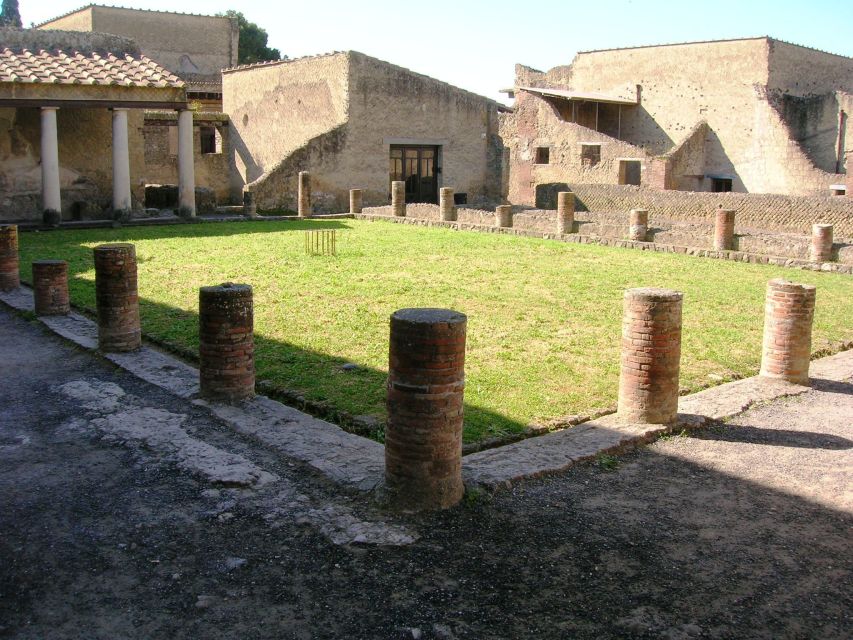
You’ll spend time in several homes, and this is where the “kid-friendly” promise really becomes tangible. Children can’t visualize life in Roman houses from a museum label alone. Here, the plan is to let them walk inside spaces and understand how rooms connect.
Highlights include:
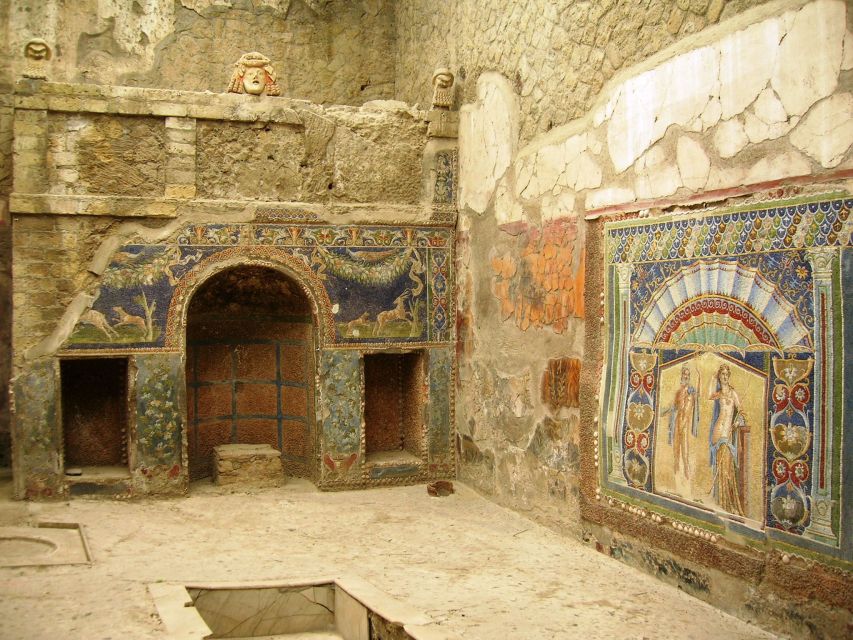
- Casa di Nettuno ed Anfitrite (Neptune and Amphitrite): a home stop that teaches how domestic space worked, not just what was discovered.
- Casa del Salone Nero (House of the Black Saloon): a dramatic named area that’s easy for kids to remember.
- House of Bel Cortile: another home layout stop that helps the guide compare daily spaces across different houses.
The tour also includes the Samnite House and the House of the Wooden Partition. These names may sound like tour memorization, but they’re actually useful signposts. They let the guide talk about space, function, and how a city could have different kinds of homes.
What I love about this part: it turns “ancient ruins” into something like “houses in a neighborhood.” Kids often start asking better questions because they can see the spaces where life happened.
Potential drawback: house areas mean more turning, more looking up and down, and sometimes more time spent at entrances or thresholds. If your children have short attention spans, stick close to the guide and help them follow the route markers.



Bakery, Gym, and the Bucks: Small Places, Big Story
Not every important stop is glamorous. The tour includes a bakery and a gym, plus the Home of the Bucks.
These are fantastic for families because they shift the focus from big public buildings to daily routines. A bakery is easy to imagine: food preparation, regular work, the practical side of life. A gym helps kids picture training and social time, not just temples and politics.
The Home of the Bucks is also a helpful reminder that homes had personality and symbols. Even without turning it into a scavenger hunt, a guide can use these named spots to keep kids engaged and moving.
If you have teenagers, this section can work even better. They often want to know what people did for fun or what the town felt like day to day. A gym and everyday shops give them that angle.
Marina Gate Terrace, Marcus Nonius Balbus, and the Beach
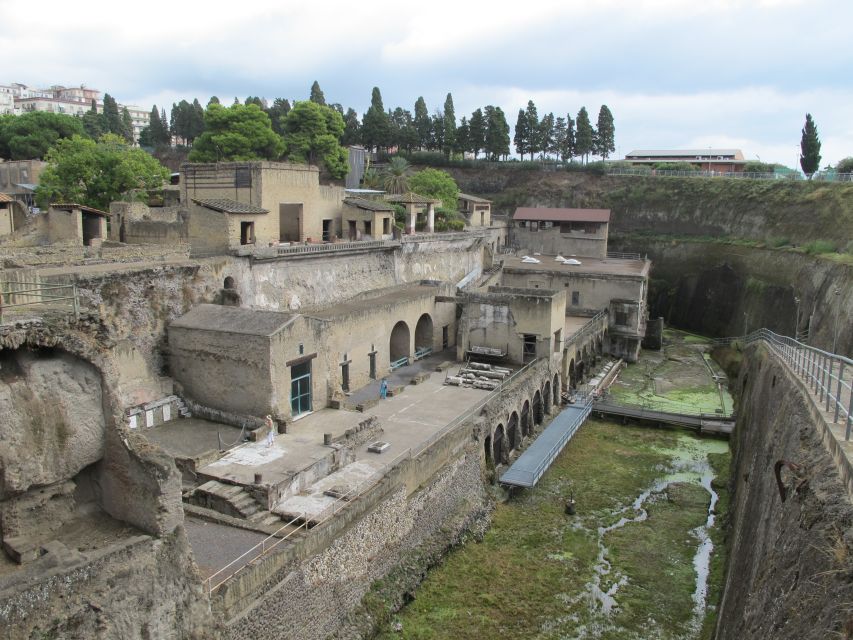
The final stretch includes the Marina gate terrace of Marcus Nonius Balbus. This stop adds a sense of position in the town, connecting daily life to the edges and outlooks of the city.
Then you reach one of the most emotionally powerful parts of the tour: the beach where hundreds of skeletons of the victims of the eruption were discovered. The guide’s job here is crucial. You want explanations that are honest but controlled, with language that matches your child’s age.
For many families, this is where the reality hits hardest: this isn’t a fictional story, it’s a place where catastrophe happened. A good kid-friendly guide doesn’t soften that truth, but it makes it understandable and age-appropriate.
Practical tip: take a breath here. If your kids need a pause, ask for one. It’s okay to step back for a minute and regroup, especially during the more intense parts of any history tour.
Tablets, Reconstructions, and Multimedia: Why This Tour Works for Kids
This experience is built around attention. Instead of relying only on what kids can see in stone, the guide uses tablets, reconstructions, and multimedia material to help children visualize what the spaces likely looked like when the city was alive.
That matters because kids don’t just need information. They need a model. When reconstructions match the layout you’re standing in, your child can connect the present ruins to the past life more easily.
It also helps you as an adult. Even if you know a little Roman history, these tools can clarify what you’re looking at without you hunting for answers on your phone. You’re getting guidance timed to the moment you’re in front of a specific place.
Small warning: if your child is sensitive to screens or gets distracted easily, tell the guide. You can still benefit from the approach; it’s just a question of how interactive you want it.
Price and Value from Naples: What You’re Actually Getting
The price is $206.75 per person for a 2-hour private group kid-friendly tour. Included is the local certified guide specialized in tours with children and the Herculaneum admission fee (16 euros each).
So you’re paying for three things at once:
- a trained guide who can explain for kids,
- access to major site areas during your route,
- and admission that you otherwise would have to handle separately.
The value is strongest if you want a focused family tour rather than a self-guided wander. Herculaneum is big, and a two-hour window can feel tight if you’re trying to figure out what to see first. This route gives you that structure with stops that are named, spaced out, and built for family interest.
What’s not included is also part of the value equation. There’s no transportation and no meals, so budget time for snacks either before or after. If you’re comparing costs, factor in that you’re paying for guiding and admission, not for transfers or food.
Also, you get skip-the-ticket-line access, which is a real help when you’re traveling with kids and you don’t want unnecessary waiting.
What This Tour Feels Like On the Ground
This isn’t a stroller-free fantasy tour. It’s a walking experience through an archaeological site, with plenty of real-world surfaces and enough stops to keep children learning without turning it into a race.
Because it’s private, you’re not managing a large crowd’s pace. That usually means fewer interruptions and more chance to ask quick questions as they pop up. If your kids have curiosity that veers off-script, a kids specialist guide is better at handling that than a standard adult tour.
English and Italian are available, so if you’re in Naples and want a guide who can switch to the right language comfortably, you have options.
Who Should Book This Kid-Friendly Herculaneum Tour
Book this if you want:
- a short, guided family outing (about two hours),
- a route built around children’s attention spans,
- and hands-on “walk through real places” access with modern explanation tools.
It’s a great match for families with kids who are old enough to follow a story with stops (think elementary age onward). If you’ve got very young kids who need frequent breaks, you might still enjoy it, but you’ll want to be realistic about the walking time.
If you’re traveling with teenagers, this can work well too, especially with the home and daily-life stops. They often like history when it has physical locations and a clear narrative.
One more practical note: the tour is described as wheelchair accessible in one place, but also marked not suitable for wheelchair users. If accessibility is a concern, contact the provider directly before booking so you’re not guessing.
Should You Book It?
If your goal is to make Herculaneum click for your kids, I’d lean toward yes. You’re getting a kid-trained guide, admission included, and a smart two-hour route that uses tablets and reconstructions to turn ruins into something children can picture.
Skip it only if your family can’t handle a steady walking tour with no transportation for two hours. Also, if your trip lines up with the first Sunday of the month, remember that entrance is free but entry can’t be guaranteed because tickets can’t be reserved ahead.
FAQ
How long is the Herculaneum kid-friendly tour?
The tour lasts 2 hours.
Where does the tour start?
Meet the guide at the ticket office of the Herculaneum ruins, at Via dei Papiri Ercolanesi 21. The guide will be holding a sign with your name.
Is transportation included?
No. This is a walking tour, and there is no transportation included.
What’s included in the price?
Included are a local certified guide specialized in tours with children and the Herculaneum admission fee (16 euros each).
What is not included?
Transportation and meals are not included.
What places will you visit during the 2 hours?
You’ll visit a route that includes stops such as the Northern Cardo, the House of the Skeletons, thermopolium, men’s thermal bath, the Temple of Augustali, the forum, Casa del Salone Nero, Casa di Nettuno ed Anfitrite, House of Bel Cortile, the Samnite House, the House of the Wooden Partition, the bakery, the gym, the Home of the Bucks, the Marina gate terrace of Marcus Nonius Balbus, and the beach area where victims were discovered.
What languages are the guides?
The live tour guide is available in English and Italian.
Is there a free entry day at Herculaneum?
Yes. On the first Sunday of each month, entrance is free of charge, but tickets can’t be reserved ahead of time, so entry is not guaranteed.
Can I cancel or pay later?
Free cancellation is available up to 24 hours in advance for a full refund. There is also a reserve now and pay later option.