REVIEW · NAPLES
From Naples: Archeological day to Pompeii and Herculaneum
Book on GetYourGuide →Operated by Around Vesuvio · Bookable on GetYourGuide
Ashfall can turn streets into time machines. This day trip from Naples takes you to Pompeii and Herculaneum, two Roman cities frozen in the fallout of Mount Vesuvius in 79 AD, with the added comfort of an easy bustransfer. I like that you get real time in both places without the usual hassle of figuring everything out on your own.
What I really like is the combination of skip-the-line tickets plus an audio guide format that helps you connect ruins to the story of the eruption. I also like that the schedule is built around free wandering, so you can move at your own pace while you learn how ash preserved homes, décor, and even food.
One watch-out: this is an audio-driven experience, not a live guide. If you prefer someone talking in real time, you might find the instructions and map helpful but not always simple to use, especially at Pompeii where you can easily get turned around.
In This Review
- Quick hits you’ll feel on day one
- Two Vesuvius victims in one day: Pompeii plus Herculaneum
- Getting from Naples with Around Vesuvio: timing and what feels easy
- Ercolano (Herculaneum) in 2.5 hours: smaller footprint, strong impact
- Pompeii for about 4 hours: audio, map, and avoiding the get-lost feeling
- What the eruption reveals: ash-preserved homes and the shock of reality
- Price and value: why $123.48 can work for short stays
- Transportation comfort versus the “audio-only” trade-off
- Who this tour suits best (and who might want something else)
- Smart ways to get better results once you’re on site
- Should you book this Naples Pompeii and Herculaneum day trip?
- FAQ
- How long is the tour?
- What’s included in the ticket price?
- Is food included?
- Do I need an ID document?
- Which languages are available for the audio guide?
- Where does the tour start and end?
Quick hits you’ll feel on day one
- Skip-the-line entry for both Herculaneum and Pompeii, so you lose less time waiting.
- 2.5 hours in Herculaneum and 4 hours in Pompeii, a workable split for a one-day plan.
- Audio formats tailored to each site: digital audioguide for Herculaneum and a Pompeii audio guide plus a detailed map.
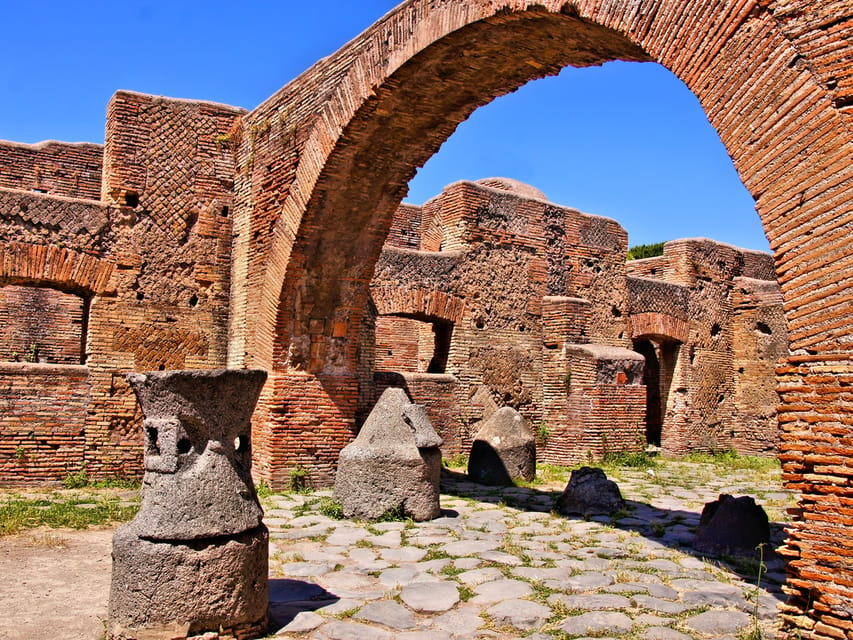
- Ash-preservation focus: you’ll see how the eruption froze daily life, from interiors to casts and human remains.
- Comfort-first logistics: roundtrip pickup/drop-off in Naples with English/Italian driver support.
- Vesuvius context built in so the ruins don’t feel like disconnected snapshots.
Two Vesuvius victims in one day: Pompeii plus Herculaneum
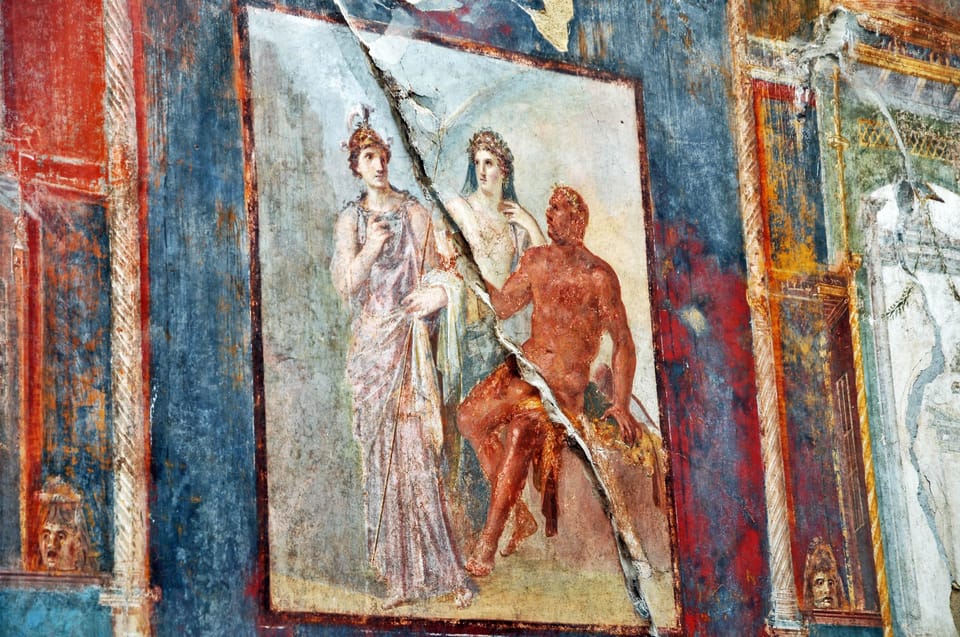
If your trip to Naples includes a short window, this is one of the most direct ways to understand the 79 AD disaster. You’re not just looking at stones. You’re walking through towns that were actively lived in, then abruptly sealed by ash and debris.
Pompeii gives you the big-city feel: long streets, public spaces, houses, and the famous preserved details that make the scale of daily Roman life feel painfully real. Herculaneum, by contrast, tends to feel more compact and intimate. The ruins help you picture how people moved through buildings and routines right before everything stopped.
Both sites are key because the eruption didn’t treat every place the same way. Seeing them back-to-back helps you notice differences in how the ash preserved structures and what kinds of remains and details you can spot as you walk.
You can also read our reviews of more tours and experiences in Naples.


Getting from Naples with Around Vesuvio: timing and what feels easy
This tour is built around roundtrip transportation from Naples and it runs like a day out, not a marathon of transfers. You start at Via Galileo Ferraris, 40 and your bus has the logo Around Vesuvio. After a pickup, you get about 40 minutes of bus time before you reach Ercolano (Herculaneum).
Once you’re done at each site, there’s another short coach leg (about 30 minutes between stops). The full day runs roughly 8.5 hours, with site time that adds up to about 6.5 hours total.
Two practical points that matter on a day like this:
- You’ll want comfortable shoes. Pompeii is spread out, and even with audio guidance, walking adds up fast.
- You’ll want to keep your expectations realistic. Four hours in Pompeii is a lot, but you still won’t see every corner. Your audio route becomes your best friend.
Ercolano (Herculaneum) in 2.5 hours: smaller footprint, strong impact

You get 2.5 hours in Herculaneum, which is a smart amount of time. It’s long enough to wander through major areas, spot preserved features, and still stop when something catches your eye.
The experience is designed to be free time with an included audio layer. You’ll also have skip-the-line entry, which is a big deal here. It’s the kind of small win that makes the start of the day feel smooth instead of chaotic.
At Herculaneum, the audio guidance matters because the site can feel like a puzzle at first glance. The digital audioguide is meant to help you connect what you see—streets, building entrances, interior spaces—with why the preservation is so unusual. You’ll learn how ash helped preserve not only architecture and décor but also evidence tied to real life, not just monuments.
What I’d do in your shoes: pick a few “must-see” stops (for example, a house interior and at least one public-area feel), then let the rest be flexible. In 2.5 hours, that approach beats trying to force a checklist.
Pompeii for about 4 hours: audio, map, and avoiding the get-lost feeling
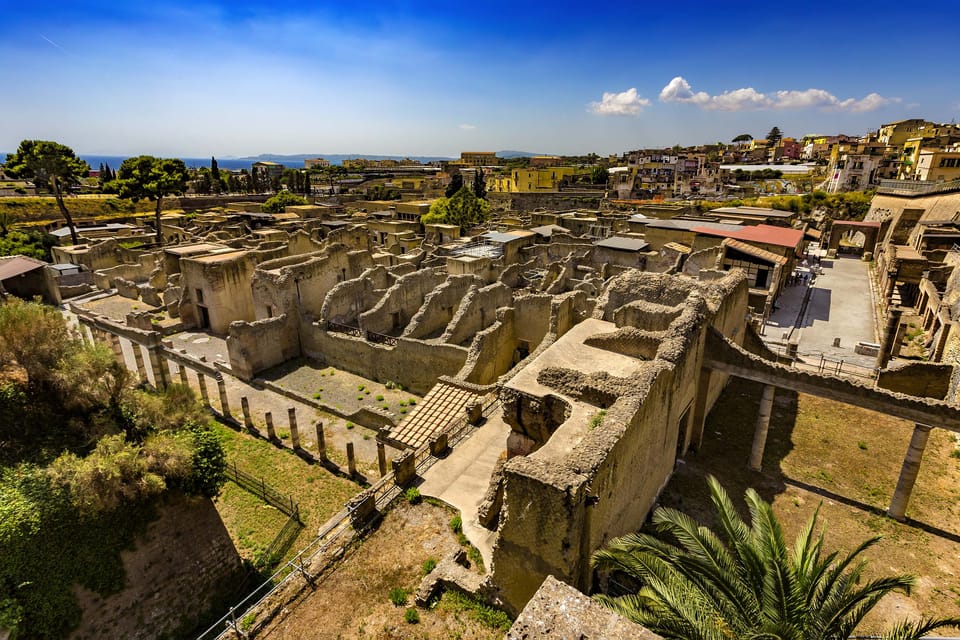
You spend about 4 hours in Pompeii, and that time is just enough to make it meaningful without turning the day into a blur. The tour includes skip-the-line tickets for Pompeii too, which helps you spend more time inside the site rather than outside it.
Here’s the key practical detail: the Pompeii audio guide involves a rental requirement tied to ID. You’ll need a valid ID document to rent the Pompeii audio guide. If you show up without it, you could lose the main learning tool that makes this day trip click.
The tour also includes a detailed map of Pompeii. That’s valuable because Pompeii’s street layout can feel different from what you expect, especially if you’re relying on your own sense of direction. The map helps you keep momentum, and the audio route gives you a reason to stop at specific features instead of just walking randomly.
What you can expect to focus on:
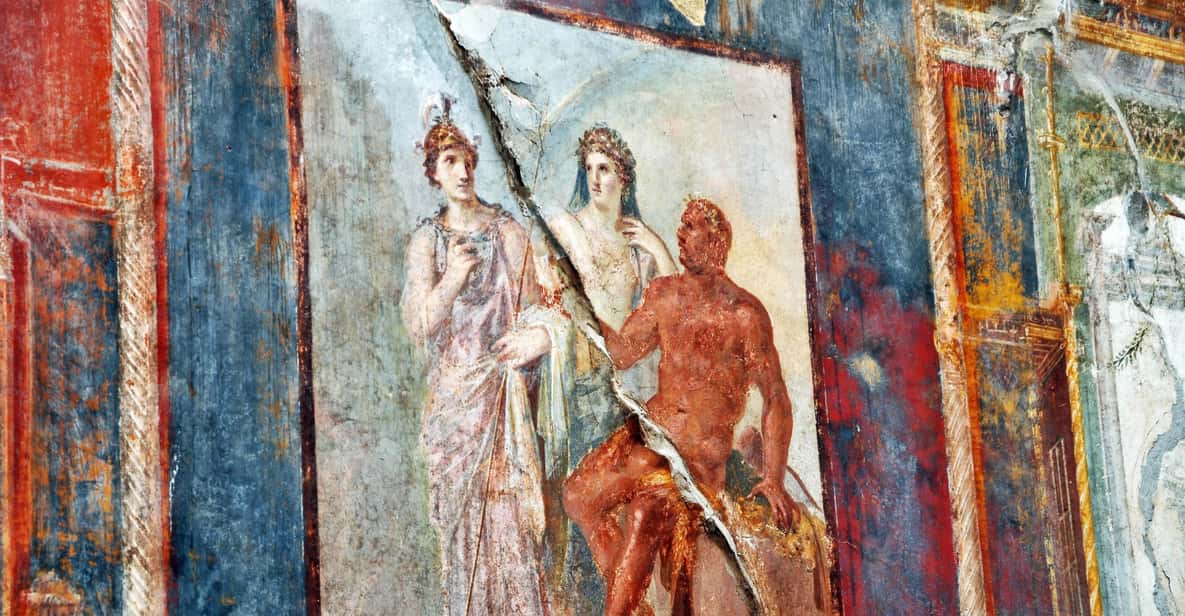
- ancient Roman streets with preserved frescoes and sculptures
- the chance to enter houses and temples
- casts and skeletons of victims, which are part of what makes the eruption feel personal rather than abstract
A quick self-check before you go: if you know you get overwhelmed in large ruins, bring a simple strategy. Save the map and don’t be afraid to pause. Even a short reset helps you keep the audio route working for you instead of chasing it.
What the eruption reveals: ash-preserved homes and the shock of reality
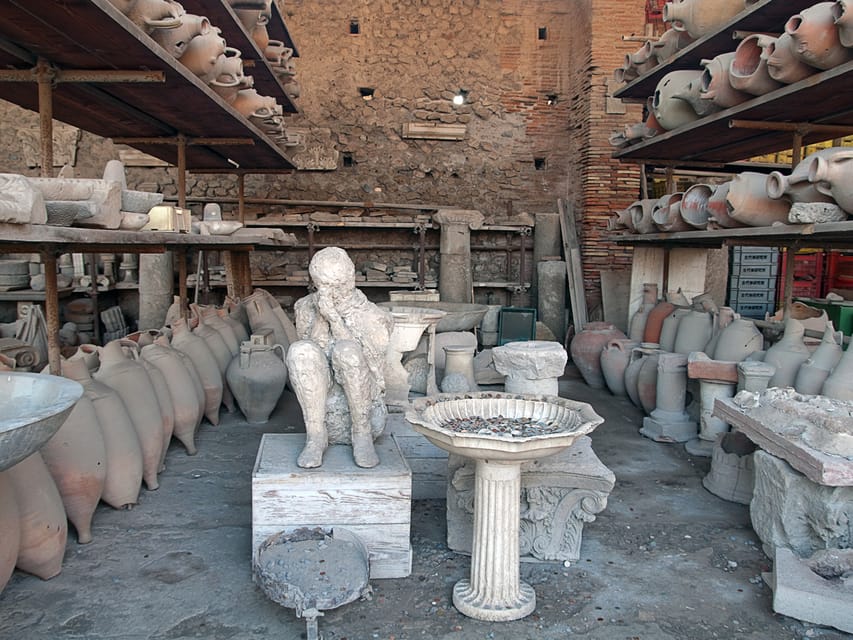
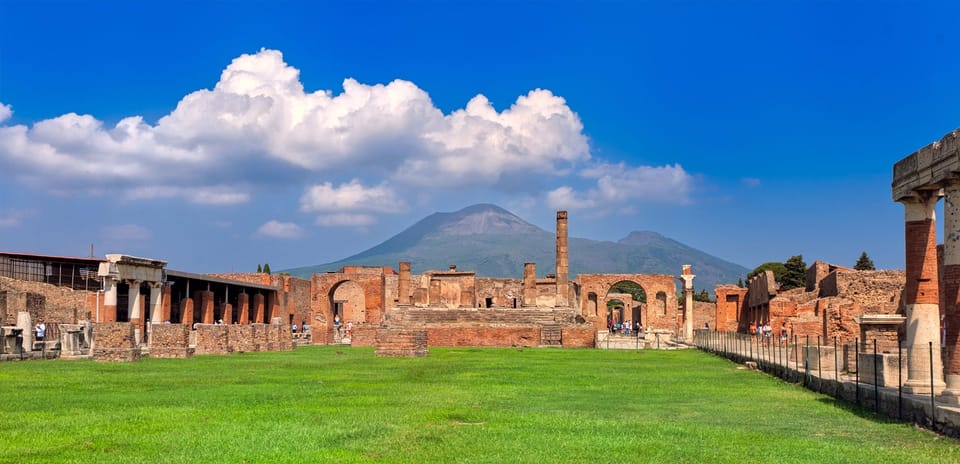
Vesuvius is the star, but the real story is what happened to people and their stuff. This tour’s learning angle is centered on how the eruption of Vesuvius in 79 AD altered everything—and how ash preservation can capture ordinary life with unsettling clarity.
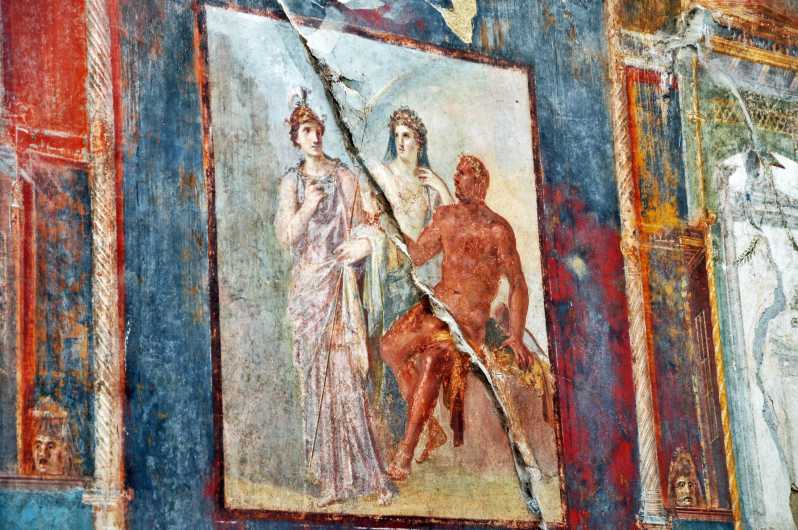
You’ll hear about how the ash preserved homes and décor, not just major monuments. That means you can stand in front of a wall section and think about rooms as lived spaces: where people cooked, ate, worked, entertained, and slept.
The most striking part is the evidence that preservation includes more than artifacts. The tour describes learning about the casts and skeletons of victims, plus how ash preserved details such as even food. That’s heavy material, but it’s also what gives these ruins their emotional weight. You’re not only seeing Roman grandeur; you’re seeing the sudden end of normal daily routines.
If you want the best version of this experience, don’t treat it like a photo scavenger hunt. Let the audio guide point you to why each preserved detail matters.


Price and value: why $123.48 can work for short stays
The price is listed at $123.48 per person, and for a Naples-to-Pompeii-and-Herculaneum day trip, it’s not just paying for transportation. It bundles together several costly or time-consuming pieces:
- Roundtrip transportation from Naples
- Skip-the-line tickets for both Herculaneum and Pompeii
- Audio guidance support, including Pompeii’s audio guide with a detailed map and a digital audioguide for Herculaneum
Food isn’t included, so plan on a meal on your own. But the big value is that you’re buying back time: less time waiting, more time walking through the sites while the educational pieces are already built in.
Is it the cheapest way to do it? Maybe not. But when you’re short on time and you want an organized flow that connects Pompeii and Herculaneum into one coherent day, the bundled logistics can be worth it.
Transportation comfort versus the “audio-only” trade-off

The transportation side is a real selling point. The bus transfer is meant to be comfortable and stress-free, and you don’t have to manage separate trips or complicated rendezvous points.
The trade-off is the format. This experience is strongly centered on audio rather than a live guide. The audio approach can be great when you use it actively: listen, move to the next stop, and let the commentary shape how you look at the ruins.
Still, you should know what could frustrate you:
- If you’re not comfortable navigating audio controls while walking, you might lose a bit of the explanation.
- Pompeii can be so visually busy that without a clear plan, you might feel stretched trying to line up what you’re hearing with where you are.
That doesn’t mean the trip is bad. It means you’ll get more out of it if you treat the audio guide like a map to the best parts, not just background noise.
Who this tour suits best (and who might want something else)

This tour is a strong match for you if:
- you’re an archaeology lover and want a structured day with learning built in
- you want to understand the Vesuvius event through two key preserved sites rather than only one
- you don’t want to spend your limited time in Naples coordinating transport and entry
It may be less ideal if:
- you strongly prefer a live, real-time guide who can answer questions on the spot
- you get impatient with audio-only explanations, especially if navigation distracts you
If you fall into the middle—curious, but not an archaeologist by training—you’ll still likely enjoy it. The free-wandering time helps you follow your interests rather than being dragged from one stop to another.
Smart ways to get better results once you’re on site
Here are a few practical moves that help this type of day trip feel satisfying instead of exhausting:
- Start with orientation. Spend a few minutes with your map at the beginning of Pompeii so you aren’t guessing later.
- Pick priorities. With 4 hours at Pompeii, you’ll do better with 6–10 “targets” than with one massive plan.
- Use audio actively. Don’t wait until you’re tired to start listening. The audio makes the ruins easier to read while your energy is still good.
- Give yourself permission to pause. Frescoes, sculptures, entrances to houses, and preserved remains reward slow looking. Quick photo stops don’t always do them justice.
- Plan for a meal break. Food and drinks aren’t included, so decide where you’ll eat before you go looking for your next stop.
Should you book this Naples Pompeii and Herculaneum day trip?
I’d book it if you want an organized way to connect Pompeii and Herculaneum in one day from Naples, with skip-the-line entry and audio guidance doing the heavy lifting on the story of 79 AD.
Skip booking if you’re the type who needs a live guide to keep momentum or you’re worried the audio controls and mapping will slow you down. In that case, you might want a guided option with a person talking throughout.
If you do book, bring your valid ID for the Pompeii audio guide rental, wear shoes you can walk in for hours, and use the audio guide like a route—not a soundtrack. Do that, and you’ll come away with a clearer sense of why Vesuvius changed these towns forever.
FAQ
How long is the tour?
The duration is about 8.5 hours, with time split between Herculaneum (2.5 hours) and Pompeii (4 hours).
What’s included in the ticket price?
It includes roundtrip transportation from Naples, skip-the-line tickets for both Herculaneum and Pompeii, and audio guidance (digital audioguide for Herculaneum and an audio guide plus detailed map for Pompeii).
Is food included?
No. Food and drinks are not included.
Do I need an ID document?
Yes. You must have a valid ID document to rent the Pompeii audio guide.
Which languages are available for the audio guide?
The audio guide is available in Chinese, English, French, German, Hebrew, Italian, Portuguese, Russian, and Spanish.
Where does the tour start and end?
It starts and ends back at Via Galileo Ferraris, 40. The meeting point uses coordinates 40.8505189, 14.2747942, and the bus logo is Around Vesuvio.