REVIEW · NAPLES
Naples Pizza-Making: From Dough to Dessert & Wine at Pizzeria
Book on Viator →Operated by Curioseety SRLS · Bookable on Viator
Pizza-making in Naples is hands-on and real.
This class at an award-winning pizzeria turns you from eater into dough-maker, using a wood-fired oven and classic Neapolitan methods like staglio for the panetti. It’s a 2-hour style lesson with your own station, plus you’ll finish with sweet dough dessert and a drink (beer or wine) in a friendly, low-stress setting.
What I like most is the way it trains you on fundamentals you can actually repeat at home: kneading, stretching, and rising times for that thin, soft Neapolitan crust. I also like the small-group feel (up to 15 people), and how hosts such as Lucia or Francesca keep everything understandable, even when the pizzaiolo is speaking Italian.
One thing to consider: the pizza maker may not speak much English, so you’re relying on the host to translate and guide you step by step. That’s usually handled well, but it can still make the experience feel more like following cues and timing than chatting freely with the chef.
In This Review
- Key Things You’ll Remember From This Naples Pizza Class
- Naples Pizza From Dough to Dessert: Why This Class Works
- Where You Start in Naples: Toto’ Sapore and Getting Oriented
- Dough Workshop: Mixing, Kneading, Rising, and Learning the Real Feel
- Staglio and Panetti: The Shaping Step You Can Actually Take Home
- The Margherita Build: Simple Ingredients, Precise Steps
- Eating the Pizza You Made: The Best Part, Plus a Social Meal
- Dessert and the Chocolate Twist: Straccetti di Pizza al Cioccolato
- Price and Value: Why $82.68 Can Make Sense
- Timing, Getting There, and What to Wear
- Who This Class Fits Best (and Who Might Want a Different Option)
- Should You Book This Naples Pizza-Making Class?
- FAQ
- Is the class in English?
- What do I eat and drink during the class?
- How long is the experience?
- How many people are in the group?
- Can children participate?
- Where does the class start?
Key Things You’ll Remember From This Naples Pizza Class
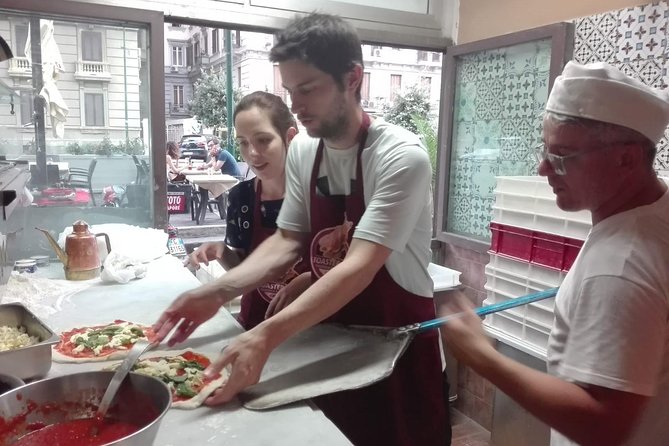
- Staglio for panetti: you’ll learn the “ancient” technique that shapes the dough properly.
- Your dough station: less watching, more doing, with utensils and ingredients provided.
- Wood-fired Margherita baking: you’ll top and bake what you make.
- Pizza dough dessert: you’ll see sweet uses for the same dough process.
- Drinks included: birra alla spina or wine, plus limoncello (or coffee) to toast.
- Small group size: up to 15 travelers means more attention and less waiting.
Naples Pizza From Dough to Dessert: Why This Class Works
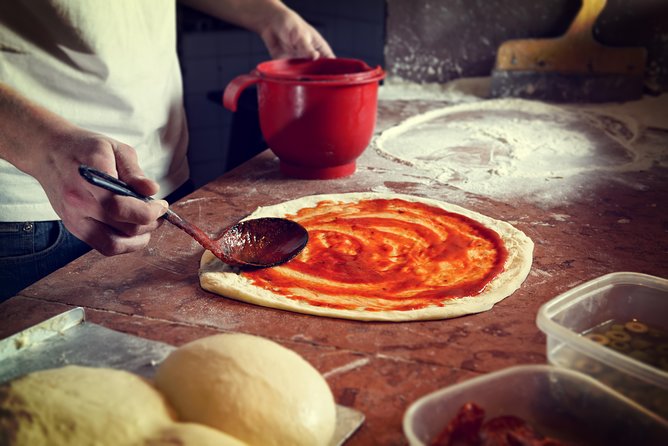
Neapolitan pizza isn’t just a style. It’s a method. And this class is built around method, not just “make a pizza and hope for the best.”
You start with dough and work through the parts that usually go wrong at home: how much you knead, how long you let dough rise, how you portion and shape the balls (panetti), and how you stretch without tearing the gas bubbles you want in a real Neapolitan crust.
Then you get the fun payoff. You bake your pizza in a wood-fired oven, eat it while it’s still warm, and finish with a sweet dough dessert plus a fried dessert featuring chocolate spread. It’s the kind of evening where you leave full and also slightly obsessed with the science of dough.
You can also read our reviews of more wine tours in Naples

Where You Start in Naples: Toto’ Sapore and Getting Oriented
You meet at Toto’ Sapore, Viale Antonio Gramsci 18/B, 80122 Napoli. The location is near public transportation, which matters in Naples because moving around can be faster by walking a bit and using transit when you can.
Plan to arrive a few minutes early. There’s a note in the experience details that timing can be affected by real-world traffic, and one person even had to shift their class schedule because they were late. Showing up on time helps you catch the dough-making part, which is the heart of the experience.
This is also a working pizzeria environment, so expect a real kitchen flow. One review noted it can feel a little awkward at first making dough in the restaurant space, but it passes once you’re rolling, folding, and wrapping.
Dough Workshop: Mixing, Kneading, Rising, and Learning the Real Feel
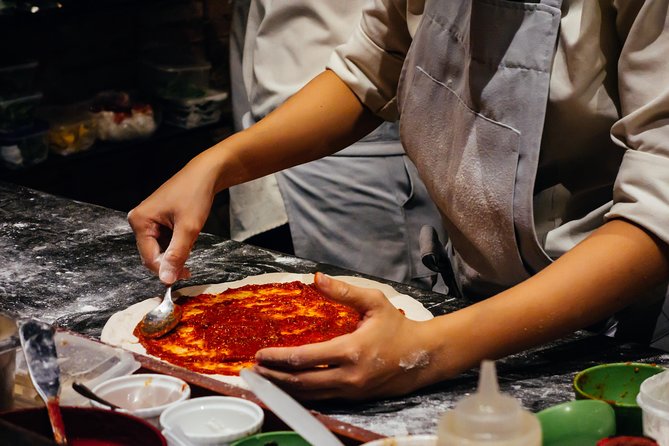
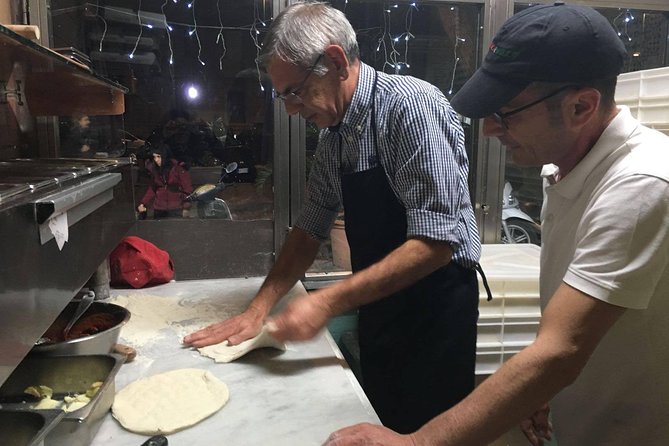
The lesson is hands-on from the first steps. You’re given utensils and ingredients, and you work at your station with guidance from the host and pizzaiolo.
Here’s what you’re really learning during the dough segment:
- Proportions so the dough balances flavor and texture.
- Kneading technique to build the structure that helps the dough stretch.
- Rising times to develop the airy interior while keeping the crust tender.
- Stretching control so you can keep the edge airy and avoid overworking.
Neapolitan pizza crust is thin and soft, not crunchy. The class keeps that goal in mind while you handle the dough. You’ll also hear a lot about simplicity—local ingredients and straightforward process—because Neapolitan pizza is famous for being basic in ingredients but demanding in execution.
And you’re not just copying steps blindly. The pizzaiolo watches closely and corrects your technique. Several comments praised the patience and step-by-step guidance, including hosts who explained each step in detail (and made sure English speakers understood what to do).
Staglio and Panetti: The Shaping Step You Can Actually Take Home
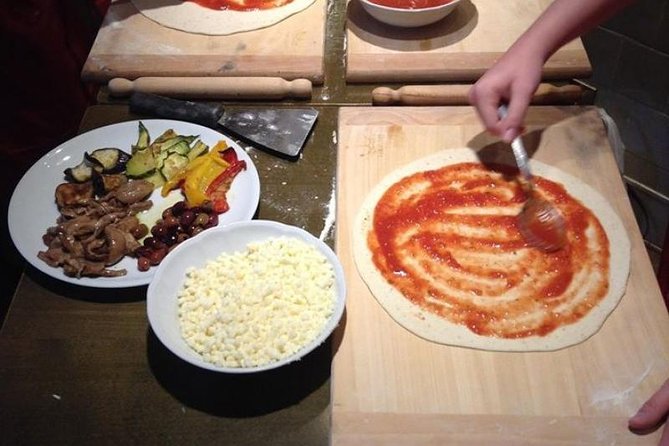
The “wow” moment in this class is staglio.
Staglio is the technique used to portion dough into panetti (the dough balls before stretching). It’s not just about making neat circles. It affects how the dough ferments and how it behaves when stretched later.
In plain terms: this is where your pizza starts acting like a Neapolitan pizza instead of a generic dough disc. If you’ve ever struggled with pizzas that shrink back while stretching or end up uneven, the staglio and handling lessons are the antidote.
The biggest value here is feedback. If your dough gets too thin in one area (or too thick in another), the chef can help you adjust before you bake. One family even described making a crust too thin in the center, then getting help to fix it before topping and cooking.
The Margherita Build: Simple Ingredients, Precise Steps
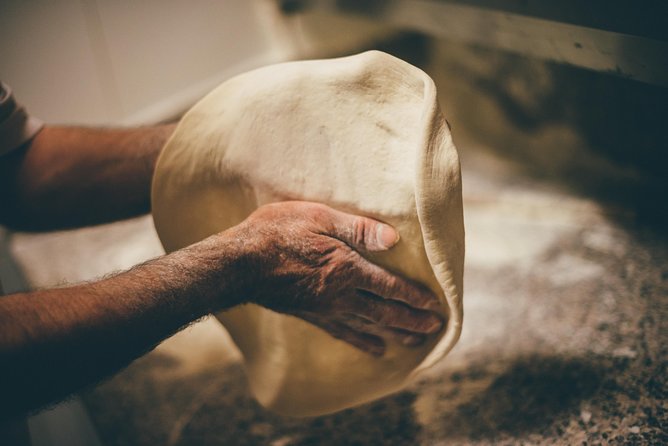
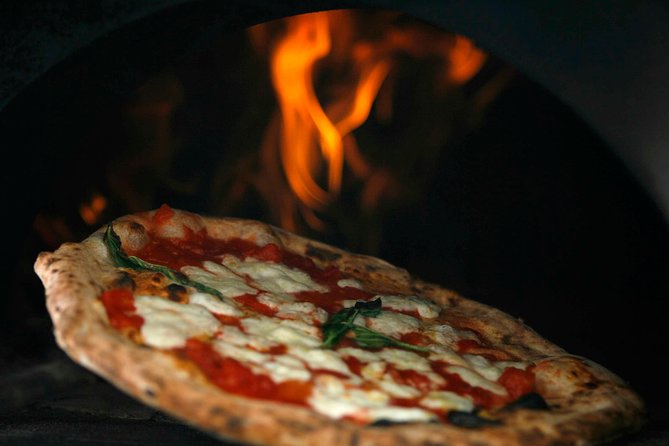
After the dough part, you move into topping and baking your pizza. The class uses the classic Pizza Margherita as the baseline—because if you can nail Margherita, you understand the system.
You’ll select toppings and work with traditional ingredients such as:
- fresh tomatoes
- buffalo mozzarella
- basil
- DOP olive oil
This part matters because Margherita is the test. It forces balance—sauce amount, moisture control, and how the cheese and basil sit on top. Too much sauce makes soggy crust. Wrong handling makes the crust tough. This class teaches you the practical version of these ideas while you’re standing there doing it.
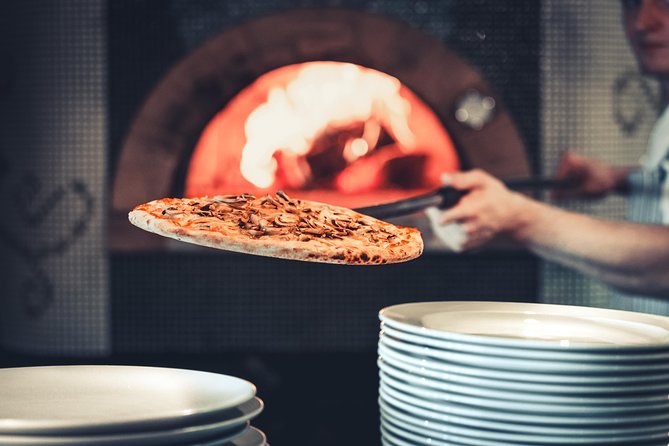
Then comes the oven time. The wood-fired oven is the centerpiece. You’ll see how the pizzaiolo manages heat and timing, and you’ll learn how the pizza goes in and how it bakes.
One review specifically mentioned learning how to use the pizza peel to rotate the pizza in the oven. If you’ve ever wondered why some homemade pizzas come out charred in the wrong places, rotation and timing are part of the answer.
You can also read our reviews of more tours and experiences in Naples

Eating the Pizza You Made: The Best Part, Plus a Social Meal
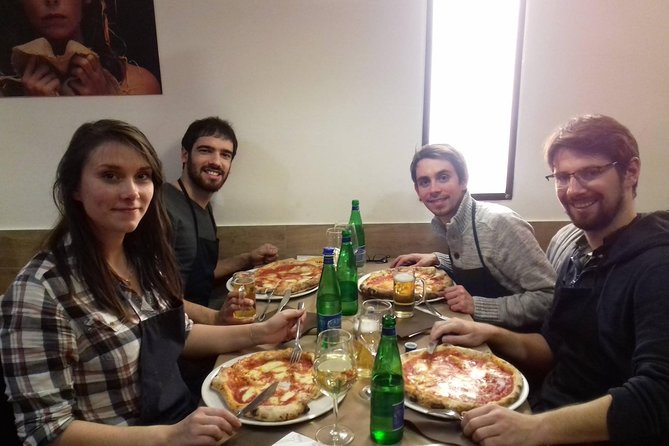
Once your pizzas come out, you eat them as part of lunch or dinner with the Margherita you created. This is a key reason the class feels more valuable than a cooking demo.
You’re not waiting for a finished plate someone else made. You built the crust, stretched the dough, topped it, and watched it bake. Then you taste it while it’s still at peak texture.
Drink is included with the meal:
- a glass of Birra alla spina (draft beer) or wine, or soda
- bottled water
It’s casual, convivial, and designed to keep the energy up without rushing. Many comments praised the relaxed, fun atmosphere and the laughter that comes from learning something hands-on with new friends at close distance.
Dessert and the Chocolate Twist: Straccetti di Pizza al Cioccolato
This class doesn’t stop at savory. You also learn how pizza dough can be used for something sweet.
The dessert mentioned in the menu is Straccetti di pizza al Cioccolato, described as fried pizza with chocolate spread. The idea is simple: you get to taste a different side of Neapolitan dough-based desserts and see how the skills can translate beyond pizza night.
More than one person called the dessert a highlight—especially the fried chocolate component—and tied it to the overall value of the evening. You’re paying for an experience that ends with multiple bites, not just one slice and a pat on the back.
After dinner and dessert, there’s a toast with limoncello (or coffee, depending on what’s listed for your session). That final moment is small, but it adds to the sense of “this was a real night out,” not a rushed class.
Price and Value: Why $82.68 Can Make Sense
At $82.68 per person for about 2 hours, the cost is not cheap. But for what you get, it can feel fair—especially in a city where food experiences can get pricey fast.
Here’s what pushes the value up:
- Hands-on instruction with dough work, not passive viewing
- Wood-fired oven cooking, which is hard to replicate at home without the right setup
- A full meal (lunch or dinner) built around what you make
- Drinks included (beer or wine or soda)
- Dessert included, including the chocolate-spread fried treat
- A small group up to 15, which helps you actually get corrected and coached
Also, the class is booked on average 31 days in advance, which tells you it’s not a random one-off. In some cases, people even described having a session that felt almost private when the group was very small. You can’t count on that every time, but smaller groups are consistent with the format.
Timing, Getting There, and What to Wear
This experience runs for about 2 hours, and one review mentioned a noon start. Your schedule may vary by day, but the timing is short enough that it works well even if you have a packed Naples itinerary.
Naples traffic is real. If you’re coming by taxi or bus, you might still get stuck. Arriving a bit early reduces stress and helps you catch the dough-making segment from the beginning.
Parking can be tough, according to one comment. If you’re driving, consider using transit or getting dropped off near the meeting point and walking the last bit.
What to wear: comfortable clothes and shoes you don’t mind getting a little warm or flour-dusted. You’ll be kneading and handling dough, so dress like you’re going to cook, not like you’re going to dinner only.
Who This Class Fits Best (and Who Might Want a Different Option)
This is a great fit if you want:
- a practical cooking lesson with real technique
- an experience centered on one core skill: Neapolitan dough and baking
- a fun food evening with drinks and dessert
- a small-group class with more attention
It also works for different ages, with a big caveat: children must be 6 and over. Under 6 isn’t allowed in the work area or oven zone for safety reasons.
If you’re traveling with kids who are old enough, this kind of hands-on “do it with your hands” class is exactly what they remember. On the other hand, if anyone in your group has limits with physical activity or heat exposure, you’ll want to think twice, since kneading and dough handling are part of the process.
Should You Book This Naples Pizza-Making Class?
Yes, I’d book it if you care about learning how Neapolitan pizza actually works. This isn’t just a souvenir meal. It teaches dough handling, shaping (including staglio), and wood-fired baking—then rewards you with both savory pizza and sweet chocolate dessert.
Book it especially if:
- you’re a pizza lover who wants technique, not just a taste
- you want a small-group experience with coaching
- you like the idea of taking home a repeatable process for pizza at home
- you’re traveling during a time when you can spare 2 hours for a hands-on meal
I’d hesitate if:
- you strongly prefer a class where the main teacher speaks fluent English at all times
- you’re expecting a mostly observation-based activity
- you’re not comfortable with hands-on food prep
FAQ
Is the class in English?
Yes, the experience is offered in English. The pizzaiolo may speak Italian, but the host helps keep the steps clear.
What do I eat and drink during the class?
You’ll make and eat a Pizza Margherita, plus you’ll have a fried pizza dessert with chocolate spread. Drinks included are a glass of beer or wine or soda, bottled water, and limoncello (or coffee).
How long is the experience?
It’s about 2 hours.
How many people are in the group?
The class has a maximum of 15 travelers.
Can children participate?
Children must be aged 6 or over. Under 6 aren’t allowed, including access to the work area and oven zone.
Where does the class start?
You start at Toto’ Sapore, Viale Antonio Gramsci 18/B, 80122 Napoli NA, Italy, and the activity ends back at the meeting point.
If you tell me your travel dates and whether you prefer beer or wine, I can help you slot this into a Naples day and suggest what time of day tends to feel easiest.