REVIEW · NAPLES
From Naples: Herculaneum and Pompeii Day Trip with Tickets
Book on GetYourGuide →Operated by VISITING CAMPANIA S.R.L. · Bookable on GetYourGuide
A day with Vesuvius in your rearview mirror. This trip combines skip-the-line entry with time to roam Herculaneum and Pompeii at your own pace. I especially like the way you get both sites in one go without feeling chained to a clock, and I appreciate the Pompeii audio guide that keeps you moving while filling in the big story. One thing to plan for: you’ll be on your feet for most of the day, and large bags/luggage aren’t allowed.
The order helps too. You start in Ercolano (Herculaneum) with 2.5 hours to look closely at frescoes, mosaics, and even carbonized wooden remains, then you roll into Pompeii for 4 hours to see the amphitheater, villas, and the cast figures of volcanic victims. A possible drawback is there’s no live guide, so if you want real-time Q&A, you’ll rely on the audio guide and signage.
In This Review
- Key points I’d plan around
- Naples Pickup and the Coach Ride to Vesuvius Country
- Herculaneum First: 2.5 Hours to See Daily Life in Ercolano
- How to spend your 2.5 hours well
- Skip-the-Line Entry at Pompeii and How to Use the Audio Guide
- Your 4-hour game plan
- What You’ll Actually See: Frescoes, Mosaics, and the Human Scale of 79 AD
- A realistic pacing mindset
- Transfers, Timing, and Comfort: Making the Day Feel Manageable
- What to bring (and why)
- Price and Value: Is This $123.48 a Good Deal?
- Should You Book This Herculaneum and Pompeii Day Trip?
- FAQ
- Where do I meet the bus in Naples?
- How much time do I get at Herculaneum and Pompeii?
- What’s included for Pompeii learning?
- Do I get a live guide on this trip?
- Do I need to bring ID for the audio guide?
- Are luggage and large bags allowed?
Key points I’d plan around
- Skip-the-line tickets save you from lottery-style waiting at two major sites
- Herculaneum’s 2.5 hours is long enough to notice small details like mosaics and painted walls
- Pompeii’s 4 hours plus an audio guide is a solid self-paced way to cover a huge site
- Roundtrip transfers from central Naples make it easier if you don’t want to coordinate transport
- No large bags allowed means pack light so you’re not stuck managing gear all day
- Audio guide requires valid ID, so bring your passport or ID card
Naples Pickup and the Coach Ride to Vesuvius Country
This is a straightforward Naples-to-the-ruins day: you meet the bus in central Naples, then head south by coach. The meeting point is Via Galileo Ferraris, 40 (helpful coordinates if you’re using Google Maps: 40.8505189, 14.2747942). Look for the bus logo Around Vesuvio.
The bus part isn’t just transit, it’s your decompression. You get a 40-minute ride to the first stop, Herculaneum (Ercolano), then a 30-minute hop to Pompeii, with another 30 minutes back to Naples. That rhythm matters because both archaeological sites are large and can tire you out fast once you’re walking.
You’ll also want to pay attention to luggage rules before you leave. Luggage or large bags aren’t allowed, so plan for a small day bag, water, and your essentials. Comfortable shoes are non-negotiable here, because Pompeii in particular covers a lot of ground.
One more practical note: the driver is listed as English, but the educational component at Pompeii is through the audio guide. If you’re the type who likes to understand context as you go, that’s a good match for this setup.
You can also read our reviews of more tours and experiences in Naples


Herculaneum First: 2.5 Hours to See Daily Life in Ercolano
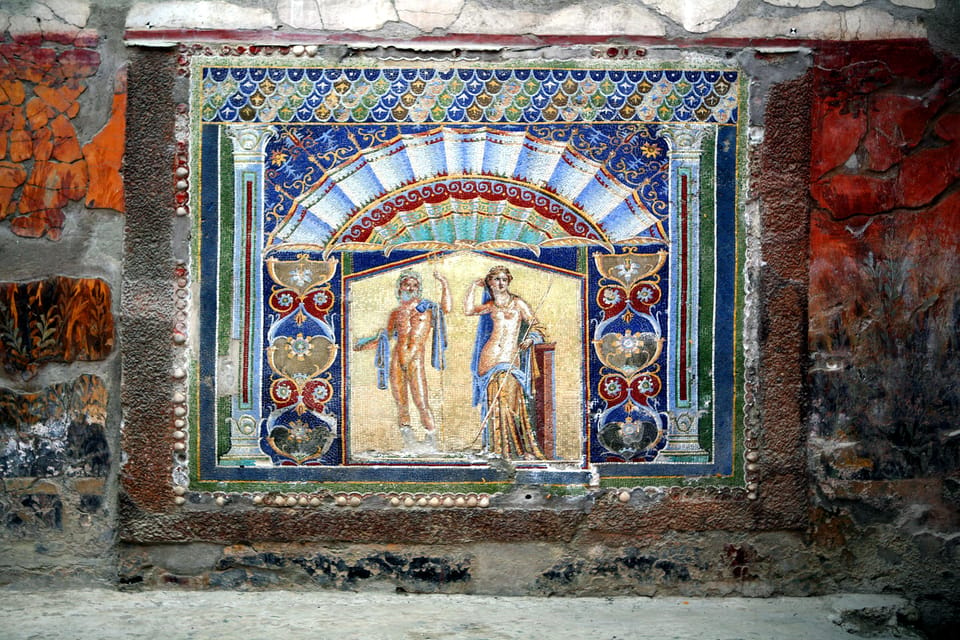
Starting at Herculaneum (Ercolano) is a smart choice. You get the calmer beginning of the day, and the ruins here are famous for how well they preserve parts of everyday Roman life. After pickup, you arrive and have 2.5 hours of free time.
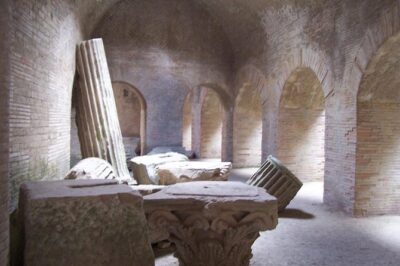
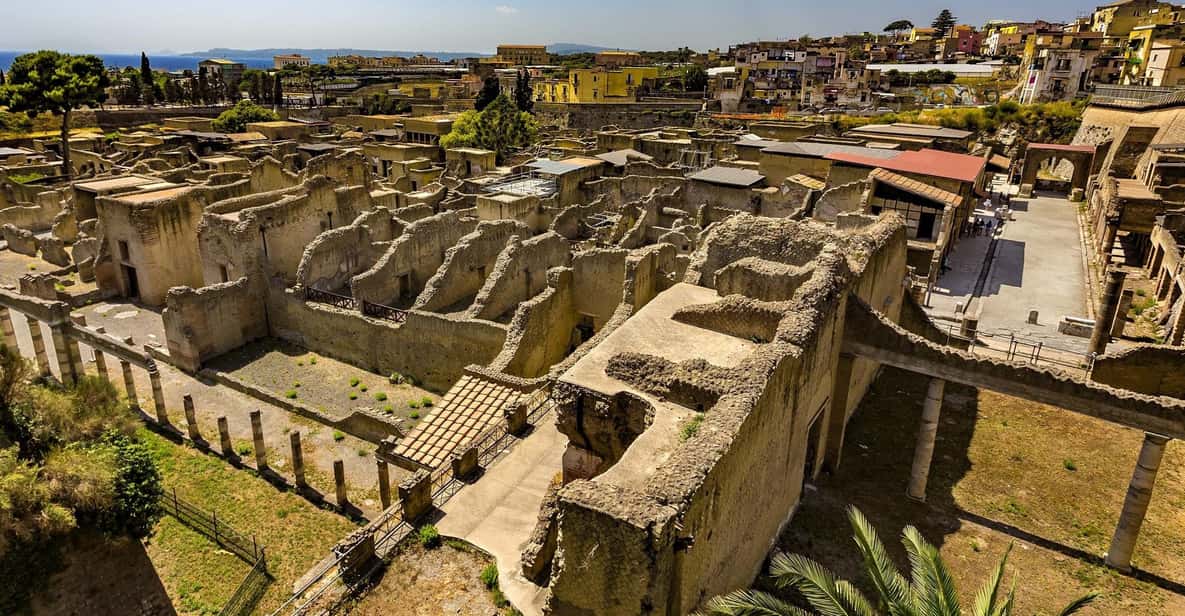
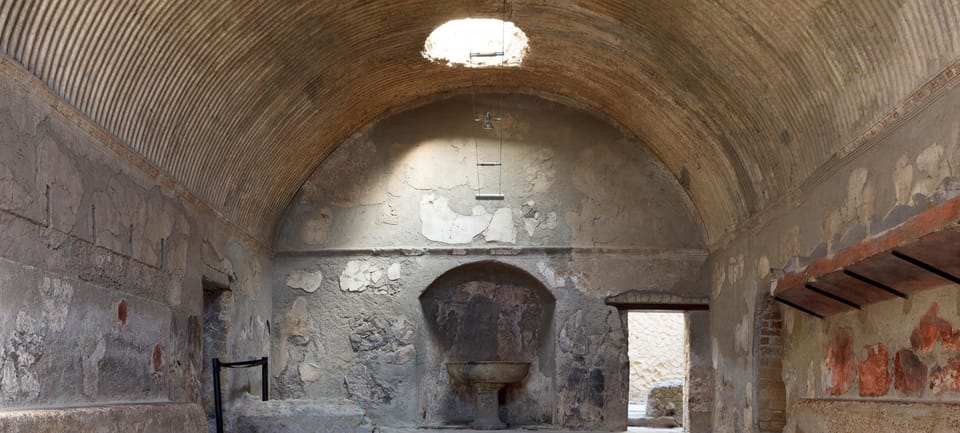
When you walk Herculaneum’s streets and inside areas resembling Roman homes, the big theme is preservation. The ruins you see aren’t just stones in a field. You can admire frescoes and mosaics, and the site is especially known for carbonized wooden structures and artifacts that give you a more intimate sense of what people were doing before the eruption.
That “up close” quality is what you should use the time for. In a place like this, it’s easy to rush and miss the visual clues. If you want value, slow down for the painted details—frescoes are the kind of thing that reads differently once you stop, step back, and actually look.
How to spend your 2.5 hours well
- Pick one main area and do a full loop before trying to “collect” everything
- Use your eyes on wall decoration first, then move to floors and room layouts
- Take breaks in shaded spots when you can, because you’ll be walking most of the day
One limitation to keep in mind: this is still a self-guided block of time. There’s no live guide included, so if you love deep storytelling, you’ll want to use what you see and the audio guide format available for Pompeii as your structure.
Skip-the-Line Entry at Pompeii and How to Use the Audio Guide
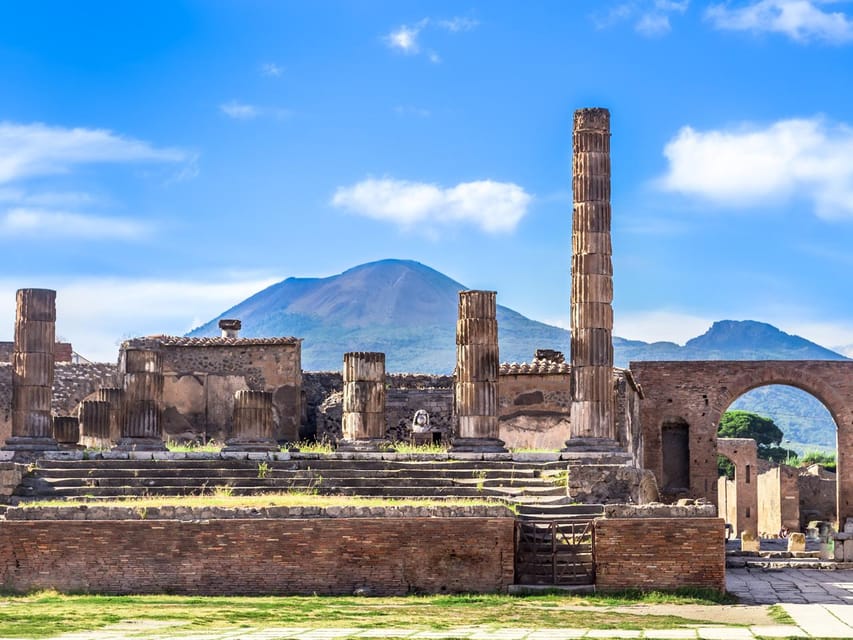
Then it’s on to Pompeii Archaeological Site, with skip-the-line tickets and 4 hours of free time. This is where the day can feel like drinking from a firehose, because Pompeii is huge. The audio guide is your best tool for turning chaos into a plan.
Your audio guide is provided for Pompeii and is available in multiple languages, including Chinese, Dutch, English, French, German, Hebrew, Italian, Portuguese, Russian, and Spanish. That’s a useful detail if you’re traveling with someone who doesn’t want to rely on English-only narration.
Before you go in, don’t forget the instruction about ID. It says you need to provide valid ID to rent the audio guide. That’s not a minor technicality. Bring your passport or ID card, or you could end up losing time at the entrance while sorting it out.
Pompeii is also a place where signage can only do so much. So I recommend using the audio guide in the way you’d use a city map: follow the story as you walk, not as a “listen only while standing still” activity. In practice, that means you’ll hear descriptions, then look at what they’re referring to, then move on.
Your 4-hour game plan
Pompeii’s highlights in this trip include:
- the grand amphitheater
- casts of volcanic victims
- decorated villas with frescoes and mosaics
If you try to hit everything equally, you’ll feel rushed. Instead, aim for one big structure (amphitheater), one emotional stop (the casts), and one “wow I can see the art” stop (villas with wall paintings and mosaic floors). That gives you three anchors for memory.
You can also read our reviews of more tours and experiences in Naples





What You’ll Actually See: Frescoes, Mosaics, and the Human Scale of 79 AD
The best part of this day trip is that it doesn’t treat history like a museum lecture. You walk through a real Roman city, and both stops are visually specific about what was preserved.
At Herculaneum, expect a focus on atmosphere and domestic life. The ruins are known for frescoes and mosaics, plus the rare glimpse of carbonized wooden structures. That combination helps you imagine rooms and daily routines rather than only public monuments. Even if you’re not a “details person,” these preserved surfaces tend to pull you in because they look like they were interrupted mid-day.
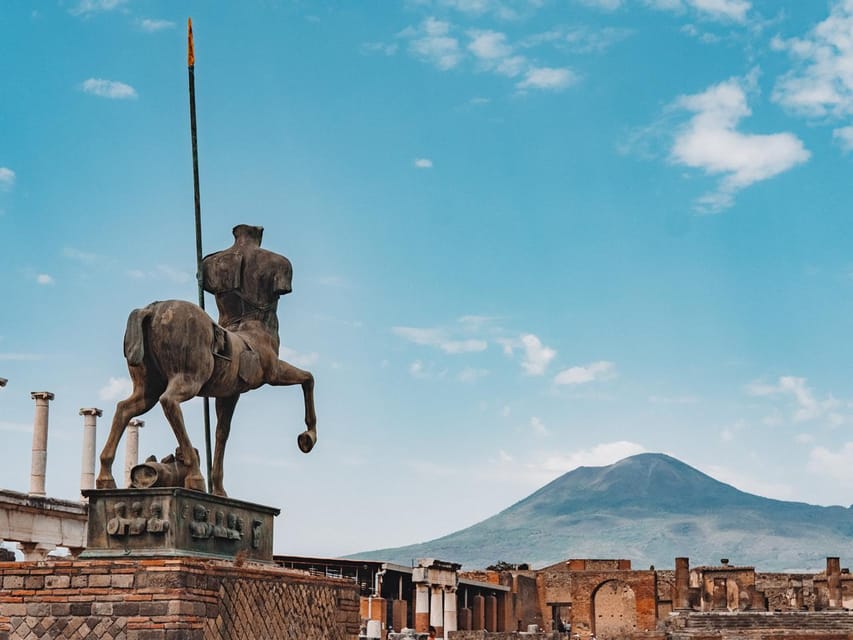
Pompeii shifts the emotional tone. You still get decorative art—frescoes and mosaics appear in the villas—but the experience also includes the casts of volcanic victims and large public architecture like the amphitheater. Those elements change how you read the city. You go from “this looks like home” at Herculaneum to “this was a city in full motion” at Pompeii.
It’s worth thinking about what “skip-the-line” really means here. These sites attract heavy crowds. Saving time at the entrances helps you spend more of your schedule walking, not waiting. And because you have fixed free time blocks (2.5 hours and 4 hours), every minute inside counts.
A realistic pacing mindset
You’re on a coach day that covers two UNESCO-listed sites. That means you’ll feel the urge to rush. The better approach is to pick moments you’ll remember. If you only chase the biggest headlines, you’ll miss the smaller scenes that make these cities feel real.
If you’re traveling with kids or older folks, the self-paced format is a mixed bag. You can slow down when needed, but there’s no built-in live commentary to keep everyone engaged. Packing patience helps.
Transfers, Timing, and Comfort: Making the Day Feel Manageable
The itinerary is built around efficient movement, not long lingering. After the 40-minute ride to Ercolano, you have a full 2.5-hour block. After that, you get a 30-minute coach transfer to Pompeii, where you have 4 hours before the final 30-minute return to Naples.
That’s a good structure if you like time to wander. It’s also a warning if you’re sensitive to walking. The “no live guide” setup can be relaxing, but it means your enjoyment depends on how comfortable you are with self-navigation and your interest level in reading site information as you go.
What to bring (and why)
The tour lists a practical packing set:
- comfortable shoes (do not compromise here)
- hat (sun can be relentless)
- camera (obvious, but these surfaces photograph well)
- passport or ID card (needed for the audio guide rental)
- comfortable clothes (you’ll want to move freely)
And keep in mind the bag rule: no luggage or large bags. If you normally travel with a backpack, you’re probably fine, but avoid anything huge that could slow you down on and off the coach.
Also, food and beverages aren’t included. So plan on buying something nearby or bringing a simple snack. A long day without a planned meal can turn into irritability fast.
Price and Value: Is This $123.48 a Good Deal?
At $123.48 per person for an 8-hour day that includes transfers and entry tickets to Pompeii and Herculaneum, the value hinges on two things: convenience and time saved.
Here’s what you’re paying for in practical terms:
- roundtrip pickup/drop-off at Via Galileo Ferraris, 40
- coach transfers between Naples, Herculaneum, and Pompeii
- skip-the-line access at both sites
- audio guide for Pompeii (multiple languages)
- scheduled free time that lets you actually see things (not just queue and pose)
You’ll notice that Pompeii entrance ticket (€20.00) is listed as included. The exact Herculaneum ticket cost isn’t spelled out, but since the tour states entry tickets to both sites are included, you shouldn’t have to pay extra at the gate for admission.
Compared to DIY, this kind of package can be a win if you hate logistics. You remove the need to coordinate transport and ticket timing, and you get a clean schedule you can follow. If you enjoy planning your own route and have transport already sorted, DIY might feel cheaper. But for most people doing one trip from Naples, the convenience is the bargain.
There’s also flexibility built in. It states free cancellation up to 24 hours and reserve now & pay later, which reduces the risk if your Naples schedule shifts.
Should You Book This Herculaneum and Pompeii Day Trip?
If you want a single-day hit of both UNESCO sites with skip-the-line tickets, this is a strong match. The structure is practical: a relaxed start at Herculaneum with time to notice details, then a focused visit to Pompeii with an audio guide to help you connect what you see to what you’re hearing.
Book it if:
- you like self-paced exploring more than constant live narration
- you’re traveling from Naples and want roundtrip transfers handled
- you value time savings at busy entrances
Skip it (or think twice) if:
- you need a live guide to answer questions in real time
- you’re not comfortable with a full day of walking and standing
- you travel with large bags
Bottom line: this trip is designed to help you make the most of a limited day in Campania. If you pack light, bring your ID, and use the audio guide like a walking companion—not a passive soundtrack—you’ll come away with Pompeii and Herculaneum feeling less like distant ruins and more like places where people actually lived.
FAQ
Where do I meet the bus in Naples?
You meet at Via Galileo Ferraris, 40. If you use Google Maps, the suggested coordinates are 40.8505189, 14.2747942. Look for the bus with the logo Around Vesuvio.
How much time do I get at Herculaneum and Pompeii?
You get 2.5 hours of free time at Herculaneum (Ercolano), and 4 hours of free time at Pompeii.
What’s included for Pompeii learning?
You get entry tickets for Pompeii and an audio guide. The audio guide languages listed include Chinese, Dutch, English, French, German, Hebrew, Italian, Portuguese, Russian, and Spanish.
Do I get a live guide on this trip?
No. The tour information lists no live guide included. The Pompeii portion uses an audio guide instead, and you explore the sites with free time.
Do I need to bring ID for the audio guide?
Yes. It says you must provide valid ID to rent the audio guide, so bring your passport or ID card.
Are luggage and large bags allowed?
No. The activity notes that luggage or large bags are not allowed, so plan for a small day bag.