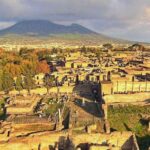
REVIEW · NAPLES
History & Local Wines: Amphitheater, Mitrium and Winery Visit
Book on Viator →Operated by Events in Italy · Bookable on Viator
Ancient ruins meet a real wine finish. This tour is interesting because you get two standout stops: the Santa Maria Capua Vetere amphitheater and the Mitreum of Mithras. I love how the day connects Roman-era spectacle with a still-standing mystery temple, and the “short list” stops keep the story focused. One thing to consider: at around 5 hours, you’ll cover a lot ground, so comfortable shoes and a patient pace matter.
What also works well is the private format. You get pickup offered in Naples and a guided visit that’s designed for your group only, which means you can ask questions without crowd noise. The tour also has a “plan for your day” feel with set hours, and a mobile ticket to keep things simple.
Price-wise, it’s not a budget outing at $868.20 per person. Still, the value can be solid because the core sites are marked as admission ticket free, and you finish with a winery tasting paired with traditional food—plus transport time is wrapped in through the driver.
In This Review
- Key highlights to notice before you go
- Santa Maria Capua Vetere: Etruscans to Rome in one guided ride
- The amphitheater stop: older than Rome’s famous one
- The Mitreum of Mithras: why one temple is so important
- Switching gears to a Mount Vesuvius winery tasting
- Timing, transport, and the private-group advantage in Naples
- Price and value: when $868.20 per person feels fair
- Weather and comfort: the small factors that affect your day
- Who should book this tour (and who might skip it)
- Should you book the Amphitheater, Mitrium and Winery Visit?
- FAQ
- How long is the Amphitheater, Mitrium and Winery Visit?
- Is this a private tour?
- Is pickup available in Naples?
- Are tickets required for the main stops?
- What if the weather is bad?
- What’s the latest start time and operating hours?
Key highlights to notice before you go

- Ancient Capua’s amphitheater: built one century before the famous one in Rome, with a different vibe than the big-ticket sites
- A rare Mitreum preserved in Campania: one of the few temples of Mithras still standing
- Focused storytelling: Etruscan beginnings, Roman conquest, then a look at a cult that Christianity actively erased
- Winery visit with Vesuvius views: wine tasting paired with traditional food right in the countryside
- Private group experience: pickup offered and only your group participates, which makes the timing feel smoother
Santa Maria Capua Vetere: Etruscans to Rome in one guided ride

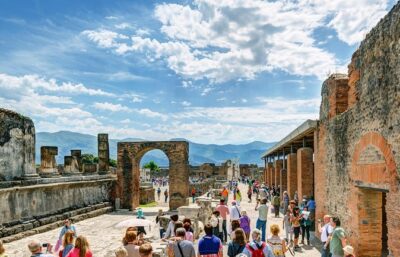
Santa Maria Capua Vetere is the kind of place that rewards a guide. You start with the basics that change how you see the stones: the town was founded by the Etruscans around 600 BC, then conquered by Rome in 340 BC. That timeline matters because it explains why the architecture and the “layering” feel different from places that only have one dominant era.
Once you’re there, your guide’s job is to help you connect the dots. You’re not just looking at ruins; you’re seeing a town that switched worlds—Etruscan roots to Roman administration and spectacle. I like this approach because it turns a stop into a narrative, and you walk away understanding what mattered to people at each step.
The town visit is also built to fit a 5-hour day. That’s good if you want real history but don’t want a full-day commitment. The trade-off is you won’t have hours to wander on your own, so if you’re the type who likes to meander for a long time, you may want to keep a little extra free time in Naples for after the tour.
You can also read our reviews of more historical tours in Naples



The amphitheater stop: older than Rome’s famous one
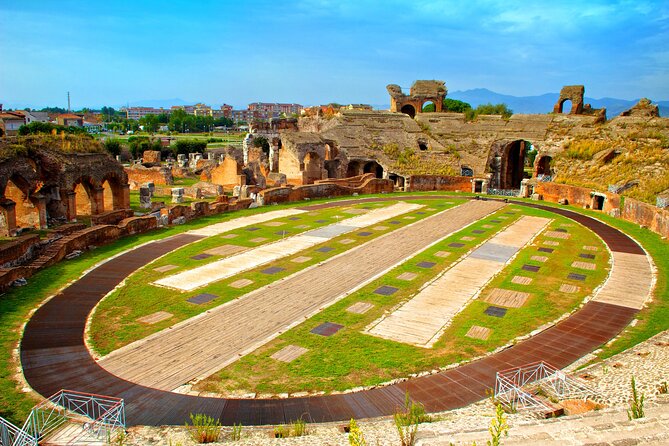
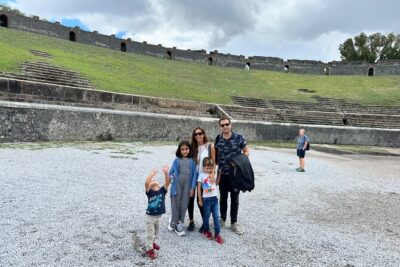
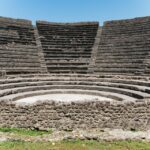
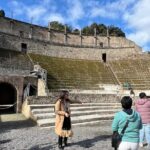
The big headline here is the amphitheater. It’s older than the famous Roman amphitheater you’ll recognize from postcards—built one century before the Roman one. That detail is the kind of thing a guide can make feel concrete. You start to notice how earlier Roman entertainment looked and what kinds of crowds they were planning for.
This is also where the tour earns its “wow, I didn’t expect that” factor. Even if you’ve visited major Roman sites before, an amphitheater that predates the one most people benchmark against changes the feeling. It’s not just a photo stop. It’s a chance to understand how Rome’s show business grew up—faster than you’d guess, and earlier than you’d expect.
A practical advantage: the amphitheater is listed with admission ticket free for this experience. That helps keep the day smoother and reduces the chance of waiting around for ticket steps. Still, you should plan for comfort: amphitheaters and ancient sites often mean uneven surfaces and some walking at a steady pace.
Why this matters for you: if you’re a history fan, it’s a rare “quality-to-time” ratio. You get a major ancient spectacle with context, without spending your whole day in a queue.
The Mitreum of Mithras: why one temple is so important
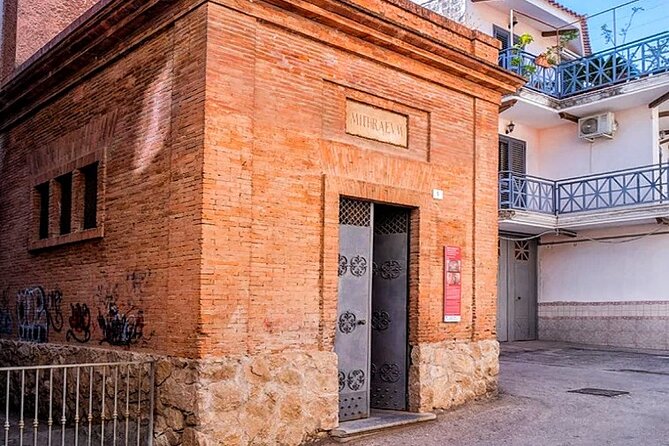
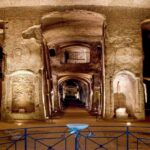
After the amphitheater, the tour shifts from public spectacle to private mystery. The Mitreum is a temple of the cult of Mithras, and it’s described as one of the few preserved in the world. That’s not trivia. It’s the reason this stop feels special: many Mithras temples didn’t survive, and the ones that did are few.
The guide context you’ll hear is key to understanding what you’re seeing. The cult of Mithras was purposefully destroyed with the advent of Christianity, and that’s part of why so little remains elsewhere. Standing in a preserved Mitreum changes the story from theory to evidence. Instead of just learning that the cult existed, you can point to the physical place where rituals would have taken place.
The experience here is also a good contrast. Your morning starts in a place designed for crowds and performance. Then you move to something linked to a very different kind of belief system—more controlled, less public, and harder to imagine unless a guide gives you the background.
One consideration: if you want only cheerful historical highlights, this portion can feel darker. The “purposefully destroyed” detail is not a light topic. But for many people, that’s exactly what makes it memorable and real—history doesn’t just preserve the pretty parts.
Switching gears to a Mount Vesuvius winery tasting

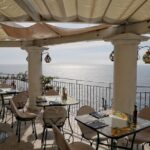
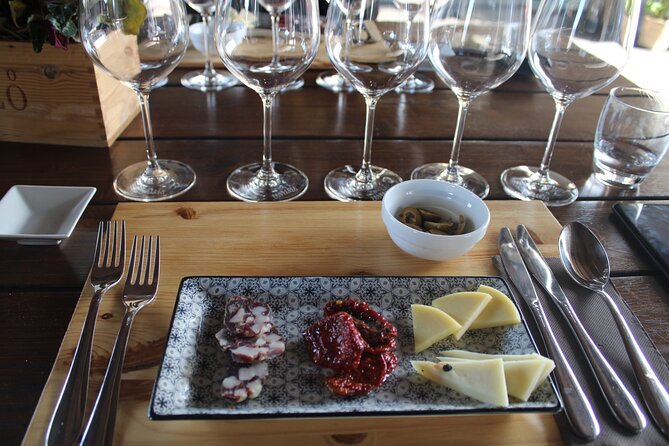
Then you go from ancient Campania mysteries to the modern rhythm of wine country. The winery stop is described as being in front of Mount Vesuvius, and the tasting includes different local wines paired with traditional food.
This is a smart payoff after the historical stops. You’ve spent the day in places shaped by Rome, religion, and empire. Then the final hour(s) ground it back into something lived today: agriculture, regional flavors, and a food-and-wine table that matches Campania’s identity.
What you can expect from the tasting: a structured selection of local wines, served alongside traditional food meant to complement the flavors. You don’t need to be a wine expert to enjoy it. Even if you mostly care about taste, this format is usually the easiest way to learn what the region does best—without building your own wine itinerary.
A practical tip: treat the winery as the “fuel” for your day, not a late-night activity. The tour total is around 5 hours, so pace yourself with the tasting pours. If you’re the designated driver or prefer to keep it light, let the staff know early so they can adjust within the tasting flow.
Timing, transport, and the private-group advantage in Naples
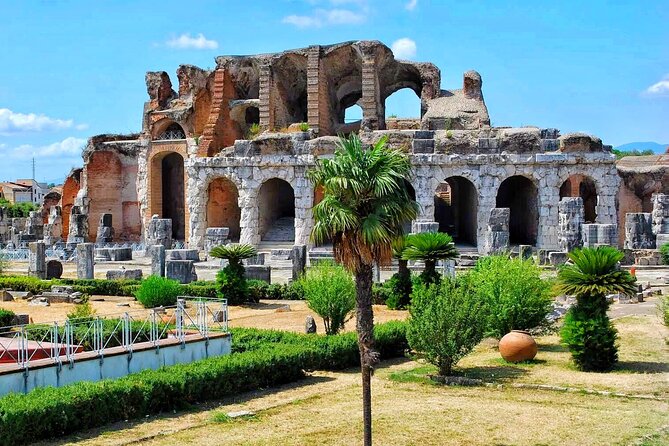
This experience runs about 5 hours, and that timing is part of its strength. You get a real “triangle” of interests—ancient Capua, Mithras history, then a Vesuvius-area winery—without burning a whole day commuting between far-off locations.
Pickup is offered, which matters in Naples. You don’t have to worry about meeting points across traffic and tight streets. You also get a driver, meaning you can spend more of your limited time focused on the stops rather than navigating.
It’s also private, meaning only your group participates. In plain terms: you’re not sharing your guide’s attention with strangers, and questions don’t get cut off when other people jump in. For a history-focused itinerary, that one change can make the difference between hearing facts and actually understanding them.
Good to know for planning: the experience operates daily within listed hours (8:00 AM to 8:00 PM), and you’ll receive confirmation at booking. Your schedule should also leave some buffer, since weather matters for this kind of outing.
You can also read our reviews of more wine tours in Naples





Price and value: when $868.20 per person feels fair

At $868.20 per person, this isn’t a “grab it last-minute and hope for the best” tour. It’s positioned as a premium, private experience. So the question is: what do you actually get for the money?
Here’s what’s clearly built in from the details:
- a private guided visit to Santa Maria Capua Vetere and the Mitreum
- a driver and pickup offered in Naples
- a winery visit with wine tasting paired with traditional food
- mobile ticket convenience
- admission ticket free is indicated for the main site portion(s)
That combination can make sense if you care about two things at the same time: access and context. Access because a private format reduces friction, and context because a guide can connect Etruscan founding, Roman conquest, amphitheater history, and the Mithras story into one coherent walk.
If you’re traveling on a tight budget, you might decide it’s too expensive versus building your own day. But if you’re a couple, a small group, or simply someone who hates transportation admin and wants a smooth sequence, the cost can feel more reasonable. You’re paying for someone to manage the flow so you can spend your energy on the actual places.
Weather and comfort: the small factors that affect your day

This experience requires good weather. If conditions aren’t right, you’ll either be offered a different date or a full refund. That’s exactly what you want to hear for an itinerary that includes outdoor ancient areas plus a winery setting.
Also plan for the reality of ancient sites: you may deal with uneven ground, outdoor light, and plenty of walking. The itinerary is short, but it’s not “sit-and-watch” the whole time. Bring shoes you can stand in for stretches.
If you’re sensitive to heat, consider timing your day so you’re not doing the strongest sun hours during summer months. The tour runs through the day (8:00 AM to 8:00 PM), so you have some flexibility.
Who should book this tour (and who might skip it)
This is a great fit for you if:
- you love Roman-era history and want more than the usual headline sites
- you’re curious about religions that aren’t commonly taught in a standard museum tour
- you want a private guide experience in a day that stays manageable
- you want wine country in the same trip, without adding extra planning days
You might skip it if:
- you only want free time to wander without structure
- you’re not interested in Mithras or ancient belief systems
- you prefer a slower schedule where you can pause as long as you want in each location
Should you book the Amphitheater, Mitrium and Winery Visit?
I’d book it if you’re the type of traveler who likes connections: how a town evolves, how entertainment architecture changes, and how a preserved religious site can carry the weight of a vanished world. The amphitheater’s “older than Rome” detail gives you a hook, and the Mitreum gives you the deeper story that most travelers miss.
It’s also a good choice if you value smooth logistics. Pickup offered, private group format, and a mobile ticket all reduce hassle. Then you finish with a winery tasting paired with traditional food in front of Vesuvius, so the day ends with something sensory and present-day.
If you want a deeply paced, “room to breathe” day, you may feel the time pressure. But if you want a focused hit of Capua history plus Campania wine in one outing, this tour fits the bill.
FAQ
How long is the Amphitheater, Mitrium and Winery Visit?
It’s approximately 5 hours.
Is this a private tour?
Yes. It’s a private experience, and only your group participates.
Is pickup available in Naples?
Pickup is offered.
Are tickets required for the main stops?
Admission ticket free is indicated for both the Santa Maria Capua Vetere/Amphitheater portion and the winery portion in the tour details provided.
What if the weather is bad?
The experience requires good weather. If it’s canceled due to poor weather, you’ll be offered a different date or a full refund.
What’s the latest start time and operating hours?
The listed operating hours are 8:00 AM to 8:00 PM, Monday through Sunday. The experience runs during the dates listed in the booking window.