REVIEW · NAPLES
Naples: Certosa San Martino Tour with an Art Historian Guide
Book on GetYourGuide →Operated by Grand Tour Experience · Bookable on GetYourGuide
Naples looks different from San Martino. Perched above the city, Certosa di San Martino is a Neapolitan Baroque showpiece with a skyline you can actually feel. With an art historian guide, you’ll get the why behind the art, not just the what.
I especially like that the tour is built for focus: a structured 2-hour visit to the church, plus stops that help you read the monastery like a story. One drawback to plan around: food and drinks aren’t included, and transportation isn’t part of the ticket—so you’ll want to sort those parts of your day in advance.
In This Review
- Key highlights you’ll care about
- Certosa di San Martino: why this Baroque hilltop matters
- Meeting at Largo S. Martino and starting with the right context
- The 2-hour church tour: from 1325 origins to the 1590 renovation
- Cloister cells and daily-life details from a second specialist
- The terrace photo stop: skyline views in sun or rain
- National Museum of San Martino: filling the gaps after the church
- Tying this to Pompeii with private transport
- Price and value: what $249.23 gets you for a private group
- Should you book the Certosa San Martino tour?
- FAQ
- FAQ
- How long is the Certosa di San Martino tour?
- Where do I meet my guide?
- Is this a private group tour?
- What’s included in the tour price?
- Is transportation included?
- Are food and drinks included?
- Which languages are available for the guide?
- Is the tour wheelchair accessible?
- Will there be a viewpoint or photo stop?
- Can I cancel for a refund?
Key highlights you’ll care about
- A proper art historian-led route: You’ll learn how the church’s look and layout connect to centuries of change.
- Cloister quiet, explained: Small cells are used to illustrate the monks’ need for peace and prayer.
- A terrace viewpoint right by the entrance: You’ll pause where the views are best, even when the weather turns.
- Church tour timing that works: It’s long enough to matter (2 hours) and short enough to keep your Naples day moving.
- Museum entry included: Your ticket coverage includes both the church and the National Museum of San Martino.
Certosa di San Martino: why this Baroque hilltop matters

If you’ve only seen Naples from street level, this is your correction. San Martino sits on one of the city’s highest hills, and that position shapes everything: light hits differently, the skyline reads clearly on good days, and even in rain the whole place feels dramatic.
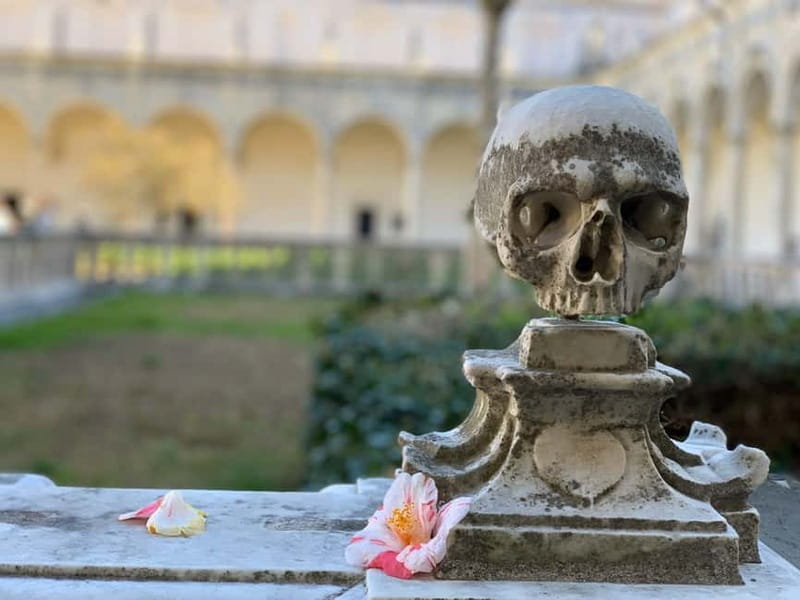
What makes the Certosa special is the mix of scale and intimacy. It’s famous for Neapolitan Baroque, but it’s also grounded in daily monastic life. You’re not just walking past paintings. You’re moving through spaces that were designed to slow people down—especially around the cloister and the small cells that help explain the monks’ quest for peace and prayer.
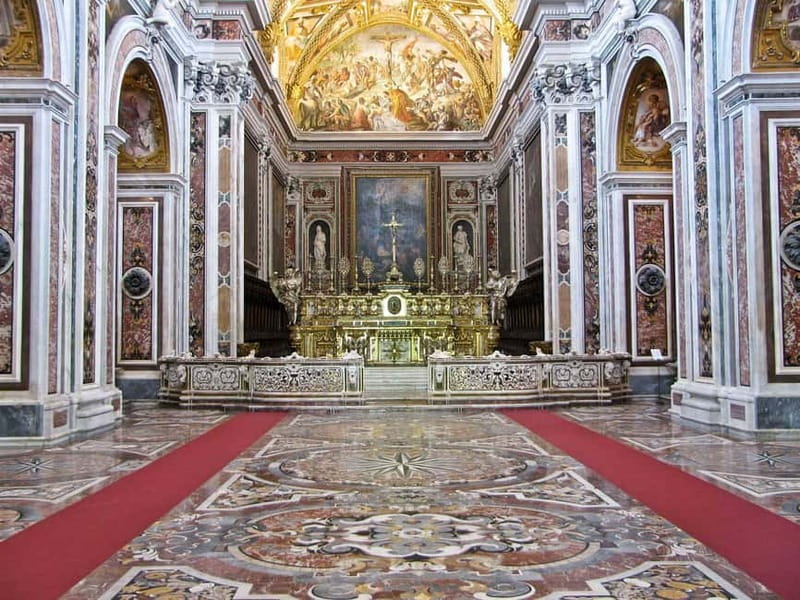
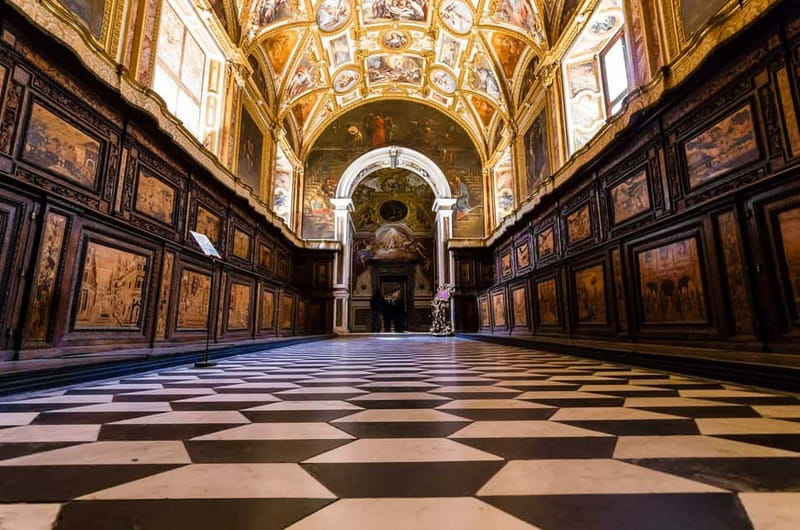
The timeline is another big reason I think this tour is worth your time. You start with the basics: the church was built in 1325 at the behest of Duke Charles of Angiò, and it served as the mother church of the Order of the Certosini. Then, the story shifts forward to the big renovation wave around 1590, when workers from Rome and other parts of the Viceregno were charged with renewing the church. Those changes took about a century, with pauses and modifications along the way—so when you look up at vaults, side chapels, and the floor, you’re seeing layers of effort, not a single instant of genius.
You can also read our reviews of more guided tours in Naples

Meeting at Largo S. Martino and starting with the right context
Your tour meets at Largo S. Martino, 5, 80129 Napoli. I like meeting at an address like this because it cuts down on confusion. Once you’re there, you’re guided right into the experience instead of spending your first 20 minutes trying to figure out where the “real” entrance is.
From the start, the art historian framing is what sets the tone. The guide helps you look at the church as an artwork with a mission. That matters because the Certosa can feel overwhelming if you just wander in. With the right context—especially the 1325 founding and the later 1590 renovation—you’ll notice more quickly why certain areas feel grand, while others feel intentionally quiet.
This tour also supports a private-group format, which is practical. If you ask a question, the guide can answer without rushing, and you’ll have time to adjust at natural stopping points—like the photo moment before you head into the church.
Language support is another real-world plus: the guide is available in English, French, Italian, and Spanish. If you’re traveling with someone who prefers a different language, that flexibility makes the whole day easier to plan.
The 2-hour church tour: from 1325 origins to the 1590 renovation
The core of the experience is a 2-hour guided tour of the church. You enter after meeting outside, and you’ll get a route that makes sense of what you’re seeing. This is where the art historian part earns its keep.
Here’s what you should expect to learn and notice as you move through the interior:
- The church’s origin story: built in 1325, linked to the Duke of Anjou’s influence, and tied to the Certosini order.
- The renovation turning point: the major renewal around 1590, executed by workers from Rome and elsewhere in the Viceregno. The work stretched for about a century, with interruptions and modifications.
- The payoff in craft: from the vaults to the floor, plus each side chapel and the different rooms you’ll pass through.
If you’ve ever left a church thinking, That was pretty, but I’m not sure what I just saw, this is the opposite. The guide helps you connect design choices to history. You’ll look longer at details because you’ll understand why they’re there.
I also appreciate that the pacing is deliberate. Two hours can sound like a lot until you’re inside a big complex. Here it feels right because you’re not trying to do everything in Naples in one sprint. You’re getting a focused pass through the most important sections, with enough time to ask questions and to slow down for the most meaningful views.
Cloister cells and daily-life details from a second specialist
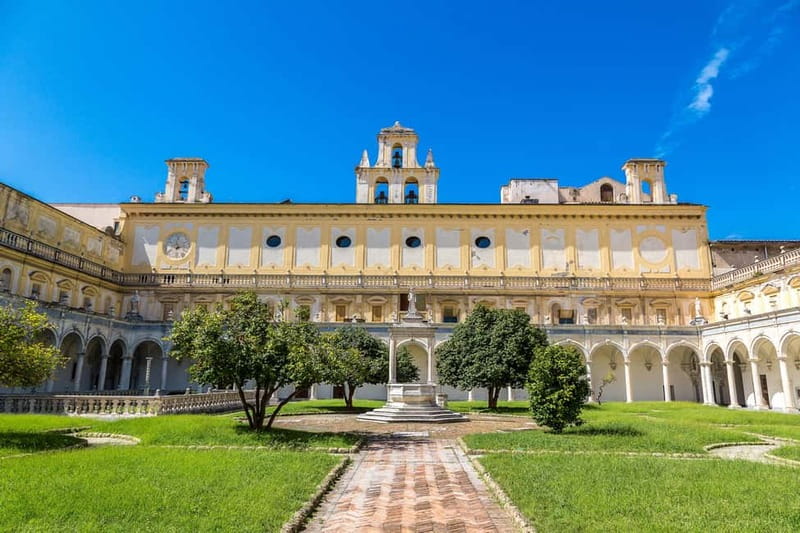
One of the smartest ways to understand a monastery is to think about routines, not only art. This tour adds that human layer by including insight into daily life as it was centuries ago, with support from an archaeologist guide.
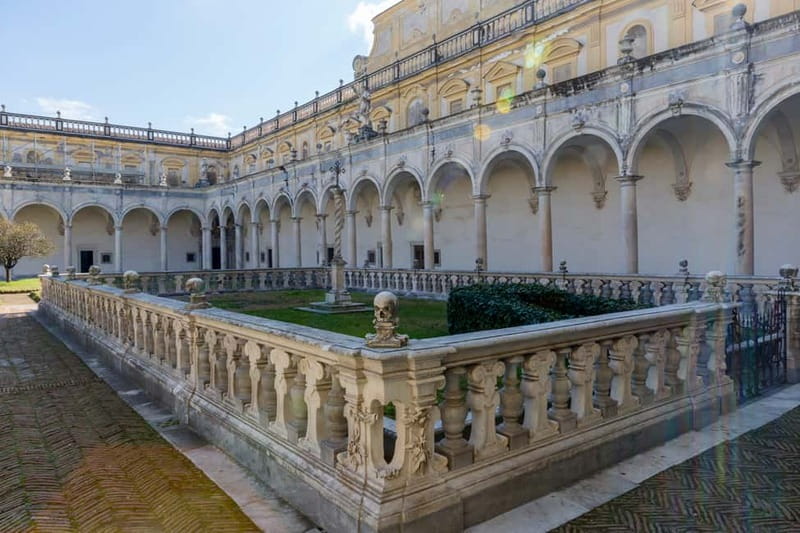
That combination—art historian plus archaeologist thinking—helps you reinterpret the spaces. The cloister area isn’t just pretty architecture. Around it, you’ll see small cells that point to the monks’ need for peace and prayer. In other words, the tour doesn’t treat the Certosa like a museum object behind glass. It treats it like a working spiritual system.
This is also where your attention shifts from decoration to function. You’ll start asking different questions: Why would these spaces be shaped this way? How did a person live here day after day? Even if you don’t know a lot of art history going in, you’ll be able to follow the logic.
For practical travelers, this also reduces decision fatigue. Instead of you trying to figure out what’s “important,” the guide gives you a route and a purpose. It’s a big quality-of-life improvement in a place that can swallow your time if you’re not careful.
The terrace photo stop: skyline views in sun or rain
After time inside, you get the views that make San Martino feel like a Naples secret you can stand on.
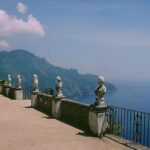
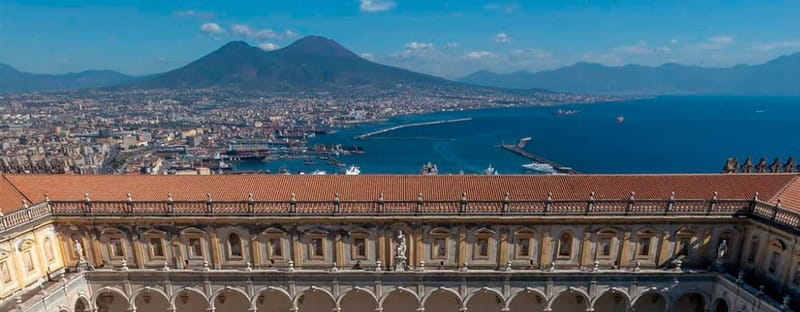
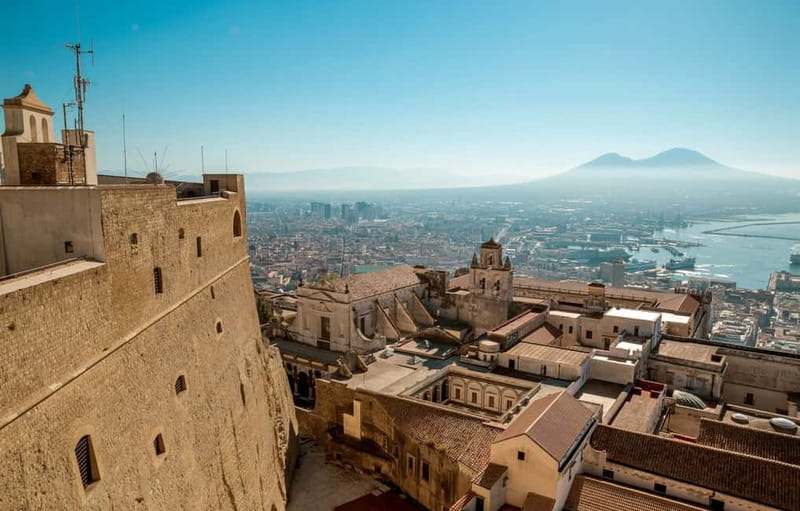
There’s a terrace stop just in front of the entrance, timed so you can admire the scenery without rushing. On sunny days, you’ll see the city skyline crisp and clear. When it rains, the experience shifts—still fascinating, just with mood instead of brightness.
This is one of the best ways to take Naples in without doing the obvious tourist checklist. The hills and vantage points change how the whole city reads, and San Martino’s height gives you a perspective that you simply can’t replicate at street level.
Bring a light layer if the weather is turning. Even in a warm season, hilltop breezes can be real. And if you’re the type who likes to take photos, this stop is your moment to do it right—no sprinting, no scrambling, and no missing the best angle while you’re still trying to orient yourself.


National Museum of San Martino: filling the gaps after the church
Your tickets cover the church and the National Museum of San Martino. That matters because the Certosa isn’t only about the church interior.
The museum ticket inclusion helps you connect art and objects to the broader story of the site. Even if you’re mainly here for the Baroque church, having museum access makes your visit feel more complete. It gives you a second chance to absorb details at your own speed after the guide’s route.
One practical note: since the museum isn’t described in detail here, your best strategy is to let the guide show you how the museum connects to the church story—then use the rest of the time to follow what grabs your attention.
If you like travel that rewards curiosity, museum entry is where you can stretch the experience beyond “tour mode.” You’re not limited to whatever the guide points out in the church. You can look again, linger, and connect dots.
Tying this to Pompeii with private transport
Many Naples days feel broken into segments: Naples old town here, then a long trip out to Pompeii there. This experience is set up to make that jump easier by including private transportation from Naples to Pompeii.
You’ll still spend the main part of your activity focused on San Martino, but the value is in the coordination. Instead of squeezing in a complicated transfer plan, you can keep your schedule calmer and reduce the chance of time getting eaten by logistics.
If Pompeii is on your list, this is one of those combinations that makes sense. Naples and Pompeii are close in geography, but far apart in feel. San Martino adds an arts-and-spirituality pause in your day before you shift gears to ruins.
Price and value: what $249.23 gets you for a private group
The price shown is $249.23 per group, with the listing indicating up to 1 person. That’s not the bargain style of a group bus tour. It’s closer to paying for a specialist and a smoother experience.
Here’s what you’re getting for that money, and why it adds up:
- Admission tickets to the church and the National Museum of San Martino
- A 2-hour guided tour led by a professional art historian and licensed tourist guide
- Gratuities and suggestions are included (so you don’t have to guess how to handle that part)
The value isn’t only in the entry tickets. It’s in having someone explain why the site looks the way it does—especially the founding era (1325) and the major renovation around 1590, which shaped so much of what you’ll see.
The tour also has a strong track record: the rating is 4.7 based on 6 reviews. The standout theme in the feedback is guide quality. One highly praised guide is Roberta, described as wonderful, courteous, competent, and genuinely interested in answering questions. You don’t always get that mix of expertise and warmth, so it’s worth paying attention to.
In short: if you want to understand what you’re looking at, this price is easier to justify. If you only want a quick walkthrough with no context, you might prefer to go on your own. But if you want Naples art history with real viewpoint rewards, this is a solid deal.
Should you book the Certosa San Martino tour?
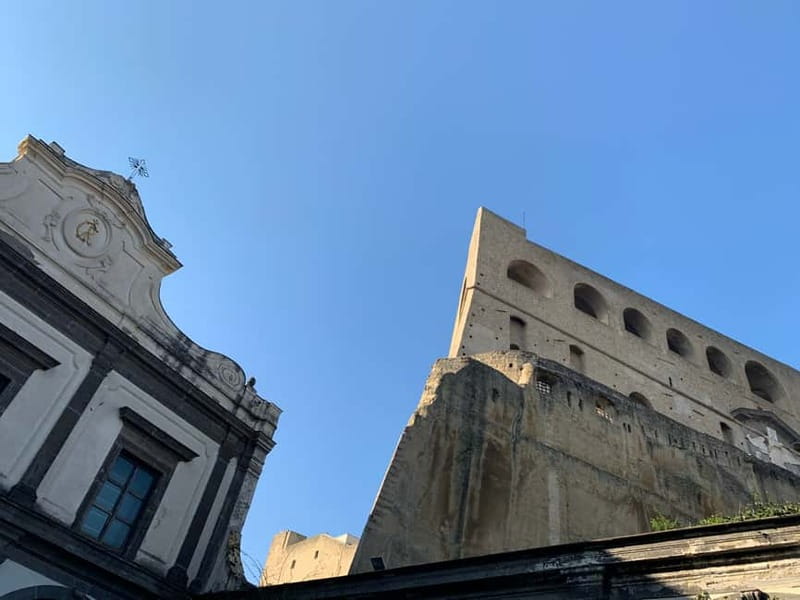
Book it if you want more than photos. This is the kind of visit where the guide’s interpretation changes what the church means to you. The combination of art historian guidance, monastery-focused storytelling, and a terrace viewpoint makes it feel like a full experience, not a checklist stop.
It’s also a strong pick for travelers who like structure. Two hours is enough to see the important areas and understand the major timeline points, without turning your day into a blur. And if you’re chaining Pompeii afterward, the private transportation connection keeps things simple.
Skip or reconsider if you’re traveling with no interest in guided context. The Certosa is beautiful, but this format is built around explanation—especially the 1325 origins, the long 1590 renovation, and the everyday-life lens from an archaeologist component.
FAQ
FAQ
How long is the Certosa di San Martino tour?
It lasts 2 hours.
Where do I meet my guide?
Meet your guide at Largo S. Martino, 5, 80129 Napoli.
Is this a private group tour?
Yes, it’s a private group.
What’s included in the tour price?
Included are admission tickets to the church and the National Museum of San Martino, a 2-hour guided tour with a professional art historian and licensed tourist guide, plus gratuities and suggestions.
Is transportation included?
No. Transportation is not included.
Are food and drinks included?
No. Food and drinks are not included.
Which languages are available for the guide?
The guide is available in English, French, Italian, and Spanish.
Is the tour wheelchair accessible?
Yes, it is wheelchair accessible.
Will there be a viewpoint or photo stop?
Yes. There’s a terrace stop just in front of the entrance for views, plus a photo stop as part of the visit.
Can I cancel for a refund?
Yes. Free cancellation is available up to 24 hours in advance for a full refund.
If you want, tell me your travel month and whether you’re also doing Pompeii that same day, and I’ll help you shape a sensible timing plan around the 2-hour Certosa visit.