REVIEW · NAPLES
Pompeii and Herculaneum day trip
Book on Viator →Operated by A DRIVE INTO THE BLUE · Bookable on Viator
Two ancient cities in one day.
This is the kind of day trip that helps you beat the Naples-to-ruins logistics and focus on the archaeology. I like the private driver setup because it gives you real flexibility in a place where timing matters, and you can pace yourself instead of being dragged. The best part is you can see both Pompeii and Herculaneum without spending your precious holiday shuttling between them.
I also love how the experience is built around interpretation, not just photo stops. If you’re lucky enough to get Antonino, the tour style is smart and human: he’s praised for adjusting the pace for sensory needs, answering questions, and keeping kids engaged without turning it into a lecture. When there’s a guide on-site like Anna at Pompeii, you get the kind of context that makes streets, buildings, and scars from AD 79 start to make sense.
One consideration: this is not a simple all-in-one ticket price. You’ll pay for entry where required (especially Porta Marina for Pompeii and the Herculaneum site access), and lunch isn’t included, so you’ll want a plan before you go.
In This Review
- Key things to know before you go
- Private driver from Naples: why the logistics matter
- Getting started at Porta Marina: the Pompeii entrance piece you must budget
- Foro, Via dell’Abbondanza, and Teatro Grande: big scenes in short time
- Casa del Menandro, Stabian Baths, and the Lupanar: life beyond the stereotypes
- Antiquarium of Pompeii: the room that explains what stone can’t
- Heading to Herculaneum: smaller site, better preserved feeling
- Herculaneum houses and baths: where architecture turns personal
- The guide factor: Antonino, Pepino, and Anna’s kind of detail
- Price and what you’ll actually pay on the day
- Timing tips: how to enjoy the whole day without burning out
- Who this Pompeii and Herculaneum day trip suits best
- Should you book this Pompeii and Herculaneum private day trip?
- FAQ
- How long is the Pompeii and Herculaneum day trip?
- Does the tour include pickup in Naples?
- Are the ruin entrance fees included in the price?
- Is this a private tour or a shared group?
- Is a guide included?
- What is the cancellation policy?
Key things to know before you go
- Private pickup in Naples area makes the day trip smoother than DIY
- Two sites, one route plan so you don’t waste time choosing between Pompeii and Herculaneum
- Guide options let you go self-paced or add professional interpretation at the ruins
- Crowd-smart pacing is a big part of why the tour works in practice
- Tickets are partly extra so check what you’ll pay on arrival vs booking
- Comfort upgrades include air-conditioning, bottled water, and a mobile ticket
Private driver from Naples: why the logistics matter
Pompeii and Herculaneum are close on a map, but getting there smoothly from Naples is where most half-day plans fall apart. With this tour, you’re picked up from your Naples hotel, the port, the train station, or even the airport area if your schedule requires it. If the street in front of your lodging is too tight for the car, the pickup shifts to the nearest car-accessible spot.
The private vehicle is air-conditioned and you’ll have bottled water, which sounds minor until you’re walking under strong sun for hours. You also get the peace of mind that your return timing is handled, not guessed.
The other underrated win: you’re not tied to a massive group’s pace. Pompeii is huge. Herculaneum is smaller, but it’s built for walking and looking closely. A driver who can adapt to your group’s rhythm means less stress and fewer “we’re behind schedule” moments.
You can also read our reviews of more tours and experiences in Naples



Getting started at Porta Marina: the Pompeii entrance piece you must budget
Your Pompeii day begins at Porta Marina, and that start matters more than it sounds. It’s where you purchase the required entry (this fee is not included in the base price), then the route begins with a licensed guide when you select the guided option.
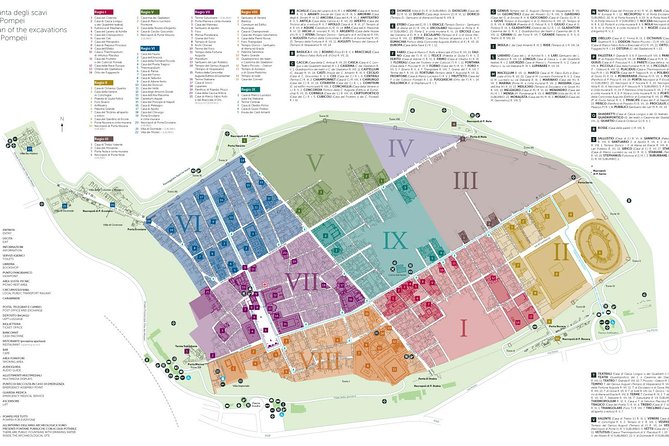
This is also where you’ll get your bearings fast. Pompeii isn’t one straight walk; it’s an ancient city grid with major streets and landmarks. Starting with an orientation-style lead-in helps you understand what you’re about to see: public spaces, homes, bathhouses, and the “everyday architecture” that tells you how people lived.
Practical tip: wear shoes that can handle uneven stone and short steps that feel endless when you’re tired. Pompeii’s ground is part of the experience, and it can be rough.
Foro, Via dell’Abbondanza, and Teatro Grande: big scenes in short time
After the initial Pompeii entry, you move into the heart of daily life with quick, targeted stops.
- Foro di Pompei (the civil forum) is where administration, justice, business, markets, and citizen worship all braided together. Even if you only spend about 10 minutes here, it’s a powerful “context stop.” It helps you stop thinking of Pompeii as only “ruins” and start thinking of it as a working town.
- Via dell’Abbondanza, the Street of Abundance, gives you a feel for the city’s prosperous commercial energy. Short stop, but useful: you get a sense of scale and how streets functioned like public rooms.
- Teatro Grande area (Large Theatre, Odeon, and the Quadriporticum) is where entertainment and social life overlapped. Roman theatres weren’t just for performances; they were meeting places. If your guide explains how crowds would shift and gather, you’ll understand the architecture faster than you would by reading alone.
A drawback to know: those quick segments mean you’ll get less lingering than a fully guided “slow walk.” If you love stopping for every carved detail, you may want the guided option so the guide can point out what you’d otherwise miss while moving efficiently.
Casa del Menandro, Stabian Baths, and the Lupanar: life beyond the stereotypes
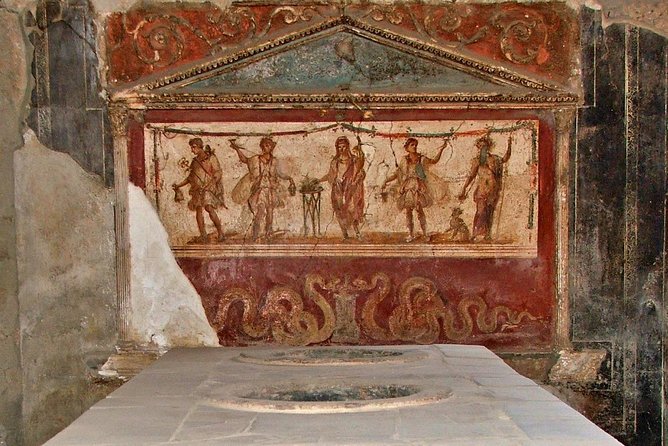
This part of the day is where Pompeii shifts from civic spaces into personal life.
You’ll see:
- Casa del Menandro: one of the grand homes of Pompeii, around 1,800 square meters. The takeaway here is not just wealth, but design choices—how decoration and space reinforced status and everyday routine.
- Stabian Baths (Terme Stabiane): a working Roman bathing complex. Even with a short stop, this is one of the best ways to understand Roman social habits because baths weren’t just about cleanliness. They were a community routine.
- Lupanar: the purpose-built brothel. It’s known for erotic wall paintings. The experience is a bit “culture shock,” but it’s also honest history. Pompeii shows you what people talked about, bought, worked for, and sought—everything, including the uncomfortable parts.
If you’re traveling with teens or kids, this is a spot to prepare emotionally. You don’t want surprise topics to steal the rest of the day.
Antiquarium of Pompeii: the room that explains what stone can’t
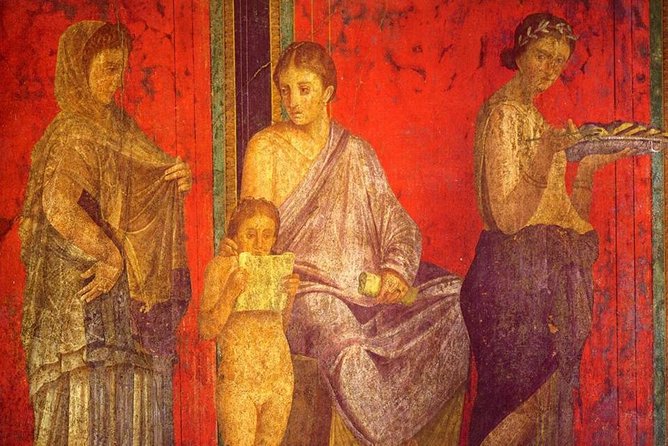
You’ll also have time at Pompeii’s Antiquarium, a practical detour that pays off. Ruins tell you where things were. Museums tell you what that means.
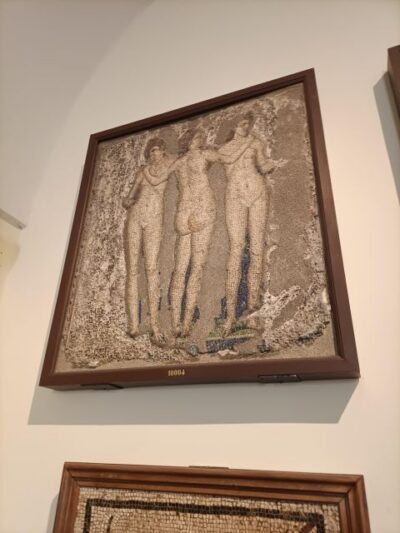
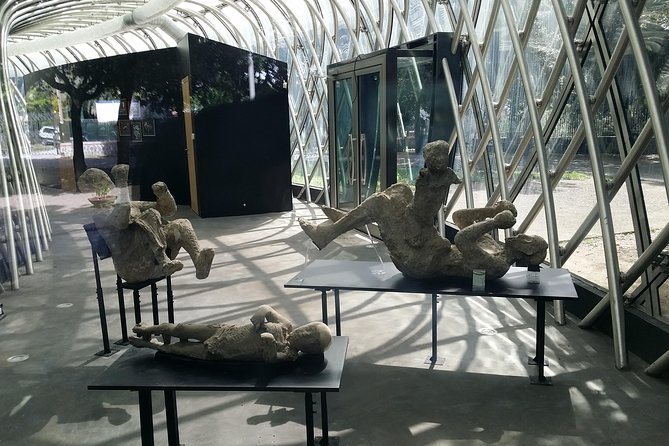
This stop covers archaeological finds tied to Pompeii’s daily life, plus casts of victims from Mount Vesuvius and displays documenting Pompeii’s settlement history. That mix is what turns a “wow, buildings” day into a “I understand the sequence” day.
One note: the timing is short. Go in with curiosity and look for connections to what you already walked through—streets, homes, and public spaces. You’ll get more from it if you treat it like a translator for the ruins.




Heading to Herculaneum: smaller site, better preserved feeling
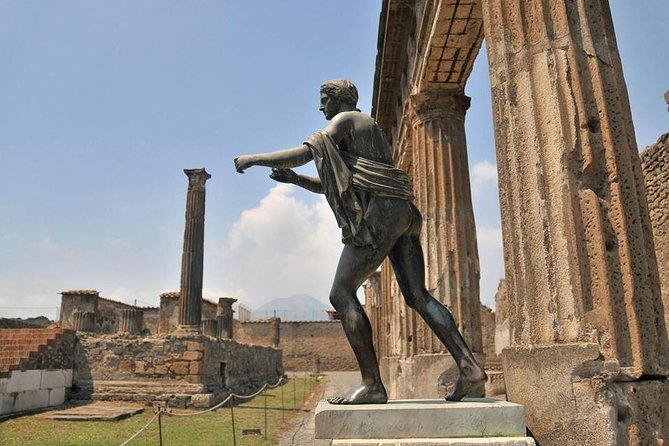
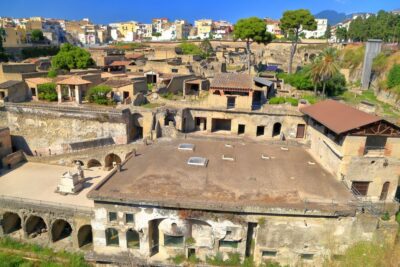
After Pompeii, you shift to Parco Acheologico di Ercolano for Herculaneum. This is the moment when the pace of the day can change. Pompeii often feels like you’re inside a giant open-air museum with crowd flow everywhere. Herculaneum can feel more manageable, and the preservation can be striking because the town was covered by lava and mud in AD 79.
Herculaneum also has a different “excavation story.” You can feel that it’s been tougher to expose the layers, and that’s one reason you get such a distinct result compared with Pompeii. It’s also UNESCO World Heritage, which helps signal its global significance—without turning it into a theme park.
Practical tip: if you’re sensitive to walking, plan your breaks here. Herculaneum is smaller, but you’ll still want time to look carefully at details.
Herculaneum houses and baths: where architecture turns personal
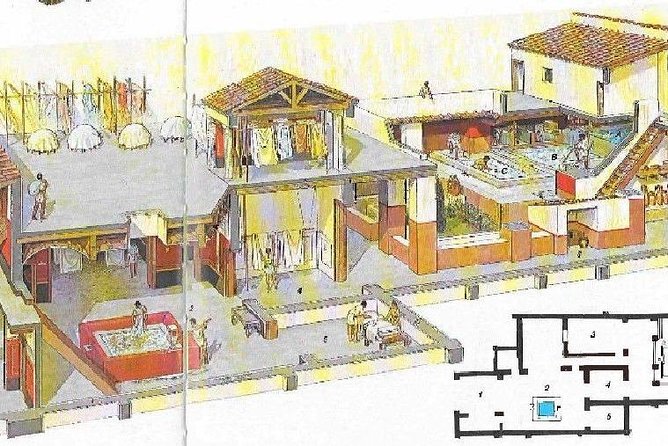
Your Herculaneum route focuses on specific structures, and the order helps you understand the town’s layout.
You’ll stop at included sites like:
- House of the Hotel: a wealthy big-house ruin, giving you a sense of domestic scale and how elite properties functioned.
- House of the Wooden Sacellum: a pre-Roman patrician facade with masonry seats at the base, plus traces of stucco and frescoes. There’s also a charred wooden folding partition mentioned in the site details, which makes the eruption feel heartbreakingly close to daily life.
- Decumano Massimo: the main street. This is the “spine” of the city. Even a short stop helps you visualize where other buildings would connect.
- College of the Augustales: a building financed by brothers and tied to the Augustan period. You get a glimpse of civic/religious organization beyond homes.
- Suburban Baths: another public bathing experience. Comparing Roman bath culture at Pompeii vs Herculaneum is a great way to see similarities and differences in how the towns worked socially.
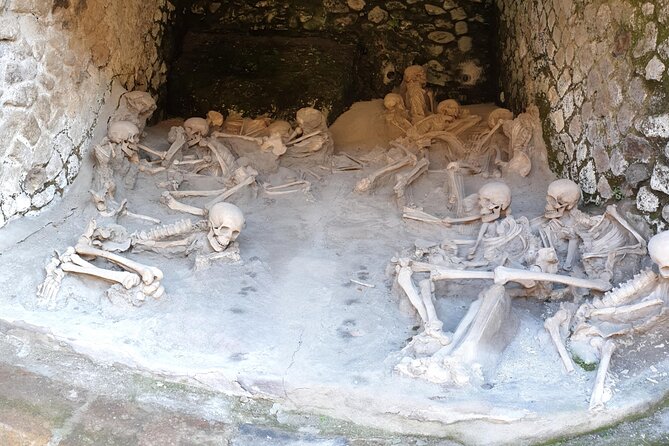
You’ll also visit the Antiquarium di Ercolano, where objects found near skeletons are displayed. That pairing is heavy, but it’s also what gives Herculaneum its emotional weight and clarity.
The guide factor: Antonino, Pepino, and Anna’s kind of detail
This tour’s success often comes down to how the guide reads the day.
In the feedback tied to this experience, Antonino is repeatedly praised for making Pompeii understandable, not just impressive. The style isn’t only facts. It’s practical explanation: how to orient yourself, what to look for, and how to move through crowds without feeling shoved into the next stop.
Another strong name you may see is Anna, highlighted as an excellent Pompeii guide. When the site guide is strong, the quick stops become meaningful. A theatre stop turns into a lesson on meeting points. A forum stop turns into a lesson on civic life.
There’s also mention of Pepino as a prompt, good driver and communicator, which matters because in Naples traffic, “on time” can mean the difference between a smooth day and a stressful one.
If you have kids, expect a guide who can keep them engaged with anecdotes rather than dumping history nonstop.
Price and what you’ll actually pay on the day
The base price is $429.69 per person, and the value depends on what you add up.
What’s included:
- Air-conditioned private transportation
- Private transportation
- Pickup from Naples hotels/ports/train station/airport area
- Bottled water
- A professional guide at the ruins if you choose the option that includes the guide
- Mobile ticket
What is not included:
- Lunch
- Access fees to the ruins/monuments (listed as €34.00 per booking, with free entry for visitors younger than 18)
- Porta Marina entrance fee for Pompeii (€18.00 per person)
- Herculaneum site access is also not included (the park entry is listed as not included)
So in practice, you should budget for:
- the base tour price
- plus Pompeii entry at Porta Marina
- plus the listed access fees
- plus your lunch plan
- plus any choice you make about the guided ruins option
If you’re comparing against DIY tickets plus buses plus train confusion plus lost time, the private driver can be a smart money decision. You’re paying to save your energy and protect your schedule.
If you’re the kind of traveler who already enjoys planning every detail and walking long distances alone, you might question the total spend. But if you want a stress-free day and clearer context, this price can feel fair.
Timing tips: how to enjoy the whole day without burning out
You’re looking at about 6 to 7 hours, and the stops are intentionally packed. That can be great, but you need smart pacing.
Plan for:
- early momentum at Pompeii so the major areas feel connected
- short breaks when the route gives you them
- a calm mindset at Herculaneum, since better preservation encourages slower looking
Comfort help:
- Wear layers if weather shifts
- Bring water (you’ll get bottled water in the vehicle, but carry a small extra if you run hot)
- Have a mask if you’re traveling during periods when local rules apply, since you may be required to wear one on the private vehicle
Also, the tour is private, meaning only your group participates. That’s a big deal if you want to ask questions or adjust pace without group pressure.
Who this Pompeii and Herculaneum day trip suits best
This tour fits best if you want:
- two top sites in one day without transit stress
- a private driver from Naples with pickup flexibility
- a guided option for interpretation, especially helpful in Pompeii’s maze of streets
- an experience that can adapt, with guide flexibility noted for sensory needs
It’s also a solid choice for families, since guides are praised for handling kids well and keeping them engaged.
If you’re a hardcore archaeology scholar who wants long time inside specific buildings, you might feel rushed. In that case, you’d likely want a slower, single-site visit. But if you want the highlights plus meaningful context, this hits the sweet spot.
Should you book this Pompeii and Herculaneum private day trip?
I’d book it if you want a well-run day where you spend your energy on the ruins, not on navigating Naples transport, timing, and ticket headaches. The private driver setup is the big reason, and the guide strength is the “how it feels” factor—especially if you get Antonino or another top interpreter.
I’d hesitate if you’re trying to minimize total spending, or if you’re the type who wants deep time in every building with no schedule pressure. With tickets and entrance fees layered on top, it’s not the cheapest way to do Pompeii.
If you’re on a limited itinerary and you want both Pompeii and Herculaneum in one clean sweep, this is a strong pick.
FAQ
How long is the Pompeii and Herculaneum day trip?
It runs about 6 to 7 hours.
Does the tour include pickup in Naples?
Yes. Pickup is offered from Naples hotels, ports, the train station, and the airport area where streets allow or from the closest car-accessible spot.
Are the ruin entrance fees included in the price?
Not all of them. Porta Marina for Pompeii is not included, and access fees for the ruins/monuments are listed as €34.00 per booking. Herculaneum site access is also not included. Some specific stops are listed as free or included, but plan for extra fees overall.
Is this a private tour or a shared group?
This is a private tour/activity, so only your group participates.
Is a guide included?
A professional guide at the ruins is included only if you choose the option that includes the guide. Otherwise, the tour includes private transportation and a mobile ticket, while the ruins parts may be more self-guided depending on the package.
What is the cancellation policy?
You can cancel up to 24 hours in advance for a full refund. If you cancel less than 24 hours before the start time, the amount you paid is not refunded. If the tour is canceled because the minimum number of travelers isn’t met, you’ll be offered a different date or a full refund.