REVIEW · NAPLES
Pompeii and Herculaneum Private Walking Tour with an Archaeologist
Book on Viator →Operated by Askos Tours · Bookable on Viator
Ashfall archaeology in one guided walk. This private Pompeii and Herculaneum tour connects two cities in one half-day, with an archaeologist turning ruins into Roman daily life. I really liked the two-site flow (Herculaneum first, then Pompeii) because it keeps the story straight instead of hopping around. The other big win is that you can ask questions as you walk, not just read plaques. One drawback to plan for: entry tickets are not included, so you’ll need to buy admission in advance to protect your time.
You start in the Naples area, then head to Herculaneum, where the ash has preserved houses, shops, and bath life in a way that feels strangely specific. This is also the kind of tour where guide quality matters, and the reviews here are consistently strong, with guides like Mena, Vincenzo, Ivan, Sylvia, and Raffaele Romano singled out for clear explanations and patience with questions.
Because the schedule moves, you should be ready to walk on uneven ancient surfaces and keep your energy up for about 5.5 hours. Wear real shoes, bring sun protection, and don’t count on the “skip-the-lines” part unless your Pompeii ticket includes it—one review flagged time lost when that wasn’t understood.
In This Review
- Key things that make this tour work
- Pompeii and Herculaneum in one half-day: why this pairing is smart
- Herculaneum first: the Roman city shaped by ash
- House of the Deer and Balbus’s terrace: luxury details with a purpose
- Religion and power in the College of the Augustales
- Telefo, domus walls, and the surviving wood details
- House of the Skeleton: a grim name that leads to a story
- Baths in Herculaneum: Central Thermae and the gendered design
- Black Salon, Samnite-style house, and courtyard originality
- Pompeii’s highlights: brothel lanes, the forum core, and the big theaters
- Main street to the Foro: where the city’s pulse lived
- Basilica and Stabian Baths: commerce meets daily routine
- Two big houses: House of the Faun and House of Menander
- Teatro Grande and Teatro Piccolo: architecture for crowds and drama
- Why an archaeologist guide changes the experience (and not just the facts)
- Timing, walking, and the practical bits that save your day
- Tickets and queue expectations: what’s extra and what to confirm
- Price and value: is $597.36 per group worth it?
- Who this tour suits best (and who may prefer something else)
- Should you book this Pompeii and Herculaneum archaeologist tour?
- FAQ
- What’s the duration of the Pompeii and Herculaneum private walking tour?
- How much does the tour cost, and what’s the group size?
- Are entry tickets included for Pompeii and Herculaneum?
- Where do we meet and where does the tour end?
- What language is the tour offered in?
- What’s the cancellation policy?
Key things that make this tour work
- Private archaeologist guidance: You get context as you walk, not after the fact.
- Herculaneum first: Train transfer plus a focused intro to the Roman world before Pompeii.
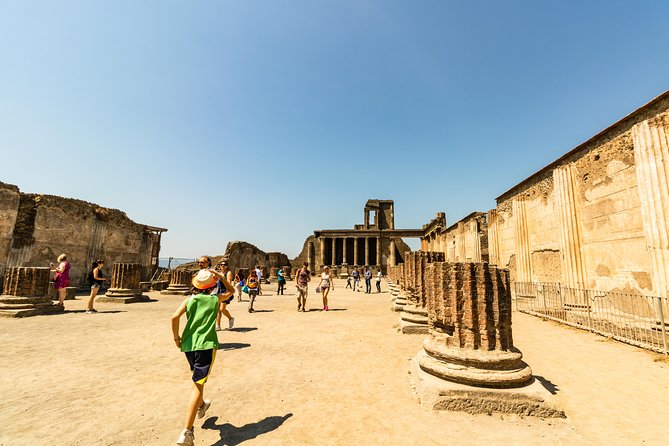
- Roman daily life stops: Houses, baths, shrines/cults, and the forum core.
- Expert-led “why this matters”: Naming details like House of the Deer and the wooden partition get explained.
- Small-group feel: Up to 15 people, and it’s repeatedly praised for pacing.
- Bring your tickets: Herculaneum admission is extra (Pompeii admission is also extra).
Pompeii and Herculaneum in one half-day: why this pairing is smart
Most people think Pompeii first. Fair. But doing Herculaneum and Pompeii back-to-back is a better way to understand what the eruption did—and what different kinds of preservation can show you. Herculaneum’s ruins often feel closer to a snapshot of daily routines. Pompeii feels like a whole city plan: streets, squares, baths, theaters, and grand homes.
On this tour, you’ll walk through both with the same archaeologist guide approach. That means the big ideas stay consistent: Roman architecture choices, neighborhood life, and how people moved through public and private spaces. It also keeps you from getting stuck in information overload from one site alone.
Value-wise, the price is listed per group (up to 15). That can be a win if you have a family group or friends who will actually split the cost. If you’re traveling solo, you may find cheaper group tours—but you also give up the question time and the guided pacing.
You can also read our reviews of more walking tours in Naples



Herculaneum first: the Roman city shaped by ash
You start at the Naples-area meet point and then head to Herculaneum by train (about 30 minutes) plus a short walk. There’s also a quick lunch break if you need it, and meeting at the ticket office of the Herculaneum ruins is part of the rhythm.
Logistics check: you can reach the Herculaneum meeting area by car (via Pignalver, with nearby unguarded parking) or by train via Corso Resina 1 on the Circumvesuviana line, about a 10-minute walk away. If you’re using transit, give yourself a little buffer so you’re not sprinting with a guide.
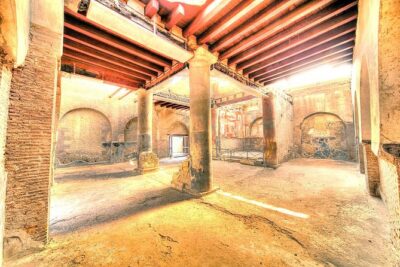
Inside, your archaeologist will guide you through a sequence of standout buildings—many of them focused on real daily-life details. That’s where Herculaneum shines: you’re not just looking at walls, you’re learning what people did in those spaces.
House of the Deer and Balbus’s terrace: luxury details with a purpose
The tour begins moving house-to-house. One early stop is the House of the Deer, named for marble stag/deer statues found in the peristyle. Even if you’ve seen famous Roman art before, this is a great moment to understand how decoration worked as status signaling. You’re not just admiring beauty—you’re seeing what a wealthy household chose to display and how.
Next is La Terrazza di M. Nonio Balbo. Nonius Balbus was a major city benefactor, restoring and building public buildings. You’ll also hear about the honors tied to his death and the long inscription connected to that. This is the kind of stop where your guide connects architecture to civic power—how public reputation shaped private life and vice versa.
Religion and power in the College of the Augustales
The College of the Augustales is where you shift from private homes to public religious identity. The building is thought to have served as a center for the cult of Emperor Augustus and possibly also connected to local governance structures (the collegium and maybe even the local curia).
If you’re the kind of traveler who likes to understand the “why” behind stone buildings, this stop is a payoff. It turns emperor worship from a textbook idea into something you can picture as an organized place with a role in community life.
Telefo, domus walls, and the surviving wood details
Then comes Casa del Rilievo di Telefo, linked (possibly) to Marcus Nonius Balbus and noted for an unusual feature: private access to the adjoining Suburban Thermae to the south. That detail matters because it shows how people designed convenience and privacy into their living arrangements.
After that, you get one of the tour’s most distinctive preservation moments: Partem Domus lignea – Casa del Tramezzo di Legno. This stop highlights an important wooden partition that remained. Roman houses often get discussed in terms of stone, but this is where you see that wood was a serious part of the original interior life—and that the eruption’s preservation can make certain architectural elements survive in surprising ways.
You can also read our reviews of more private tours in Naples




House of the Skeleton: a grim name that leads to a story
The House of the Skeleton is named for human remains discovered in a second-floor room in 1831. It’s understandably a bit eerie, but it’s also a reminder that archaeology is both art and evidence. Your guide can tie the remains to how the site was excavated and interpreted.
If you’re traveling with kids, this is one of the stops where a good guide earns their paycheck by keeping it respectful and clear without making it sensational.
Baths in Herculaneum: Central Thermae and the gendered design
You’ll then move to bath life with Central Thermae, built around the beginning of the 1st century AD. The key detail here is how baths were divided into men’s and women’s areas, each with separate entrances—exactly the kind of social structure that helps you picture Roman everyday routines.
This stop also gives you a smoother transition to Pompeii’s baths later, because you’ll recognize the bigger pattern: the city’s public hygiene and leisure systems were built into architecture, not just habits.
Black Salon, Samnite-style house, and courtyard originality
Luxury continues with House of the Black Salon, known for a monumental entrance that still retains carbonised remains of doorposts and lintel. It’s one of those moments where you see preservation as a visual record of how materials burned and survived.
Then you’ll see Casa Sannitica, with an arrangement typical of the Samnites: an atrium skirted by a gallery with Ionic columns, decorated rooms, and frescoes. Even if you’ve only heard the term Samnite casually before, this stop turns it into an architectural pattern you can spot.
Next is Casa del Bel Cortile, another standout because it uses a courtyard with a stairway and a stone balcony instead of an atrium. It’s a great reminder that Roman “standard” design had variation—people adapted layouts to preferences and space.
Finally, House of the Grand Portal rounds out the Herculaneum sweep with a central domus and multiple environments, plus charred remains of wooden parts. If you want a clear “final picture” of Herculaneum’s range—from entrance drama to household interiors—this is it.
Pompeii’s highlights: brothel lanes, the forum core, and the big theaters
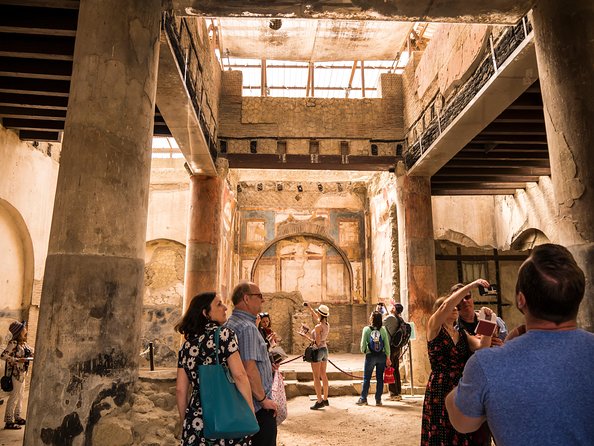
After Herculaneum, the tour shifts into Pompeii’s major public spaces and signature homes. The big idea here is simple: Pompeii reads like a city you could navigate, if you had the roads and time. With a guide, you notice the city planning logic.
You’ll start with the Lupanar, the famous brothel. It’s a memorable stop because it forces you to confront something many people skip when they tour Pompeii: sex work and entertainment weren’t hidden. They were integrated into the urban landscape, down to how the building sat along routes people walked.
Main street to the Foro: where the city’s pulse lived
From there, you’ll walk the main street of Pompeii and then look into the Forum (Foro di Pompeya), the city’s main square. This is where most towns feel “central,” but Pompeii’s forum is especially important because it anchors how Romans organized commerce, authority, and public gatherings.
You’ll also visit the Granaries of the Forum, where you can see marble tables and features tied to fountain-adorned entrances of houses. This stop also includes casts of eruption victims and even casts of a dog and a tree. Those animal and nature details can feel odd at first glance, but they help you understand scale: the eruption affected everything alive nearby, not just human bodies.
Basilica and Stabian Baths: commerce meets daily routine
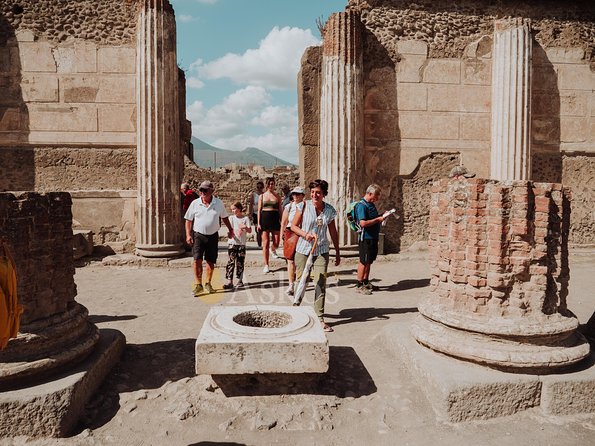
Next is the Basilica, described as an open portico that sheltered merchants and other activities. This is a good spot to picture how business and civic life blended into everyday street movement.
Then you’ll hit the Stabian Baths (Terme Stabiane), a vast thermal complex described as the oldest in the city. Baths weren’t just about cleaning. They were social time, and Pompeii’s size makes you realize how serious the city was about that daily rhythm.
Two big houses: House of the Faun and House of Menander
Home life returns with House of the Faun, one of Pompeii’s largest and most impressive residences. Then comes House of Menander, celebrated for its architecture and decoration.
These stops work best if you treat them like a lesson in how Romans lived. You’ll often see the same themes—courtyards, movement through spaces, and how art and layout advertised taste. With an archaeologist, you’ll also hear what certain choices likely meant for status and for how guests were received.
Teatro Grande and Teatro Piccolo: architecture for crowds and drama
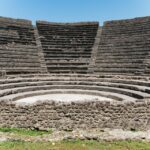
The tour ends in the theatrical zone, including Teatro Grande, the most important theater in Pompeii, and a look at Teatro Piccolo. Even if you don’t have a deep theater background, you can still appreciate what these places were for: public gatherings, performances, and a city culture that made room for large groups.
When the guide times your stops well, you get a feeling for sightlines and crowd flow without needing technical training.
Why an archaeologist guide changes the experience (and not just the facts)
A guided tour here isn’t about reciting dates. It’s about helping you see patterns.
In the reviews, guides like Mena and Vincenzo are repeatedly praised for expert explanations and turning the sites into a living story. One standout account named Ivan as a wealth of information who helped avoid crowds and pointed out engineering and cultural choices people might miss on a self-guided visit. Another described Sylvia as archaeologist-led with depth that made both sites feel different, not just bigger.
What I think you’ll feel most is the ability to ask your own questions and get direct answers on the spot. A PhD-level classical studies background is specifically mentioned in one review, and that matches what you want when you’re standing in a place that’s both physical and interpretive.
Also, pay attention to pacing. One review called out the value of having your own space early in the tour on a private format, which matters because Pompeii and Herculaneum can feel like information dumps if you’re always being pulled along.
Timing, walking, and the practical bits that save your day
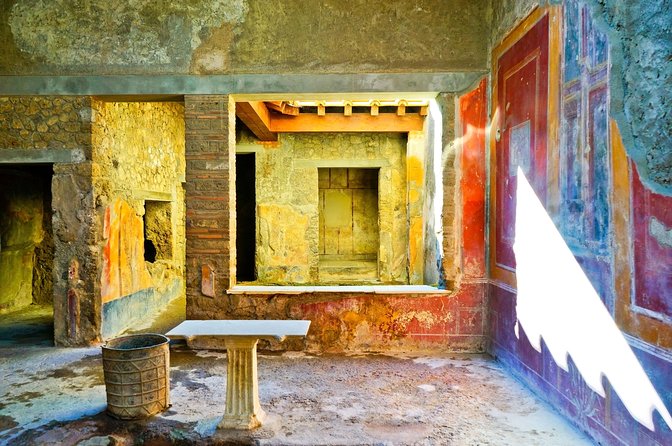
This tour runs about 5 hours 30 minutes. That’s long enough to see the major anchors of both sites, but short enough that you’re moving most of the time.
You’ll want comfortable shoes with grip. The tour guidance explicitly warns against flip-flops. The ground is uneven, and you’ll be stepping around old surfaces and reconstructions.
Sunglasses and sunscreen are suggested, which is good advice because Pompeii’s open areas can bake you faster than you expect. If you’re heat-sensitive, plan a slower lunch moment in Herculaneum if you need it. Food and drinks aren’t included, so bring water and a simple plan.
Fitness level is listed as moderate. Translation: you don’t need to be an athlete, but you should be ready for steady walking and occasional climbs/steps typical of archaeological parks.
Meeting points matter. The start is listed at Via dei Papiri Ercolanesi in Ercolano, and the tour ends inside the Pompeii ruins at Via Villa dei Misteri, 2. In Herculaneum, meeting is at the ticket office, and your guide will be holding a sign with Askos Tours. One review noted the meeting point was hard to find, so arriving early and keeping an eye out for the sign is smart.
Tickets and queue expectations: what’s extra and what to confirm
Here’s the clean truth: the tour price includes guidance and the private tour setup, but it does not include admission tickets. Herculaneum entry tickets are listed as 16 euros for adults and 2 euros for EU citizens ages 18–25. Pompeii entry is also not included (and Pompeii express entry tickets are specifically noted as not included).
That matters because admission is part of your timing. If you arrive without tickets (or without the right type of tickets), you’ll lose valuable minutes while your guide can’t magically make the line disappear.
One review also pointed out a problem with understanding guaranteed skipping queues, which wasted time. You can avoid that by confirming what your Pompeii ticket actually gives you before you show up.
Price and value: is $597.36 per group worth it?
The price is $597.36 per group, up to 15 people. That’s a private-archaeologist format, not a shared-bus style tour. The real value is how much you gain when you trade a self-guided map for a guide who can explain why specific buildings exist and what details mean.
To judge value for your trip, think in per-person terms. For example:
- If you have 6 people sharing, you’re around $100 per person before tickets.
- If you have 12 people sharing, you’re around $50 per person before tickets.
- If you have a full group close to 15, it’s lower per person.
Your cost may land anywhere based on your group size, but the structure is designed so families and small groups get the best “split the price” value.
Also remember what you’re paying for: roughly 5.5 hours, two major archaeological parks, and help with navigation across both. One review described guides personally handling unexpected transit issues between sites, which is another reason private beats DIY when your day gets complicated.
Who this tour suits best (and who may prefer something else)
This is a strong fit if you:
- Want a private format where you can ask questions freely.
- Care about the “how did Romans live” side, not just big landmarks.
- Travel with kids or a mixed-age group and want patience and explanation.
- Prefer a guided pace that helps you avoid crowd traps.
It may be less ideal if you:
- Only want one site and don’t want to compress two into one day.
- Are looking for zero walking and minimal schedule pressure.
- Haven’t bought tickets yet and don’t want to handle that extra step.
Should you book this Pompeii and Herculaneum archaeologist tour?
If you’re choosing between DIY and a guided deep look, I’d book it. The combination of Herculaneum’s house-and-bath details with Pompeii’s forum, baths, and theaters is exactly the kind of two-city route that benefits from an archaeologist guide.
The main reason to hesitate is straightforward: you must plan for extra admission tickets and you’ll want to confirm anything queue-related before you arrive. If you handle tickets smoothly and you’re ready to walk, this is a smart way to turn Vesuvius-era ruins into a coherent Roman story.
FAQ
What’s the duration of the Pompeii and Herculaneum private walking tour?
The tour lasts about 5 hours 30 minutes.
How much does the tour cost, and what’s the group size?
It costs $597.36 per group and is for groups of up to 15 people.
Are entry tickets included for Pompeii and Herculaneum?
No. Herculaneum entry tickets and Pompeii entry tickets (including Pompeii express tickets) are not included in the tour price.
Where do we meet and where does the tour end?
You start at Via dei Papiri Ercolanesi, 80056 Ercolano NA, Italy. You meet the guide for Herculaneum at the Ticket Office of the Herculaneum ruins, and the tour ends inside the Pompeii ruins at Via Villa dei Misteri, 2, 80045 Pompei NA.
What language is the tour offered in?
The tour is offered in English.
What’s the cancellation policy?
You can cancel for a full refund up to 24 hours in advance of the experience’s start time.