REVIEW · NAPLES
Pompeii Guided Walking Tour – Skip-the-Line Priority Access
Book on GetYourGuide →Operated by Napoli Official Tour · Bookable on GetYourGuide
Pompeii feels huge even on a good day. A 2-hour guided walk with priority access helps you see the most important parts without losing time to ticket lines. It’s a focused route through the city’s public spaces, neighborhood streets, and a couple of the more vivid places that explain how Romans lived and relaxed.
I especially like the way this tour gives you an authorized, professional guide to connect ruins to real human routines. You move through the main gateway at Porta Marina Inferiore, then land in the Forum and baths, where you can almost picture daily schedules, conversations, and civic life.
One thing to keep in mind: Pompeii is enormous. In just two hours, you’ll cover the center comfortably, but you won’t see even close to all of it—so come with a short list of what matters most to you.
In This Review
- Key highlights worth your time
- Priority access at Pompeii: what $47 actually buys you
- Meeting at Porta Marina Inferiore: get your bearings fast
- Walking into Pompeii through Porta Marina Inferiore
- The Forum: where politics, religion, and business collide
- Forum Baths or Stabian Baths: a Roman routine you can picture
- Via dell’Abbondanza: shops, bakers, taverns, and street life
- House of the Faun: elite living and Pompeii’s big scale
- The Lupanar brothel: leisure, rules, and social reality
- Recently excavated areas: fresh context on Pompeii’s final days
- Timing and pacing: what 2 hours feels like in real life
- Who this tour suits best (and who might want a different plan)
- Quick practical notes you’ll be glad you remembered
- Should you book this Pompeii priority tour?
- FAQ
- How long is the Pompeii guided walking tour?
- Where do I meet the guide for this tour?
- Does this tour really help me avoid the ticket line?
- What languages are available?
- What should I bring?
- Is Pompeii free on the first Sunday of each month?
- What is the cancellation policy?
Key highlights worth your time
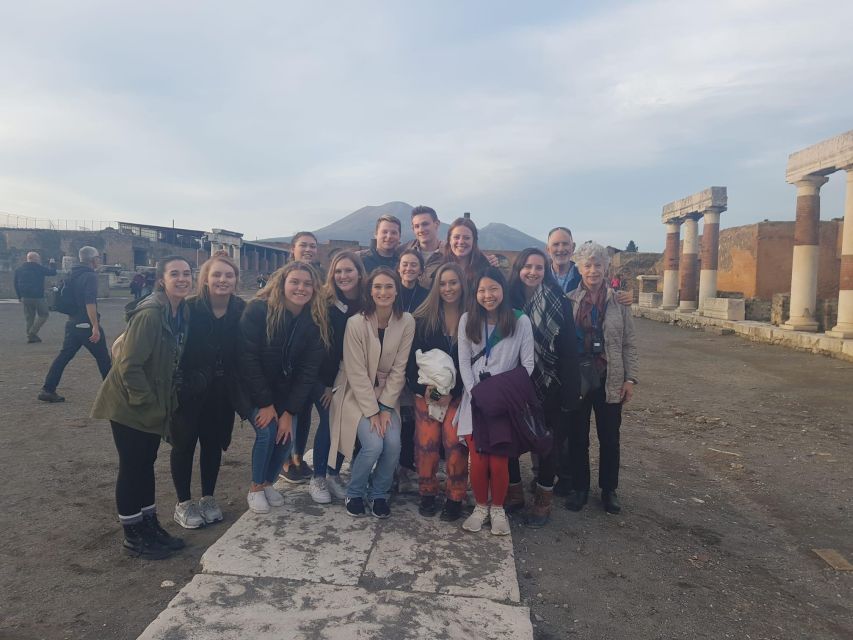
- Priority access that saves you from the worst of the ticket-line chaos
- Porta Marina Inferiore start, the original gateway to the harbor approach
- Forum sweep with major landmarks like the Basilica and temples of Jupiter and Apollo
- Via dell’Abbondanza walking through the commercial street scene
- House of the Faun viewpoints for elite life and famous Pompeii scale
- Lupanar (brothel) stop that shows leisure and social norms, not just monuments
Priority access at Pompeii: what $47 actually buys you
Pompeii isn’t hard to visit. What’s hard is timing. When you arrive, you’re competing with lines, crowd flow, and the simple fact that the site covers a lot of ground.
This tour is priced at $47 per person for a 2-hour experience that bundles the entrance fee and includes priority access to buy your ticket. That combination matters more than it sounds: you’re paying for time-saving entry and a guide who helps you read what you’re looking at. If you’re trying to keep your day efficient—especially if you’re on a tight Campania schedule—this is good value.
Also, the time is realistic. Two hours in Pompeii is not “everything.” It’s long enough for a guided overview of the core area, but short enough that you can still roam afterward on your own if you want more of one type of site (shops, neighborhoods, or houses).
You can also read our reviews of more walking tours in Naples



Meeting at Porta Marina Inferiore: get your bearings fast
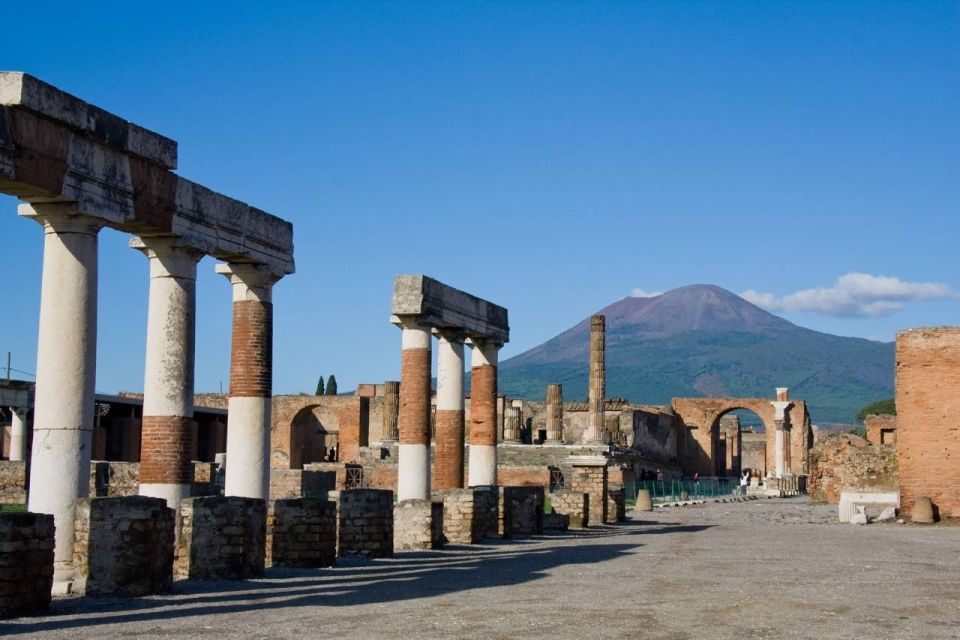
Your day starts at Porta Marina Inferiore, in Piazza Esedra, where your guide will hold a board with the local tour operator logo. That matters because Pompeii is spread out, and “meet near X” can turn into confusion if you show up late or don’t know which gate is the right one.
My advice is simple: show up with a little buffer, and plan to double-check the logo on the sign. The walk begins right away, so if you’re late, you’ll feel it.
You’ll also benefit from the fact that the meeting point is tied to the route itself. Instead of starting mid-site, you begin at a real entryway—Porta Marina Inferiore—so the tour naturally recreates the approach into Pompeii.
Walking into Pompeii through Porta Marina Inferiore
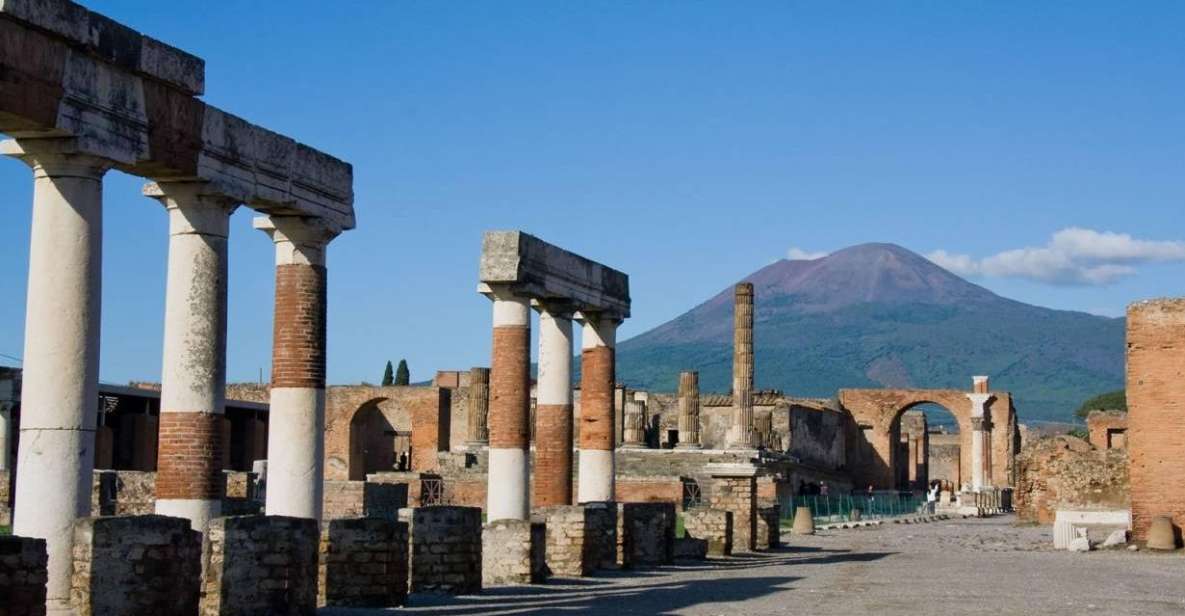
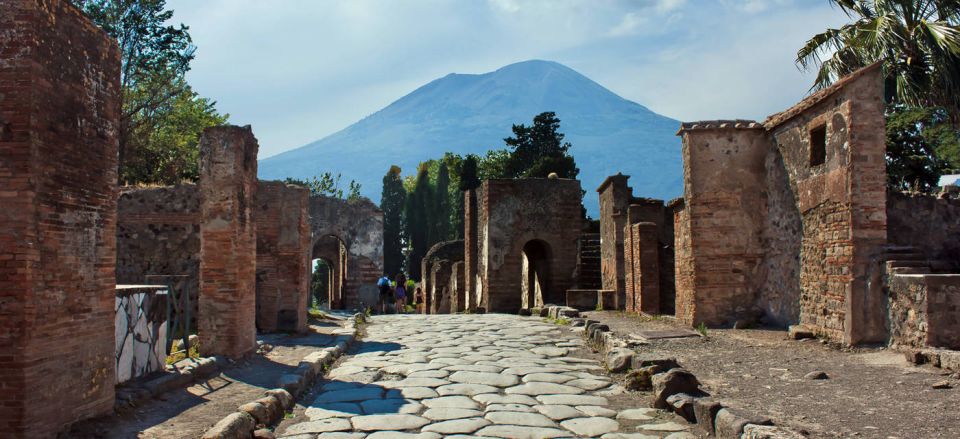
One of the smartest parts of this tour is the start. Porta Marina Inferiore was the main gateway connecting Pompeii to its harbor. That context changes how you see the first stretch of walking.
As you enter through the gate, you’re not just “looking at stones.” You’re stepping onto an original Roman street setting that ties the city to travel, trade, and movement. It’s an easy way to get oriented fast, because the guide’s explanations have somewhere to land: you’re literally walking along the bones of the city.
And the best practical payoff? You’re moving while your brain is still fresh. Early on, it’s easiest to absorb what the guide is pointing out—street levels, public buildings, and how space was organized for crowds and everyday movement.
The Forum: where politics, religion, and business collide
The tour’s backbone is a walk into the Forum, Pompeii’s political, religious, and commercial hub. If you want your two hours to feel like more than a highlight montage, this is where you get it.
Around the Forum, you’ll see major monumental structures, including the Basilica, the Temple of Jupiter, and the Temple of Apollo. Even if the buildings look broken today, the layout explains how Pompeians organized public life.
Here’s why I think the Forum stop is so valuable:
- It teaches you how one area could function as civic center, worship zone, and money-making space.
- It shows you the contrast between grand architecture and the everyday people who used it.
- It gives your later stops—baths, shops, homes—better meaning because you understand the city’s “center of gravity.”
If you’re the type who likes to take photos, this is also where you’ll want time. The Forum has clear lines of sight, so you get good angles. Just keep in mind the tour pace is guided—so if you need extra seconds, flag it politely.
Forum Baths or Stabian Baths: a Roman routine you can picture
After the Forum, the itinerary shifts to public relaxation at the Forum Baths or Stabian Baths—two of the most famous bath complexes tied to social life.
Baths in the Roman world weren’t only about hygiene. They were places to hang out, chat, and move through a set routine in a shared environment. Standing in a bath complex is one of the fastest ways to understand how public spaces shaped relationships.
What I like about this stop is how it balances the grand civic buildings with a more human rhythm. You can shift from temples and civic power to a setting where people met regularly. You start thinking like a resident rather than a spectator.
And because the tour is designed to focus on the central area, you’re not wandering randomly. The baths support the larger story: how the city worked day-to-day right before 79 AD.
You can also read our reviews of more guided tours in Naples



Via dell’Abbondanza: shops, bakers, taverns, and street life
Next comes Via dell’Abbondanza, one of Pompeii’s liveliest streets—lined with spaces that connect directly to daily consumption and small business. As you walk, you’ll pass ancient shops and see the kind of commercial street activity that must have felt familiar to Romans.
This is the part of the tour where I start noticing more “small details” even though we’re still moving. You get a sense of where locals bought food, grabbed snacks, and worked through errands. The guide’s job here is crucial: they help you connect what you’re seeing (street layout and storefront remnants) to the real life behind it.
If you tend to crave more everyday-life storytelling, this is where you’ll likely get the most satisfaction in the fixed two-hour window—because the street itself is about daily exchange, not just impressive buildings.
House of the Faun: elite living and Pompeii’s big scale
No central Pompeii tour feels complete without a peek at elite residence life. This stop includes the House of the Faun, one of Pompeii’s largest and most luxurious private homes.
What you should look for here is scale and layout. A house like this isn’t just a single room. It’s a statement about wealth, status, and how people moved through spaces for display and privacy.
And while ruins can be hard to interpret on your own, a guide helps you translate the remains:
- Which parts suggest how a wealthy household wanted to be seen
- How the residence connects to Pompeii’s broader street world
- Why certain famous design elements (including mosaics) became part of Pompeii’s lasting fame
The House of the Faun is also a good reality check. Pompeii wasn’t one single lifestyle. It was an entire spectrum—public glory for civic spaces, social mixing in baths, and polished luxury behind walls.
The Lupanar brothel: leisure, rules, and social reality
The most vivid stop on this route is the Lupanar, the brothel. It’s not included to shock you. It’s included because it offers a direct window into Roman leisure and social customs.
This is where your tour stops feeling like an architectural walk and starts feeling like a city documentary. You’re looking at a place tied to behavior and norms, and the guide’s explanations help you understand how it fit into the city’s daily ecosystem.
A balanced expectation helps here: a two-hour tour can’t turn into a full deep study of every topic. But the Lupanar stop does give you a broader view of life in Pompeii—how people used public leisure spaces, how private commercial spaces operated, and how social rules were represented in built form.
If you prefer “clean and classy” ruins only, you might not love this part. If you want the whole snapshot—even the uncomfortable parts—this stop is one of the best reasons to choose a guided format.
Recently excavated areas: fresh context on Pompeii’s final days
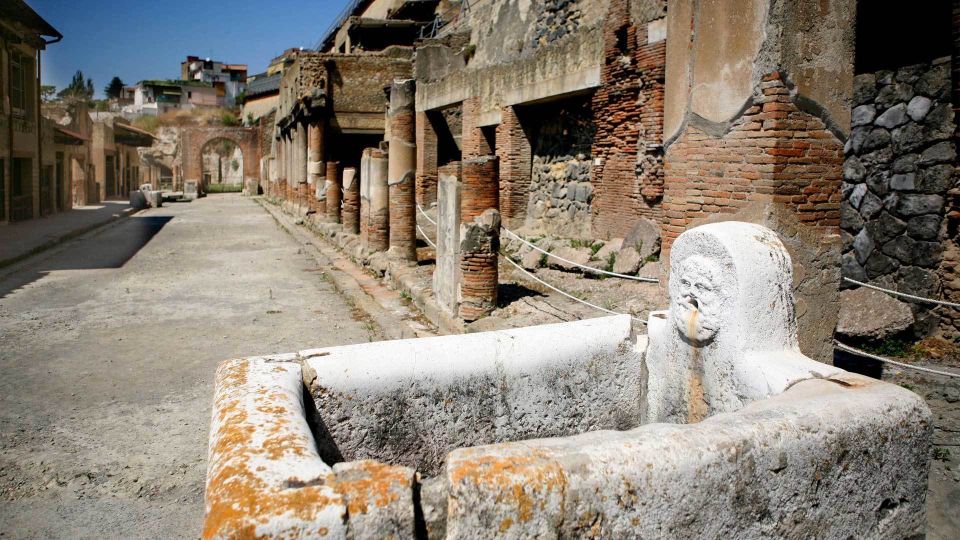
One reason this tour feels slightly different from a generic walk is that it includes mention of recently excavated areas and new archaeological findings. Pompeii has ongoing work, so the story you get isn’t just frozen in time. You’re hearing how interpretation continues to evolve as more is uncovered.
Why that matters for you: excavations can change what people thought they knew about daily life and how the eruption affected different parts of the city. Even when you’re only passing through a small area, the guide can connect new info to the larger timeline—the final days before the eruption of Mount Vesuvius in 79 AD.
It’s a useful reminder that Pompeii isn’t only “a museum.” It’s still an active research site, and guides can help you see how evidence supports the story.
Timing and pacing: what 2 hours feels like in real life
Two hours can sound short until you’re standing in Pompeii, where every direction looks like a new world. This tour is designed to keep you comfortable in the central area, with enough structure to avoid wandering in circles.
You should expect:
- A guided overview of the main points (Forum, baths, street life, one or two elite or vivid stops)
- Time to absorb key visuals with explanations on the spot
- A likely opportunity afterward to continue exploring on your own while your bearings are still fresh
The biggest pacing risk is the classic one: Pompeii makes it easy to get distracted. If you stop too often for photos, you might feel rushed later. If you want to slow down, communicate it early—guides typically adjust within reason.
Also, remember the scale issue. One reason people like this tour is because it works as an opener. Pompeii is huge, and this route is only a slice. Use it as a smart “first pass,” then pick where you want to spend more time once you’ve learned what matters most to you.
Who this tour suits best (and who might want a different plan)
This Pompeii skip-the-line priority tour is a strong choice if you:
- Want a guided overview with context, not just a walk through ruins
- Prefer a tight plan that shows the core of Pompeii in 2 hours
- Care about minimizing waiting time and maximizing your site hours
- Like a mix of public spaces (Forum, baths) plus a few standout social locations (like the Lupanar and elite home)
It’s also a decent fit if you’re traveling with limited time in Campania and want a high-impact day.
On the flip side, you might want a different approach if:
- You’re hoping to cover a large portion of Pompeii in one go (this doesn’t try to do that)
- You strongly want a heavy focus on everyday minute-by-minute life instead of the city’s major anchors
- You’re traveling with someone who needs long photo breaks or slow, independent wandering
Quick practical notes you’ll be glad you remembered
- Wear comfortable shoes. Pompeii’s surfaces and footpaths can be uneven.
- For children, bring passport or ID card if that applies to your group.
- The tour runs in English and Italian, so pick the language that matches how you want explanations to land.
- If you’re visiting on the first Sunday of the month, entrance is free—but tickets can’t be reserved ahead, so entry isn’t guaranteed. That can affect how your day goes.
Should you book this Pompeii priority tour?
I think you should book this tour if your goal is simple: get into Pompeii smoothly, learn what you’re looking at, and walk away with a clear sense of how Pompeii functioned—civic life at the Forum, social routines at the baths, daily street trade on Via dell’Abbondanza, elite residence glimpses at the House of the Faun, and Roman leisure represented at the Lupanar.
If you’re the type who wants to cover only a few themes but go deep for hours, or you love being completely independent from start to finish, you might prefer a self-guided plan. But if you’re aiming for the best use of limited time and you want the city explained as you walk, the priority access + authorized guide combo is exactly what makes this worth considering.
FAQ
How long is the Pompeii guided walking tour?
The tour lasts 2 hours.
Where do I meet the guide for this tour?
You meet at Porta Marina Inferiore in Piazza Esedra, where your guide will have a board with the local tour operator logo.
Does this tour really help me avoid the ticket line?
Yes. The experience includes priority access to buy your entrance ticket, which helps you move through the arrival process faster.
What languages are available?
The live guide is available in English and Italian.
What should I bring?
Bring comfortable shoes. Also, the tour notes that children should have passport or ID card.
Is Pompeii free on the first Sunday of each month?
Entrance is free on the first Sunday of each month, but tickets can’t be reserved ahead of time, so entry is not guaranteed.
What is the cancellation policy?
There’s free cancellation up to 24 hours in advance for a full refund.