REVIEW · NAPLES
Pompeii Wheelchair Accessible Private Tour with Pick Up
Book on Viator →Operated by Napoli Official Tour · Bookable on Viator
Pompeii is amazing, even with limited mobility. This private tour sets you up with a wheelchair-accessible route through the ruins, plus a private guide who helps you make real progress in a place that can feel huge. I love the hassle-free Naples pickup and drop-off, and the way the route focuses on major areas like the Necropolis and the Forum. One catch: the Pompeii entrance ticket is not included, and the accessible route won’t cover every corner of the park.
What makes this work in practice is the planning around movement. You follow a special path of about 2 kilometers, with about 2 hours of time inside the archaeological area. That means you’re not just stuck waiting for ramps and detours—you get a clear route and a plan for your morning, even if you’re using a wheelchair or mobility scooter.
In This Review
- Key highlights that matter before you go
- Naples pickup and the private ride: less stress, more ruins
- The 9:00 start: planning your morning like a local
- Pompeii Archaeological Park: the special route built for real movement
- What you might enjoy most on this format
- Necropolis and Forum: big Roman life in two meaningful zones
- A consideration: you’re not seeing every single building
- Guide time: what private attention changes in Pompeii
- How the vehicle and loading support works for wheelchairs and scooters
- Admission ticket and what to do before you arrive
- Price and value: $774.42 per group up to 4
- What to bring, and how to get the most out of your two hours
- Who this tour suits best
- Should you book? My practical take
- FAQ
- What time does the tour start?
- How long is the experience?
- Is the Pompeii entrance ticket included?
- How much time will I have inside Pompeii?
- Where does pickup happen?
- Is this a private tour?
- How many people are in a group?
- What language is the guide service?
- Does it use a mobile ticket?
- Are service animals allowed?
Key highlights that matter before you go
- A special 2 km accessible path in Pompeii keeps the route manageable and designed for mobility needs
- Naples pickup and round-trip transfers save you from figuring out buses and timing
- Private guiding time means no one rushes your pace or overlooks access needs
- Top sights on the route, including the Necropolis and the Forum
- A mobility-scooter friendly setup, including safe loading and unloading noted in guide/driver experiences
Naples pickup and the private ride: less stress, more ruins
Starting in Naples is a smart way to do Pompeii. You’re not trying to coordinate rail timing, parking, or a patchwork of local transport. Instead, you get round-trip private transfer in a wheelchair-accessible vehicle, with pick-up offered from your hotel (on request), the cruise terminal, Naples Central Train Station, or the airport.
Practically, this means you control the day. If you’re traveling with family members who need slower pacing, or you’re simply tired of logistics before you even reach the first stone wall, the pickup helps you shift into sightseeing mode fast. It also reduces the risk of missing a connection—Pompeii doesn’t pause because you’re stuck finding a taxi.
The other thing I like about a private setup: you’re not negotiating your needs in a crowd. You’re dealing with one driver, one guide, and one plan. That shows up later in Pompeii, where the ability to move easily is the whole point.
You can also read our reviews of more private tours in Naples



The 9:00 start: planning your morning like a local
The tour begins at 9:00 am. For many people, that’s ideal—morning light helps ruins feel more readable, and you’re more likely to stay comfortable during transfers and walking on uneven surfaces.
You also get to structure your time. The tour overall runs about 3 to 4 hours, and Pompeii time is built around a clear route with a couple hours on-site. That time framing is helpful if you don’t want a half-day that stretches into fatigue and frustration. Pompeii can wear you down quickly because it’s spread out. This format keeps it focused.
If you’re the type who likes to linger, just know your personal pace matters. You’ll likely have enough freedom for breaks and photos, but this is still a guided plan built around accessibility, not a free-for-all through the entire site.
Pompeii Archaeological Park: the special route built for real movement
Here’s the heart of the experience: the tour is tailored along a special path about 2 kilometers long that’s designed to make Pompeii more accessible for everyone. That’s a big deal, because Pompeii is not an even, flat museum floor. It’s an active archaeological park with all the unevenness that comes with two thousand years of history and recovery.
With this route, you’re not just hoping you can get through. You’re following a line that’s meant to work. And the tour includes time in the ruins—about two hours of free time inside Pompeii. So you’re not stuck watching your guide do all the work. You can take in details at your speed, stop when something grabs you, and still stay within a plan that fits mobility needs.
You’ll also see some of Pompeii’s most important zones. The tour highlights include major areas like the Necropolis and the Forum. Even if you’ve seen Pompeii photos before, walking these areas is different. Streets feel narrower, doorways feel taller, and the scale becomes real fast.
What you might enjoy most on this format
This kind of route is especially good if you want a meaningful hit of Pompeii without the burnout. It’s a practical way to experience how a large Roman city operated—daily life, public spaces, and the edge of the city where burial grounds come into play.
A guide who can adapt is key here. In past groups, guides including Elvira have been praised for being history-focused and very accommodating. That matters because accessibility isn’t only about ramps—it’s also about pacing, interpretation, and knowing where your energy will go.
Necropolis and Forum: big Roman life in two meaningful zones
The Necropolis and the Forum are not random choices. They show two sides of the city’s rhythm.
The Forum is where Pompeii’s public life happens—think crowds, civic space, and the feel of a city center. Even if you’re not trying to see every building on every street, the Forum gives you a strong sense of how people gathered and organized daily life. It’s the kind of area that helps you understand why Pompeii wasn’t just a place to live—it was a place to meet, trade, and run the city.
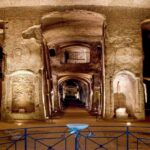
The Necropolis brings a totally different mood. Pompeii’s burial grounds are part of how the city defined community and memory. It’s also where you can get a stronger emotional connection to the site, because the story becomes personal fast.
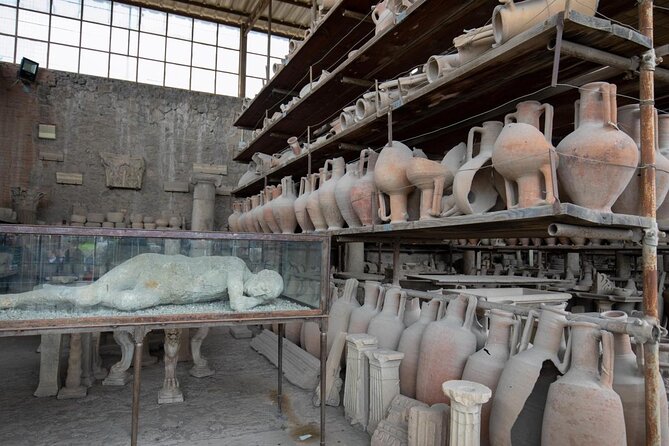
One review specifically highlighted the body casts—people died in the eruption, and their positions tell the story of the moment. If your guide brings you past the cast displays or gives you time to incorporate that kind of stop, it’s the sort of detail that tends to stick with people long after they leave. (Not all routes include every museum corner, so just use the guide time to ask what’s best to include within your mobility limits.)




A consideration: you’re not seeing every single building
Pompeii is huge. This tour is designed to be accessible and doable, so you’re following an approach that may not cover the entire park. That’s not a flaw—it’s the whole tradeoff. You’ll likely get a better experience by focusing on the route that works rather than trying to force a full-site checklist.
Guide time: what private attention changes in Pompeii
You’re paying for more than transport. You’re buying undivided attention from a professional guide during the Pompeii portion (about 2 hours of guide service in Pompeii).
That matters because Pompeii is hard to read on your own. The buildings are dramatic, sure, but the meaning isn’t always obvious from street level—especially if you’re moving at a slower pace. A good guide turns stone walls into a story you can follow.
In reviews, guides were described as accommodating and strong on historical context. One guide was noted as being a local high school teacher, which makes sense: teaching skill often translates into clear explanations, pacing, and patience. Another guide experience praised both history and helpfulness, plus support finding accessible paths for mobility scooters.
Even if you don’t need lots of narration, the guide helps you avoid wasted time. You’re less likely to wander into dead ends or miss key viewpoints that you can actually reach comfortably.
How the vehicle and loading support works for wheelchairs and scooters
A wheelchair-accessible vehicle is the baseline, but the real question is whether you can smoothly transfer in and out without stress. In the experiences described, the van driver was careful and helpful with unloading and loading a scooter, making sure the rider could get in and out easily.
That kind of care is important for two reasons. First, it reduces the time your group spends dealing with equipment. Second, it reduces anxiety—when the loading process goes well, the rest of the day feels easier.
If you use a wheelchair or mobility scooter, I’d treat this as a “system” approach: vehicle access plus an accessible path inside the site. The tour is built around that logic, instead of assuming you’ll handle everything alone.
Admission ticket and what to do before you arrive
The Pompeii entrance ticket is not included. That’s the one extra step you should plan for, because it affects your total cost and your timing.
Also, the tour offers a mobile ticket option. That helps if you prefer digital tickets rather than printing. But again, the Pompeii entrance ticket itself isn’t part of this package, so you’ll still need to handle the site entry separately.
If you want the smoothest start, I recommend doing the ticket part early, so you’re not trying to sort it out while you’re waiting for pickup or traveling in from Naples.
Price and value: $774.42 per group up to 4
At $774.42 per group (up to 4 people), this is not a budget tour in the usual sense. It’s a private service with wheelchair accessibility, plus round-trip transport from Naples and a professional guide.
So the value question is: will you benefit from private guiding plus an accessible route plan more than you would from a cheaper group tour?
I think it tends to make sense if:
- you want control over pace and access needs
- you’re traveling with someone who uses a wheelchair or mobility scooter and you’d rather not gamble on route feasibility
- you’d rather pay for smooth logistics than spend your day coordinating transport and figuring out what’s reachable
It can also be a good value for small groups, because the price is per group rather than per person for larger parties. If you’re two, you might feel it more. If you’re up to four, the cost spreads and the private format becomes easier to justify.
The admission ticket is extra, but that’s common for major sites. The key is that you’re paying here for the transfer + guide + route design that makes Pompeii actually workable.
What to bring, and how to get the most out of your two hours
The tour gives you a focused Pompeii window, so your preparation matters.
Bring:
- your admission ticket (since it’s not included)
- any mobility equipment you use, properly set up for transport
- water and basic snacks if you need them, since food & drinks aren’t included
And when you’re on-site, use your guide time to set priorities. If you want Forum first, or you want to focus on the Necropolis feel, decide early. With an accessible route around about 2 kilometers, small choices can make the difference between a calm morning and an overly rushed one.
Also, be realistic about the tradeoff. You’re getting a well-planned accessible route, not a full-site sweep. That’s usually a win.
Who this tour suits best
This tour fits best if you want:
- a wheelchair-accessible experience without turning Pompeii into a logistics project
- a private guide who can adapt to your pace
- a short, high-impact morning that doesn’t burn the whole day
It’s also a strong option if you care about seeing big anchors of the city, like public and civic spaces (Forum) and burial areas (Necropolis), without forcing every detour.
If you’re traveling with mobility challenges, or if your group includes someone using a wheelchair or mobility scooter, this format is built for you. If everyone in your group is fully mobile and you don’t care about accessibility routing, you might find other tours cheaper—but you won’t get the same built-in structure.
Should you book? My practical take
Book it if accessibility planning and private guiding are worth paying for. This tour’s value comes from three things working together: private Naples pickup, an accessible plan inside Pompeii (that 2 km route), and guide time that helps you make sense of what you’re seeing.
Skip it (or consider alternatives) if:
- you want to spend much longer than a short morning in Pompeii
- you’re comfortable handling site access and navigation on your own
- your budget is very tight once you add the Pompeii admission ticket and any personal food needs
If you want Pompeii to feel doable and meaningful, this is a very rational choice.
FAQ
What time does the tour start?
The start time is 9:00 am.
How long is the experience?
It lasts about 3 to 4 hours.
Is the Pompeii entrance ticket included?
No. The admission ticket is not included.
How much time will I have inside Pompeii?
You’ll have about 2 hours of free time inside the ruins.
Where does pickup happen?
Pickup is offered from your hotel on request, the Cruise Terminal of Naples, Naples Central Train Station, or the airport.
Is this a private tour?
Yes. It’s private, and only your group participates.
How many people are in a group?
Up to 4 people per group.
What language is the guide service?
The tour is offered in English.
Does it use a mobile ticket?
Yes. A mobile ticket is offered.
Are service animals allowed?
Yes, service animals are allowed.