REVIEW · POMPEII
Pompeii Ancient City Walking Tour – Italian & English Guide
Book on Viator →Operated by Sesto Continente Tours · Bookable on Viator
Two days in Pompeii feel like a time machine. I like the guided walkthrough through the main highlights, and I also like that the guide points out what to notice in places like the Villa dei Misteri so it feels less like wandering ruins and more like understanding a living city. You get a structured route across big sites without having to decode everything alone.
The main catch is the Pompeii entrance ticket is not included, so you’ll want to budget for it (listed as €22 per person) and plan your timing so the walk starts smoothly.
In This Review
- Key things to know before you go
- Start at Piazza Porta Marina: the ticket-office help that saves time
- Day 1: Pompeii’s biggest highlights in a guided walking route
- Temple stops: Apollo and Jupiter with quick context you can use
- Casa del Fauno and Casa del Menandro: mosaics and naming stories
- Casa del Fauno: the Alexander mosaic
- Casa del Menandro: a name you can trace to a painting
- Casa dei Vettii and the Villa dei Misteri: social climbing meets an initiation ritual
- Casa dei Vettii: freedmen flexing through wall art
- Villa dei Misteri: nine scenes and Dionysus
- Day 2: a calmer hour at the Roman Catholic Sanctuary
- Price and value: what you really pay for
- Practical tips for getting a smooth experience
- Should you book this Pompeii Ancient City Walking Tour?
- FAQ
- Is the Pompeii entrance ticket included?
- What languages is the tour offered in?
- Where does the tour start?
- How many travelers are in the group?
- How long is the tour?
- What does the tour include for tickets and entry?
- Is the Roman Catholic Sanctuary visit on day two included?
- Is free cancellation available?
- What if the weather is bad?
- Can I bring a service animal?
Key things to know before you go
- Ticket office entry help: facilitation at the Ticket Office entrance is included, which matters at a busy site like Pompeii.
- A tight, highlight-first route: you move through major buildings, with the big archaeological park time anchored early.
- Art-focused house stops: the Casa del Fauno, Casa del Menandro, Casa dei Vettii, and Villa dei Misteri are chosen for their standout wall paintings and mosaics.
- Religious stop on day two: the Roman Catholic Sanctuary of Pompeii is part of the schedule with entry included.
- Small group size: the tour caps at 25 travelers, which usually keeps questions possible.
Start at Piazza Porta Marina: the ticket-office help that saves time
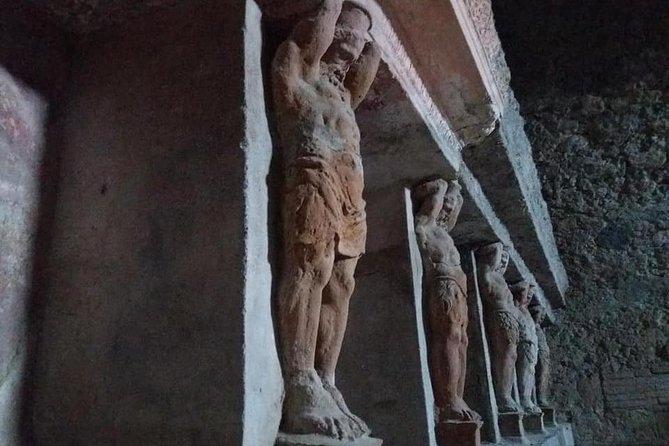
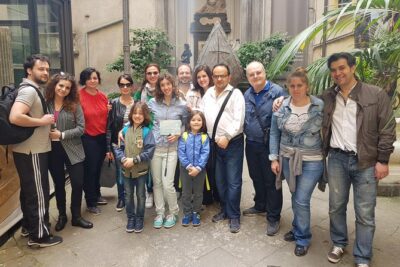
This tour meets at Piazza Porta Marina, 80045 Pompei NA. The practical idea is simple: instead of you trying to guess where to queue, your guide helps with facilitation at the Ticket Office entrance, which can reduce stress on your first minutes in Pompeii.
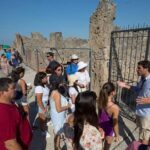
When you arrive, look for your guide holding a Sesto Continente Tours sign. From there, the route is built around getting you into the Pompeii Archaeological Park and then moving station-to-station across the most famous areas. Since the entrance ticket itself is not included in the tour price, this “meet and manage” approach is especially useful because you can focus on the ruins, not logistics.
One more point: the tour is offered in English. If you have Italian, or if you’re in a mixed group, you might find the guide can adjust, since one real-world example showed a guide (Simone) reworking the visit to fit the group’s language needs and offering to repeat in Italian when asked.
You can also read our reviews of more walking tours in Pompeii

Day 1: Pompeii’s biggest highlights in a guided walking route
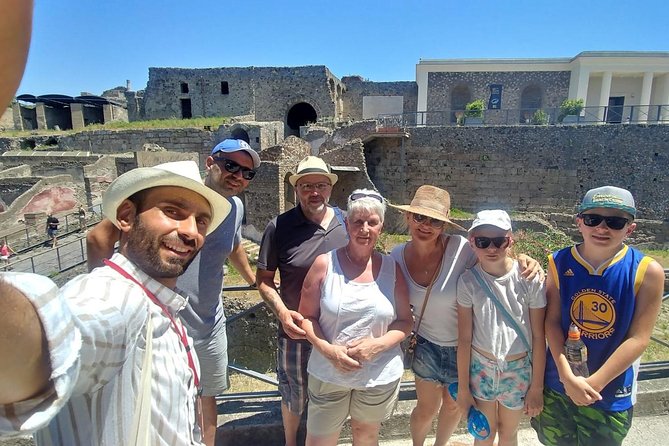
Day 1 starts at the Pompeii Archaeological Park. The schedule gives you about 2 hours here, after entry, and that’s a smart chunk of time because it sets your bearings fast. In that first segment, you’re walked through a cluster of heavy hitters, including the Anfiteatro, the Tempio di Apollo, the Tempio di Giove, and several famous homes.
Then the tour continues with short, focused stops at specific houses and temples. Many of these are listed as around 10 minutes each, which tells you the pacing: this is a highlight tour, not a slow, linger-and-read-everything tour. If you want detail on every wall, you’ll still need extra time later. But if you want the big story of Pompeii and the most important buildings lined up in a logical order, this format fits well.
Here’s what you’re aiming to see on day one, in plain terms:
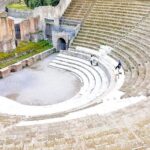
- Anfiteatro Romano (Roman Amphitheatre): built in 80 a.C., and noted as the oldest amphitheatre of its type, with seating arranged in three sections by social class. The size alone (up to about 20,000 people) gives you scale for daily life and public events in Pompeii.
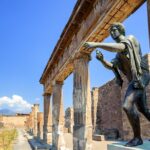
- Tempio di Apollo: described as one of the oldest religious buildings in Pompeii, including a reproduction of a bronze statue of Apollo shown holding a bow and arrow.
- Tempio di Giove Capitolino: framed around the Roman idea of Jupiter as the supreme god of the divine hierarchy, part of the Capitoline triad with Juno and Minerva.
After temples and the amphitheatre, the tour shifts into homes—where Pompeii stops being a textbook and becomes personal.
Temple stops: Apollo and Jupiter with quick context you can use
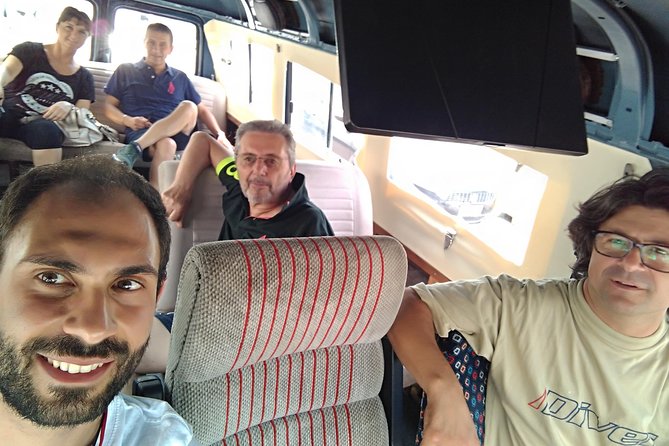
The value of the Temple stops is not just that they’re famous. It’s that the guide gives you a few key facts that anchor what you’re looking at, so the architecture makes sense in your head instead of feeling like random stone.
At the Temple of Apollo, the schedule flags it as religious space with Apollo presented as the prophetic god, plus that bronze statue reproduction detail. Even if you don’t spend long inside (the stop is short), that single reference helps you understand why the temple was part of a larger religious landscape.
At the Temple of Jupiter Capitolino, the stop is linked to the Roman cult of the Capitoline triad. The practical payoff for you is that you can connect what you see to who worshipped there and what role the gods played in Roman public life.
One caution: because each temple stop is short, you’ll get the basics, not a full lecture. If you’re the type who wants to stand and stare at details, plan to slow down on your own afterward. The best approach is to let the guided stops give you direction, then choose what you revisit.
Casa del Fauno and Casa del Menandro: mosaics and naming stories
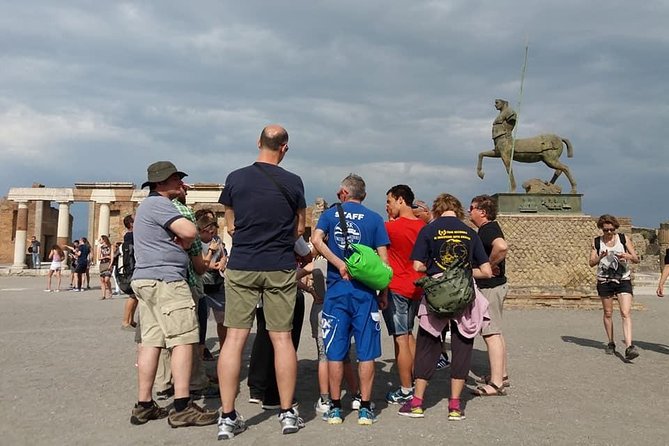
Pompeii homes are where the city texture shows through. On this tour, two specific stops do a great job explaining why some houses became famous and how their art helps identify them.
Casa del Fauno: the Alexander mosaic
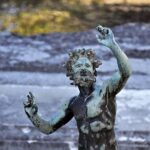
The Casa del Fauno is presented as one of the largest residences in Pompeii. The real draw is the mosaic of Alexander: a floor reproduction depicting the battle between Alexander the Great and Persian king Darius III. That’s the kind of detail you can remember later, because it’s a clear story scene, not just decoration.
If you’re visiting Pompeii for the first time, this kind of anchor is gold. It turns a massive site into something with plot.
You can also read our reviews of more guided tours in Pompeii


Casa del Menandro: a name you can trace to a painting
Next is the Casa del Menandro. This one is named not after the original owners, but after an artwork: an impressive fresco of the Greek poet Menander. Again, you’re learning something practical—how Pompeii’s modern labels often come from what’s painted or set into the rooms.
The benefit for you is that you can walk through and interpret what you’re seeing. The buildings stop feeling like anonymous rooms and start feeling like curated scenes shaped by owners and culture.
Casa dei Vettii and the Villa dei Misteri: social climbing meets an initiation ritual
Two of the best stops on the day-one plan are also two of the most story-driven.
Casa dei Vettii: freedmen flexing through wall art
Casa dei Vettii is tied to a social shift. The tour description points out that after becoming freed slaves, the Vettii brothers didn’t hold back on expenses to show off their new status. What you get here is a house with striking frescoes and wall paintings.
That’s useful context while you’re looking. Instead of wondering why the art is so intense, you can connect it to ambition and identity—what it meant to show success in a city.
Villa dei Misteri: nine scenes and Dionysus
Then comes the Villa dei Misteri, centered on the “Camera d’Iniziazione.” The key detail is that there are nine painted scenes in sequence, showing a rite of passage for a bride transitioning into adult womanhood, plus the cult of Dionysus, the Greek god of wine and fertility.
Even with a short scheduled stop, this is the kind of theme you can walk away remembering. You’re not just seeing pigments on plaster. You’re seeing a narrative and a belief system presented as a sequence.
If you’re curious about symbolism, this is the stop that gives you the most conversation material later—because the story is specific and visual.
Day 2: a calmer hour at the Roman Catholic Sanctuary
On day two, the schedule shifts tone. You have 1 hour at the Roman Catholic Sanctuary of Pompeii, with entry included.
This is not a repeat of the ancient city walking grind. It’s a different kind of site visit—one more connected to later religious life than the Roman houses and temples of the ancient Pompeii plan.
If you like a tour that doesn’t end with you completely fried from nonstop stone and stairs, this day-two stop can feel like a breathing space. It’s also a good time to ask your guide about how later eras interacted with places like Pompeii, since the ancient city is now a layered memory rather than a single moment.
Price and value: what you really pay for
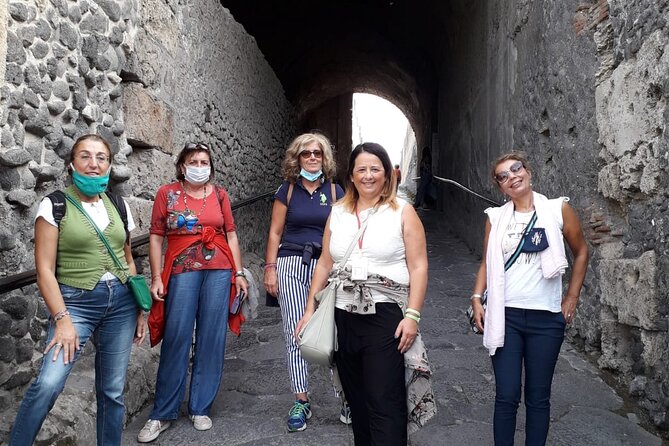
The tour price is listed at $36.12 per person, and the big value is the guided route plus entry facilitation at the ticket office. The part that changes your total cost is the Pompeii entrance ticket: listed as €22.00 per person, and not included.
So your realistic budgeting math is: tour price + the separate site ticket. For many people, that still feels reasonable because Pompeii is huge and easy to get overwhelmed in. A guide can turn confusion into a clear path through the most important zones.
Group size also matters. With a maximum of 25 travelers, you’re less likely to get the experience of a huge bus tour where nobody can ask questions. It doesn’t guarantee personal attention, but it helps.
One more value note: this tour is built as a highlight sprint. That can be perfect if you’re short on time, but less perfect if you want long stays inside every house or want to read every label. Choose based on what kind of visitor you are.
Practical tips for getting a smooth experience
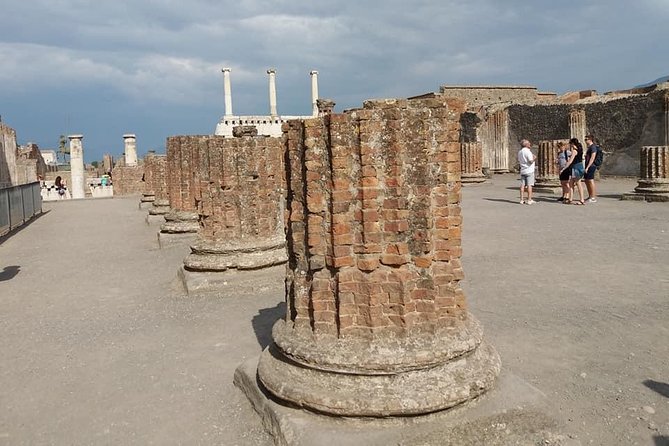
- Plan your footwear and pacing for a lot of walking. Even when individual stops are short, Pompeii adds up quickly.
- Bring what you need for the entrance ticket, since it’s listed as not included. Your guide’s ticket-office assistance helps, but you still need the paid entry.
- Use the guided stops to pick what you want to revisit later on your own. The villa and house art (Alexander mosaic, Menander fresco, Vettii wall paintings, Villa dei Misteri scenes) are the best candidates if you want extra time.
- If you’re traveling in a mixed-language group or you have specific language needs, it’s worth being proactive about communication before you arrive. One example showed a guide handling a language shift and repeating in Italian on request.
There is also at least one serious caution in the overall record: a report of a missed meet-up and no refund after non-response. That doesn’t mean it’s common, but it does mean you should confirm details ahead of time and arrive on the dot at the meeting point, then keep your expectations grounded.
Should you book this Pompeii Ancient City Walking Tour?
Book it if you want a structured two-day introduction to Pompeii with a guide, especially if you care about art and narrative scenes in the homes—Alexander’s mosaic, the Menander fresco naming story, the social ambition behind the Vettii, and the sequential initiation scenes of the Villa dei Misteri.
Skip it (or plan more independent time) if you dislike short stops and would rather spend long, quiet hours reading and wandering room by room. This tour is designed to hit major points efficiently, not to slow down.
If you do book, go in prepared for the separate entrance ticket cost and treat the guided route as your map. Then decide what deserves your extra attention after the tour ends.
FAQ
Is the Pompeii entrance ticket included?
No. The Pompeii entrance fee is listed as €22.00 per person and is not included. A day-two sanctuary visit is listed as entry included.
What languages is the tour offered in?
The tour is offered in English.
Where does the tour start?
The meeting point is Piazza Porta Marina, 80045 Pompei NA, Italy.
How many travelers are in the group?
The tour has a maximum of 25 travelers.
How long is the tour?
It’s listed as 2 days (approx.), with day-one stops totaling multiple segments and day two including a 1-hour visit.
What does the tour include for tickets and entry?
You get facilitation at the entrance to the Ticket Office. The entrance ticket for Pompeii itself is not included.
Is the Roman Catholic Sanctuary visit on day two included?
Yes. The Roman Catholic Sanctuary of Pompeii is listed as visit free with admission ticket included.
Is free cancellation available?
Yes. You can cancel up to 24 hours in advance for a full refund.
What if the weather is bad?
The experience requires good weather. If canceled due to poor weather, you’ll be offered a different date or a full refund.
Can I bring a service animal?
Yes. Service animals are allowed.