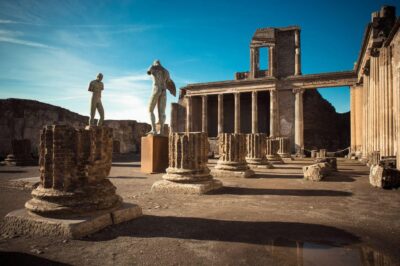
Sunset turns Pompeii into a calmer place. This Pompeii sunset tour is built for people who want to dodge summer heat and the biggest crowds while still seeing the Forum, baths, villas, theaters, and mosaics. The guide keeps the ruins readable, not random stones.
I love the way the guides bring Pompeii to life with clear, caring explanations. Romolo has been praised for contacting you quickly with precise information, then leading in fluent English with a personal connection to the excavations; Paolo also gets strong praise for thorough, detailed guiding that makes the visit feel shorter (in a good way) than it likely is.
One thing to plan for: the entrance ticket to the Pompeii excavations isn’t included in the tour price. Also, the core visit moves along at a good pace, so you’ll want comfortable shoes for uneven surfaces.
In This Review
- Key points to know before you go
- Pompeii at Sunset: why the timing feels smarter
- Price and logistics: what the tour includes (and what you still pay for)
- Starting at Pompei Porta Marina: the easiest entry point
- Pompeii Archaeological Park: the core 2-hour circuit
- Temple of Apollo: a preserved focal point (10 minutes well spent)
- The Forum square and the Granai del Foro museum (civic space to storage space)
- Forum baths and Via dell’Abbondanza: social life and the main street
- Teatro Grande and the Lupanar: big performances and adult entertainment
- Casa del Poeta Tragico and Casa del Cinghiale: mosaics you’ll remember
- Tempio di Venere and Tempio di Giove Capitolino: a compact finish
- What the guide quality really changes for you
- Who should book this Pompeii sunset private tour
- Should you book this private Pompeii sunset tour?
- FAQ
- How long is the Pompeii Sunset Private Guided Tour?
- What is the price per person?
- Is the Pompeii entrance ticket included?
- Does the tour include skip-the-line access?
- What language is the tour guide?
- Where do we meet, and does the tour end there too?
- Is this a private tour?
- Are service animals allowed?
- What is the cancellation policy?
Key points to know before you go
- Sunset timing helps you see Pompeii with less heat and fewer crowds
- Official guide in English, with strong communication (Romolo and Paolo are repeatedly praised)
- Skip-the-line access so you start walking sooner
- A tight route through the Forum area, theaters, key temples, and signature homes
- Stops built around daily life: food, baths, entertainment, religion, and public squares
- Private format means it’s only your group and your questions get real answers
Pompeii at Sunset: why the timing feels smarter
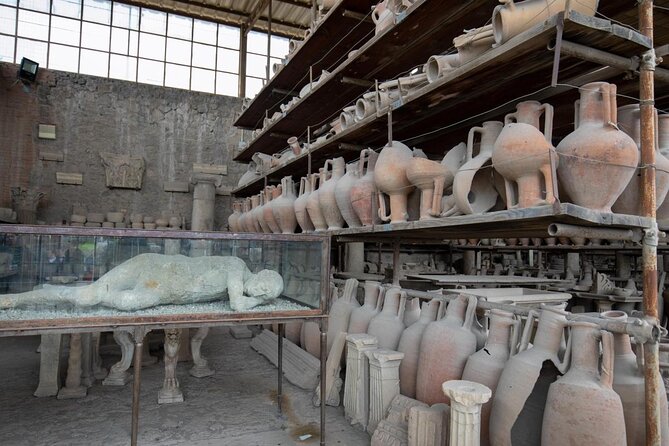
Pompeii is famous, which is exactly why the timing matters. A sunset tour is designed around one idea: arrive when the day is less punishing and the crowds are thinner. Even if you’ve seen pictures, walking the streets in cooler light changes how the whole place feels.
This tour also gives you structure. Instead of wandering for hours, you get a guided flow that hits the places people most often miss when they go solo. That’s a big deal at Pompeii, where it’s easy to feel like you’re moving from one sign to another without understanding what you’re looking at.
The other nice part is the vibe shift. At sunset, the ruins don’t feel like a checklist. They feel like a living town laid out in front of you, with the Roman world getting more understandable as the light softens.
You can also read our reviews of more guided tours in Pompeii

Price and logistics: what the tour includes (and what you still pay for)
At $95.31 per person, this isn’t a cheap “quick look” add-on. What you’re paying for is a private guided experience with official tourist guidance, plus skip-the-line entry included.
Here’s the catch you should budget for: the entrance ticket to the Pompeii excavations is not included. So even though some specific stops list admission as included, you should still plan on adding the main site ticket cost at checkout.
The value equation looks better if you care about getting your money’s worth in a limited time window. You’re getting an organized route across the big headline zones, and the guide’s job is to make the site feel coherent. If you’re the type who learns faster with a human explaining what you’re seeing, this price tends to make sense.
Also keep in mind: you’ll be moving. This is a 2 to 3 hour visit, and the main Pompeii circuit alone is about 2 hours. That’s plenty of time to get a strong introduction, but not enough to linger like a slow museum day.
Starting at Pompei Porta Marina: the easiest entry point
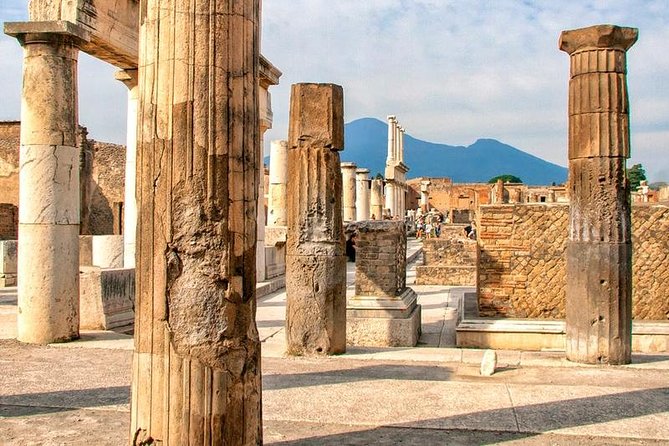
The tour starts at Pompei Porta Marina – scavi (80045 Pompei) and ends back at the same meeting point. That matters more than it sounds. With Pompeii’s size and the maze of entrances, it’s a relief when you don’t have to figure out your way out at the end.
You also get a mobile ticket, which is handy if you’re bouncing between stops in Naples or your phone is your travel lifeline. The meeting point is near public transportation, so it’s not a hassle if you’re not hiring a private car just for this.
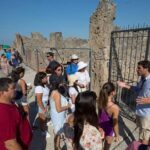
Since this is a private tour, only your group participates. That means the pace can fit your comfort level, and you’re not stuck waiting for a crowd of strangers before the guide can explain the next room, doorway, or mural.
Pompeii Archaeological Park: the core 2-hour circuit
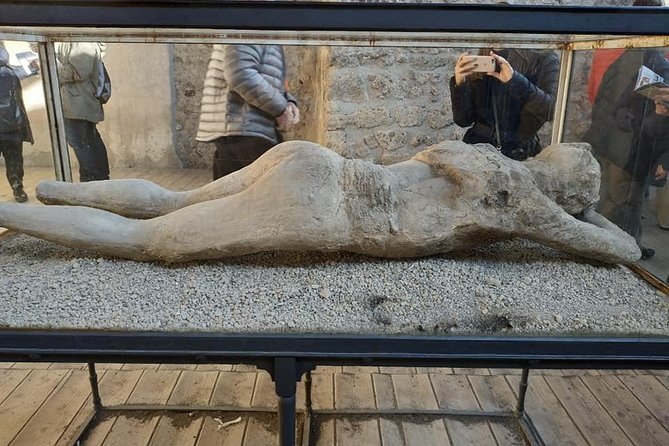
Stop 1 is the big one: Pompeii Archaeological Park, with about 2 hours on site. This is where the tour earns its keep, because you cover multiple major areas rather than getting stuck in one neighborhood.
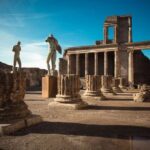
You’ll visit the Forum, baths, Roman villas, the Lupanare, and theaters, plus key everyday details like ancient shops, bakeries, and decorative art such as mosaics and frescoes. The value here isn’t just seeing famous ruins. It’s learning how they connect.
In practical terms, the guide helps you interpret the layout. You stop at points that reveal what people did in that city: where citizens gathered, where families washed and socialized, where performances happened, and where daily commerce took place. It’s a lot of information, but the route keeps it tied together.
Possible drawback: you’re covering ground. Pompeii is open-air, the surfaces can be uneven, and sunset still doesn’t make walking effortless. If you tend to tire quickly, plan for shorter breaks and keep your water handy.
Temple of Apollo: a preserved focal point (10 minutes well spent)
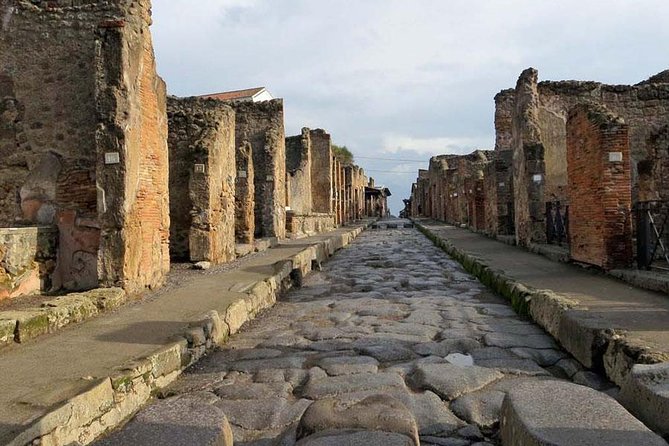
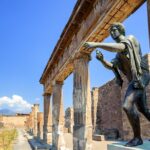
After the park circuit, you move to the Temple of Apollo for about 10 minutes, with admission included for this stop. This is one of the preserved temples, and it’s a great “anchor” moment in the tour.
Temples at Pompeii aren’t just impressive facades. They help you understand the city’s priorities. When you see Apollo’s temple in context, you get a clearer picture of how religion sat right next to public life and community space.
In a short stop like this, the guide’s job is crucial. You’ll want the explanation that links the temple to the wider Forum zone, not just a description of columns and stonework.
You can also read our reviews of more private tours in Pompeii



The Forum square and the Granai del Foro museum (civic space to storage space)
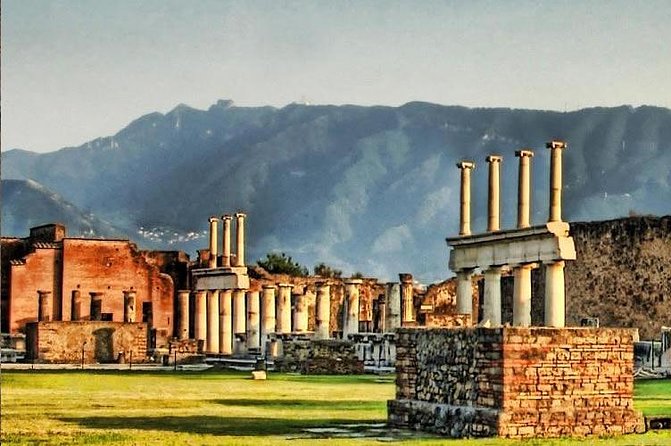
Next comes the Foro de Pompeya, the main square, for about 20 minutes. This is the heart of civic life. You’ll be in the space where the city’s public rhythm played out—meetings, movement, and the everyday “center of town” feeling that any ancient city depended on.
Then you head to Granai del Foro, a museum stop of about 15 minutes, with admission included. The name points you toward storage, and that’s exactly why it works. It shifts your understanding from public ceremony to the practical engine behind daily survival: food systems and provisioning.
This combination of square and storage makes the Forum area click. You stop seeing Pompeii as “big buildings” and start seeing it as a functioning system.
Forum baths and Via dell’Abbondanza: social life and the main street
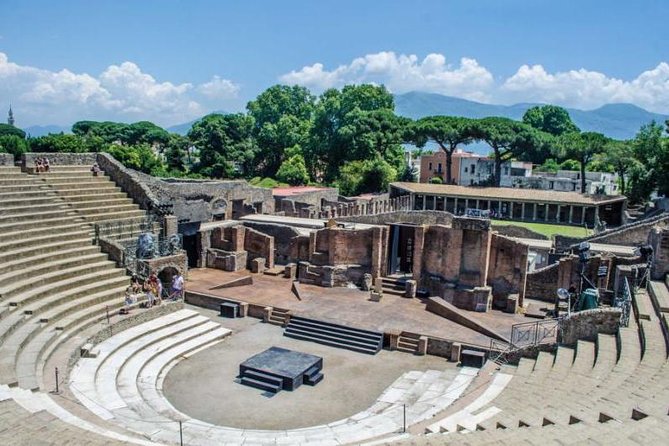
You’ll spend about 20 minutes at Terme del Foro, often described as the most beautiful spas of Pompeii. The key here is not only the architecture. Baths show how Romans spent time: washing, chatting, and staying socially connected.
Even on a guided run, the baths are a strong contrast point after squares and temples. They bring you back to the body-and-routine side of Pompeian life. And the guide’s explanations help you picture movement through the rooms instead of treating it like a still-life.
Then you walk or reorient onto Via dell’Abbondanza, the main road, for about 20 minutes. This street is where shops and traffic would have shaped the daily tempo. It’s also a great place for the guide to connect what you’ve already seen: commerce meets public space, and decorative details start looking purposeful rather than random.
Teatro Grande and the Lupanar: big performances and adult entertainment
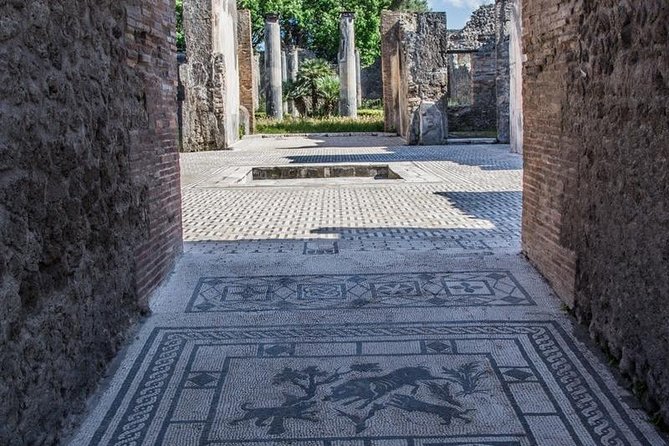
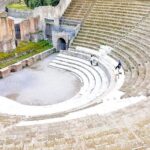
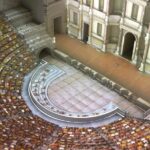
Teatro Grande takes about 20 minutes, with admission included. The site points to comedies and tragedies, which helps you understand that Pompeii had a full cultural calendar. A theater is never just seating—it’s a statement about how people spent leisure time and what kinds of stories mattered.
Then you head to the Lupanar, the ancient house of entertainment, for about 20 minutes. This stop is often emotionally charged for modern visitors because it’s tied to adult life. The value on a guided tour is that it stays grounded in context: what the space was, how it functioned, and how it fits the city’s broader social pattern.
Practical note: if you’re sensitive to adult-themed history, you’ll still likely see this area on the route. The upside of a guide is tone. You get explanation without the experience becoming awkward or uncomfortable.
Casa del Poeta Tragico and Casa del Cinghiale: mosaics you’ll remember
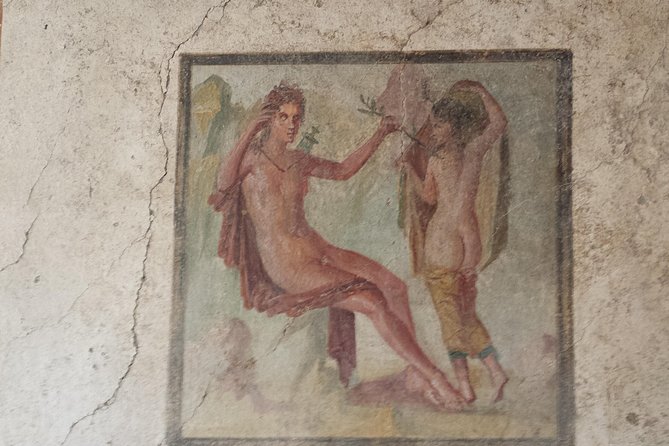
Two of the most talked-about quick stops on the route are the houses with standout decoration.
You’ll visit Casa del Poeta Tragico for about 10 minutes. The headline here is the mosaics. This is the kind of stop where a guide can make the art more than a photo opportunity. You’ll learn what you’re looking at and why the design choice mattered in that household.
Next is Casa del Cinghiale for about 10 minutes. This one is known for mosaics and architecture, which gives you a slightly broader view than decoration alone. It helps you compare how different homes expressed identity through both layout and imagery.
Even in short visits, these house stops create memory hooks. The Forum tells you about public life. The baths show routine. The houses show personal taste, wealth, and what was valued inside private rooms.
Tempio di Venere and Tempio di Giove Capitolino: a compact finish
The final stretch includes quick temple stops that are about 5 minutes each, with admission included:
- Tempio di Venere
- Tempio di Giove Capitolino
These short stops work because you’re not trying to overload. You’re wrapping the tour with the religious thread that runs alongside the civic and commercial areas you saw earlier. Venere and Jupiter bring the Forum zone’s spiritual “map” into focus.
At this point, you’ll probably feel your brain starting to file pieces into categories. A good guide times these last stops so you end with clarity, not fatigue.
What the guide quality really changes for you
Pompeii can feel like a lot: street layers, doorways, rooms, signage, and stone pathways. The difference between a frustrating walk and a satisfying one often comes down to the guide’s pacing and explanation style.
In the feedback you’ll see around this experience, two names come up again and again: Romolo and Paolo. Romolo is praised for clear phone contact before you arrive and for fluent English that keeps the tour understandable even if you’re not traveling with someone who knows Italian. Paolo is praised for detailed explanations and for making the visit feel shorter than expected.
That matches what you want from a sunset tour. You don’t want a tour that repeats what every sign says. You want guidance that helps you connect places: how the main road relates to commerce, how the theater relates to leisure, how baths relate to social life, and why the temples belong in the same storyline as the Forum.
Also, skip-the-line matters here. When you lose time to queues, you lose the best part of the sunset window and the calm mood that the tour is built around.
Who should book this Pompeii sunset private tour
This tour is a good fit if you:
- Want to see Pompeii without spending the whole day figuring things out
- Prefer a cooler, less crowded sunset experience
- Like guided context for the Forum area, baths, theaters, and major houses
- Care about clear English explanations from an official guide
- Want the comfort of a private group pace
You might choose something else if you:
- Want to linger for hours in one or two areas and wander freely
- Already know Pompeii well and just need a self-guided route
- Have very limited mobility, since you’ll still be covering multiple stops within a short time window
Should you book this private Pompeii sunset tour?
If your goal is a focused introduction to Pompeii’s most meaningful zones, I think this is an easy yes. The route is designed to feel complete in 2 to 3 hours, and the sunset timing helps the experience feel calmer instead of like a race.
The biggest reason to book is practical: skip-the-line plus an official guide who explains what you’re seeing. That combo saves time and turns the site from overwhelming to understandable.
Just go in prepared for the one real add-on: the Pompeii entrance ticket isn’t included. Budget for it, wear good shoes, and plan on a brisk but satisfying walk.
If you want Pompeii with structure, less heat, and real explanations in English, this private sunset format is a strong choice.
FAQ
How long is the Pompeii Sunset Private Guided Tour?
It lasts about 2 to 3 hours.
What is the price per person?
The price is $95.31 per person.
Is the Pompeii entrance ticket included?
The entrance ticket to the Pompeii excavations is not included.
Does the tour include skip-the-line access?
Yes, skip the line is included.
What language is the tour guide?
The tour is offered in English.
Where do we meet, and does the tour end there too?
Meet at Pompei Porta Marina – scavi (80045 Pompei, Metropolitan City of Naples, Italy), and the tour ends back at the meeting point.
Is this a private tour?
Yes. It’s private, and only your group participates.
Are service animals allowed?
Yes, service animals are allowed.
What is the cancellation policy?
Free cancellation is available. You can cancel up to 24 hours in advance for a full refund. Changes made less than 24 hours before the start time aren’t accepted, and cancellation within 24 hours doesn’t get refunded. Cut-off times use the local time where the experience takes place.