REVIEW · NAPLES
Spaccanapoli tour of the historical center of Naples
Book on Viator →Operated by Insolitaguida - Naples city tours · Bookable on Viator
Spaccanapoli is easier with a guide. This Naples historical center walk turns the big sights into a simple route, with a local explaining what you’re looking at as you go. I especially like the way it helps you skip map and guidebook guesswork while still moving at a human pace.
I also like the mix of major monuments and the oddly charming craft stop on Via San Gregorio Armeno. One thing to consider: it’s a 2-hour walking tour through an old, stone-heavy neighborhood, so comfortable shoes matter.
In This Review
- Key things to know before you go
- How the Spaccanapoli walk flows in about 2 hours
- Piazza del Gesù Nuovo: UNESCO context and a marble obelisk
- Chiesa del Gesù Nuovo: Baroque art plus a local saint
- Santa Chiara’s monumental complex: a monastery you can still feel
- Piazza San Domenico Maggiore: where Spaccanapoli meets the city’s links
- Via San Gregorio Armeno: the nativity workshops street
- Duomo di Napoli area: layered styles and San Gennaro’s ritual
- Price and value: what $89.87 actually buys you
- Real-world guide style: Simone and Valentina’s impact
- Practical tips to make the most of it
- Should you book this Spaccanapoli walking tour?
- FAQ
- How long is the Spaccanapoli tour?
- Where does the tour start?
- Where does the tour end?
- What language is the tour offered in?
- Is it a private tour?
- What does the price include?
- Are there tickets or entrance fees?
- Are children allowed?
- What is the cancellation policy?
Key things to know before you go
- Local guidance, not just landmarks: You get explanations and context as you walk.
- Spaccanapoli as your backbone: One straight spine through the historic center, so the story stays connected.
- UNESCO-linked core stops: You pass major sights tied to Naples historic center recognition.
- Nativity workshop street all year: Via San Gregorio Armeno is known for figurine shops and artisan scene-making.
- Free entry at listed stops: The itinerary notes free admission tickets for each location.
- Private format for your group: You’ll only share the walk with your own group, not strangers.
How the Spaccanapoli walk flows in about 2 hours

This is a straightforward, two-hour walking tour designed to help you see Naples without feeling lost. You start at Piazza del Gesù Nuovo and end back there, which is a nice setup when you want an easy plan for the rest of your day.
You’ll be moving at a pace that lets you stop, look up, and ask questions. The tour is offered in English, and it’s a good fit if you want more than “here’s a photo spot” energy. It also comes with a mobile ticket, so you’re not scrambling for paperwork while you’re on the move.
The price is $89.87 per person, and value-wise, the key question is whether you want interpretation. If you like monuments with context, paying for a guide makes sense fast—especially when you’re hitting several big-name stops in one go.
You can also read our reviews of more historical tours in Naples


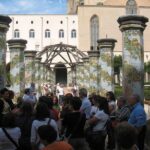
Piazza del Gesù Nuovo: UNESCO context and a marble obelisk
The tour begins at Piazza del Gesù Nuovo, centered on the monumental obelisk of the Immaculate Conception. This isn’t just a pretty marker for the square—it’s tied to why the historic center of Naples is recognized by UNESCO.
From here, you’re in the right mindset: Naples isn’t laid out like a grid. It’s more like a set of overlapping stories. In this piazza, you can see how the city’s most important buildings cluster around open space, and you’ll get help making sense of that layout as you walk.
A quick practical note: the tour description keeps the time at each stop tight, so treat this as a “look closely, then move” style tour. If you enjoy lingering on details, bring that energy to the time you’re given rather than planning on extra long photo breaks.
Chiesa del Gesù Nuovo: Baroque art plus a local saint
Next up is Chiesa del Gesù Nuovo, a major church known for its strong Baroque presence. The building sits right in front of the famous obelisk, and that positioning makes it feel like part of the square’s center of gravity.
Inside, you’re looking at a concentration of Baroque painting and sculpture tied to artists of the Neapolitan school. This is exactly the kind of stop where a guide helps: without context, it can turn into “pretty ceiling, pretty statues.” With context, it becomes a story about style and influence.
There’s also a specifically Naples element that adds meaning: the body of St. Giuseppe Moscati, canonized in 1987. If you’re the type who likes why a place matters to locals, this is one of those moments that makes the church feel less like a generic sight and more like a living part of the city.
Santa Chiara’s monumental complex: a monastery you can still feel
The tour then moves to the Complesso Monumentale di Santa Chiara, one of Naples’ big monastic complexes. Even if you’re not a hardcore architecture person, there’s a strong sense of scale here, and it helps you understand how religious institutions shaped neighborhoods over time.
Think of this stop as a palate cleanser after the Baroque focus. You’re not just chasing ornament. You’re stepping into a space that signals discipline, tradition, and long-term presence in the urban fabric.
The time is short, so don’t expect a full deep visit. Instead, treat it like a “first impression with context” stop—good for getting oriented and learning what to look for in a second visit later.
Piazza San Domenico Maggiore: where Spaccanapoli meets the city’s links
Now you’re at Piazza San Domenico Maggiore, one of the important squares near the lower decumanus line. The big idea here is the crossroads effect: this square sits where Spaccanapoli intersects with via Mezzocannone.
If you’ve ever walked in Naples and wondered why the streets feel like they twist and braid rather than run straight, this is where you start to get the answer. This square is essentially a street map you can feel under your feet.
The time allocation is again brief, but it’s enough to register the geometry of the area: open space, street corridors, and the way major routes push activity around them. It’s also a good spot to pause, look around, and decide what you want to explore on your own after the tour.



Via San Gregorio Armeno: the nativity workshops street
One of the most memorable stops is Via San Gregorio Armeno, famous for artisan shops that make nativity scenes and figurines. What makes this street worth your time is that it’s not confined to one season. You’ll see the craft work displayed and sold across the year, which gives Naples a kind of continuity you don’t always get in tourist-only shopping lanes.
The street is known for both canonical figures and more original, eccentric creations. You might see figurines reflecting the more topical side of the year—caricature-like takes on public characters, situations, and trends. That playful angle is a big reason this stop feels different from standard souvenir shopping.
This is the kind of stop where you benefit from a guide’s local framing. It helps you tell the difference between mass-produced items and work that actually belongs to the artisan tradition of the street.
Duomo di Napoli area: layered styles and San Gennaro’s ritual
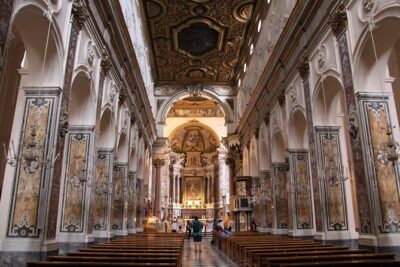
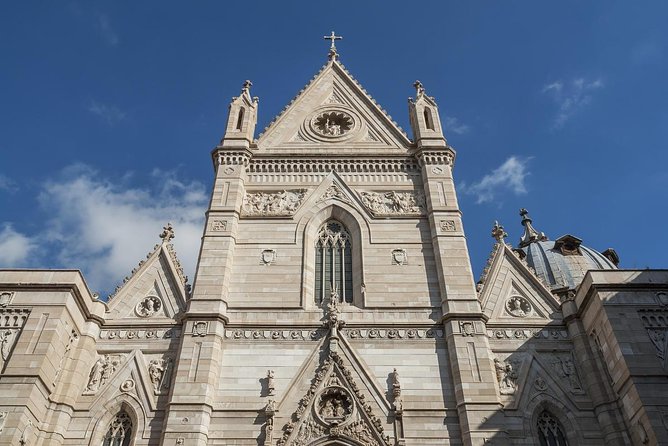
The final big monument stop is the Duomo di Napoli, rising along the east side of its namesake street. The cathedral area is more than one building in one place. It incorporates other religious sites that grew alongside it, including the basilica of Santa Restituta and the oldest baptistery of the West at San Giovanni in Fonte.
There’s also the royal chapel of the Treasury of San Gennaro, which preserves the relics of the city’s patron saint. If Naples is your destination for more than food and chaos, this is where the city’s identity gets very clear very fast.
Artistically, the cathedral is a layered set of styles: Gothic elements from the 14th century through 19th-century neo-Gothic. That mix isn’t random. It shows how a major site keeps changing as generations add their own chapters.
And yes, the stop connects to a ritual that matters to locals: the rite of the dissolution of the blood of San Gennaro occurs three times a year. Even if you’re not visiting on one of those dates, knowing it exists changes how you think about the cathedral. It’s not just an old building—it’s a calendar landmark for the city.
Price and value: what $89.87 actually buys you
At $89.87 per person, this tour sits in the “pay for convenience and interpretation” category. You’re not just paying for someone to point at buildings. You’re paying for a guided route that strings together several major stops and keeps you moving efficiently through the historic center.
Several things support the value:
- You get a professional local guide, which is the whole point of why these monuments feel more understandable.
- The itinerary’s listed stops note free admission tickets, so you’re not adding major entry costs on top.
- It’s offered in English, with a private setup for your group, which usually means you can ask questions without worrying about slowing down a large crowd.
- The tour is about 2 hours, so it fits well even if your day is packed with other Naples plans.
There’s also a practical timing detail: this experience is often booked in advance—on average about 67 days ahead. That’s a sign it fits into many people’s schedules and doesn’t always stay available forever.
Real-world guide style: Simone and Valentina’s impact
The guides are a key reason this tour earns a high score. In past experiences, Simone was praised for tailoring the walking pace and answering questions directly, which is exactly what you want if you’re the type who sees one detail and then wants the story behind it.
Valentina is another guide name tied to excellent results, with a style described as informative and caring while still engaging you with what you’re seeing as you go. That matters because walking tours can turn into a lecture. Here, the focus stays on helping you connect the dots as you look at the city.
This is why I think the private/group-only format can be worth it. You’re more likely to get back-and-forth conversation and a rhythm that matches your interests.
Practical tips to make the most of it
Naples rewards curiosity, but it punishes sloppy planning. Here’s how to show up ready:
- Wear comfortable shoes with decent grip. This is a historic center with street surfaces that don’t feel like smooth museum floors.
- Bring your question style. If you like art, ask about the Baroque interior choices at Gesu Nuovo. If you like religion-and-identity, ask about San Gennaro and the cathedral’s layered buildings.
- Keep expectations realistic. The tour is about orientation and key highlights, not a slow-motion, every-doorway kind of visit.
If you want to see more after the tour, this route also gives you a strong foundation. You’ll know where you are along Spaccanapoli, and you’ll have a clearer sense of which streets branch off and where to head next.
Should you book this Spaccanapoli walking tour?
I’d book this tour if you want:
- a guided route through Naples’ historic center without map stress
- a mix of major religious and cultural stops plus the craft street at Via San Gregorio Armeno
- English guidance and a private format for your group
- free-entry stops across the itinerary, so your budget stays tidy
I wouldn’t prioritize it if you already know Naples well and you’re planning to wander slowly on your own. This is a structured walk with limited time per stop, so people who want long stays inside buildings may prefer a self-guided day plan plus a separate ticket for deeper entry.
If you’re visiting for the first time and you want a smart way to understand the city’s layout and its most iconic anchors, this is a very practical choice.
FAQ
How long is the Spaccanapoli tour?
It runs for about 2 hours.
Where does the tour start?
The meeting point is Piazza del Gesù Nuovo, 25, 80135 Napoli NA, Italy.
Where does the tour end?
The activity ends back at the meeting point.
What language is the tour offered in?
The tour is offered in English.
Is it a private tour?
Yes. It’s listed as a private tour/activity, meaning only your group participates.
What does the price include?
It includes a professional and local guide.
Are there tickets or entrance fees?
The itinerary notes free admission tickets for each listed stop.
Are children allowed?
Children can participate, but must be accompanied by an adult.
What is the cancellation policy?
You can cancel for a full refund up to 24 hours before the experience starts. If you cancel less than 24 hours before, you won’t get a refund.