REVIEW · CAMPANIA
Top Amalfi city sights private walking tour
Book on GetYourGuide →Operated by TUI Musement · Bookable on GetYourGuide
Amalfi looks postcard-perfect, then the guide explains why. This private walking tour focuses on the town’s most important sights, including the Duomo and the Fontana di Sant’Andrea in the main square. I also like that the route is designed for a tight 2.5 hours, so you see the essential viewpoints and historic corners without spending your whole day stuck on stairs.
Two other things I’m glad this tour prioritizes: a guided look at the old waterfront-era Amalfi story (including the period when it was a maritime power with a population over 70,000) and a clear walk-by-and-stop rhythm that keeps you moving while still giving time for questions. One possible drawback: entrance fees for churches, museums, and palaces are not included, so if you want to go inside several places, plan for extra ticket costs.
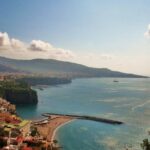
Finally, it’s not a casual, flat promenade. You’re in Amalfi—at the mouth of a deep ravine with dramatic cliffs and coastal scenery—so expect steps and uneven ground. If you’re traveling with no large luggage (it’s not allowed) and you’re ready for some climbing, this tour is a strong way to make the most of a limited time window.
In This Review
- Key highlights worth planning around
- Amalfi on foot: a focused 2.5 hours that actually fits
- Meeting at Piazza Flavio Gioia: how the tour gets you oriented
- The main square and Fontana di Sant’Andrea: your first big “wow”
- Amalfi Cathedral (Duomo) and Piazza Duomo: architecture with meaning
- Chiostro del Paradiso: the quiet pause in a compact town
- Via dei Mercanti and the UNESCO feel of walking in layers
- Atrani’s Santa Maria Addolorata: a quick change of scenery with context
- Piazza Umberto I and Santa Maria Maddalena: where the streets open up
- Via dei Dogi: the old-town street you can feel in your legs
- Price and value: is $158.60 per person a smart spend?
- Rain, stairs, and carrying less: practical limits that matter
- Who this tour suits best (and who should skip it)
- Should you book the Amalfi Top Sights private walking tour?
- FAQ
- How long is the private walking tour?
- Where does the tour start and end?
- Is this a private tour?
- What languages are available for the live guide?
- Are entrance tickets included for churches, museums, or palaces?
- What sights will I see on the tour?
- Are luggage or large bags allowed?
- Does the tour run in bad weather?
- Is the tour suitable for wheelchair users?
Key highlights worth planning around

- Start at Piazza Flavio Gioia, with a meeting point you can use to find your bearings fast
- Fontana di Sant’Andrea in the main square, a perfect photo stop right as the tour begins
- Amalfi Cathedral (Duomo) and the viewpoint over Piazza Duomo, where the architecture makes sense
- Chiostro del Paradiso (walk-by/short look) for a calmer, quieter change of pace
- Piazza Umberto I, Santa Maria Maddalena, and Via dei Dogi for the compact old-town “string of highlights” feel
- Atrani’s Santa Maria Addolorata sanctuary gets attention along the way, adding variety beyond Amalfi streets
Amalfi on foot: a focused 2.5 hours that actually fits
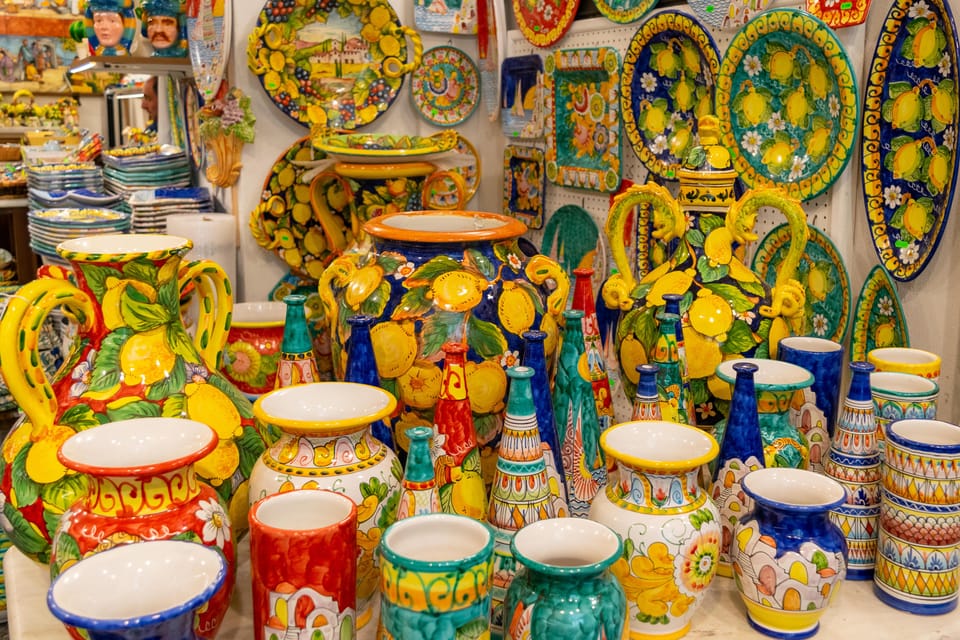
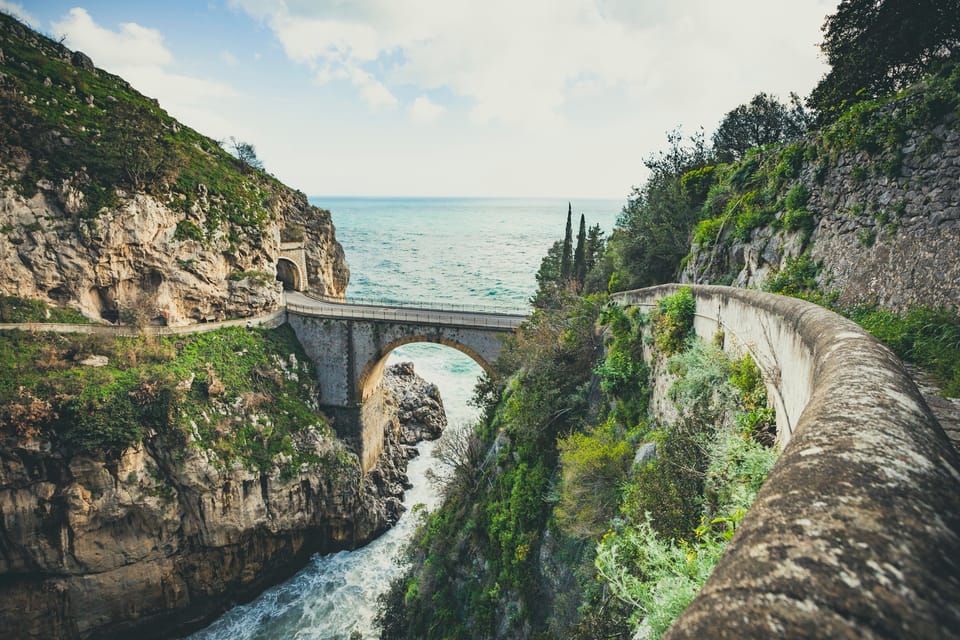
Amalfi is one of those places where the setting does half the work for you. You’re surrounded by cliffside views and that dramatic ravine geography that explains why the town feels built for walking, not driving. This tour leans into that reality. In about 2.5 hours, you cover the key “you must see this” points while your local guide ties them together into a story.
The private format matters here. With a private group, you’re not stuck listening to a one-size-fits-all script. You can ask questions, pause for photos, and take a little extra time at the places you actually care about. If you’re the type who wants context—why a cathedral is where it is, what a courtyard means, what a disaster changed—this is a good match.
The downside is also straightforward: Amalfi’s streets and sights aren’t designed for rolling suitcases or a stroller-friendly loop. The tour also isn’t suitable for wheelchair users, and luggage or large bags aren’t allowed. So travel light, wear shoes with grip, and treat the walk as part of the experience, not an afterthought.
You can also read our reviews of more walking tours in Campania
Meeting at Piazza Flavio Gioia: how the tour gets you oriented
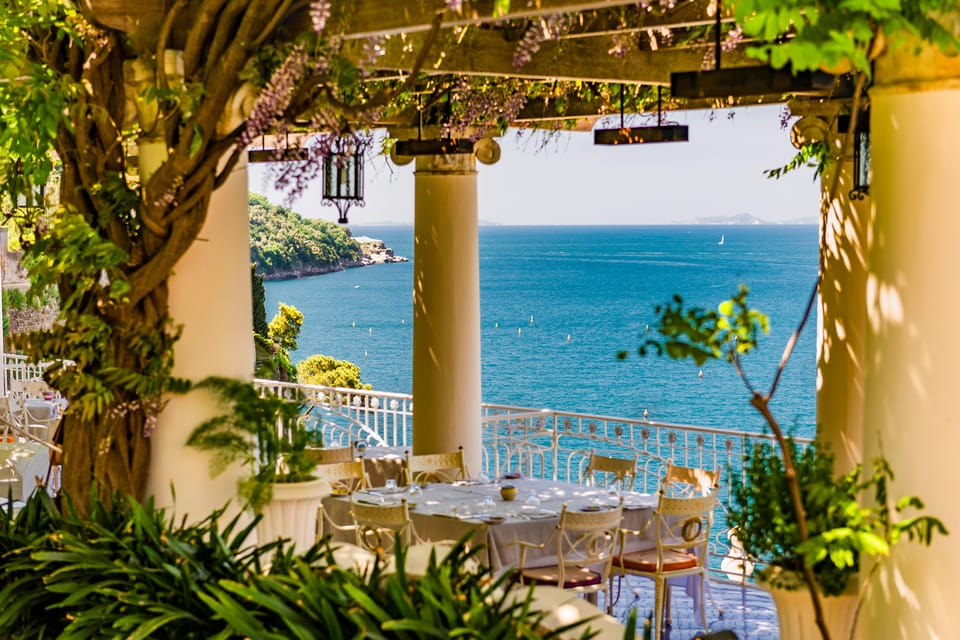
You meet your guide at Piazza Flavio Gioia, near the fountain in the square. That’s a smart start because piazzas in Amalfi function like landmarks—people orient themselves here, and your guide can point out the direction of the most important sites early on.
I like that the tour doesn’t waste time with a long introduction. In the first stretch, you’re already moving toward the most photo-friendly landmarks. The tour has that practical feel: get your bearings quickly, then slow down where it counts.
Camera time is also built into the vibe. The experience specifically reminds you not to forget your camera—mostly because views and architecture show up at the right angles as you cross different lanes and open up into squares.
The main square and Fontana di Sant’Andrea: your first big “wow”
The tour’s early highlight is Fontana di Sant’Andrea. It’s not just a fountain stop for a quick snap. The guide uses it as a reference point for the town’s layout and the way religious and civic spaces overlap in Amalfi.
This is also one of the easiest places to feel the local rhythm. You’re in the heart of town, so it’s a good place to notice how people actually move through Amalfi—where they linger, where they pass through, and how the square frames the surrounding buildings.
And yes, the fountain is photogenic, but the real value is that your guide connects it to the broader Amalfi story you’ll keep hearing throughout the walk.
Amalfi Cathedral (Duomo) and Piazza Duomo: architecture with meaning
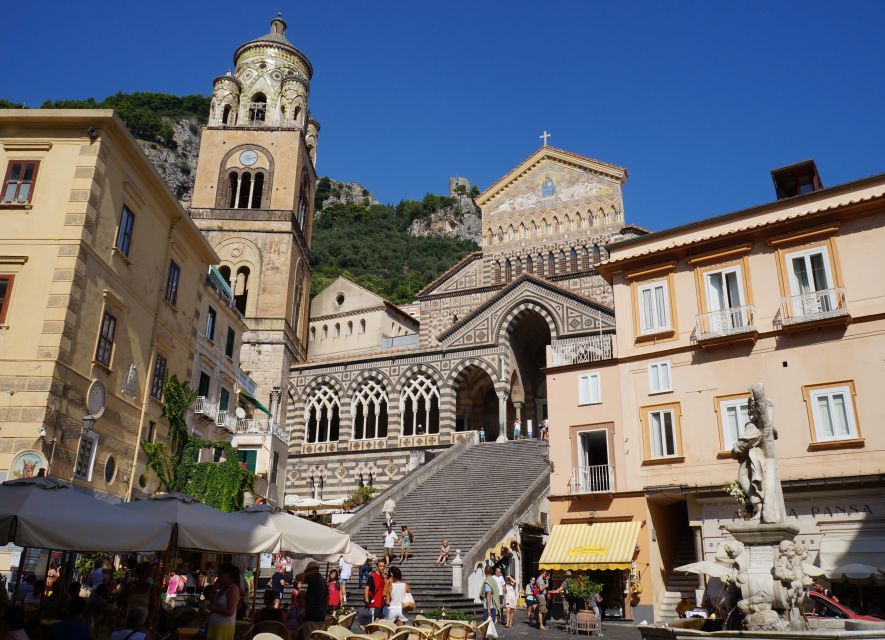
Next up is Amalfi Cathedral (Duomo), which overlooks Piazza Duomo. This spot is all about context. From the outside, the cathedral looks impressive; with a guide explaining the “why,” it becomes more than a pretty building.
Your guide also shares the kind of story you don’t get from a signboard alone—especially the devastating event that forever changed the town’s fate. Amalfi’s beauty is real, but its survival and rebuilding are part of the reason the town looks the way it does today. Understanding that makes the architecture feel less like decoration and more like history you can walk past.
If you enjoy seeing how a city’s power and faith shape its physical space, this is the core moment of the tour. This is also one of the stops where you’ll probably want a little extra time to take in the viewpoint and look back toward the coast.
Chiostro del Paradiso: the quiet pause in a compact town
After the cathedral area, the tour shifts to a calmer, more enclosed feeling at Chiostro del Paradiso. You’re still in the old-town zone, but the mood changes. Cloisters like this are designed for reflection and shelter from street noise, even when the surrounding area is active.
This stop works well as a mental breather. It breaks up the stronger “square-and-cathedral” rhythm, and it gives you a different architectural angle to photograph.
It’s also a useful contrast for figuring out Amalfi’s scale. The town isn’t huge in walking distance, but the changes in space—open piazza to interior courtyard to narrow street lanes—are what make it feel layered.




Via dei Mercanti and the UNESCO feel of walking in layers
As you continue, you’ll walk along Via dei Mercanti. This lane is the kind of place where the city’s past shows up in the street pattern more than in single monuments. It’s an important reminder that Amalfi’s story isn’t only about big buildings. It’s also about commerce, crafts, and everyday movement—where people would have gathered, traded, and worked.
The tour is positioned around spots included in UNESCO World Heritage Sites, and that matters because UNESCO status isn’t just a label. It’s a way of saying: pay attention to how the historic fabric holds together. When you’re walking, you can actually see that connection.
If you like “reading” a town by how streets connect, this stretch is satisfying.
Atrani’s Santa Maria Addolorata: a quick change of scenery with context
The experience also points you toward the Sanctuary of Santa Maria Addolorata in Atrani. Atrani is smaller than Amalfi, and that difference is exactly why this works. You get a change of scenery without losing the theme of the walk.
This is the kind of stop that adds variety: it shifts your focus from Amalfi’s main squares into the surrounding area that shaped daily life in this corner of the coast. The guide’s explanations are what help you connect the dots—so it doesn’t feel like a random add-on.
Even if you’re mostly thinking Amalfi, don’t skip this part. It gives you a broader view of the coast’s religious and community landscape.
Piazza Umberto I and Santa Maria Maddalena: where the streets open up
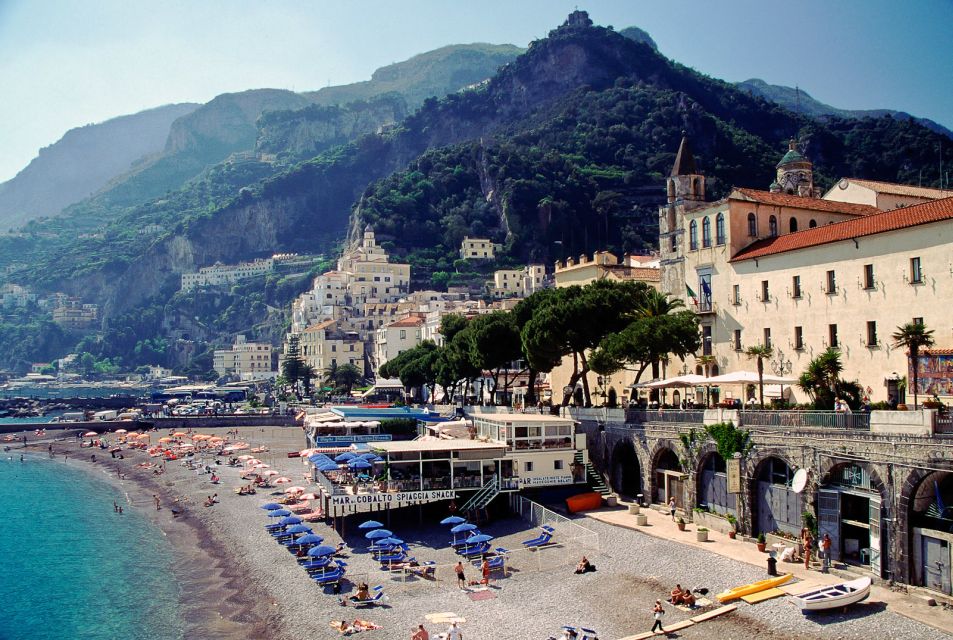
Then you move through Piazza Umberto I and toward Santa Maria Maddalena. These stops are about balance. Piazza Umberto I is another open-space moment, where you can reset and look around. Santa Maria Maddalena helps you keep the architectural thread going, especially as you continue toward the older lanes and street segments that feel characteristically Amalfitan.
One practical perk of this design: the tour staggers the heavier-sight blocks. You’re not stuck in one single area for the whole walk. You get your “main sights” and then supporting stops that round out the picture.
If you like small details—facades, doorways, how the buildings align with the street—these are good checkpoints. They’re also good photo opportunities if you’re careful about choosing angles that include the surrounding cliffs and coastal cues.
Via dei Dogi: the old-town street you can feel in your legs
The tour finishes with a stretch along Via dei Dogi, one of the streets that makes old Amalfi feel real. This is where the walk itself becomes part of the experience. You’re not just visiting places; you’re moving through the same kind of street logic that people used historically.
After enough stops, Via dei Dogi becomes the “last chapter” of the walk—less about a single monument and more about how the town holds together as you keep going. It’s also a good place to slow down for a final photo and absorb your sense of place before you head back.
The walk returns you to Piazza Flavio Gioia, so you don’t end up negotiating transit on your own at the end. That’s a real value in a town like Amalfi, where getting back can sometimes take longer than you expect.
Price and value: is $158.60 per person a smart spend?
At $158.60 per person for a private walk, you’re paying for three things: a local guide, a timed route through the core Amalfi sights, and the benefit of not doing the planning yourself. In Amalfi, that planning time can be costly—streets are compact, viewpoints are everywhere, and it’s easy to miss what matters.
What you get for the money is not just a list of stops. It’s the way your guide connects the devastating event that changed the town’s fate, the maritime-power backdrop (population once over 70,000), and the way the religious and civic spaces sit in the town. If you care about context, this is where the value lives.
One thing to keep in mind: entrance to churches, museums, and palaces isn’t included. So the effective total cost can rise if you decide to go inside multiple sites during the tour. Still, not including entry fees is often the more flexible option—you can choose what’s worth it on the day rather than paying for entrances you skip.
For the right traveler—someone who wants a guided, meaningful route in limited time—this price is reasonable. For someone who only wants exterior photos and doesn’t care about history or interpretation, you might feel you could do it independently for less.
Rain, stairs, and carrying less: practical limits that matter
The tour takes place even when raining. That’s good because Amalfi weather can change fast. However, if you get exceptionally heavy rain, the tour may be cancelled with a full refund. In other words, you’re not stranded in limbo; there’s an off-ramp if conditions become unsafe.
Stairs are part of the deal. The experience isn’t described as step-free, and one highlight from an experienced run is that stairs were optional for that group. Translation: you can likely choose your effort level depending on how your guide manages the route, but you should still wear shoes you trust.
Also, because large bags and luggage aren’t allowed, you’ll want a small day bag or crossbody. If you’re in Amalfi after a hotel check-out, keep your carry-on plan simple so you don’t waste energy managing it.
Who this tour suits best (and who should skip it)
This tour fits well if:
- You want a private local guide and appreciate learning as you walk.
- You’re short on time and want the main Amalfi sights plus a few key related stops.
- You like architecture, piazzas, and religious landmarks when they’re explained in plain language.
- You can handle uneven ground and some stairs.
You might want to look at another option if:
- You need wheelchair access (this one isn’t suitable).
- You have a lot of luggage and don’t want to carry it.
- You’re not interested in interpretation and would rather do a slower, self-guided wandering day.
Should you book the Amalfi Top Sights private walking tour?
I’d book it if your goal is to understand Amalfi quickly and walk away with a clear sense of why the town looks like it does. The combination of Fontana di Sant’Andrea, Duomo over Piazza Duomo, and the old-town route through places like Chiostro del Paradiso is a strong way to compress the best of Amalfi into one efficient outing.
Before you go, do one simple thing: confirm the meeting spot details the day-of. One unfortunate account involved a guide not showing up at the guest’s planned location, causing confusion and a missed tour. That’s rare, but it’s exactly the kind of preventable problem you can avoid by checking directions again before you leave.
If you’re ready to travel light, wear good shoes, and spend 2.5 hours learning while you walk, this tour is a smart use of time in Campania.
FAQ
How long is the private walking tour?
The tour lasts 2.5 hours.
Where does the tour start and end?
It starts at Piazza Flavio Gioia and ends back at the meeting point.
Is this a private tour?
Yes. It’s listed as a private group.
What languages are available for the live guide?
The tour guide is available in Spanish, English, French, German, and Italian.
Are entrance tickets included for churches, museums, or palaces?
No. Entrance to sites that require a ticket is not included. You can buy tickets on the spot if you choose to visit.
What sights will I see on the tour?
You’ll see key Amalfi highlights such as the Amalfi Cathedral (Duomo), Chiostro del Paradiso, Fontana di Sant’Andrea, Piazza Umberto I, Santa Maria Maddalena, and Via dei Dogi. The experience also mentions the sanctuary of Santa Maria Addolorata in Atrani.
Are luggage or large bags allowed?
No. Luggage or large bags are not allowed.
Does the tour run in bad weather?
The tour takes place even when it’s raining. In exceptionally heavy rain, it may be cancelled and you’ll receive a full refund.
Is the tour suitable for wheelchair users?
No, it’s not suitable for wheelchair users.