REVIEW · NAPLES
Walking Tour of Naples with Traditional Music
Book on Viator →Operated by APSIS Tour Napoli · Bookable on Viator
Street history sings in Naples.
This walk mixes traditional Neapolitan music with story-driven stops across some of the city’s most central sights. I especially like how the route connects places that look close on a map but feel totally different once you hear the explanations. Another thing I love is the performance energy: theatrical acting and singing turn each plaza and church into a scene. One drawback to plan for is the format: it’s an outdoor walking tour that depends on good weather, and you’ll be on your feet in crowded streets and church entrances.
You’ll cover a smart loop from Piazza Bellini to Piazza del Gesù Nuovo in about 2 hours 15 minutes, keeping it doable even if Naples already has you walking all day. The group is small (up to 10), it’s in English, and coffee or tea is included to keep you comfortable. Since the schedule window is late afternoon on weekdays, you’ll want to pick a time that doesn’t clash with dinner plans.
In This Review
- Key highlights worth your time
- Naples by foot: how the music changes the monuments
- The walk starts at Piazza Bellini and the Greek foundation story
- Via dei Tribunali: the Roman street grid in everyday life
- Basilica di Santa Maria Maggiore alla Pietrasanta: bell tower and church meaning
- Santa Maria delle Anime del Purgatorio ad Arco: the pezzentelle souls angle
- Piazza San Gaetano and the old agora feeling
- Duomo di Napoli: San Gennaro and the city’s center of gravity
- Spaccanapoli and Via San Biagio: the “real Naples” street rhythm
- Via San Gregorio Armeno and the shepherds route
- Piazza San Domenico Maggiore and the city’s present-day center
- Complesso Monumentale di Santa Chiara: Angevin church context
- Piazza del Gesù Nuovo: baroque drama and the finishing line
- Price and value: $83.08 for music, performance, and sights
- Weather, timing, and what to wear for the best experience
- Should you book this Naples walking tour?
- FAQ
- How long is the walking tour of Naples?
- What language is the tour offered in?
- What’s included in the price?
- Where does the tour start and end?
- Is there a limit on group size?
- Are tickets required for the stops?
- When is the tour available?
- What if the weather is bad or the tour can’t run?
Key highlights worth your time
- Traditional music woven into the walk, not added afterward
- Theater-style guides and singers (including Antonella Esposito; Enzo and Salvatore appear in performances)
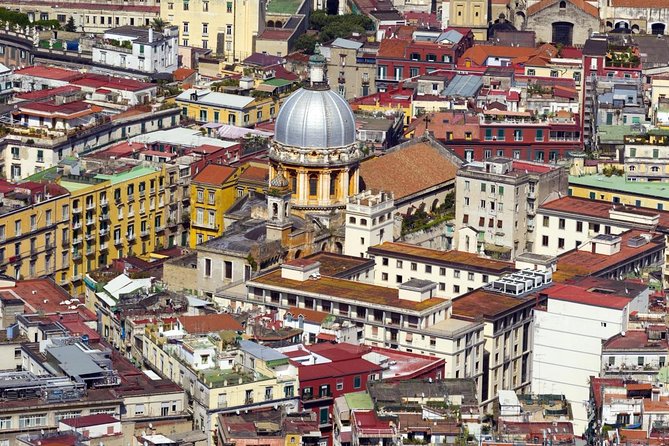
- A tight route through major city layers, from Greek foundations to baroque streets
- Church-and-plaza storytelling with several stops marked free admission
- Small-group pace (maximum 10) so explanations land instead of getting rushed
Naples by foot: how the music changes the monuments
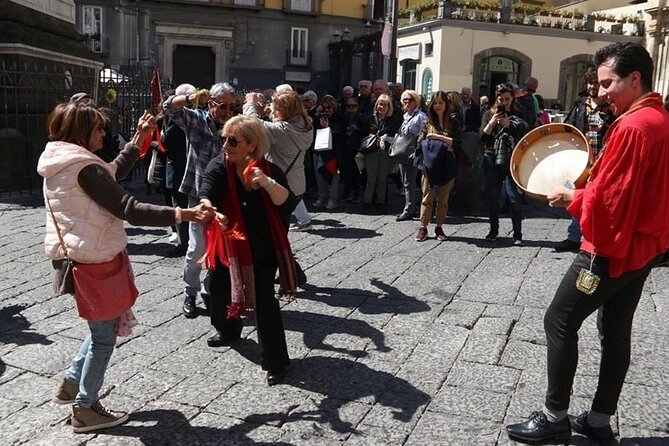
Naples is easy to visit and hard to truly read. This tour helps you do the second part without feeling like homework. The basic idea is simple: you walk through key squares and lanes, and at the same time you get songs, acting, and explanations that make the street plan and sacred sites feel personal.
What makes it work is the way the music and storytelling connect the stops. You’re not just hearing facts about architecture; you’re getting cultural context—how people used those places, what legends attached to them, and why certain streets matter beyond being scenic.
And yes, you’ll still see the expected big names (hello, the cathedral). But the tour’s real strength is the rhythm: it keeps moving, so your brain stays engaged and your feet don’t feel like they’re dragging through dead time. With a small group, the tone stays friendly, and it’s easier to follow along even when you’re stopping for short musical interludes.
You can also read our reviews of more walking tours in Naples



The walk starts at Piazza Bellini and the Greek foundation story
Your tour begins at Greek Walls, Piazza Bellini, and that’s a smart choice. Piazza Bellini isn’t just a convenient starting point. It’s tied to the idea of the city’s origin—so you get a starting point that frames everything you’ll see later.
At this stage, listen for the way the guide sets the map. Naples can feel like a maze, but the tour gives you anchors: where the old city core likely formed, and how later streets built on earlier plans. It’s one of the best moments to get oriented fast, before you start weaving through tighter lanes.
This first stop also helps with pacing. You’re not committing to a long transfer or a complicated intro. You start where things begin, then walk from there.
Via dei Tribunali: the Roman street grid in everyday life
Next up is Via dei Tribunali, described as the major decumanus. If that sounds like jargon, don’t worry. The key is that this street represents a big idea: the Greco-Roman urban plan still shapes how the city flows.
I like this stop because it gives you a visual way to understand why Naples’ street layout can feel logical in fragments. You’re walking down a line that mattered centuries ago, and that makes the surrounding buildings and activity feel less random.
Practical note: this kind of central street can be busy. The good news is the tour stays short here, so you don’t get stuck waiting while the city does its thing.
Basilica di Santa Maria Maggiore alla Pietrasanta: bell tower and church meaning
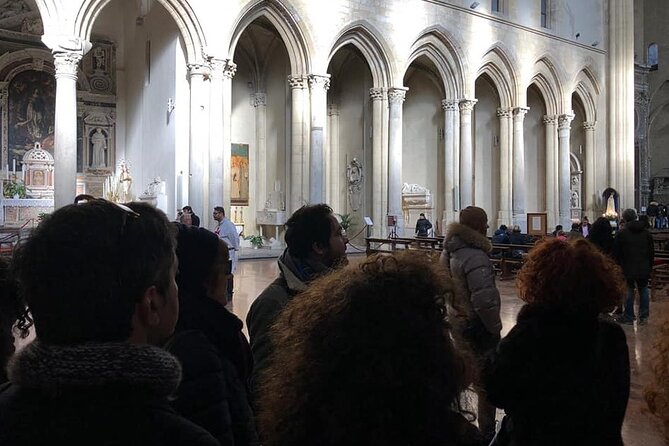
At Basilica di Santa Maria Maggiore alla Pietrasanta, the focus shifts to what people came to see and pray for—especially through the church’s history and bell tower.
This is the kind of stop where the tour’s “culture + performance” approach can help more than a standard plaque-reading visit. You’re not only looking at stone; you’re hearing what made the place significant, which makes the details feel earned.
A small consideration: churches often mean you’ll spend a bit of time standing near entrances or inside spaces with your own flow rules. Wear comfortable shoes and keep an eye on how the group moves.
Santa Maria delle Anime del Purgatorio ad Arco: the pezzentelle souls angle
Then you reach Complesso Museale Santa Maria delle Anime del Purgatorio ad Arco, a stop built around the cult of the pezzentelle souls.
This is one of those Naples moments where the “story” is part of the architecture. The tour frames the cult and the belief system connected to the site, which changes how you read the space. Even if you’re not a theology person, you can feel the human side of it: these places were about comfort, memory, and moral imagination.
If you want an experience that goes beyond classic sightseeing, this is it. You leave with a clearer sense of why Naples has such strong emotional ties to its sacred corners.

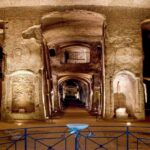


Piazza San Gaetano and the old agora feeling
In Piazza San Gaetano, the tour turns to civic life: it’s described as the agora of the ancient city.
I like this pivot because it balances the religious stops. You get to think of Naples not only as churches and saints, but as everyday gathering points—places where people met, traded, and lived their routines.
This is a good spot to pause and look around. The plaza layout helps you connect the earlier grid and the later street bends. You start to see how the city organizes public space even when the lanes feel tight.
Duomo di Napoli: San Gennaro and the city’s center of gravity
At Duomo di Napoli, you’ll get the cathedral and the cult of San Gennaro.
This is a major landmark, and the tour treats it like more than a photo stop. The guide’s job here is to explain why a cathedral isn’t just a building. It’s a living symbol tied to the city’s identity, festivals, and hope.
Time here is about right for most people. You get enough to understand what you’re looking at, without turning it into a long sit-down.
Tip: if you’re sensitive to crowds, pick a moment to look up and around quickly, then let the guide do the talking. That way you’re not stuck hovering in the densest spots.
Spaccanapoli and Via San Biagio: the “real Naples” street rhythm
The route then moves to Spaccanapoli, described as the lower decumanus—again returning to the big urban-plan thread. This repeated emphasis matters. It quietly teaches you how to read Naples’ structure instead of treating each street like an isolated postcard.
After that comes Via San Biagio dei Librai, where the focus is the street’s history, including its relationship to buildings and shops.
I like this stop because it brings the city into focus at human speed. It’s the kind of place where you can feel the neighborhood trade-offs: tight sidewalks, old facades, everyday commerce. The tour uses it to show how history lives in daily movement.
Expect the walking to feel more “city normal” here. If you were hoping for museum-level pacing the whole time, this is a reminder that Naples history often happens in motion.
Via San Gregorio Armeno and the shepherds route
At Via San Gregorio Armeno, the tour brings you to a street tied to the way of the shepherds, plus a baroque church connection.
This stop is a favorite for people who like their sightseeing a little theatrical (and who don’t mind streets that are lively). The tour’s performance elements fit the vibe: the baroque tone and the story-driven explanations work well together.
If you enjoy cultural atmosphere, this part can feel like Naples in full voice—street-level, not staged.
Piazza San Domenico Maggiore and the city’s present-day center
Then you head to Piazza San Domenico Maggiore, described as the center of the city today.
This is where you stop and compare. You’ve walked through layers: Greek origins, Roman street lines, religious complexes, and neighborhood streets. Now you’re in a plaza that reads like the city’s current heartbeat.
I think this is one of the best mid-to-late points on the route because it helps you recalibrate. You’ll remember the earlier explanations more easily once you see how the modern city actually functions around them.
Complesso Monumentale di Santa Chiara: Angevin church context
At Complesso Monumentale di Santa Chiara, the tour points to the history of the Angevin church.
This is less about “look how pretty” and more about “why this matters.” The tour uses the site to keep your understanding of Naples layered—different rulers, different eras, different religious and artistic priorities.
Even if you skimmed a guidebook the night before, this stop can change what you notice in your photos later, because you’ll have a reason behind the visual.
Piazza del Gesù Nuovo: baroque drama and the finishing line
Finally, you reach Piazza del Gesù Nuovo, with its baroque church and a finishing point that’s easy to connect to dinner afterward.
This is a strong ending because baroque style tends to feel like theater already—so it pairs naturally with a tour that uses acting and singing as a teaching tool. You finish with a stronger mental picture of how Naples blends devotion, art, and street life.
If you want a practical next step: after the tour ends here, you’re in a spot where it’s easier to keep walking, hop into a bus or metro connection, or simply wander toward your next meal.
Price and value: $83.08 for music, performance, and sights
At $83.08 per person for roughly 2 hours 15 minutes, this is not the cheapest walking tour in Naples. The value comes from how much is packed into that time:
- A small group size (maximum 10) that supports more interaction
- English language delivery
- Coffee and/or tea included, so the mid-walk energy stays up
- A route that hits multiple major sites with admission ticket free at the stops listed
- Traditional music and theatrical storytelling rather than only guided narration
If you enjoy tours where you learn but also get an emotional hit, the price makes more sense. If you only want quick factoids and zero performance, you might find yourself wishing for a more straightforward sightseeing walk.
Weather, timing, and what to wear for the best experience
This is an outdoor walking tour, and the operator notes it requires good weather. That means you should treat it like a flexible plan: if it’s cancelled for poor weather, you’ll be offered a different date or a full refund.
Timing-wise, it runs within a late-afternoon weekday window (Monday–Friday). The meeting point and ending point are fixed, so plan your day so you’re not sprinting across town right before the start.
For clothing: comfortable shoes matter. Naples alleys and plaza stone can be uneven, and you’ll likely be standing for short explanations and music moments.
Should you book this Naples walking tour?
Book it if you want Naples to feel like a story you can walk through—especially if you like traditional music, theatrical performances, and guided explanations that connect the street plan to the places you’re seeing. It’s also a good pick if you’re short on time but still want a route that covers a lot of “real city” ground without turning into a rushed checklist.
Skip it if you’re looking for a quiet, purely academic museum-style tour with zero performance. And if weather is questionable the day you plan to go, keep your schedule flexible.
If you match the vibe, you’ll probably leave with something harder to measure than photos: a clearer mental map of Naples, and a sense of why these locations mattered to the people who lived there.
FAQ
How long is the walking tour of Naples?
It lasts about 2 hours 15 minutes.
What language is the tour offered in?
The tour is offered in English.
What’s included in the price?
Coffee and/or tea is included.
Where does the tour start and end?
It starts at Greek Walls, Piazza Bellini, Naples, and ends at Piazza del Gesù Nuovo, Naples.
Is there a limit on group size?
Yes. The tour has a maximum of 10 travelers.
Are tickets required for the stops?
The listed stops show admission ticket free.
When is the tour available?
The opening hours are listed Monday–Friday, 3:00 PM to 7:00 PM.
What if the weather is bad or the tour can’t run?
The experience requires good weather; if it’s canceled due to poor weather, you’ll be offered a different date or a full refund.