REVIEW · NAPLES
From Naples: Guided tour of Pompeii skip-the-line and round-trip train
Book on GetYourGuide →Operated by inStazione · Bookable on GetYourGuide
Pompeii hits harder with a guide. This Naples-to-Pompeii day trip pairs a short 40-minute train ride with skip-the-line entry, so you spend more time walking the ruins and less time stuck in queues. I also like that the tour is led in multiple languages by a real person, and you’ll even hear familiar guide names like Maria, Anna, and Bernadetta across past groups.
The big downside to plan for is comfort: the train can be crowded, and some return rides mean tight corners or standing for parts of the journey. Still, once you’re inside Pompeii, the payoff is the way a guide turns scattered ruins into a real sense of daily life—where people shopped, relaxed, bathed, and went to shows.
For about $49, you’re not just buying tickets. You’re buying time, structure, and a focused route through a site that’s too large to “figure out” comfortably on your own.
In This Review
- Key things I’d plan around
- Naples to Pompeii: why the train day trip is the right move
- Skip-the-line tickets: saving time at the entrance
- The guided Pompeii portion: a 2-hour walkthrough that actually teaches
- Taking breaks inside a huge site: how to pace your feet
- Transport comfort: the train ride can be the hardest part of the day
- Price and value: is $49 worth it for this specific mix?
- Who this Pompeii tour fits best
- Practical tips that help the day go smoothly
- Should you book this Pompeii skip-the-line train tour?
- FAQ
- Where does the tour start in Naples?
- How long is the train ride from Naples to Pompeii?
- How long is the guided visit inside Pompeii?
- Are the train tickets included?
- Is skip-the-line entrance included?
- What’s included in the price?
- Is lunch included?
- What languages are the guided tours available in?
- What do I need to bring?
- Are pets allowed?
Key things I’d plan around
- Skip-the-line helps, but show up ready anyway so you don’t lose momentum at the entrance.
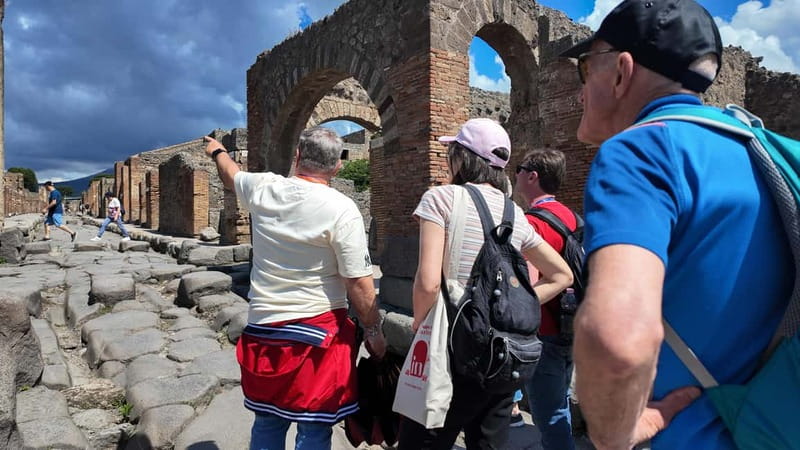
- A live guide makes Pompeii make sense—especially when they point out everyday details, not just famous sights.
- 2 hours inside Pompeii is a fast but workable sweep if you accept you can’t see everything.
- Napoli Centrale start point is convenient for an easy rail day trip.
- Train crowding is the main trade-off—bring patience for the ride.
Naples to Pompeii: why the train day trip is the right move
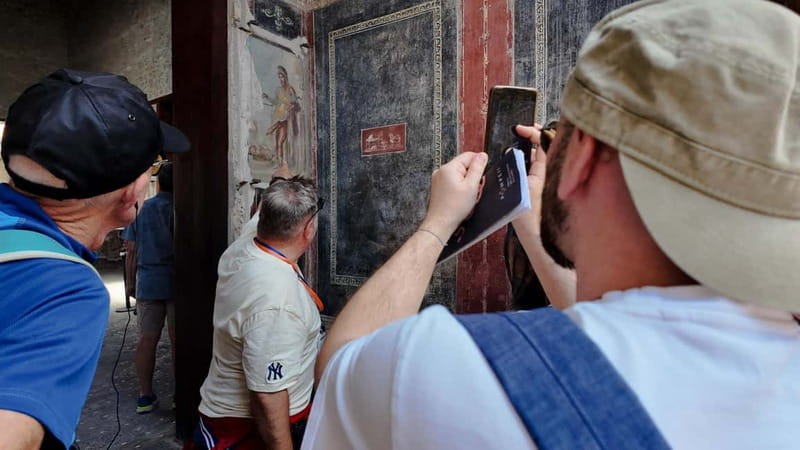
The whole rhythm of this experience is built around one thing: getting you from Napoli Centrale to Pompeii without complicated transfers. You pick up what you need at the station, then you’re on the train fast—just 40 minutes to reach Pompeii. When you’re on a tight schedule, that matters. It also makes the day feel like a simple loop: Naples out, Pompeii in, Naples back.
Once you reach Pompeii, you’re not just dropped at a map. You get guided time in the ruins, which is the best way to appreciate what you’re actually looking at. Pompeii isn’t a small stop where you glance at a few columns and move on. It’s a whole town-scale archaeological site, and without context it can feel like you’re reading random pages instead of a story.
I like that the tour keeps the day tight and predictable: you know the travel time, you know the on-site time, and you know the return train is included. If you’ve got one day and you want the classic Pompeii experience, this format does the job.
You can also read our reviews of more guided tours in Naples


Skip-the-line tickets: saving time at the entrance
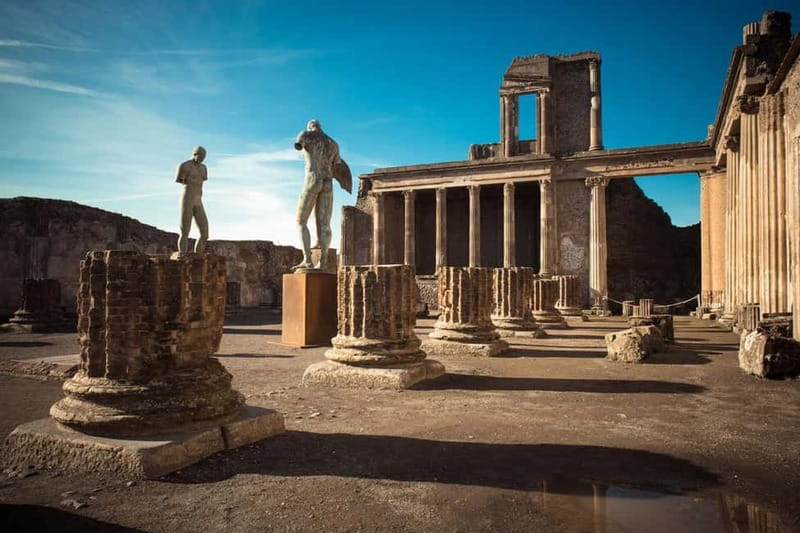
In theory, skip-the-line is a simple win: you get in faster. In practice, it’s still smart to manage expectations. Even with skip-the-line tickets included, you might still encounter delays at the entrance depending on crowd levels and how the site is operating that day.
What you should take from this: don’t treat the skip-the-line part as permission to stroll around casually. I’d arrive with a calm, ready attitude, because the real value is what you gain after entry—when you can spend that extra time actually touring rather than waiting.
Also, the tour is set up so you’re not only buying access. You’re buying access plus a guide who helps you use that access well. Skip-the-line is great, but the guide is what keeps Pompeii from becoming just a long walk through stone.
The guided Pompeii portion: a 2-hour walkthrough that actually teaches
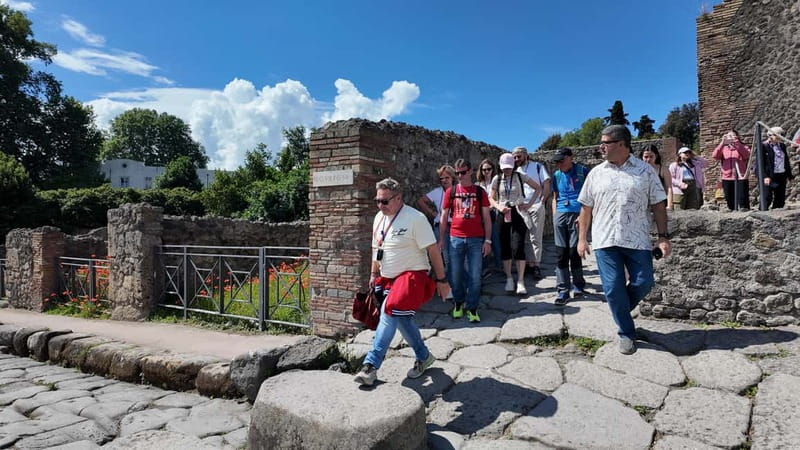
The guided time is about 2 hours inside Pompeii. That’s enough to see the biggest “feel” of the city—its public spaces, everyday structures, and the layers that make Pompeii so fascinating.
Pompeii’s preservation is what makes it unlike most ruins. The town was buried by the eruption of Mount Vesuvius in 79 AD, and that ash-lava aftermath is why you can still recognize how the city worked. Streets, buildings, rooms, and even human traces are part of the experience. A guide’s job is to help you connect the dots.
Here’s the kind of Pompeii story you can expect your guide to build for you:
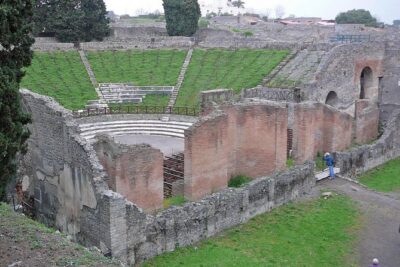
- Public life: theaters and gathering spaces where Romans spent free time.
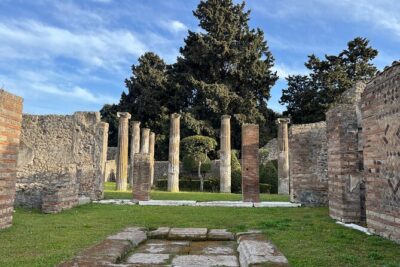
- Religious and civic areas: temples and monumental architecture that show what mattered.
- Daily routines: baths, homes, and the kinds of objects people lived around, from ceramics to everyday items.
- Art and decoration: frescoes that reveal how interior spaces were painted and used.
The best guides don’t just list sights. They give you practical mental images. For example, they’ll help you understand why walking the street grid feels so strange: you’re moving through a city that stopped mid-life, preserved by the same catastrophe that destroyed it.
And this is where group feedback has been consistently strong. Guides like Maria (noted for being descriptive and excellent for families) and Anna show up repeatedly in past experiences because they tend to cover the major areas and explain the meaning behind what you’re seeing.
Taking breaks inside a huge site: how to pace your feet
Pompeii is enormous. Even if you only tour for two hours, the scale can surprise you. The site layout is spread out enough that you’ll feel the walking, and you’ll notice how easy it is to get stuck watching where everyone else is moving.
Here’s how I’d pace it in your head:
- Let the guide set the early pace, especially at the start, when you’re orienting yourself.
- During the walk, focus on a few “anchors” your guide mentions: one public building, one everyday routine space, and one art/decoration detail.
- When the guide stops, don’t drift away mentally. That’s usually when the explanation is tying the building to real life.
One recurring issue from past days is that people sometimes feel there’s a lot of standing while listening. That doesn’t mean the guide is wrong—it often comes with the nature of a living outdoor museum. Still, if you’re the type who gets antsy sitting still, come prepared to stay flexible. Pompeii rewards attention, but the pacing can feel slow if you expect constant movement.
Transport comfort: the train ride can be the hardest part of the day
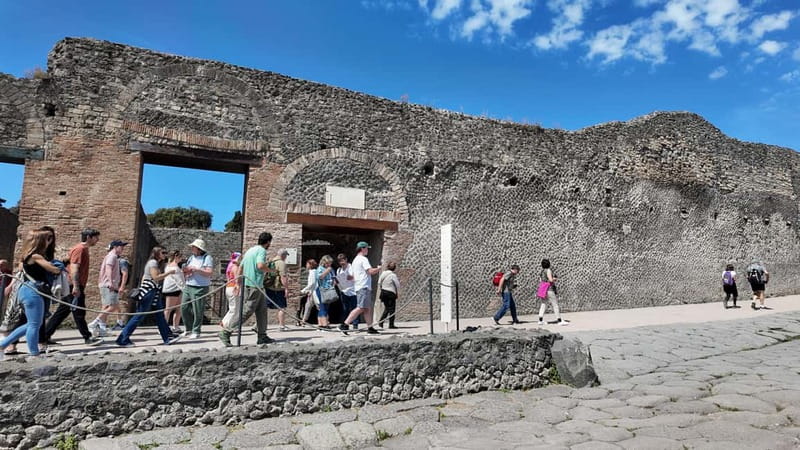
The trains are part of the convenience—and also the stress test.
The ride out is short, 40 minutes, but it can still feel very crowded, and some people report tight conditions with limited comfort. The return ride can be the rougher segment, particularly if the train is packed and you end up standing in a cramped area.
If comfort matters to you, here’s what you can do:
- Plan to dress for close quarters: light layers help.
- Keep your bag organized so you’re not fumbling in tight spaces.
- Have a backup mindset for the return train. The schedule is tight, and the ruins are the main event.
This is the one moment where the tour’s “easy logistics” may not feel easy. Once you’re inside Pompeii, though, most people say the day becomes magical—and the rail discomfort fades into the background.
You can also read our reviews of more tours and experiences in Naples


Price and value: is $49 worth it for this specific mix?

At roughly $49 per person for a day, you’re getting a package deal: train tickets + skip-the-line entry + a professional guided tour.
Value here comes from three places:
- You’re not paying separately for transport and entry. A Naples–Pompeii rail day costs money even before you touch entrance fees.
- The skip-the-line component protects time. Two hours inside Pompeii goes quickly; losing time at entry chips away at that guided window.
- The guide reduces wasted wandering. Pompeii is too large and too dense to “learn by luck.” A good guide turns the walk into a coherent story.
Where the value equation can wobble is the train experience and pacing. If you’re sensitive to crowded public transport, you might feel like you spent energy on logistics rather than enjoying the ride. But if your priority is getting to Pompeii cleanly and learning the site in a single day, this pricing structure is hard to beat.
Also note: lunch and drinks aren’t included. If you skip food, you’ll feel it. If you eat, budget time to find something nearby on your own before or after the ruins.
Who this Pompeii tour fits best
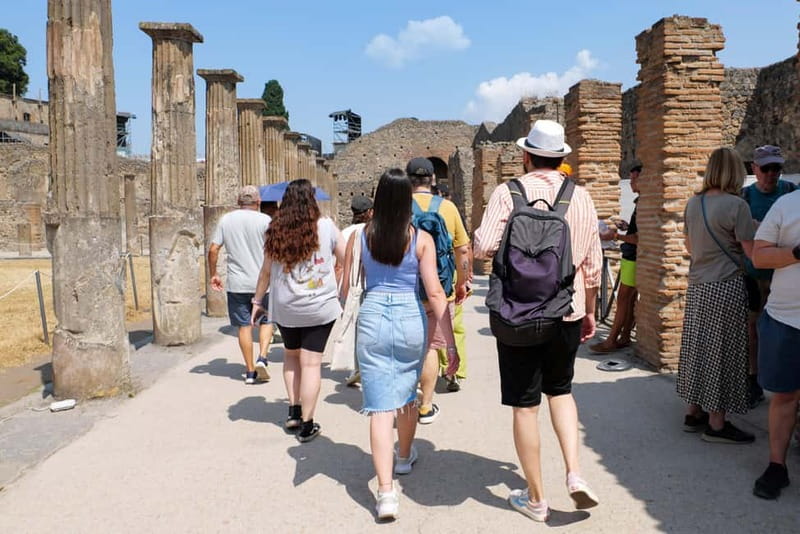
This tour makes the most sense if you want a one-day Pompeii experience with a guide and simple Naples transport. I’d especially point it toward:
- First-timers who want to see the biggest parts without getting lost in the details.
- Families who benefit from a guide that can explain things clearly (Maria has been specifically praised for making it great for a 7-year-old).
- Visitors with limited time in Naples who still want the signature Vesuvius-era experience.
- Language-diverse groups since multiple guide languages are offered.
If you’re the type who loves roaming slowly and photographing every corner, you’ll still enjoy Pompeii—but you may want extra independent time to go deeper after the guided portion.
Practical tips that help the day go smoothly

A few small things make a difference on a Pompeii day trip.
- Bring your passport or ID card. It’s required for the experience.
- No pets are allowed. Plan accordingly.
- Expect a WhatsApp/email message the day before to remind you of what you need. If your booking comes in after 6:00 PM, it’s handled the next morning starting at 8:00 AM.
- Dress for walking and weather. Some past groups dealt with heavy rain, and that’s when good guidance really matters because the goal is still to keep the tour moving safely.
- Plan food on your own. Lunch and drinks aren’t included.
One more note: guides can operate in many languages (French, English, Spanish, Italian, Portuguese, German, Russian). Some content may be shown in its original language, so don’t assume every bit of info is translated word-for-word everywhere.
Should you book this Pompeii skip-the-line train tour?
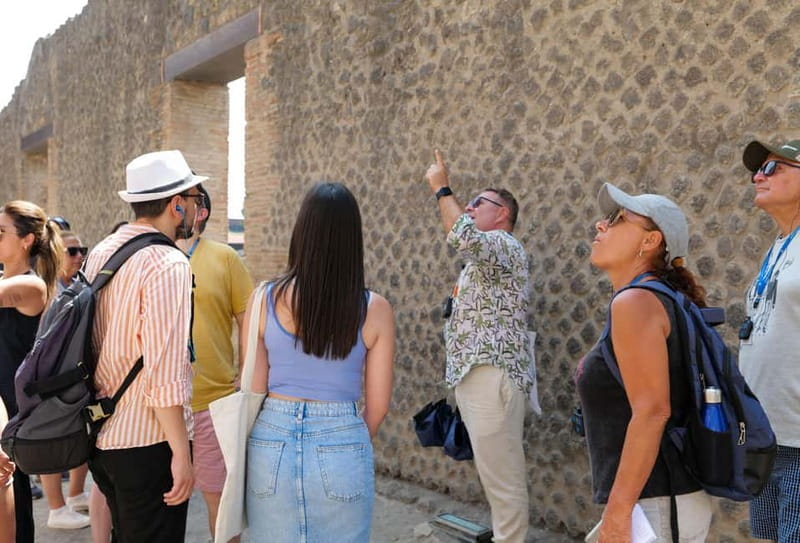
If you want Pompeii without turning your day into a navigation project, I think this is a strong choice. The combination of Napoli Centrale rail convenience, skip-the-line entry, and a real guide for about two hours is exactly what most one-day visitors need. The train can be crowded, and the pacing can include moments of standing still, but the payoff inside Pompeii is the kind you remember.
I’d book this if:
- Pompeii is the priority on your Naples trip.
- You like learning while you walk, not after.
- You want a guided route that covers the main areas rather than hoping you’ll piece it together yourself.
I’d reconsider if:
- Train crowding will stress you out more than you can tolerate.
- You need a ton of freedom to wander completely solo the whole time.
In other words: book it for Pompeii. Just accept the train ride is the annoying warm-up.
FAQ
Where does the tour start in Naples?
The tour departs from Napoli Centrale.
How long is the train ride from Naples to Pompeii?
The train ride is about 40 minutes.
How long is the guided visit inside Pompeii?
The guided tour inside Pompeii is about 2 hours.
Are the train tickets included?
Yes. Round-trip train tickets are included.
Is skip-the-line entrance included?
Yes. Skip-the-line entrance tickets are included.
What’s included in the price?
Included are the train tickets, skip-the-line entrance tickets, and a guided tour with a professional guide.
Is lunch included?
No. Lunch and drinks are not included.
What languages are the guided tours available in?
French, English, Spanish, Italian, Portuguese, German, Russian.
What do I need to bring?
Bring a passport or ID card.
Are pets allowed?
No, pets are not allowed.