Pompeii feels close and real. I love the guided focus on Roman villas with painted frescoes and original mosaics, and I also like the sobering stop at the plaster casts that ties it all to the eruption in 79 AD. One drawback: the Pompeii entry ticket is not included in the tour price.
This is a private tour/activity in English (only your group), usually running about 2 hours. It’s a good fit if you have a moderate fitness level and want someone to help you read the site without rushing.
In This Review
- Key things you’ll notice on this Pompeii visit
- A 2-Hour Pompeii Route That Actually Makes Sense
- Private English Tour: How the Guide Changes the Ruins
- Roman Villas, Frescoes, and Mosaics: Wealth You Can See Up Close
- Shops and Temples: Figuring Out How the City Worked
- Thermal Baths and the Plaster Casts: Daily Life to Final Moments
- Price and Tickets: Is $36.04 Good Value?
- Location and Practical Comfort: Getting There and Staying Ready
- Who This Pompeii Tour Suits Best
- Should You Book This Pompeii Tour?
- FAQ
- Is the Pompeii admission ticket included in the tour price?
- How long is the Exploring Pompeii tour?
- What language is the tour offered in?
- Is this tour private or shared?
- What fitness level do I need?
- Are service animals allowed?
- What is the cancellation policy?
Key things you’ll notice on this Pompeii visit
- A tight, 2-hour Pompeii route built around the most important sights
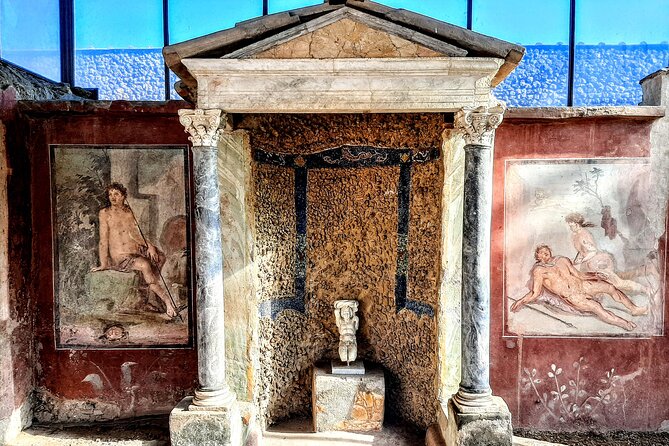
- Private Roman residences featuring painted frescoes and original mosaics
- Temples, shops, and everyday spaces that make the city feel lived-in
- Thermal baths to understand how people relaxed and cleaned up
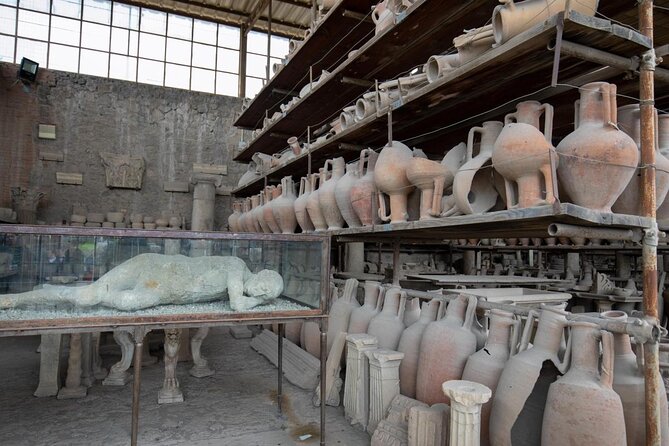
- Plaster casts of victims that bring the final moments into focus
A 2-Hour Pompeii Route That Actually Makes Sense
Pompeii can overwhelm fast. Streets loop. Houses blur together. Signs point everywhere. This tour helps you get your bearings by turning the Archaeological Park of Pompeii into a guided, time-friendly walk.
The big win is the 2-hour length. That might not sound long, but it is enough time to hit the highlights without spending your whole day trying to decide where to go next. You’ll see a sequence that moves from wealthy domestic life to public spaces and then to the dramatic remnants tied to Vesuvius in 79 AD.
That pacing also means expectations matter. You should not expect to see every corner of Pompeii in one visit. Instead, this experience aims to give you a clear story arc: how a wealthy town worked, what it valued, and what the eruption ended. If you want a guided “best of” that fits into a tight travel schedule, this format delivers.
You can also read our reviews of more tours and experiences in Pompeii.



Private English Tour: How the Guide Changes the Ruins
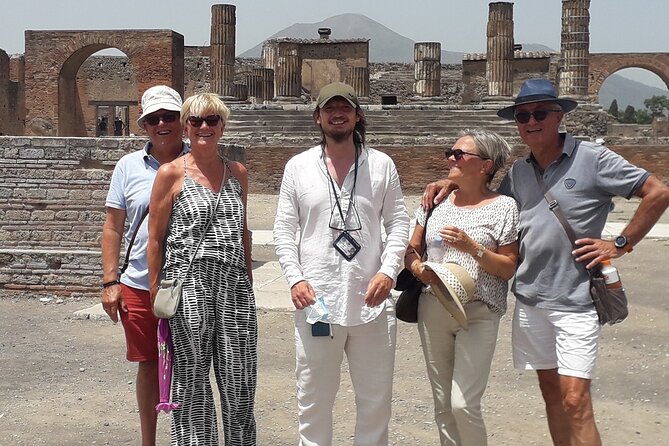
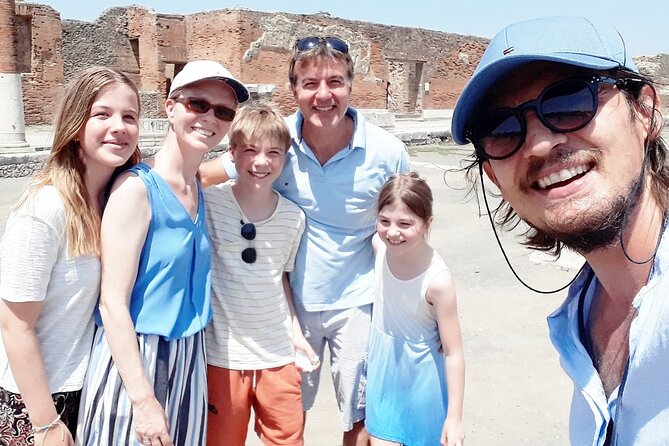
You’ll be in a private setting with only your group, and the tour is offered in English. That matters more than people think. In a self-guided visit, you’re often stuck translating what you see on your own. With a guide, you get the connective tissue: what a room was for, why certain decorations mattered, and what those plaster figures are trying to make you understand.
The reviews highlight the guide experience in a very practical way. One guest specifically called out Francesco for being great and making the tour better through clear, strong explanations. Even if you do not get the same guide, the idea is consistent: you’re paying for interpretation, not just access to ruins.
One more practical point: the tour suggests a moderate physical fitness level. Pompeii involves real walking on an uneven archaeological site, so go in with comfortable shoes and the willingness to keep a steady pace for the full 2 hours.
Roman Villas, Frescoes, and Mosaics: Wealth You Can See Up Close
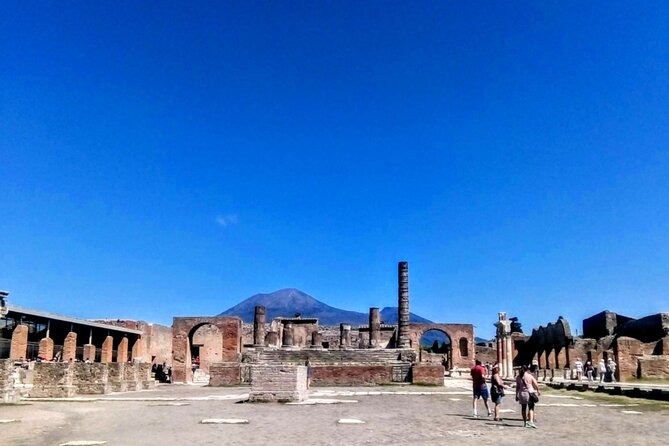
The heart of the experience is a visit through the Archaeological Park of Pompeii’s focus on private residences—especially the homes of wealthy townspeople. This is where you’ll start to understand why Pompeii still feels so human.
In these homes, you’ll notice painted frescoes and original mosaics. The key value here is that you aren’t just staring at cracked walls. You’re learning what those decorations signaled about status and taste. Frescoes give you a window into the kinds of themes people liked to display indoors. Mosaics show careful workmanship and daily design choices—beauty built into rooms people actually lived in.
This section also tends to be emotionally different from the street views. Homes feel intimate. You can picture everyday routines more easily because the space is scaled to people. Even if you’re not an expert in Roman art, a good guide can point out what you’re looking at and why it matters.
If you’re the type of traveler who likes museums, you’ll probably feel at home here. Pompeii becomes a kind of open-air collection, but with a guiding plan that keeps you from missing what’s most informative.
Shops and Temples: Figuring Out How the City Worked
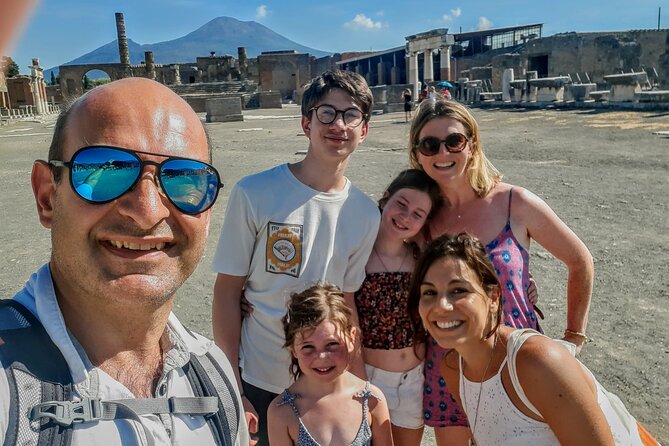
After the houses, the tour shifts into the public side of Pompeii. You’ll move through Roman shops and visit major temples.
This part is valuable because it explains Pompeii as a functioning city, not just a collection of buildings. Shops tell you about commerce and daily needs. Temples help you understand what people valued and where communal life likely gathered. When you connect those dots, Pompeii stops feeling like random ruins and starts behaving like a real place with real priorities.
One practical benefit of a guided route is that it keeps the story coherent. It’s easy to wander among architectural features and forget how they fit together. With a guide-led visit, the stops come in an order that helps you remember: home life first, then public life, then the tragedy that froze everything in place.
If you enjoy city planning or just want a better grasp of daily Roman life, this section gives you exactly that kind of context—without needing a long lecture.
Thermal Baths and the Plaster Casts: Daily Life to Final Moments
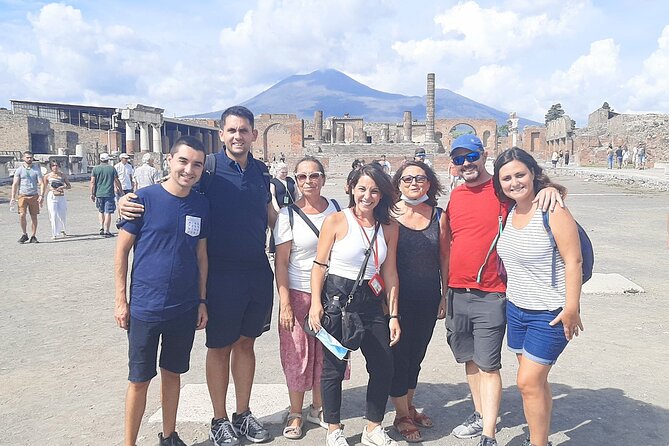
Not every Pompeii tour handles the emotional side well. This one includes two stops that bring a strong contrast: the thermal bath and the plaster casts of victims’ bodies.
First, the thermal bath. A bathhouse isn’t just about cleanliness—it’s about routine, social time, and how people spent part of their day. Seeing this within the same guided visit makes the city feel complete. You can connect the wealthy homes and public buildings to a shared rhythm of life.
Then comes the heavy moment: the plaster casts. These are a brutal reminder of what happened when the eruption of Mount Vesuvius struck the town in 79 AD. This is not a casual stop. You’ll feel the weight of it.
Why is this inclusion important for you? Because Pompeii is often marketed as a visual spectacle. The plaster casts force the experience to stay grounded in human impact. They also help you understand what the site means: a city interrupted, preserved, and revealed to us through loss.
The tour’s value is that it doesn’t just show you objects. It helps you hold both ideas at once—the normal daily life of Pompeii and the abrupt end.

Price and Tickets: Is $36.04 Good Value?
The price is $36.04 per person, for about 2 hours, offered in English. That’s a straightforward base cost for a guided walk in the Archaeological Park of Pompeii.
Here’s the part you should plan around: admission tickets are not included. That means your real total cost will be higher than $36.04. This is also why you should budget early. If you arrive without tickets sorted, you may lose time that you’d rather spend seeing the site with your guide.
So is the tour still good value? In most cases, yes—if you want interpretation and a structured route. A guide can save you from wandering and missing key spaces like wealthy residences, shops, temples, thermal baths, and the plaster casts. You’re essentially paying for time-saving guidance and a coherent experience in a limited window.
One other pricing signal: this tour is often booked ahead, with an average booking lead time of 36 days. That suggests demand stays steady, at least for the available dates. If you have fixed travel plans, booking earlier usually helps you lock in your preferred time.
Location and Practical Comfort: Getting There and Staying Ready
The tour notes a moderate physical fitness level requirement, so plan for walking. It also says service animals are allowed, which is great for travelers who need them.
It’s also listed as being near public transportation, which can make a difference in a day packed with multiple stops. For many people visiting Pompeii, getting there and back is part of the stress. When the tour starts near transit, it reduces the risk of your schedule slipping.
The tour is also confirmed at booking time, so you should receive your confirmation when you book. That’s a small detail, but it helps you coordinate the rest of your itinerary with less guessing.
Who This Pompeii Tour Suits Best
This experience is a strong match for travelers who want:
- A private, English guided visit without the hassle of coordinating with others
- A 2-hour Pompeii plan that hits major highlights
- A visit that includes both everyday life (homes, shops, temples, baths) and the final tragic stop (plaster casts tied to 79 AD)
You may enjoy this even more if you like clarity and structure. Pompeii can feel like a maze when you’re on your own. With a guide-led route, you get context that helps you make sense of what you’re seeing as you go.
On the other hand, if your dream is to wander through every street and corner at your own pace, this tour may feel like a curated sprint. In that case, you might prefer a longer, less structured visit. Here, the value comes from focus and timing.
Should You Book This Pompeii Tour?
Book it if you want a guided Pompeii highlight route in English, with a private group experience and a clear mix of Roman daily life and the sobering memorial elements. It’s also a smart choice if your schedule is tight and you want the best parts of the Archaeological Park of Pompeii without piecing together a plan on the fly.
Skip or double-check if you do not want to manage separate Pompeii entry tickets, since admission is not included in the $36.04 price. Also consider the moderate fitness level—this is not presented as a zero-effort stroll.
If you’re weighing options, I’d treat this as the practical choice: you come for Pompeii, and the guide helps you leave with understanding, not just photos.
FAQ
Is the Pompeii admission ticket included in the tour price?
No. The tour price does not include the Pompeii admission tickets, so you’ll need to purchase those separately.
How long is the Exploring Pompeii tour?
It runs for about 2 hours.
What language is the tour offered in?
The tour is offered in English.
Is this tour private or shared?
It’s private. Only your group will participate.
What fitness level do I need?
The tour lists a moderate physical fitness level. Expect walking as part of the experience.
Are service animals allowed?
Yes, service animals are allowed.
What is the cancellation policy?
You can cancel for a full refund up to 24 hours before the experience starts. If you cancel less than 24 hours before the start time, the amount paid is not refunded.