REVIEW · POMPEII
Small-Group Tour in Pompeii with a Real Archeologist, ticket included
Book on Viator →Operated by Pompei Trip&Transfer · Bookable on Viator
Pompeii works best with a smart guide nearby. This small-group tour (up to 15 people) pairs a real archaeologist with a priority ticket so you can get moving through the ruins without wasting hours in lines. I especially like how the focus stays on daily life—houses, streets, work, and worship—rather than just the disaster story. One caution: the time is tight at about 2 hours 30 minutes, so you’ll feel some “see and understand” pacing, not a slow wander.
What makes it more than a checklist is the way the guide teaches. Guides such as Paulo and Teresa are noted for turning rooms and objects into clear context—dating details, explaining how city life worked, and sharing more than one way to interpret what you’re seeing. You’ll also get headsets, which matters in Pompeii when you’re walking and the wind is doing its best impression of white noise.
In This Review
- Key things I’d plan around before you go
- Priority ticket and small-group size: value at $66.23
- Meeting at Hotel Vittoria: starting on the right foot
- Casa del Poeta Tragico and the Cave Canem mosaic
- Casa dei Vettii: luxury, ownership names, and household pride
- Lupanar: reading Pompeii’s sex trade without getting lost
- Forum of Pompeii: 142 meters of civic life
- Suburban Baths: where travelers likely relaxed outside the walls
- Casa del Fauno and Casa del Menandro: the houses people talk about
- Pompeii’s amphitheatre and gymnasium: games, crowds, and summer shade
- Temple of Apollo and Diana: religion right before 79 A.D.
- After the tour: how to use your ticket for best results
- Who this tour is best for
- Should you book this Pompeii small-group tour with a real archaeologist?
- FAQ
- How long is the Pompeii tour?
- Is the tour offered in English?
- What’s included in the price?
- Is there admission included for the amphitheatre stop?
- How big is the group?
- Where does the tour start and end?
- What if the weather is bad or I need to cancel?
Key things I’d plan around before you go
- Priority entry saves real time so you can spend your energy on the sites, not waiting.
- Archaeologist-led meaning, not memorization turns mosaics, villas, and street life into understandable stories.
- Small groups (max 15) make it easier to hear questions and keep the pace comfortable.
- Headsets help a lot when you’re moving between buildings and the area gets noisy.
- Most stops are included with admission, but the amphitheatre segment notes admission may not be separately included—double-check for the day.
- Your ticket lets you keep exploring after the guided portion ends, so you can slow down on the parts you liked.
Priority ticket and small-group size: value at $66.23
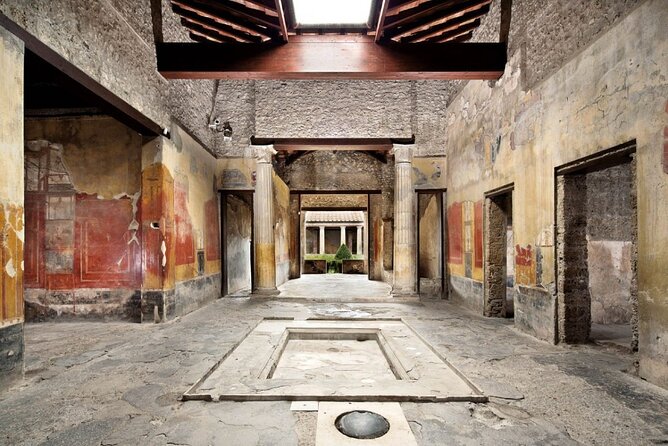
At $66.23 per person for about 2.5 hours, the value is the combo: guide service + headsets + entry advantages + admission tied to the park. You’re not paying just for someone to point; you’re paying for context and access, and that’s what makes Pompeii click.
The small-group limit of 15 travelers is a big deal here. Big tours can turn into a moving crowd line. With fewer people, the archaeologist can slow down when a mosaic, inscription, or room layout needs explanation.
The other value move is the priority ticket to the Archaeological Park of Pompeii. Pompeii is famous, which means it’s busy. Priority entry won’t magically make everything fast, but it reduces the “stand around and sweat” time.
You can also read our reviews of more tours and experiences in Pompeii

Meeting at Hotel Vittoria: starting on the right foot
You’ll start and end at Hotel Vittoria, Piazza Esedra, 80045 Pompei NA, Italy. That “back to the meeting point” ending matters because it lets you plan lunch or a second stop afterward without needing a complicated pick-up.
I’d treat the meeting spot like the start of a train day: arrive a few minutes early, and keep your phone ready for your mobile ticket details. One practical note from experience: sometimes the meeting location shown to you in an app can be off, so message the tour team if nobody is there when you arrive. In one case, guides waited and got everyone moving once the right location was found.
Casa del Poeta Tragico and the Cave Canem mosaic
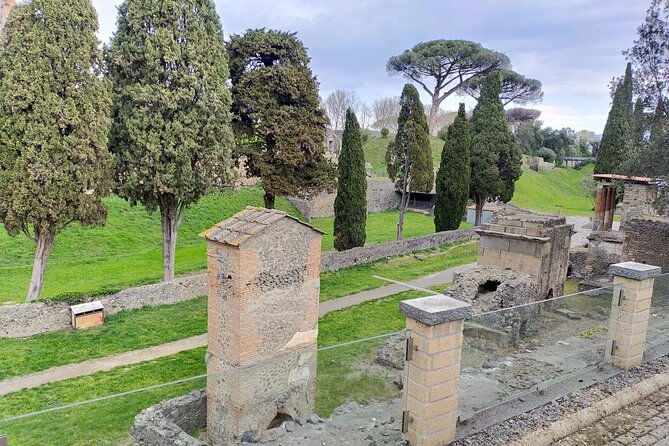
Your first stop is the Casa del Poeta Tragico, an elegant house from the imperial age. This is where you’ll see the famous floor mosaic, Cave Canem—the warning to watch for the dog. It’s a small image for such a dramatic instruction, which is exactly why it’s a great starting point. You get a quick “this isn’t decoration; it’s communication” lesson.
A good guide will also connect the house to how people lived: entry space, room hierarchy, and why mosaics were placed where they were. Even with a short stop (about 15 minutes), you can leave with a clearer idea of how Pompeii’s homes were designed for daily use.
Casa dei Vettii: luxury, ownership names, and household pride
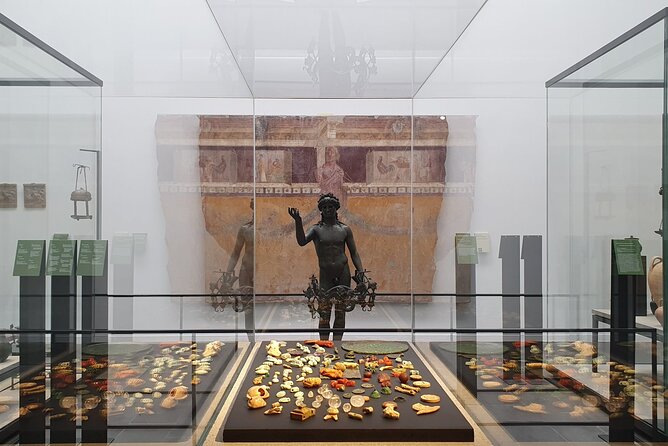
Next up is the Casa dei Vettii, one of the most luxurious houses in Pompeii. The name comes from its owners: Aulo Vettio Restituto and Aulo Vettio Conviva. That detail matters because it turns “random ruins” into “a specific family with money and taste.”
What you’re looking for here isn’t just wall art. It’s the overall sense of wealth: the way rooms are laid out, how visual display is woven into the house, and how Pompeii’s elite used these spaces to show status.
One practical consideration: if you hit a longer wait at a popular house on the day, don’t panic. And remember, the ticket is for the day, so you can revisit areas after the guided portion ends if the timing feels off.
Lupanar: reading Pompeii’s sex trade without getting lost
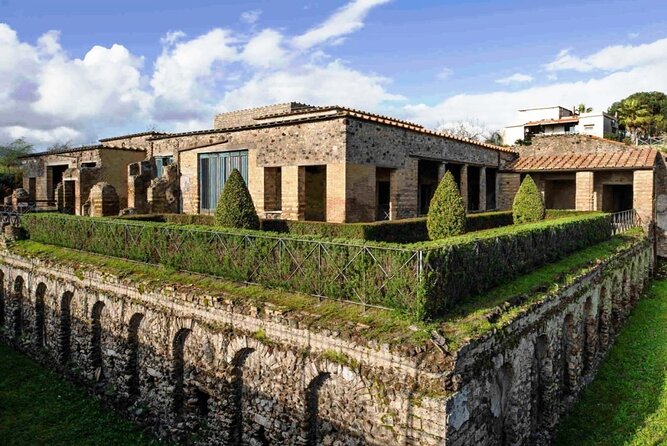
Then you’ll walk into the Lupanar, the two-storey building known for prostitution. This is one of the most visited stops for obvious reasons, but a real guide keeps it factual and grounded.
Here’s what you’ll learn from the structure itself: it had five rooms on the ground floor and five upstairs. Each room had a concrete bed, and if conditions allowed, there might have been a mattress or mat. That blunt physical layout is the point. It helps you picture the reality of commerce in the city—small, controlled spaces designed for transactions.
A short visit can feel strange if you expect a museum vibe. If you approach it as “a window into social life and how the city organized work,” it’s easier to handle.


Forum of Pompeii: 142 meters of civic life
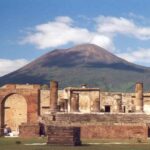
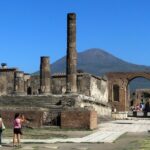
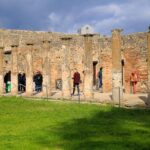
The Forum in Pompeii is a long, rectangular public space—about 142 metres long and 38 metres wide. A key detail: carts weren’t allowed here. The Forum was for pedestrians, which tells you something about how the city pushed movement and crowds.
Today, you’ll see it stripped down compared to its original look. It’s bare of statues, and some of the ornate flooring and marble work is gone. A guide should explain the likely reason: after the eruption, materials got dug up and reused in later projects.
In other words, this stop is less about “wow, it’s intact” and more about understanding how Pompeii got pulled apart and recycled over time. It’s a quieter kind of history, but it lands well when a guide points out what you’re not seeing.
Suburban Baths: where travelers likely relaxed outside the walls
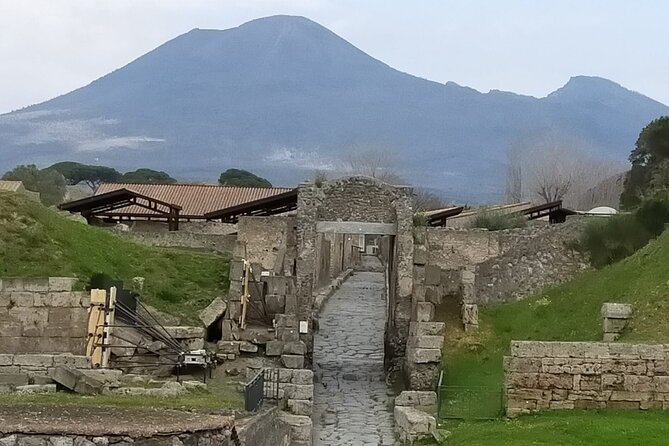
The Suburban Baths sit outside the city walls, and that location changes the story. Your guide will frame them as a thermal bathing zone likely used by visitors—people passing through—rather than everyday residents alone.
The nearby port is also part of the explanation. Boats could be moored around large rocks, and that makes the bath area feel connected to travel, arrival, and rest. Pompeii wasn’t just an inland “sealed time capsule.” It was a functioning city with movement and incoming traffic.
A short stop here is still worth it. Even if you can’t picture every detail, the outside-the-walls setting gives you a mental map of the city as an active hub.
Casa del Fauno and Casa del Menandro: the houses people talk about
Two of the most memorable house visits in Pompeii happen back-to-back.
First is Casa del Fauno. It’s named for a bronze statue of a faun located in the impluvium. The impluvium is the central basin area, and the presence of a bronze sculpture there signals status right in the heart of the house. If you like “small artifacts that change the meaning of a room,” this is a great stop.
Then you move to Casa del Menandro, a large house of about 2,000 square metres. It gets its name from an affresco of the poet Menandro. One of the most striking points you’ll likely hear: 118 objects in silver were found here—tableware used at meals by people with serious spending power.
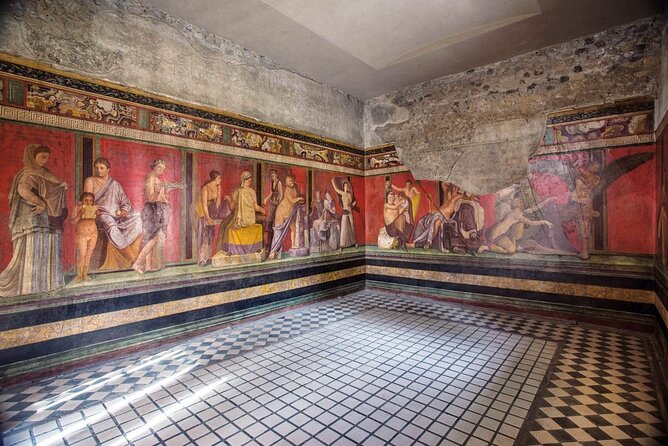
You’ll also get a look at frescoes tied to the Trojan War, including the death of Laocoonte and scenes with Cassandra and Ulysses. This is where a skilled guide earns their keep. These paintings stop being “generic myth images” when someone explains why those stories mattered and how elite households used art to project identity.
Pompeii’s amphitheatre and gymnasium: games, crowds, and summer shade
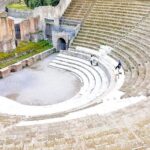
Your guided time inside the Archaeological Park culminates with the amphitheatre area and nearby gymnasium. Pompeii had gladiatorial games and other organized spectacles, and the amphitheatre could hold up to 20,000 people across three levels.
One of the most useful details for planning is the note about heat: during hot summer months, spectators were protected by a type of dark linen covering. Even if you can’t see the setup today, the explanation helps you understand why surviving records and arrangements matter.
Adjacent to the arena is the gymnasium, where youngsters would work out. The pairing makes a point: spectacle wasn’t only about fights. It was about training, youth culture, and public performance in the Roman way.
Admission for this particular stop segment is marked as not included. At the same time, your park priority ticket is included as part of the tour. To avoid surprises, I’d check on the day or confirm during booking how the amphitheatre access is handled in your exact ticket package.
Temple of Apollo and Diana: religion right before 79 A.D.
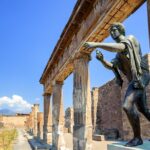
The final main stop is the Temple of Apollo. This cult arrived before the eruption of 79 A.D., so you’re looking at religious life in the last stretch of the city’s existence.
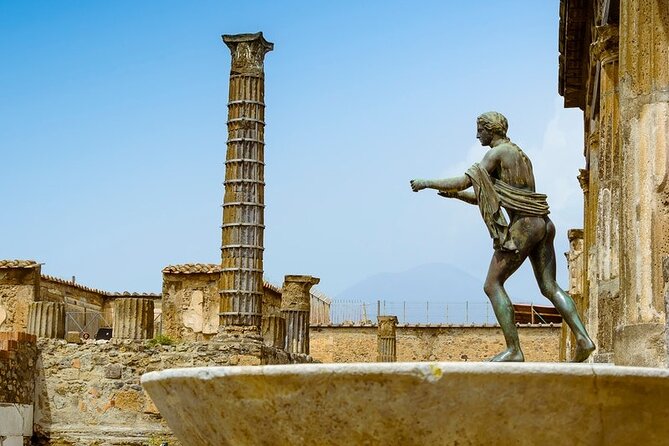
You’ll see representations connected to Apollo: a bronze statue shown with bow and arrow, plus a statue of the goddess Diana. This is a good closer because it shifts you from “houses and streets” to “belief and authority.” It also reminds you that Pompeii’s identity wasn’t only local. It followed Roman patterns of worship and power.
After the tour: how to use your ticket for best results
Your priority park ticket gives you flexibility. After the guided portion ends, you can explore on your own as long as you like that same day.
That’s smart because Pompeii rewards a second look. One area that’s just “interesting” during a fast 15-minute stop can become a favorite after you slow down and notice the details: floor patterns, wall marks, doorways, and the way spaces connect.
If it’s hot, plan your follow-up like this: return to the shade pockets first, then pick one or two places you didn’t have time to absorb fully. Pompeii can be mentally exhausting, and hydration helps more than willpower.
Who this tour is best for
This fits you if you want a guided structure without committing to a huge group. It’s also a great match if you like your history explained through objects and buildings—mosaics, room layouts, public spaces, and the everyday design of life.
It may not be ideal if you want a long, slow “wander anywhere” visit with no pressure. The schedule is tight, and each major stop is short. You’ll learn a lot, but you won’t cover Pompeii at a leisurely pace.
If you’re traveling in English, the tour is offered in English. And if you need service animals, they’re allowed.
Should you book this Pompeii small-group tour with a real archaeologist?
Yes, I’d book it if your priority is understanding what you’re seeing while you’re still in motion. The mix of real archaeologist guide, small-group size, headsets, and priority ticket makes the experience feel efficient without feeling rushed-for-the-sake-of-it.
I’d think twice only if you’re the type who needs long stays in one place, or if you’re worried about fitting a day under hot conditions. Pompeii can be intense. Bring water, wear good walking shoes, and accept that you’re getting a smart “guided introduction” that you can extend afterward with your own exploring time.
FAQ
How long is the Pompeii tour?
The tour lasts about 2 hours 30 minutes.
Is the tour offered in English?
Yes, it is offered in English.
What’s included in the price?
The tour includes the guide service in your language, a priority ticket entrance for the Archaeological Park of Pompeii, and a headset. Admission tickets are included for several of the listed stops.
Is there admission included for the amphitheatre stop?
The amphitheatre stop notes that admission ticket is not included for that specific segment. Your priority entrance ticket for the Archaeological Park of Pompeii is included as part of the tour, so it’s worth double-checking how the day’s access is handled.
How big is the group?
The maximum group size is 15 travelers.
Where does the tour start and end?
It starts at Hotel Vittoria, Piazza Esedra, 80045 Pompei NA, Italy, and ends back at the meeting point.
What if the weather is bad or I need to cancel?
You can cancel for a full refund up to 24 hours in advance. The experience requires good weather, and if it’s canceled due to poor weather, you’ll be offered a different date or a full refund.