REVIEW · POMPEII
Pompeii 2-hour Private Tour with an Archaeologist-Ticket included
Book on Viator →Operated by Askos Tours · Bookable on Viator
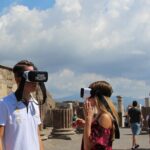
Pompeii works best when you move at your pace. This 2-hour private tour pairs that freedom with a real archaeology guide and an admission ticket built in, so you’re not stuck figuring things out mid-walk. I like that it avoids the big-group rush and that you get focused interpretation at the exact stops you care about.
One consideration: two hours means you won’t see every corner of the park. If you want deep, slow exploration of Pompeii’s full layout, you may need a longer day plan (or a second visit) to avoid feeling like you’re sprinting.
In This Review
- Key Points You’ll Notice on This Pompeii Archaeologist Tour
- Why This 2-Hour Private Pompeii Tour Fits the Real World
- Price and Value: What $214.75 Buys You Here
- Meeting at Porta Marina Superiore and How You’ll Get Oriented
- Basilica and the Foro: Pompeii’s Public Life, Explained Simply
- Walking the Main Street: What to Notice Beyond the Big Sights
- Granaries of the Forum and the House of Menander: Space, Status, and Daily Detail
- Stabian Baths and the Lupanar: Roman Routine With Real Stakes
- House of the Faun and the Theaters: How Pompeii Ends Up in Your Head
- Pace, Footing, and Weather: Small Planning Choices That Matter
- Who Should Book This Pompeii Private Tour?
- Should You Book This Askos Tours Pompeii Private Tour?
- FAQ
- How long is the Pompeii private tour?
- Is the Pompeii admission ticket included?
- What are the start and end points of the tour?
- Is this tour private or shared?
- Does the tour run in bad weather?
- What is the cancellation policy?
Key Points You’ll Notice on This Pompeii Archaeologist Tour
- True private pacing: only your group, so you control the tempo.
- Archaeologist-led insights: guides bring context to what you see on the ground.
- Pompeii entry ticket included: admission is part of the deal, not an add-on.
- Balanced route: forum centerpieces plus everyday-life stops like baths and a brothel.
- Comfort matters: comfortable shoes and a moderate fitness level are part of the setup.
Why This 2-Hour Private Pompeii Tour Fits the Real World
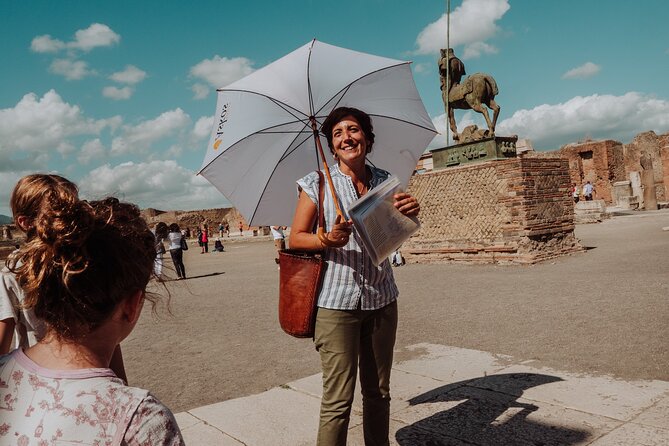
Pompeii can feel overwhelming fast. You’re surrounded by streets, buildings, and stone fragments that all look similar until someone puts them into context. That’s exactly where a short, private format shines: you get interpretation when it still feels fresh, not after your brain is already tired.
The private setup also changes the vibe. You’re not waiting for a pack to catch up, and you’re not getting pulled ahead at the wrong moment. If you spot details you want to photograph, or you need a slower pace on rough ground, you have room to adjust.
The biggest tradeoff is time. With about 2 hours, you’ll hit the most meaningful highlights, but you’ll do it with a “best of” rhythm. Think of this as a guided launchpad into Pompeii, not a full-day replacement.
You can also read our reviews of more tours and experiences in Pompeii


Price and Value: What $214.75 Buys You Here
At $214.75 per person for a private, archaeology-led tour with the Pompeii admission included, the value depends on your group size and style.
If you’re splitting the cost with family or friends, the price starts to look like a practical upgrade. You’re paying for (1) private guide time, (2) professional archaeology interpretation, and (3) ticket coverage—so you avoid the classic “we’re here, now what?” scramble.
If you’re traveling solo, it can feel steep compared to self-guided entry. In that case, I’d treat this as paying for clarity: someone helps you understand why the forum matters, how the theaters worked, and what the baths and Lupanar tell you about daily life.
Meeting at Porta Marina Superiore and How You’ll Get Oriented
You start at the archaeological park main entrance area at Porta Marina Superiore, with your guide holding a sign for Askos Tours. The meeting location is key because Pompeii’s paths can be confusing when you arrive, and you don’t want your day to begin with guesswork.
Another practical plus: the tour ends at Piazza Esedra, and the guide can help you with directions back to your accommodation or to the nearest train station. That matters because Pompeii visits often turn into logistics puzzles at the end—this one keeps that part calmer.
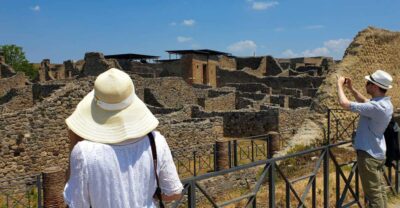
Also, expect a schedule that assumes you’ll walk. The tour recommends comfortable shoes and a moderate physical fitness level, and it operates in all weather conditions, so dress accordingly. If you’ve had any trouble with steep, uneven surfaces at ruins, plan for slower steps and short pauses.
Basilica and the Foro: Pompeii’s Public Life, Explained Simply
You’ll begin with a quick stop at the Archaeological Park of Pompeii (ticket included), then move into the open-air structures that shaped daily movement.
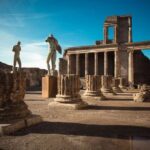
At the Basilica, you’re looking at an area that functioned like a sheltered space for merchants and active public dealings. The takeaway I’d want you to carry into this stop is basic: Pompeii wasn’t just impressive architecture—it was a working city with constant transactions and crowd flow, and this building helped keep that momentum going even when the weather turned.
Next comes the Foro de Pompeya, Pompeii’s main square. This is where the city’s “center of gravity” shows up on your feet. It’s not just a pretty plaza; it’s a way to orient yourself geographically. Standing here helps you understand how the rest of the route connects.
A smart approach during these first segments is to keep asking yourself: where would you walk if you lived here? The guide’s job is to point out what each space suggests about movement, priorities, and social life—especially early in the tour, when your map in your head is still forming.
Walking the Main Street: What to Notice Beyond the Big Sights
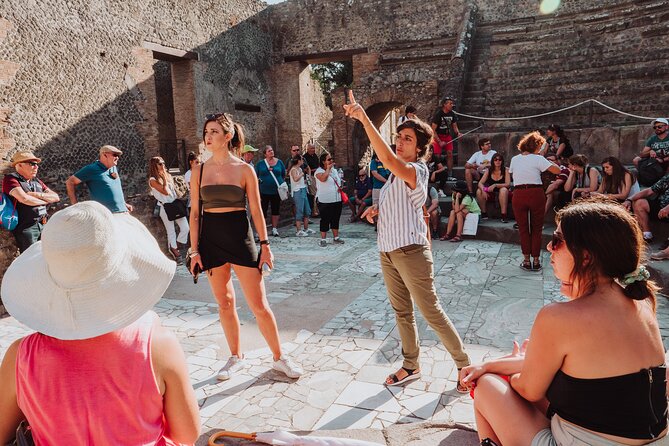
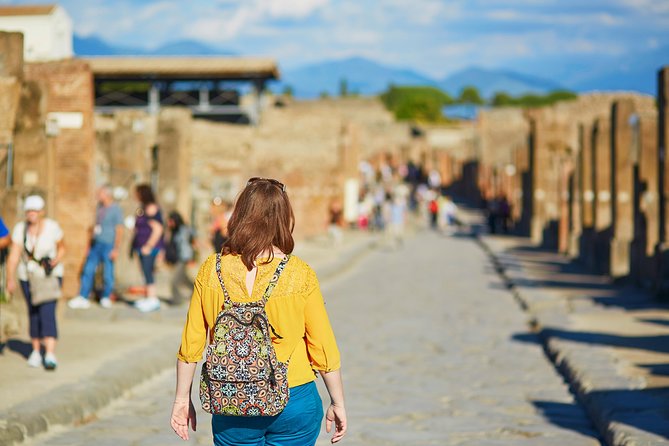
After the Foro stops, you’ll head along the main street. This is where a guided walk adds value beyond what you can get from a phone map. The street grid matters, and so do the “small” details that make Pompeii feel lived-in rather than staged.
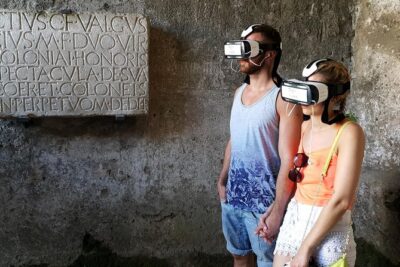
One of the strongest benefits of a private route is the flexibility to spend a minute longer where your eyes catch something. If you’re the kind of person who always zooms in on inscriptions or layout clues, you’ll likely enjoy having that time without worrying about holding up a larger group.
The guide-led pacing also helps you avoid the common frustration of seeing a place and thinking: I get it, but what am I looking at? That question is exactly what interpretation is for.
You can also read our reviews of more private tours in Pompeii





Granaries of the Forum and the House of Menander: Space, Status, and Daily Detail
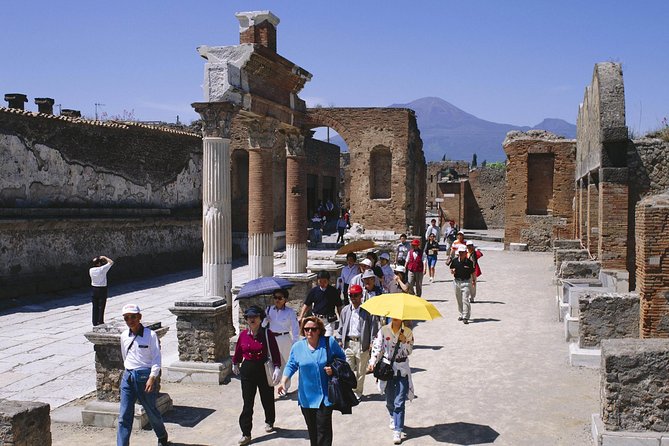
Two stops in this mid-route section connect Pompeii’s public face to the private life behind it.
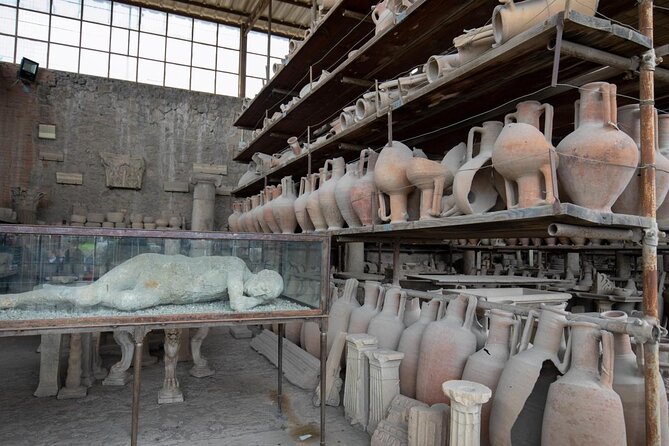
At the Granaries of the Forum, you’ll notice details tied to storage and distribution—plus sculptural and decorative elements around entrances of houses. You’ll also come across references to casts of victims of the eruption, along with elements mentioned such as a dog and a tree connected to those casts. This is an emotionally heavy stop for many people, so the guide’s tone and pacing can really affect the experience. In this format, you’re more likely to get time to process instead of being rushed onward.
Then you move to the House of Menander, described as one of the richest and most magnificent houses in Pompeii for architecture, decoration, and contents. This is where you start seeing how wealth expressed itself in surfaces and layout, not just objects. If you’ve ever wondered how a city can look both grand and intimate, a house like this answers that by showing what everyday routines looked like for the elite.
A practical tip for this portion: don’t force yourself to memorize everything. Instead, aim to spot one or two recurring themes the guide points out—materials, decoration choices, and how rooms connect. Those are the bits that stick.
Stabian Baths and the Lupanar: Roman Routine With Real Stakes
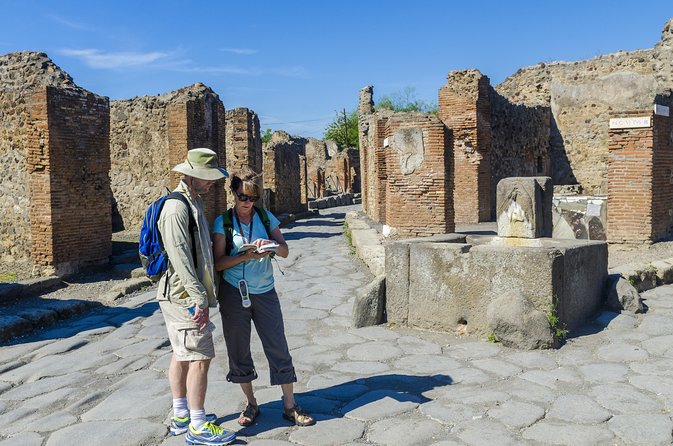
This part of the walk is where Pompeii starts feeling human. You’re stepping from squares and homes into spaces tied to routine and social behavior.
At the Stabian Baths (Terme Stabiane), you’re in a large area between key crossroads and streets. The standout detail here is that these baths represent the oldest thermal complex in the city, so you’re not just looking at ruins—you’re looking at an early stage of Roman bathing culture in Pompeii.
Then comes the Lupanar, described as the most famous brothel in the ruined city. It’s a charged stop, and it can be uncomfortable even when you’re expecting it. In a private tour, the difference is control: you can take the information you’re ready for, ask questions, and move on when you need to.
The guides you might encounter for this tour have been praised for turning Pompeii into something you can understand, not just something you can walk through. Names that have shown up include archaeologists such as Silvia and Alessandra (both described as PhD-level in the accounts I was given), along with guides like Giovanni, Ivan, Diego, Luca, Sara, and Paolo. Even without knowing which guide you’ll get, it’s a good sign that the human part of the interpretation is taken seriously.
House of the Faun and the Theaters: How Pompeii Ends Up in Your Head
You’ll finish with household scale and then shift into entertainment.
The House of the Faun is one of the largest and most impressive private residences in Pompeii. This stop helps you connect earlier themes—wealth, layout, and decoration—into a bigger picture. If you felt like the smaller details earlier were hard to hold in your mind, a large house can do the opposite: it makes everything feel legible because the scale frames your understanding.
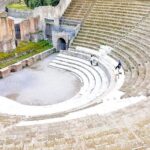
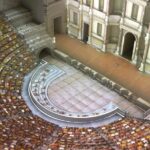
Then you’ll get looks at the Teatro Piccolo and finally the Teatro Grande, the most important theater in Pompeii. Here’s why this matters: theaters weren’t just buildings for shows; they were part of how the city publicly expressed culture. When the guide explains what these spaces did, you stop seeing rows of stone and start picturing crowds, schedules, and civic life.
One of the most satisfying things about ending with theaters is that it gives you a final anchor. After hours of walking streets and peering into structures, you get a clear sense of Pompeii’s social rhythm—public meetings, daily routines, and shared entertainments.
Pace, Footing, and Weather: Small Planning Choices That Matter
This tour operates in all weather conditions, so dressing for that matters. Pompeii’s surfaces are uneven and sometimes steep, and the tour is designed for people with at least moderate physical fitness. Comfortable shoes are strongly recommended.
If you’re traveling with older relatives or anyone who needs more time moving around, the private format is a practical advantage. Multiple accounts highlighted guides adjusting to slower steps and rough ground, which is exactly the kind of flexibility you want when you’re working with real stone under real feet.
If it’s raining, you’ll likely appreciate that the route is built around a set number of stops and walking segments. You’re not doing “wander until you find something” in wet conditions—you have a plan, guided interpretation, and a finish point at Piazza Esedra.
Who Should Book This Pompeii Private Tour?
This is a strong fit if you:
- Want a private Pompeii experience without the stress of keeping up with a big group.
- Value an archaeology guide who explains what you’re seeing instead of leaving you to figure it out alone.
- Prefer a focused highlight route in about two hours, not an all-day marathon.
It’s also a good choice for families and mixed groups, because the format is flexible and can keep people engaged through story and structure. If you’re the type who loves details, you may also enjoy how the stops are spaced to help you compare public life (forum and basilica) with private spaces (houses) and daily routine (baths and brothel).
If you want a slow, photo-heavy, cover-every-street visit, you might feel limited by the time window. In that case, consider pairing this with time for self-guided wandering afterward—especially since Pompeii rewards repeated looks.
Should You Book This Askos Tours Pompeii Private Tour?
Yes, I’d book it if you want Pompeii to make sense quickly and you like the idea of being guided through the key sites on a timed route.
Here’s my decision rule: if you’re willing to trade some freedom for guidance, this is a smart value. Admission is included, the tour is private, and the itinerary covers a solid mix—forum, houses, baths, the Lupanar, and the theaters—so you leave with more than photos. You leave with a clearer mental map.
If you’re on a tight budget and you don’t care about interpretation, self-guided entry may be enough. But if you want the site to feel connected—why each area mattered and what life looked like in Pompeii—this is one of the easiest ways to get that, in a manageable 2 hours.
FAQ
How long is the Pompeii private tour?
The tour lasts about 2 hours.
Is the Pompeii admission ticket included?
Yes. Admission fees to Pompeii are included, and the ticket is included with the first stop.
What are the start and end points of the tour?
You start at Via Villa dei Misteri, 2, 80045 Pompei NA, Italy, and the tour ends at Piazza Esedra, 80045 Pompei NA, Italy.
Is this tour private or shared?
This is a private tour/activity. Only your group will participate.
Does the tour run in bad weather?
Yes. It operates in all weather conditions, and you’re advised to dress appropriately.
What is the cancellation policy?
You can cancel for a full refund up to 24 hours in advance of the experience start time.