REVIEW · NAPLES
Walking Tour of Herculaneum with Local Guide
Book on Viator →Operated by Worldtours · Bookable on Viator
Two hours in Herculaneum feels like time travel. This is the compact way to see why the site feels so different from Pompeii, with preserved rooms, everyday spaces, and quick stops that keep your day from running away on you. You’ll also go with a mobile ticket and an English guide, so you’re not stuck figuring things out on your own.
What I like most is the value of seeing the big highlights with less fuss: a prebooked entry ticket helps you get inside without wasting precious vacation time. I also really appreciate how the guide keeps things clear and human—on one recent group, Mr Raphael’s explanations made it easy to connect the buildings to daily life.
The main consideration is pacing and languages. The tour is short, and it moves between several sites, so if you like to linger, you might feel rushed. Also, language support can depend on the group, since the operator may combine groups to keep the tour running.
In This Review
- Key highlights worth your attention
- Why Herculaneum is a smarter use of your Naples time
- Getting started at the Herculaneum ticket office
- The small museum stop with the ancient boat: Salone della Barca di Ercolano
- Antiquarium di Ercolano: furnishings, furniture, and jewels
- Casa dei Cervi: seeing wealth and design in a patrician villa
- Casa del Rilievo di Telefo and Casa di Nettuno e Anfitrite: houses as storytelling
- Grande Taberna: Roman fast food you can almost smell
- Vestibolo della Palestra and Terme Del Foro: gym and baths
- Partem Domus lignea: the wooden doors and beams
- Pace, group size, and what to expect from the walk
- Price and value: what you actually get for $48.16
- The language factor: English works, but group changes can happen
- Who should book this Herculaneum walking tour
- Should you book this tour?
- FAQ
- How long is the Walking Tour of Herculaneum?
- What is the meeting point?
- Is admission to Herculaneum included?
- What language is the tour offered in?
- What does the tour include?
- Is there transportation included from Naples?
- Does the tour run in bad weather?
- What is the cancellation policy?
Key highlights worth your attention
- A fast 2-hour loop that hits the most important Herculaneum highlights without taking your whole afternoon
- Admission included so you don’t burn time buying tickets at the gate
- Stop-by-stop guidance in English, making it easier to understand what you’re seeing
- House and object variety, from patrician villas to baths and a Roman boat display
- Wood preservation you can actually look at, thanks to preserved wooden doors and beams
- A small-group experience with a maximum of 20 people
Why Herculaneum is a smarter use of your Naples time
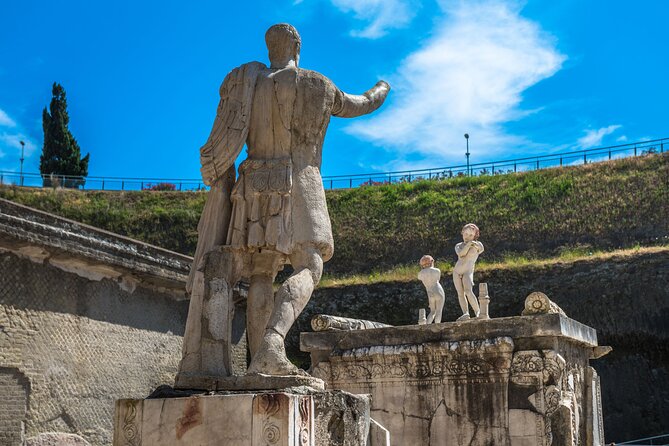
Herculaneum is one of those places where the size can trick you. On paper, it looks like you could cover it fast. In real life, the preservation makes you want to slow down—because you’re not just looking at ruins. You’re seeing parts of daily life laid out in rooms, courtyards, and public spaces.
This tour fits the people who want the highlights without turning the day into a marathon. At around 2 hours, you get a guided path through spaces that feel meaningful: a Roman boat, museum displays of objects, elite houses with mosaics, and public-feeling areas like baths and a gym. It’s a good match if you’re basing yourself in Naples and you don’t want to lose half your day to logistics.
You can also read our reviews of more walking tours in Naples



Getting started at the Herculaneum ticket office
The meeting point is the Herculaneum Ticket Office (80056 Ercolano). The tour starts at 2:00 pm and ends back at the same meeting spot, which is exactly what you want on a short schedule.
Because the tour is inside the archaeological site and includes the entry ticket, you’re not bouncing between outside landmarks and then trying to re-solve the ticket line. You go in and start looking. Also, since the meeting point is near public transportation, it’s easier to combine with other plans in the area.
One practical note: the tour involves walking through the site, so bring shoes you can trust on uneven ground. The activity is listed for people with moderate physical fitness, so you should be comfortable with short distances and moving steadily.
The small museum stop with the ancient boat: Salone della Barca di Ercolano
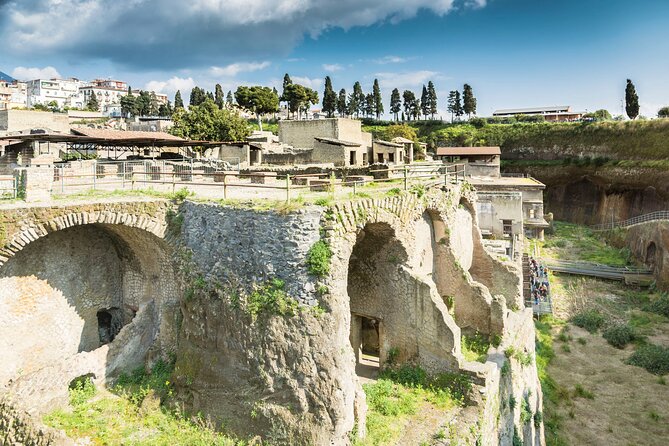
Your first stop is Salone della Barca di Ercolano, a small museum built around one of the most striking artifacts from Herculaneum: an ancient Roman boat displayed in excellent condition.
Even if you’re not a big “maritime history” person, this stop works because it gives you a fast anchor. You start with something tangible and well-preserved, then you move into the city itself. If you’ve ever felt like archaeology can feel abstract, this is a nice way to reset your brain: look at the object first, then connect it to the life around it.
Plan for a short visit here—around 10 minutes—which means you won’t get time to read everything. The guide’s job is to point you toward what matters most so you leave with a clearer idea of why it’s important.
Antiquarium di Ercolano: furnishings, furniture, and jewels
Next comes Antiquarium di Ercolano, where you see what archaeologists pulled from the excavations: furnishings, furniture, and jewels. It’s a quick museum stop, roughly 20 minutes, but it’s doing heavy work for the tour.
Instead of jumping straight into houses and rooms, this stop helps you recognize what “stuff” looks like when it belonged to real people—everyday objects, personal items, and the kind of decorative pieces wealthier households might own. When you later look at elite homes, you’ll be able to better imagine how spaces were used.
This is also a good place to get your terms straight. Once you understand the kinds of objects that were found, the preserved rooms and architectural features start making more sense.
Casa dei Cervi: seeing wealth and design in a patrician villa
One of the best-preserved buildings you’ll see is Casa dei Cervi, an ancient patrician villa. It’s on the tour for about 15 minutes.
A patrician villa, in plain terms, is a home tied to status—someone with resources. That matters because Herculaneum doesn’t just show you walls. It helps you understand what wealth looked like in architecture and how elite households organized space.
The drawback of short tours is that you can’t fully absorb every angle of a large home. Still, with a guide, you’ll focus on the features that help you read the building quickly: where rooms begin and end, how the layout supports daily movement, and what preservation lets you actually see today.
You can also read our reviews of more guided tours in Naples





Casa del Rilievo di Telefo and Casa di Nettuno e Anfitrite: houses as storytelling
After Casa dei Cervi, you’ll move to Casa del Rilievo di Telefo for about 5 minutes. Even though it’s brief, it’s part of the tour’s strategy: you’re collecting examples of patrician homes so you can feel the range of design rather than fixating on one building.
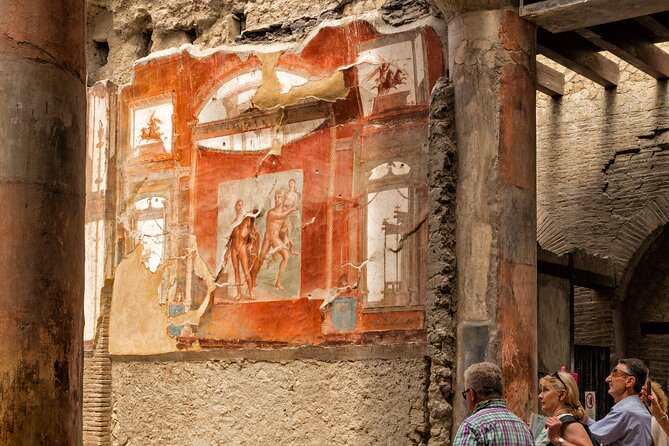
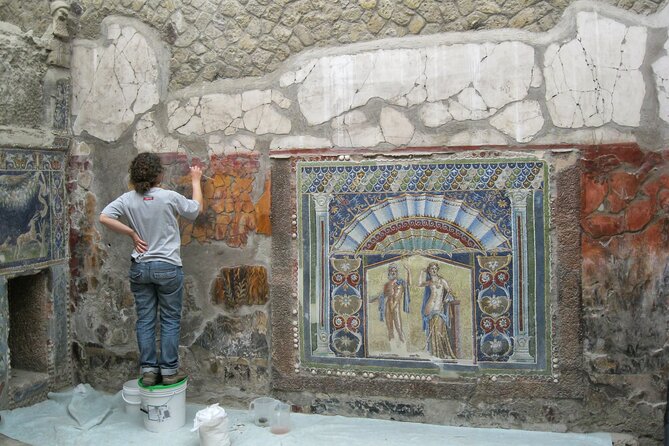
Then you’ll reach Casa di Nettuno e Anfitrite, another house stop, again for a short window (about 5 minutes). This one is especially about artwork, since it’s known for one of the most beautiful mosaics of the excavations. If you like visual details, this is the kind of stop that can make the whole tour feel more real.
Here’s the practical advantage: you’re not just walking through ruins. You’re seeing how decoration, layout, and household life show up in different ways across multiple homes—fast, but focused.
Grande Taberna: Roman fast food you can almost smell
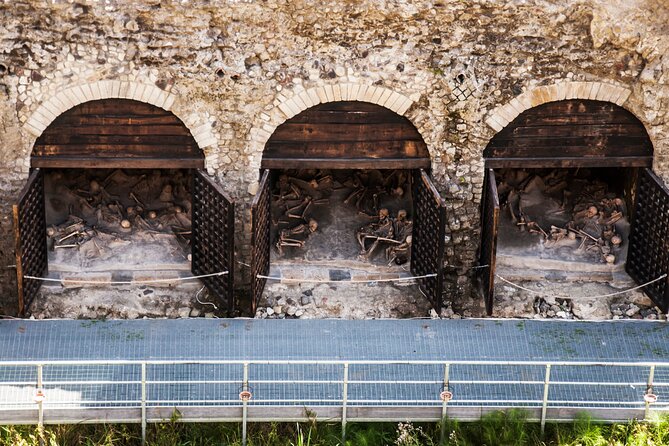
Not every stop is a mansion. Grande Taberna is described as a thermopylae, essentially a Roman fast-food setting. Expect about 5 minutes here.
This matters because it balances the tour. If you only saw wealthy houses, you’d leave with a skewed picture of who lived where and what daily life looked like. A thermopylae-type space helps you picture eating and routine in a more public, practical way.
Since the time is short, use the guide’s context to frame it: think less about menu details you can’t confirm and more about what the space suggests—food prepared for quick consumption and the flow of everyday customers.
Vestibolo della Palestra and Terme Del Foro: gym and baths
Two of the most recognizable “public life” categories on this tour are exercise and bathing.
First is Vestibolo della Palestra, for about 5 minutes, described as a gymnasium and swimming pool. Then you’ll see Terme Del Foro, thermal baths, for about 10 minutes. If you’ve ever wondered how important bathing and leisure were in Roman culture, these stops help you connect the dots.
The value here isn’t just the architecture. It’s the feeling of routine. These spaces suggest regular habits—time to socialize, to care for the body, and to gather. Even in a quick pass, you’ll walk away with a clearer sense that Roman life wasn’t only about temples and politics. It also included daily rituals that were social and physical.
Partem Domus lignea: the wooden doors and beams
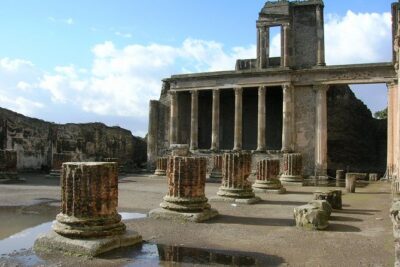
One of the tour’s most memorable elements is Partem Domus lignea – Casa del Tramezzo di Legno, where preserved wooden doors and beams can still be seen. This stop runs about 10 minutes.
Wood preservation is rare enough that it makes this section feel almost impossible when you first hear about it. In practical terms, the preserved wood changes how you imagine the place. You’re not only seeing stone foundations and outlines—you’re seeing wood elements that would have shaped doorways and interior spaces.
If your brain tends to picture the past as just “ruins,” this is a strong correction. It nudges you toward a lived-in image: thresholds, structural support, and the way rooms might have felt as you moved through them.
Pace, group size, and what to expect from the walk
This is a walking tour inside the archaeological site with a small group size: a maximum of 20 people. Short stops (often around 5 to 10 minutes) mean you’ll see a lot of points, but you won’t get long sittings.
It’s built for moderate physical fitness, and it’s said to operate in all weather conditions, so you should dress accordingly. If it’s rainy or damp, plan for slick surfaces and bring layers you can handle. The tour doesn’t pause because you’d rather take a slow scenic break.
Also, the experience is priced and structured as an express option. That makes it ideal for first-timers who want a clear path through the highlights, and for repeat visitors who want a guided refresh without spending hours wandering.
Price and value: what you actually get for $48.16
At about $48.16 per person for an approximately 2-hour tour, this is priced as a guided, entry-included experience rather than a budget walking free-for-all.
Your money is going toward three things you’d otherwise have to manage:
- The Herculaneum entrance ticket (included)
- A licensed expert tour guide
- A guided route through the site, so you’re not trying to make sense of the layout alone
For many people, the “value” isn’t the math—it’s the time saved and the mental clarity. When you have a guide, you stop guessing what you’re looking at. You also get fewer dead ends and less backtracking, which matters a lot at a site where preservation draws you into details.
If you’re on a tight schedule in Naples, this format makes sense. It’s less about collecting every single stop and more about leaving with a solid understanding of what makes Herculaneum different.
The language factor: English works, but group changes can happen
The tour is offered in English, and the info also suggests it can be bilingual. That’s usually helpful, but it also means your exact language experience can depend on group size and how the operator groups people.
One point worth keeping in mind: if you need a specific language at all times, don’t assume it’s guaranteed in every scenario. The guide is key to making the tour feel smooth, so verify what language your booking is actually set to before you go.
On the bright side, English guidance still makes the tour practical—especially for stops where objects and architecture need interpretation. One guide name you may hear in good feedback is Mr Raphael, praised for keeping explanations clear and helpful.
Who should book this Herculaneum walking tour
This tour is a strong fit if you:
- want an express way to see Herculaneum’s most important highlights
- like guided stops with short explanations rather than long self-guided wandering
- want a mix of elite houses, daily-life spaces, and a museum/object stop
- value included admission and a route that’s easy to follow
You might choose a different format if you:
- prefer very slow museum-style pacing
- need long time at mosaics or interiors to fully take in details
- have zero flexibility with language and want it to be strictly one language
Should you book this tour?
If your goal is to get a clear, well-structured view of Herculaneum without spending half a day lost in logistics, I think this is a good booking. The combo of included entry, a licensed guide, and an efficient set of stops—from the Roman boat to baths, patrician villas, mosaics, and preserved wood—makes it hard to feel like you wasted time.
Just be honest about your pace. If you like to linger, bring your own strategy: take notes or phone photos fast, listen closely, then plan a slower return later if you want more.
FAQ
How long is the Walking Tour of Herculaneum?
It runs for about 2 hours.
What is the meeting point?
You meet at the Herculaneum Ticket Office (80056 Ercolano, Metropolitan City of Naples, Italy).
Is admission to Herculaneum included?
Yes. The entrance ticket of Herculaneum is included.
What language is the tour offered in?
It is offered in English.
What does the tour include?
It includes the Herculaneum entrance ticket, an expert licensed tour guide, and a walking tour inside the archaeological site.
Is there transportation included from Naples?
No. Transportation to/from Naples is not included.
Does the tour run in bad weather?
It operates in all weather conditions, and you should dress appropriately.
What is the cancellation policy?
You can cancel for a full refund up to 24 hours before the experience starts, and cancellation is free.
If you’d like, tell me your travel dates and whether you’re doing Pompeii too—I can help you decide whether this 2-hour plan fits your schedule.