REVIEW · NAPLES
Herculaneum Private Guided Tour Led by a Local Top-rated Guide – All inclusive
Book on Viator →Operated by Raphael Tours & Events · Bookable on Viator
Ash-buried streets make Roman life click.
This private guided tour of Herculaneum is a smart pick because it’s built around what you can actually see: preserved mosaics in seafront villas and the “frozen” feel of a city sealed by Vesuvius in AD 79. I also love how the guide turns ruins into stories you can picture, from the thermal baths and forum to the big public spaces. One drawback to plan for: there’s no hotel pickup, so you’ll handle getting to Ercolano Scavi on your own.
You get a skip-the-line start, then a focused 2.5-hour walk (morning or afternoon) with a local specialist guide. If you care about art details—symbols, household scenes, and floor designs—this kind of small, private format helps you ask questions without losing the group. And if you’re traveling with teens, it’s one of those sites where classical studies stop feeling like homework.
In This Review
- Key things you’ll notice on this Herculaneum tour
- Herculaneum is quieter, clearer, and easier to understand
- Meeting at Ercolano Scavi and getting in without stress
- The 2.5-hour route: what happens from start to finish
- Inside the city: amphitheater, main streets, and civic space
- Amphitheater: more than a big ruin
- Decumanus: the street that helps you read everything else
- Palestra and public life
- Thermal Baths, Forum, and Basilica: the center of everyday Roman routine
- Thermal Baths and the gymnasium feel
- Forum: politics, commerce, and community
- Basilica: the official rhythm of the city
- The seafront villas: mosaics you can actually interpret
- House of Neptune and Amphitrite
- House of the Mosaic Atrium
- House of the Deer
- The “AD 79” story explained through what’s preserved
- How the guide can make or break the day (names to look for)
- Price and value: what you’re paying for (and when it’s worth it)
- Who this private Herculaneum tour is best for
- Practical tips before you go
- Should you book this Herculaneum private guided tour?
- FAQ
- What is the duration of the Herculaneum private guided tour?
- Where does the tour start?
- Is the tour private?
- What time options are available?
- Is admission included?
- Do I get skip-the-line entry?
- What language is the tour offered in?
- Is hotel pickup included?
- What should I bring or have with me on the day?
- Can children join, and do they need an adult?
- Is free cancellation available?
Key things you’ll notice on this Herculaneum tour
- Skip-the-line entry so you spend time looking, not waiting
- Private walking pace with just your group
- Art-and-archaeology storytelling, including mosaic interpretation
- Roman daily-life stops like the Forum, Thermal Baths, and Basilica
- Seafront villa highlights including House of Neptune and Amphitrite and the Mosaic Atrium
- Meaningful “Vesuvius moment” context tied to what’s preserved in place
Herculaneum is quieter, clearer, and easier to understand
Herculaneum is one of those rare places where you don’t need a big imagination kit. The city is preserved in a way that makes it easier to visualize how people moved through daily life—work, markets, bathing, and social space—than you might expect from a ruin.
What makes this tour especially satisfying is the focus on the most readable parts of the site. You’re not just “walking around old walls.” You’ll be guided through a route that connects street layout, public buildings, and private homes, then lands you in the areas famous for color and craftsmanship. And because it’s private, your guide can slow down when you want to look longer at details like mosaic patterns or symbolism.
One big advantage here: Herculaneum spans a long timeline, reaching back as early as the 7th century BC, and then collapsing into a single dramatic event in AD 79. Your guide helps you keep those layers straight, so the site doesn’t feel like a random collection of stone.
You can also read our reviews of more guided tours in Naples

Meeting at Ercolano Scavi and getting in without stress
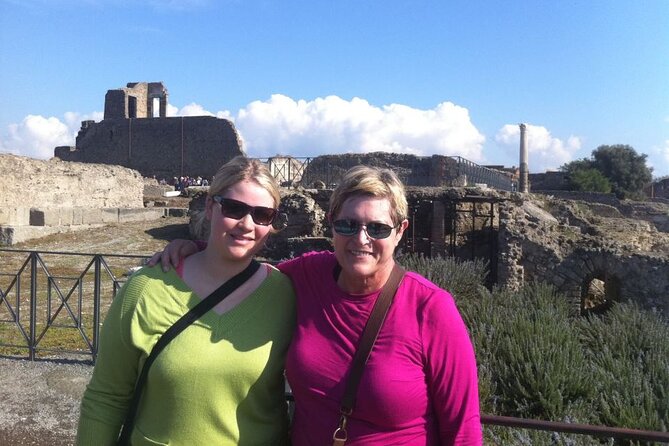
Your tour meets at Parco Acheologico di Ercolano (Ercolano Scavi), 80056 Ercolano. Plan to arrive a bit early so you can find your guide and settle in before the walk begins.
The schedule runs with an 8:30am or 12:30pm departure option, depending on which you choose. You’ll head to the ticket office area yourself, then use skip-the-line entry to move straight into the archaeological site.
Two practical notes that matter more than you’d think:
- There’s no hotel pickup, so confirm your plan for getting to Ercolano Scavi from Naples. This is normal for sites outside the city center, but it’s still on you.
- Comfortable shoes matter. The tour is a walking route through uneven archaeological areas, and the fitness level is described as moderate.
If you’re traveling with a phone, have your mobile ready. You’ll be asked for your mobile number with your country code for emergencies.
The 2.5-hour route: what happens from start to finish
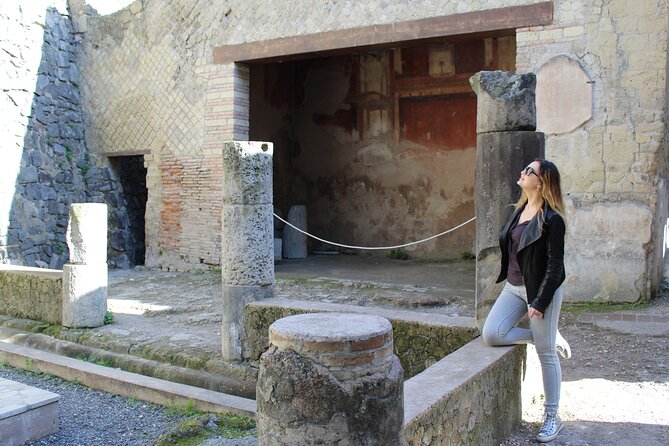
This is a private walking tour, so the group size is limited to you and your party. The rhythm is straightforward: enter the site quickly, then follow your guide from major urban features to home interiors and artwork highlights.
The core experience unfolds like this:
- You start at the archaeological area entrance and get inside with skip-the-line tickets.
- You walk through key urban zones, learning how Herculaneum functioned as a Roman city.
- You stop for the most visually striking preserved elements—especially mosaics and the kinds of artifacts that survived the eruption conditions.
- After about two and a half hours, you return to the starting point.
Because it’s structured, you won’t lose time trying to figure out where to go next. And because it’s private, you can spend extra minutes where your curiosity pulls you—like floor decoration or public architecture—without feeling rushed.
Inside the city: amphitheater, main streets, and civic space
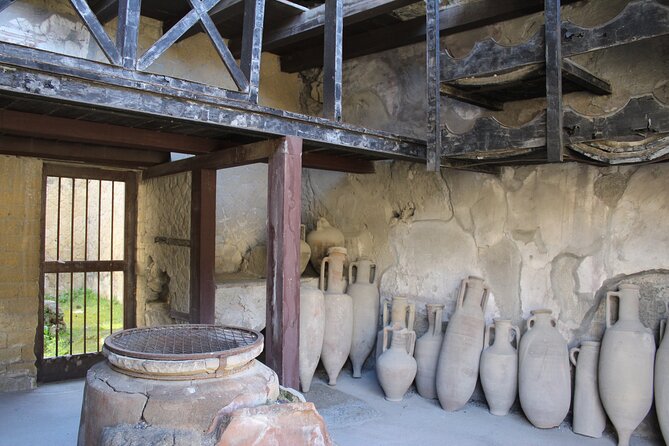
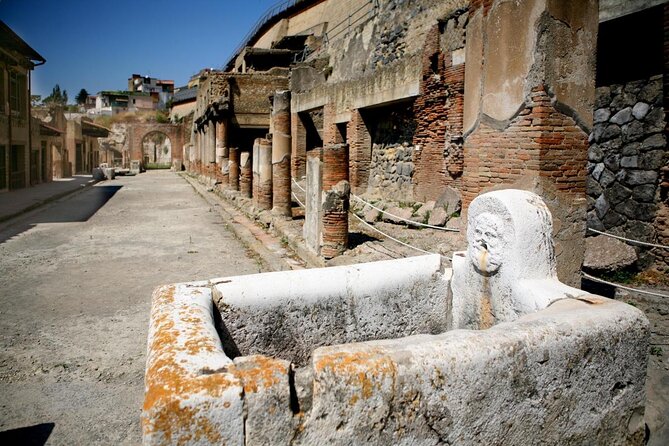
Early on, your guide steers you through the layout and public heart of Herculaneum. You’ll see the amphitheater, the main thoroughfares such as the Decumanus, and civic and leisure-related spaces like the Palestra (linked with training and exercise).
This part works well because it answers a basic question you might have at the start: What did people actually do here, and how did the city organize daily movement?
Amphitheater: more than a big ruin
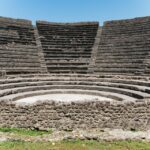
The amphitheater is one of those structures that makes the whole place feel alive. Even when you’re staring at stone seats and walls, your guide can point out how it likely functioned as a public gathering point—so it stops being just “ancient seating.”
You can also read our reviews of more private tours in Naples




Decumanus: the street that helps you read everything else
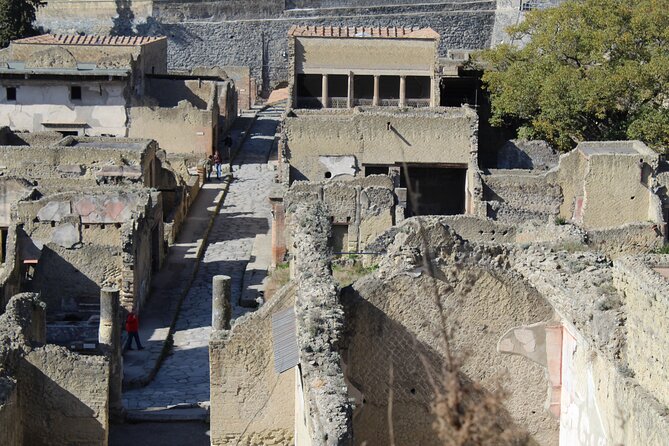
Seeing the Decumanus is useful because streets are like the site’s map. When you understand the main route, the rest of the ruins click into place faster. You’ll be walking with an internal sense of direction rather than drifting.
Palestra and public life
The Palestra and nearby training-related areas help you connect the city to Roman routines. It’s also a nice contrast to the household spaces later, because you can compare how public and private life differed.
A small consideration: because this is a walking route with multiple stops, it helps if you can comfortably move at a steady pace for the full duration.
Thermal Baths, Forum, and Basilica: the center of everyday Roman routine
One of my favorite ways to learn a city’s “real life” is to focus on its shared spaces. Here, that means the Thermal Baths, the Forum, and the Basilica.
You’ll hear stories tied to how Roman life worked—who used what space, why certain buildings mattered, and what the architecture suggests about daily habits. This is where the guide’s background really matters, because baths and civic centers aren’t just impressive; they’re functional.
Thermal Baths and the gymnasium feel
The thermal baths connect you to one of the most iconic Roman behaviors: socializing and relaxing in public bathing spaces. Your guide also points out related areas like the gymnasium, so the experience isn’t only about hot water history—it’s about routine, status, and how people spent their time.
Forum: politics, commerce, and community
In the Forum, the goal is understanding the city as a lived-in machine. Even if you don’t read Latin inscriptions, you can still grasp the vibe: this is where people gathered for work, decisions, and social life.
Basilica: the official rhythm of the city
The Basilica adds the civic layer. It’s the kind of building that makes a Roman city feel official—like the setting for arguments, transactions, and community order.
If you want a reason this tour beats wandering on your own, it’s this section. Your guide helps you connect form to function, so you’re not just admiring stone—you’re learning how a Roman city operated.
The seafront villas: mosaics you can actually interpret
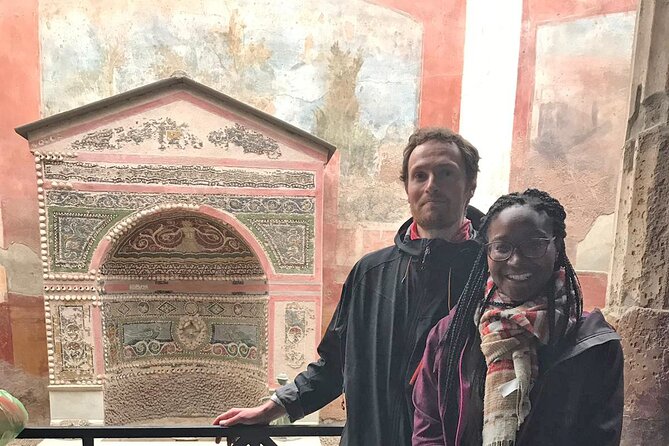
Later in the walk, you shift from public buildings to the private, decorative side of Herculaneum. The tour highlights grand seafront villas, including the House of Neptune and Amphitrite and the House of the Mosaic Atrium. You may also see other notable homes, such as the House of the Deer.
This is where the preserved detail can feel almost too intact. Color in mosaics and the layout of room space help you imagine the house as a lived environment, not a museum display.
House of Neptune and Amphitrite
This stop matters because the name alone signals a theme: myth and sea symbolism. Your guide can connect the imagery and layout so you’re not just looking at a pretty floor—you’re learning what kind of messages wealthy households wanted to broadcast.
House of the Mosaic Atrium
The Mosaic Atrium is a highlight because it lets you focus on craftsmanship. Mosaics aren’t just decoration. They’re visual statements about taste, identity, and sometimes even status.
One fun detail I like to watch for is how a guide points out specific iconography. In this tour’s experience, guides like Italo have been known to spotlight small symbolic touches—like angel symbols—that most people would overlook without direction.
House of the Deer
This add-on helps you see variety in household art and theme. Even if two villas share similar structure elements, the décor choices can feel distinct. A good guide will help you notice those differences without drowning you in technical terms.
The “AD 79” story explained through what’s preserved
Herculaneum’s reputation comes from what happened when Mt. Vesuvius erupted in AD 79. The ash burial preserved the site in a way that makes the experience feel different from Pompeii-style ruins.
Your guide ties the big event to what you see on the ground: the way the city was buried and what survived in place. You’ll hear about the preservation of structures and the survival of material elements such as colorful mosaics and even carbonized furniture.
This matters because it changes your interpretation while you walk. You start paying attention to context. Why a room looks the way it does. Why certain household items remain recognizable. Why the layout feels so “specific,” as if the city was paused rather than erased.
If you’re the type who likes meaning more than just visuals, this is one of the best parts.
How the guide can make or break the day (names to look for)
This tour isn’t just “a guide holding a map.” It’s built around a high-level local specialist, sometimes with an art-historian focus in the mix. That shows up in how they explain symbolism, architecture, and daily life.
In the experiences I’m most drawn to, the guide doesn’t talk at you. They guide your eye. That’s been the case with several standout guides reported for this tour:
- Italo, who is praised for pointing out details that aren’t obvious, including symbolism like angel imagery.
- Anna, described as excellent for connecting site history and answering questions clearly.
- Lelo, noted for being helpful, friendly, and even funny—useful if you’re traveling with teens who need energy.
- Loretta, recognized for enthusiasm and turning the site into something you can picture.
- Roberta, highlighted as a brilliant guide when people felt the extra cost was worth it for the depth and passion.
Even if you don’t get the same guide, that pattern is a good sign: you’re paying for interpretation, not just access.
Price and value: what you’re paying for (and when it’s worth it)
At $207.11 per person for an approx. 2-hour experience (listed duration) with a walking route that runs closer to about two and a half hours in practice, this isn’t a budget option. But it can be good value if you’re choosing the right kind of trip.
Here’s how I judge value for a tour like this:
- You’re paying for private time with a guide, not a large group shuffle.
- You get skip-the-line entry tied to admission that’s included.
- The guide mix includes local expertise and professional-level interpretation (including an art-historian guide element).
- You’re saving the effort of figuring out the best route through a complex archaeological site.
So if your priorities are mosaics, architecture, and explanations you can ask questions about, the price makes more sense. If you just want a quick self-guided scan, you might feel the cost more than you’d like.
One other note: this is booked fairly far in advance on average, so if you’re traveling in peak season, plan ahead.
Who this private Herculaneum tour is best for
This works especially well if you:
- Want a private, guided walk rather than a crowded group tour
- Care about art details like mosaics and symbolism
- Enjoy Roman history stories that connect public buildings to daily life
- Are traveling with older kids or teens who learn better with conversation and concrete examples
It’s less ideal if you:
- Need hotel pickup or fully worry-free transportation plans
- Prefer a very slow pace with lots of sitting breaks (the tour assumes moderate walking ability)
Practical tips before you go
A few things will help your day run smoother:
- Wear comfortable shoes. The terrain is part of the archaeological experience.
- Bring a valid passport on the day of travel.
- Have your mobile number ready with your country code for emergency contact.
- Plan to meet at Ercolano Scavi and arrive early enough to link up with your guide.
Should you book this Herculaneum private guided tour?
If you want Herculaneum to make sense—streets, baths, civic spaces, and household art—this is a strong booking. The skip-the-line entry, the private format, and the interpretive focus on mosaics and Roman life are what justify the cost.
I’d book it if you love seeing how people lived, and you like learning from guides who point out specific details (the kind of attention that gets you angel symbolism or other small-but-important elements). If you’re on a tight schedule, or you hate navigating to meeting points without pickup, then treat the logistics as the trade-off.
In short: for most people who can handle a moderate walk and want real guidance, this tour is the version of Herculaneum that feels most rewarding.
FAQ
What is the duration of the Herculaneum private guided tour?
The tour is listed as approximately 2 hours, and it covers about two and a half hours of exploring at the site.
Where does the tour start?
It starts at Ercolano Scavi (80056 Ercolano, Metropolitan City of Naples, Italy).
Is the tour private?
Yes. It’s a private tour/activity with only your group participating.
What time options are available?
Departures are offered in the morning or afternoon, with meeting tied to 8:30am or 12:30pm.
Is admission included?
Yes. Admission to the archaeological site is included, and you’ll have skip-the-line access.
Do I get skip-the-line entry?
Yes. You’re guaranteed to skip the long lines.
What language is the tour offered in?
The tour is offered in English.
Is hotel pickup included?
No. Hotel pickup and drop-off are not included.
What should I bring or have with me on the day?
A current valid passport is required on the day of travel.
Can children join, and do they need an adult?
Children must be accompanied by an adult.
Is free cancellation available?
Yes. You can cancel up to 24 hours in advance for a full refund.