REVIEW · NAPLES
Herculaneum Private Tour with an Archaeologist
Book on Viator →Operated by ELIANA SANDRETTI · Bookable on Viator
Herculaneum hits you in the gut. This private tour with an archaeologist turns the ruins into a real story of daily life and the 79 AD eruption, guided in English with the meeting point at the Parco Archeologico di Ercolano ticket area. I love that the guide work is hands-on, with names like Eliana Sandretti (you’ll spot the sign), plus other top guides such as Roberto and Amedeo showing how much context you can get in a short visit.
One possible drawback: the entrance tickets are not included, so you’ll still want to budget for admission before you go.
What I like most is the pace and focus. In about two hours, you move house to house, seeing specific details tied to the disaster—like charred wooden partitions, frescoes, and even skeletal remains—so the site stops feeling like random rooms. I also appreciate that this setup is built for groups up to 10, which makes it easier to keep things organized without feeling rushed the whole time, though it can still involve some walking and steps.
In This Review
- Key Things I’d Circle Before Booking
- Herculaneum in About Two Hours: The Best Way to Make It Make Sense
- Price and Value: How $349.98 Per Group Really Plays Out
- Meeting at the Parco Acheologico di Ercolano: Where the Tour Starts
- Stop-by-Stop at Herculaneum: What Each Place Teaches You
- Stop 1: Parco Acheologico di Ercolano
- Stop 2: La Terrazza di M. Nonio Balbo
- Stop 3: Casa dei Cervi
- Stop 4: Partem Domus lignea (Casa del Tramezzo di Legno)
- Stop 5: Casa del Salone Nero
- Stop 6: Salone della Barca di Ercolano
- Stop 7: College of the Augustales
- Stop 8: House of the Skeleton
- Stop 9: Casa Sannitica
- Stop 10: Casa di Nettuno e Anfitrite
- Why the Guide Matters More Than You Think
- What to Bring (and What to Plan For) at Herculaneum
- Who This Tour Is Perfect For
- Should You Book This Herculaneum Private Archaeologist Tour?
- FAQ
- How long is the Herculaneum private tour with an archaeologist?
- Is this tour private?
- What language is the tour offered in?
- Are the entrance tickets to Herculaneum included?
- Where do we meet for the tour?
- Can I cancel, and what happens if the weather is bad?
Key Things I’d Circle Before Booking
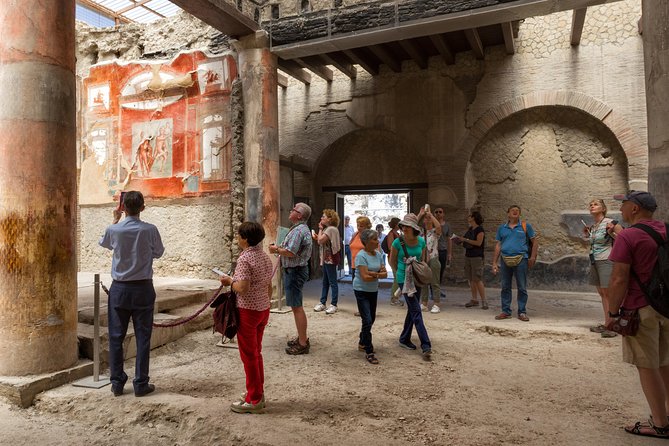
- Private English archaeologist guiding you through the key sights
- Stop-by-stop focus on preserved wood, frescoes, and eruption evidence
- Skeleton and terrace moments that explain what people faced during the catastrophe
- Famous named domus such as Casa del Salone Nero and Casa dei Cervi
- Up to 10 people in your group, so the pace can suit you
- Mobile ticket included, while entry fees are extra
Herculaneum in About Two Hours: The Best Way to Make It Make Sense
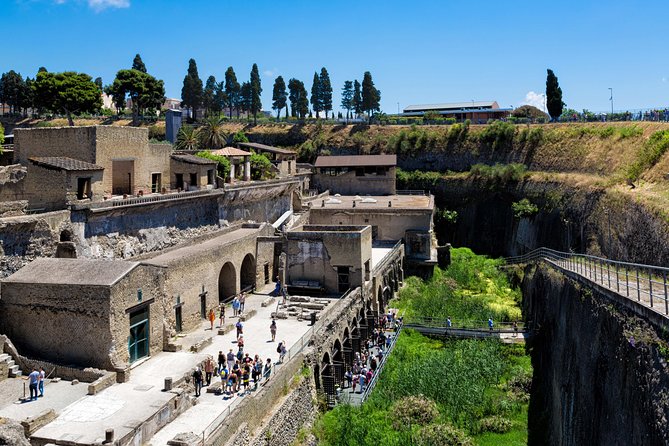
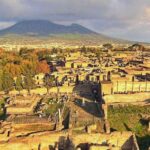
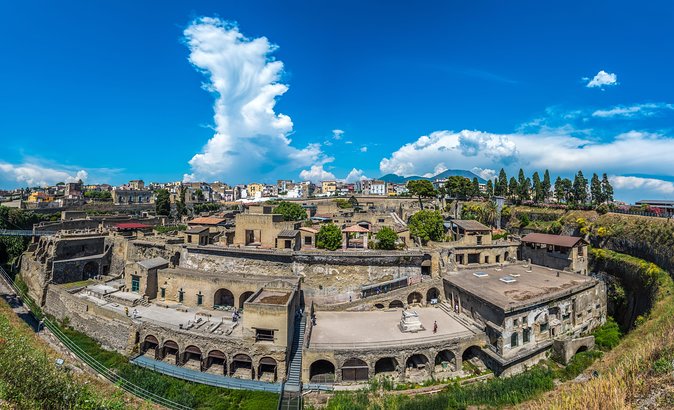
Herculaneum is smaller than Pompeii, but it can feel more intense. Here, the tragedy is close-up: rooms, objects, and even human remains help you understand the lives behind the ruins.
This is exactly why I’d pick a private archaeologist for your first visit. You get a tight route and a guide who can point out what matters, why it matters, and how the town’s layout and artwork fit together. With names like Eliana Sandretti, you’re not just listening to facts—you’re learning how archaeologists read evidence.
You should also know the tour is designed for an efficient visit window: about 2 hours. That’s great if you want the essentials without spending a whole day on your feet, but it’s also a reminder not to expect long lingering stops.
You can also read our reviews of more private tours in Naples


Price and Value: How $349.98 Per Group Really Plays Out
The price is $349.98 per group for up to 10 people. That matters because your cost per person drops fast as your group fills up—especially compared with paying for separate guides.
On top of that, the private tour doesn’t include admission to the archaeological park. The entrance fee is €15 per adult, with free tickets for under 18s. Think of it this way: you’re paying for expert interpretation and a structured route, while the park entry is the separate “get in the door” cost.
If you’re traveling with family or friends, this price structure can be a strong deal. If you’re traveling solo or as a couple, it can still be worth it if you value a real back-and-forth with an archaeologist instead of relying on signage.
Meeting at the Parco Acheologico di Ercolano: Where the Tour Starts
The tour starts at the Archaeological Park of Herculaneum, at Corso Resina, 187, 80056 Ercolano NA, Italy. You meet at the ticket office area, and if you didn’t buy your tickets ahead, you can buy entrance tickets there.
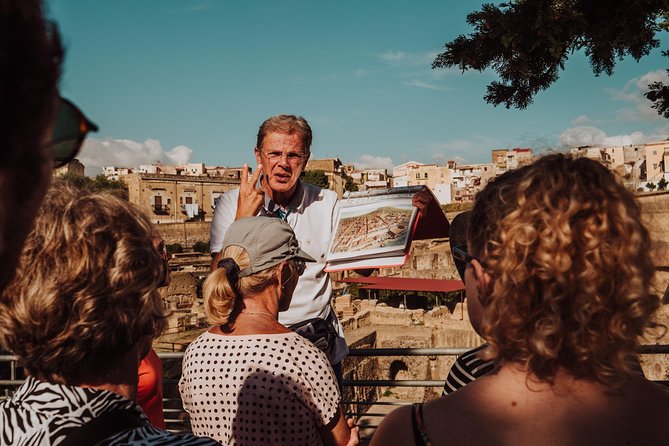
Your guide will be waiting with a sign to help you spot them—Eliana Sandretti is explicitly named for recognition. The tour ends back where it started, so you don’t have to worry about a second transit plan at the end.
You’ll be in a walking-focused route, near public transportation. It’s also set up so most travelers can participate, and service animals are allowed.
Stop-by-Stop at Herculaneum: What Each Place Teaches You
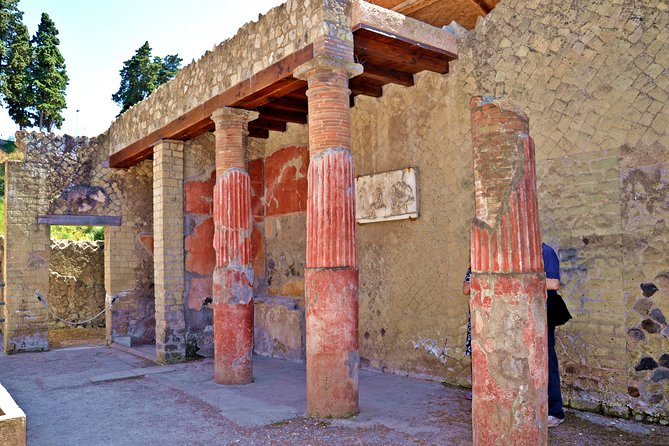
You’ll cover a curated set of domus and key rooms. Each stop is short, so the guide can keep momentum while still explaining why the detail you’re seeing is important.
Stop 1: Parco Acheologico di Ercolano
You begin at the main archaeological area ticket office, where the entrance ticket lets you access the attractions and houses covered by the tour. This opening matters because Herculaneum can feel confusing without an interpretive map—your guide sets the story line so every later room clicks.
If you’re coming in cold (no prior reading), this is where you’ll get your bearings fast: what you’re looking at, how Herculaneum was preserved, and why the eruption left such specific traces.

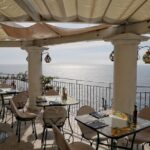


Stop 2: La Terrazza di M. Nonio Balbo
Next is the terrace viewpoint tied to the people who died during the eruption. This is one of the most sobering parts, because you’re not just seeing remains—you’re asked to imagine what the panorama looked like before the big explosion of Vesuvius.
The tour gives you about 5 minutes here. It’s short on purpose. You’ll want a moment to look out before you move on, so take a second to slow down even if you feel tempted to keep walking.
Stop 3: Casa dei Cervi
At Casa dei Cervi, the highlight is a luxury house with a terrace overlooking the sea. In a town where so much is about what survived underground, it’s powerful to see how people lived above ground—especially with that outward-facing view.
This stop is about 15 minutes, long enough for the guide to connect everyday wealth and taste to what you’re seeing in the house layout and surroundings.
Stop 4: Partem Domus lignea (Casa del Tramezzo di Legno)
Here you focus on preserved architecture—specifically a wooden partition that was charred due to the eruption of Vesuvius. This is one of the places where Herculaneum feels like a time capsule, because the material evidence is so direct.
You’ll get around 15 minutes. I’d pay attention to how the guide explains what makes this kind of survival possible, because it changes how you look at every other preserved element in the town.
Stop 5: Casa del Salone Nero
Then comes Casa del Salone Nero, named for the black-painted salon. This is where the experience shifts from “what burned?” to “how people decorated and thought.”
This stop is also about 15 minutes, and it’s a good one if you care about art. The black room isn’t just a cool nickname—it’s a clue to style, status, and how visual design worked inside Roman domestic life.
Stop 6: Salone della Barca di Ercolano
At Salone della Barca di Ercolano, you see a charred boat connected to the eruption, including mention of its recent discovery. Even if boats don’t sound like your thing, this stop lands because it turns an object into a human detail: transport, trade, and daily practicality.
You’ll spend about 15 minutes. It’s a great counterbalance to the more emotional moments, because it shows the breadth of what the eruption interrupted.
Stop 7: College of the Augustales
The College of the Augustales preserves frescoes showing Hercules entering Olympus. This is a strong art stop, and it also connects religion, mythology, and local identity in one room.
You’ll also see references to the skeleton of the keeper who died during the eruption. This mix of myth imagery and real loss is exactly what makes the site so hard to forget. Expect about 15 minutes.
Stop 8: House of the Skeleton
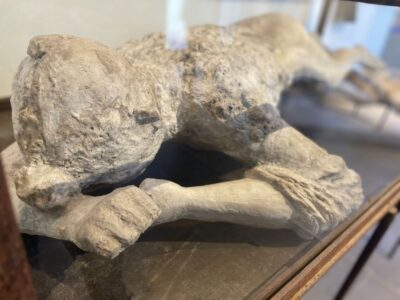
The House of the Skeleton is named for a discovery of an inhabitant who was unable to save himself. There’s no way to turn that into something comfortable. The guide’s job here is to keep it respectful and to explain what the find means.
This stop is about 10 minutes. Short, direct, and not a place to rush past—just don’t expect a long pause.
Stop 9: Casa Sannitica
At Casa Sannitica, you see one of the oldest houses in Herculaneum. This stop is useful if you want more than just the eruption story; it helps you understand how deep the town’s timeline goes.
You get about 15 minutes. It works best when you listen for the guide’s comparisons—how earlier domestic design differs from later changes.
Stop 10: Casa di Nettuno e Anfitrite
The last major stop is Casa di Nettuno e Anfitrite, with scenographic compositions named for Neptune and Amphitrite. This is a finishing note that helps you leave with a sense of what Herculaneum looked like when it was alive—not just what it became after the ash.
It’s around 15 minutes, which is long enough to appreciate the visual storytelling without the tour dragging.
Why the Guide Matters More Than You Think
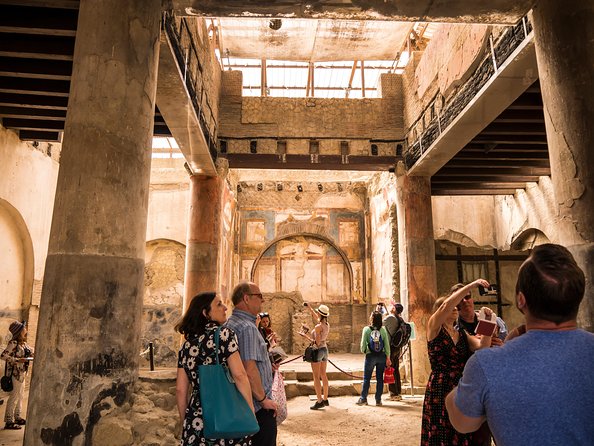
The recurring theme across strong guide experiences is simple: the site changes when someone teaches you how to read it. I’d especially value this tour if you like asking questions and getting explanations that connect objects, rooms, and the eruption.
Different guides are mentioned with different styles, but the goal stays the same. People highlight guides such as Roberto, Amedeo, Pina, Mattia, Francesco, Maria, Pia, and of course Eliana Sandretti as able to keep pace while also handling questions.
One practical takeaway: you’re on a schedule, but the guides seem to adapt—speed up when you’re ready, slow down for details, and accommodate needs when possible. For example, one guide experience notes support for a mobility scooter, and another points out managing the pace even with stairs in mind.
What to Bring (and What to Plan For) at Herculaneum
Food and drinks aren’t included, so bring what you need for your own comfort. You’ll want water, especially in warm weather, because the route covers multiple houses within a compact time frame.
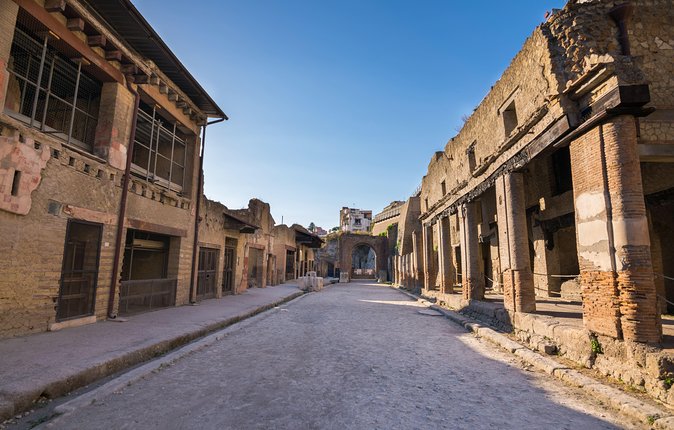
Wear shoes you trust. Even without exact elevation details, you should assume uneven surfaces and steps are part of a preserved archaeological park experience. If stairs are an issue, tell your group and your guide early so they can help you move smartly.
Also plan around weather. The experience requires good weather, and if it’s canceled for poor weather, you’re offered a different date or a full refund. That’s not something to ignore if you’re juggling a packed Naples itinerary.
Who This Tour Is Perfect For
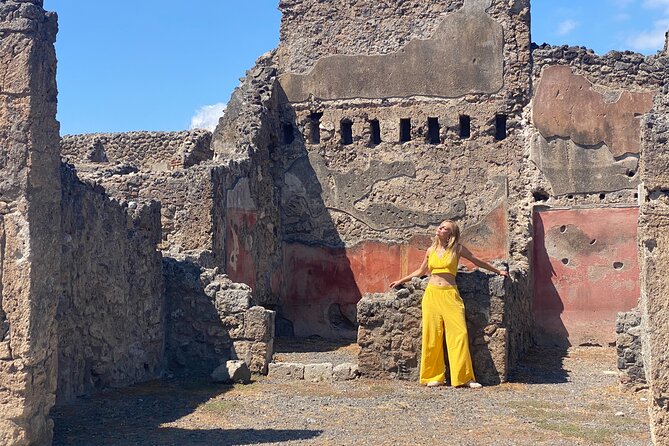
This is a solid choice if you want the best “signal-to-time” ratio. In about two hours, you get a guided route through major domus, plus the key eruption-related stops—terrace, charred objects, and the human evidence that makes the tragedy real.
I’d also recommend it if you’re deciding between Herculaneum and Pompeii. Herculaneum often feels more intimate because it’s smaller and more compact, and the preserved details can feel closer to daily life.
It’s private, limited to your group (up to 10), so it suits:
- couples who want a sharper explanation than audio-only visits
- families who prefer a guided pace
- history and art lovers who care about frescoes, rooms, and domestic design
Should You Book This Herculaneum Private Archaeologist Tour?
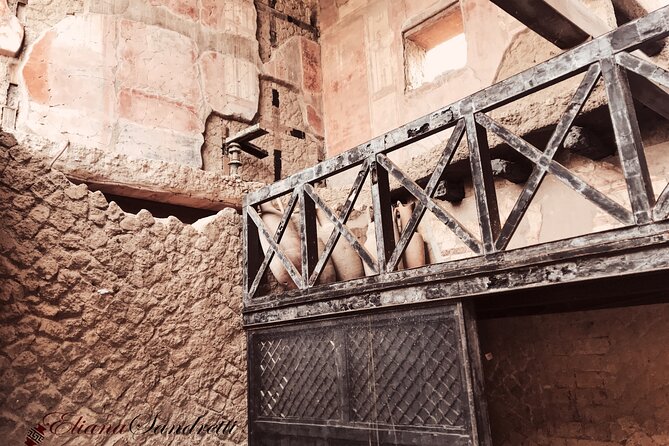
If you can swing the admission cost and you want a guided, English-speaking archaeologist experience, I think it’s an easy yes. The route hits the big emotional and art moments—terrace viewpoint, preserved wooden evidence, frescoes like Hercules entering Olympus, and standout rooms like Casa del Salone Nero—without turning your visit into a marathon.
Book it especially if you care about context. Without a guide, you can see things at Herculaneum, but it’s the interpretation that helps you understand why a charred partition, a black-painted room, or a skeleton discovery matters.
Only reconsider if:
- you’re hoping admission is included in the price
- you want a long, free-form wander with lots of unscheduled time
FAQ
How long is the Herculaneum private tour with an archaeologist?
It runs for approximately 2 hours.
Is this tour private?
Yes. It’s a private tour/activity, and only your group participates.
What language is the tour offered in?
The tour is offered in English.
Are the entrance tickets to Herculaneum included?
No. Admission fee for the private tour is separate from the entrance tickets to Herculaneum. The entrance ticket cost is €15 for adults, and tickets are free for under 18 years old.
Where do we meet for the tour?
You meet at the Archaeological Park of Herculaneum, Corso Resina, 187, 80056 Ercolano NA, Italy. The tour ends back at the meeting point.
Can I cancel, and what happens if the weather is bad?
Free cancellation is available. You can cancel up to 24 hours in advance for a full refund, and if the experience is canceled due to poor weather, you’ll be offered a different date or a full refund.