REVIEW · NAPLES
Pompeii and Vesuvius Full Day Private Shore Excursion
Book on Viator →Operated by Askos Tours · Bookable on Viator
Pompeii plus Vesuvius is a lot, in a good way. This private shore excursion combines skip-the-line Pompeii entry with a licensed guide in the ruins, then finishes with a crater view over the Bay of Naples. One real consideration: the Vesuvius climb has a steep, slippery final section, so you’ll want solid shoes and a comfortable walking pace.
I like that the day is built around less stress. You get door-to-door pickup and drop-off in the Naples, Sorrento, and Salerno area, and the driving is handled by a professional. In the right conditions, you can turn a 7-hour day into two major sites without feeling like you’re sprinting.
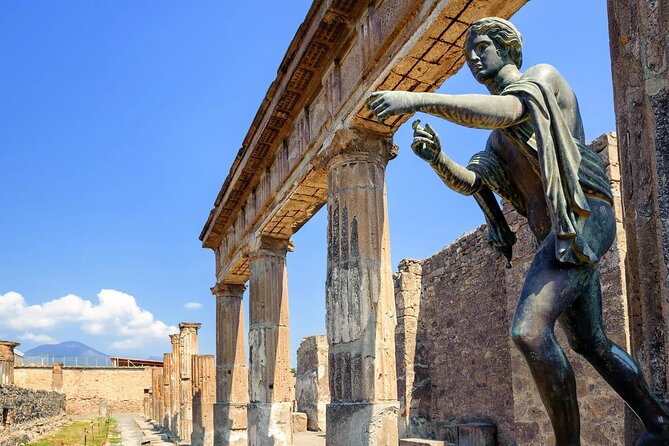
The best part is how the ruins start to make sense fast. With an archaeologist guiding you through key spots like Porta Marina, the Forum, and Teatro Grande, you’re not just looking at walls—you’re getting a clear map of daily life before the eruption.
Skip-the-line Pompeii entry with admission taken care of up front
Two hours guided Pompeii by a licensed archaeologist guide, not just a walk-along
Private minivan pickup and drop-off across Naples, Sorrento, and the Amalfi/Sorrento zone
Vesuvius crater access plus big-bay panoramas (crater still smoking slightly)
Steep final walk on Vesuvius means plan for footwear and comfort
Lunch is optional on the slopes, so you control cost and timing
In This Review
- From Naples pickup to Porta Marina: how the day really starts
- Pompeii guided by an archaeologist: what you’ll actually get from the tour
- Pompeii stop-by-stop: the key sights and what to watch for
- The Basilica: the covered space that shows street life
- Casa del Menandro: what wealth looked like
- The main street walk: your quick way to get the layout
- Foro de Pompeya (the Forum): the center of civic life
- Granai del Foro: everyday objects, plus chilling casts
- Lupanar: the brothel and how Romans labeled space
- Casa del Fauno: scale and private power
- Stabian Baths (Terme Stabiane): the oldest thermal complex
- Teatro Piccolo and Teatro Grande: performances and people-watching
- Lunch timing near Vesuvius: how to avoid a hungry squeeze
- Vesuvius crater views: the steep part, the smoking crater, and the payoff
- Price and logistics: is $568.94 per person good value?
- Who should book this private Pompeii and Vesuvius shore excursion?
- Should you book it?
- FAQ
- What is included in the tour price?
- Is lunch included?
- How difficult is the Vesuvius walk?
- Where does pickup happen?
- Is this a private tour?
- Can I cancel for free?
From Naples pickup to Porta Marina: how the day really starts
This is one of those tours where the “start time” matters less than the handoff from your hotel to the ruins. You’ll be collected at your accommodation, airport, or central station in Naples, or around Sorrento/Salerno. Then you’re in a comfortable modern minivan with a professional driver, which matters because parking and getting out of city traffic is half the battle on the Amalfi side.
You’ll also use a mobile ticket, which helps keep things smooth once you arrive. The schedule is roughly a 7-hour day, with most of your “thinking time” happening in Pompeii and your “wow time” happening on Vesuvius.
If you’re traveling with kids, or you just want your day to feel organized, this approach is a big win. I also like that it’s private, so you can shape what you focus on with the guide rather than spending the day stuck behind random group decisions.
Pompeii guided by an archaeologist: what you’ll actually get from the tour
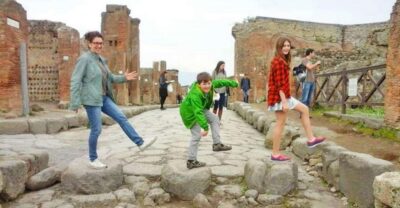
Pompeii works best when you understand what you’re looking at. This tour gives you a 2-hour guided visit led by a licensed guide, and that changes everything. You go beyond famous photos and start picking out what mattered to people: where merchants worked, how streets functioned, how homes were laid out, and what public spaces were used for.
In past experiences tied to these tours, guides such as Mareluce, Mena, Barbara, and Enzo have been praised for clear explanations and an energetic style that keeps people moving. And a standout detail from the overall vibe: one guide was specifically an archaeologist, which you can feel in the way the site is interpreted—like you’re being shown the logic of the city, not just reciting facts.
You also get Pompeii admission included, with skip-the-line access. That means less waiting, fewer schedule headaches, and more time where it counts.
One more practical note: you still walk Pompeii at ruin pace. It’s not a sit-and-watch museum. But the route is structured so you’re not wandering in circles trying to find the big sights.
You can also read our reviews of more private tours in Naples


Pompeii stop-by-stop: the key sights and what to watch for
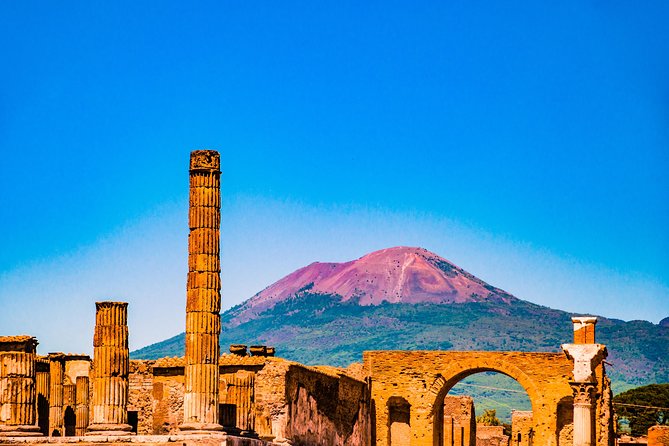
Your entry point is Porta Marina, which is a good way to start. It’s the main entrance, and once you’re in, you get pulled toward the city’s core areas rather than random back corners.
The Basilica: the covered space that shows street life
The Basilica is described as an open portico that offered shelter to merchants and other activities. When you stand there, you can picture how commerce and public life blended along the street network. It’s one of those spots where the guide’s context helps your brain “build the day” instead of treating it as an empty shell.
Casa del Menandro: what wealth looked like
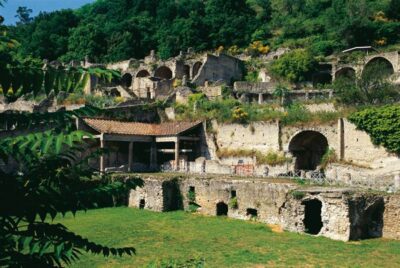
This house—one of the richest Pompeian residences—comes up early for a reason. It shows how architecture and decoration weren’t just luxury; they were identity. You’re seeing how the affluent lived and how a home displayed status.
The main street walk: your quick way to get the layout
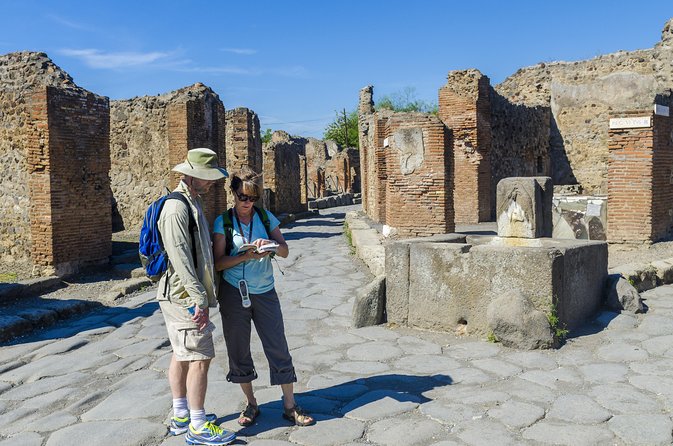
You’ll also walk through Pompeii’s main street. This is a smart move on a guided route because it helps you orient yourself. Streets are where the whole city’s rhythm makes sense: turns, junctions, sightlines, and how neighborhoods connect.
You can also read our reviews of more tours and experiences in Naples





Foro de Pompeya (the Forum): the center of civic life
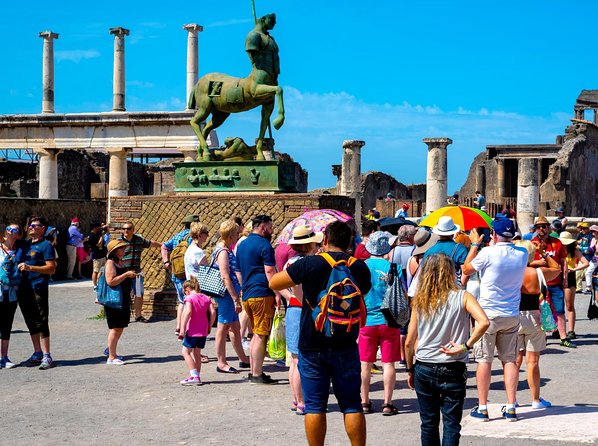
The Forum is the old main square, and it’s where you can feel the city’s public heartbeat. The guide’s job here is to connect the physical space to what would have happened there: gatherings, decisions, commerce, and civic identity.
Granai del Foro: everyday objects, plus chilling casts
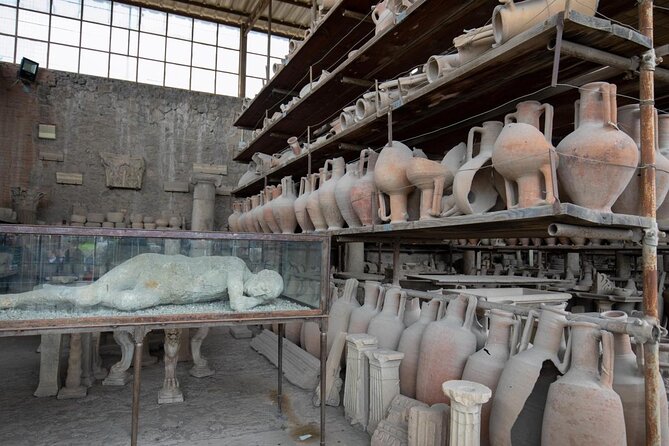
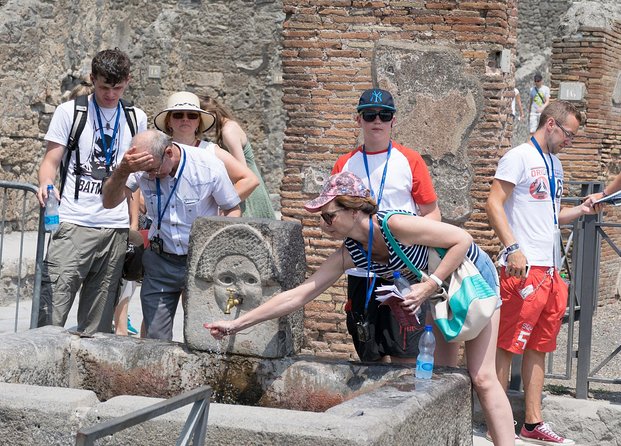
The Granaries are where you see marble tables and features tied to fountains near entrances of houses. You’ll also encounter casts of victims of the eruption, plus a cast of a dog and a tree. These aren’t “optional emotional moments”—they hit, and the guide’s framing can help you process what you’re seeing without feeling like you’re being dragged through shock.
Lupanar: the brothel and how Romans labeled space
The Lupanar is one of Pompeii’s most famous sites, and it’s included on this route. It’s easy to treat it like a scandal museum, but the more useful approach is to look at layout and how the rooms were arranged within the neighborhood. That’s where a guide helps you interpret the site as part of daily life, not just shock value.
Casa del Fauno: scale and private power
Casa del Fauno is one of the largest and most impressive private residences. Standing in or around major house layouts helps you understand how much space wealthy families controlled and how a home functioned beyond sleeping and eating.
Stabian Baths (Terme Stabiane): the oldest thermal complex
The Stabian Baths occupy a vast area and are noted as the oldest thermal complex in the city. Even if you don’t know Roman bath culture, the sheer size is the clue. With a guide, you’ll see it as a social hub: exercise, conversation, cleansing routines, and status.
Teatro Piccolo and Teatro Grande: performances and people-watching
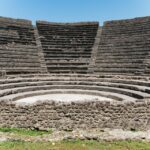
You’ll have a look at Teatro Piccolo, then move to Teatro Grande, Pompeii’s most important theater. These are great stops because they connect architecture to human behavior—where people went to gather and how crowds likely moved. If you’re the type who likes to imagine events, these theater spaces will help.
Pompeii is intense. The biggest quality of a good guide is pacing—knowing when to speed up your understanding and when to let the site land.
Lunch timing near Vesuvius: how to avoid a hungry squeeze
After Pompeii, you transfer toward Mount Vesuvius. There’s an optional lunch break in a typical restaurant on the slopes of the volcano or in Pompeii. Lunch is not included, so you’re choosing your own budget and timing.
This matters because the day ends with a climb. If you eat too late or too heavy, the uphill stretch can feel longer than it needs to. I’d treat lunch as a practical “fuel stop,” not a long sit-down meal.
Also note what the tour suggests by structure: Vesuvius time includes the crater visit, and the total Vesuvius section is about 2 hours. So if you plan to linger, keep it realistic.
Vesuvius crater views: the steep part, the smoking crater, and the payoff
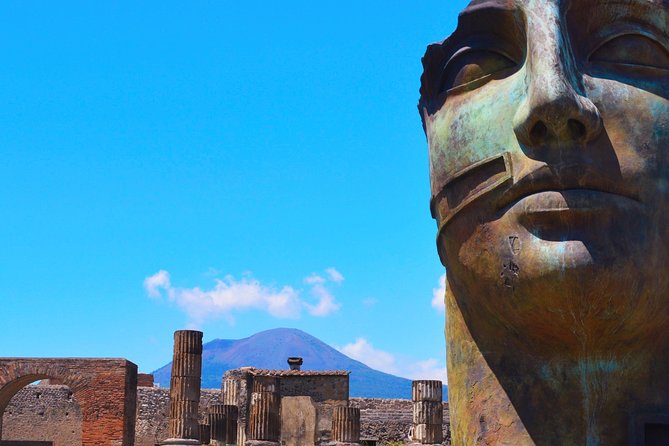
Vesuvius National Park is where the day earns its name. You’ll transfer up to the volcano and then visit the crater area. The crater still smokes slightly, and that little detail makes the whole moment feel less like a postcard and more like a living system.
Expect stunning panoramas of the Bay of Naples, Capri, Ischia, and parts of the Sorrento coast. The viewpoint also helps you understand why this eruption changed everything—your brain can finally place Pompeii in relation to the water and surrounding hills.
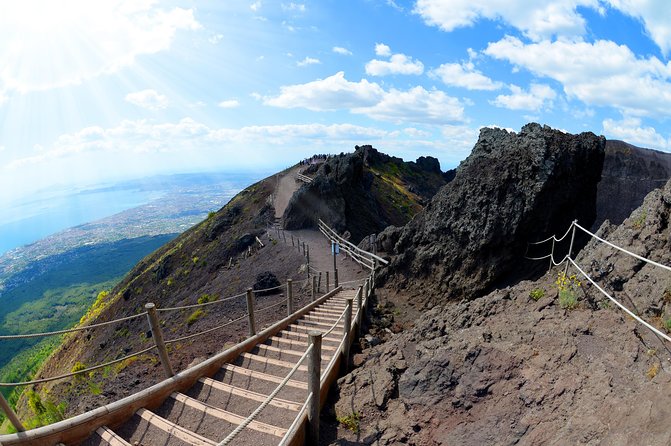
Now the part you need to plan for: the last 500 meters is a very steep uphill walk. The tour also calls out that closed-in shoes are essential. One of the most helpful tips you can follow is simple: wear footwear with grip and bring a calm pace to the final climb.
You’ll also want to think about slippery conditions. The tour notes that the path on Vesuvius is quite steep and slippery, so it’s not suitable for people with reduced mobility.
One more practical detail: there are snack-and-drink stops during the hike on the way up, so you’re not totally stranded if you get thirsty.
After the visit, you head back toward your cruise ship or accommodation in Salerno, Naples, or the Amalfi area.
Price and logistics: is $568.94 per person good value?
At $568.94 per person, this isn’t a cheap day. But it’s private, and private tours in this area can cost a lot because of the drive time and parking demands.
Here’s what helps justify the price based on what’s included:
- Private transportation in a modern minivan with a professional driver
- Hotel/accommodation pickup and drop-off
- A 2-hour guided Pompeii visit by a licensed guide
- Pompeii admission and Vesuvius admission included
- All taxes, fuel, and parking expenses
For couples, families, or small groups who want a real guide in Pompeii (not just a self-guided audio loop), the value comes from time saved and understanding gained. Skip-the-line entry is also a quiet win; on a busy day, waiting can eat the best hours.
Where the price can feel less “worth it” is if you’re trying to stretch a tight budget, or if you prefer exploring on your own with no structured pacing. Also remember lunch is on you, since it’s not included.
Bottom line: for a guided, private day that covers two big-ticket sites with admissions included, this price can make sense—especially if you’re prioritizing comfort and clarity over squeezing in extra stops.
Who should book this private Pompeii and Vesuvius shore excursion?
I’d book this if:
- You want a guided Pompeii that explains what you’re seeing, especially through major civic and residential sites
- You like having pickup and drop-off handled, since Amalfi/Naples logistics can be messy
- You’re comfortable with moderate walking and want a structured route
I’d think twice if:
- You have reduced mobility or you’re worried about a steep, slippery final climb on Vesuvius
- You’re hoping lunch is included in the price
- You want the flexibility of a slower, self-directed day (this itinerary is paced and purposeful)
Families often fit well here too, since guides have used engaging approaches to keep kids interested while still covering the essential Pompeii highlights.
Should you book it?
If your goal is to check Pompeii and Vesuvius off your list without wasting hours figuring things out, this private excursion is a strong choice. The best reasons to book are straightforward: skip-the-line entry, a licensed Pompeii guide for real interpretation, and a finished crater-view payoff.
Just be honest about one thing: Vesuvius is physically demanding at the end. If you can handle steep uphill walking with good shoes, you’ll likely feel like you got your money’s worth in sights and in understanding. If not, you might want a different plan that avoids the steep climb.
If you do book, show up with comfortable closed shoes, a bit of patience for a full day, and a willingness to let the guide turn stone streets into a story. That’s where the day becomes memorable.
FAQ
What is included in the tour price?
The tour includes full-day private transportation by modern minivan with a professional driver, hotel pickup and drop-off, a 2-hour guided tour in Pompeii by a licensed guide, Pompeii admission, Vesuvius admission, and all taxes, fuel, and parking expenses.
Is lunch included?
No. Lunch in Pompeii is not included, and there’s also an optional lunch break on the slopes of Mount Vesuvius or in Pompeii.
How difficult is the Vesuvius walk?
The path on Mount Vesuvius is steep and slippery, and the last 500 meters is a very steep uphill walk. Closed-in shoes are essential. It is not suitable for people with reduced mobility.
Where does pickup happen?
Pickup is offered at your hotel or accommodation, airport, or central station in Naples and in the Sorrento/Salerno area and their surroundings.
Is this a private tour?
Yes. It’s a private tour/activity, and only your group will participate.
Can I cancel for free?
Yes. You can cancel up to 24 hours in advance for a full refund. If you cancel less than 24 hours before the experience starts, the amount paid is not refunded.