One city. Three hours. Pompeii moves fast when you have a plan. This guided route hits the big sights at a calm pace, so you can understand Roman daily life instead of just snapping photos and walking in circles.
I like how this tour keeps your focus on the Forum area and the major public buildings, with enough time to connect the dots. I also love the mix of monumental spots and everyday details, from streets and fountains to places tied to food and shopping.
One thing to think about: the Pompeii admission ticket is not included, and some areas can be closed at certain times. If you’re sensitive to crowds or steep walking, plan your energy before you go in.
In This Review
- Key things to know before you go
- A 3-hour Pompeii circuit that keeps you from feeling rushed
- Meet at Villa dei Misteri: start in the right place
- The Forum, theatres, and thermal baths: the Romans’ public world
- Streets, fountains, baker-style scenes, houses, and shops
- Frescoes and mosaics: how art makes the town feel alive
- A guide who brings Campania context (and real stories)
- Private group up to 8: better questions, less crowd pressure
- Price and ticket math: when $335.48 makes sense
- Who should book this Pompeii ruins special?
- Should you book Pompeii Ruins Special?
- FAQ
- How long is the Pompeii Ruins Special tour?
- Is the Pompeii archaeological park admission ticket included?
- Is this a private tour?
- What is the group size limit?
- Who is the guide?
- Do I need to bring a printed ticket?
- Where does the tour start?
- When will I receive confirmation after booking?
- Can I cancel and get a full refund?
Key things to know before you go
- Campania Region licensed guide: you get official expertise, not a random walk-and-talk.
- A smart 3-hour pace: long enough to make sense, short enough for a real day plan.
- Main sites first: the Forum, theatres, and thermal baths are center stage.
- Everyday Pompeii details: streets, fountains, baker/bakery scenes, houses, and shops help the ruins feel lived-in.
- Art on the ground: frescoes and mosaics get explained so you don’t miss what matters.
- Private group up to 8: you stay with your group the whole time.
A 3-hour Pompeii circuit that keeps you from feeling rushed
Pompeii is huge, and the ruins can feel overwhelming if you show up with only a map. This tour’s main win is the pacing: about 3 hours that gives you context without eating your whole day.
You’ll walk through the most important areas, then get the “why” behind what you’re seeing. That matters because Pompeii isn’t just collapsed buildings. It’s a whole town frozen in time, and the connections are what make it click.
The other practical benefit is mental: you’re not trying to guess what’s significant while the daylight and your energy are running out. With a guide, you spend your time looking at the right details, not chasing them.
You can also read our reviews of more tours and experiences in Pompeii.

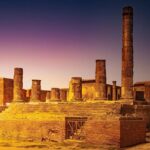
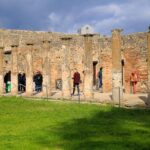
Meet at Villa dei Misteri: start in the right place
Your meeting point is at Pompei Scavi Villa Dei Misteri. That’s useful because it puts you at a recognizable entry area for Pompeii rather than leaving you to figure out logistics on your own.
The location is also described as being near public transportation, which helps if you’re coming from Naples (or using local transit on your way). If you’re organizing your own ride, building in a little buffer time is still smart, since Pompeii can be busy.
Once you start, the tour doesn’t treat the ruins like random stops. It builds a walking path that leads you from the city’s public heart toward its entertainment and bathing life, then into the street-level world where daily habits show up in stone.
The Forum, theatres, and thermal baths: the Romans’ public world
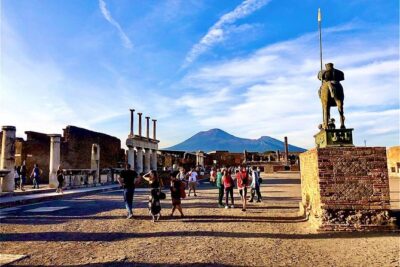
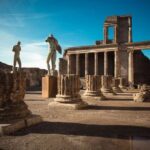
The centerpiece of the tour is Pompeii’s city center around the Forum—the ancient Roman square where civic life played out. Seeing it with a guide helps you understand how a forum wasn’t only about politics. It was about community rhythm: announcements, movement, and social energy all in one place.
From there, you’ll move through major public buildings, including the theatres. Even in ruin form, theatres tell a story about leisure and status. They’re designed to keep crowds together, with architecture meant for viewing and sound—so you get a sense of how people gathered and spent their evenings.
Next come the thermal baths, which is a highlight for a lot of visitors because bathing was more than hygiene. It was relaxation, routine, and social time. When your guide connects bathing culture to what you see around the complex, the ruins feel like a functioning lifestyle instead of just stone shells.
A realistic note: some areas can be closed depending on timing and conditions. If that happens, your guide’s job is to keep you oriented and still cover the essentials so you leave with a coherent picture.
Streets, fountains, baker-style scenes, houses, and shops
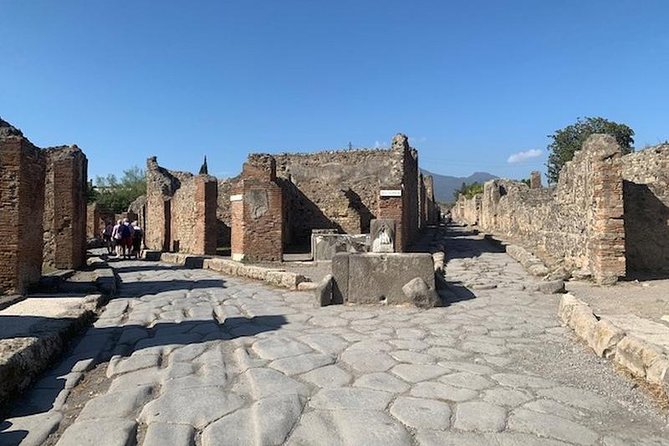
Pompeii gets truly human when you shift from landmark buildings to the everyday stuff. This tour includes ancient streets, fountains, bakery/fast-food related areas, houses, and shops, so you can picture a normal day moving from place to place.
What I like about this part is that it turns the ruins into a city you can almost walk through in your head. You’re not only seeing grand public spaces. You’re seeing how residents ate, met, worked, and shopped, and how those routines were woven into the street grid.
Fountains and street features are the kind of details that are easy to miss alone. With a guide, they become practical clues: where water mattered, where people paused, and how the town’s layout supported daily life.
You also get the “home and commerce” mix, since Pompeii includes houses and shop spaces along the way. That’s a big deal for understanding Roman society, because it shows the blend of private living and public-facing business.
Frescoes and mosaics: how art makes the town feel alive
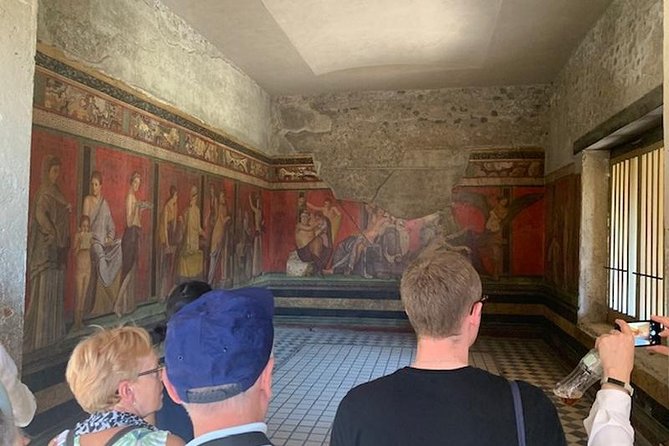
One of Pompeii’s surprises is how much decoration still shows up. This tour includes frescoes and mosaics, and that’s not just for art lovers.
When you see color and pattern where you expected only rubble, the whole town feels more real. The goal here is to help you notice what you’re looking at and why the designs mattered to owners and visitors.
A solo visit can turn into a lot of scanning from one ruin to the next. This guided approach helps you slow down for the details that communicate taste, wealth, and storytelling—especially when you’re standing in exactly the right place to understand the artwork’s context.
If you love history but sometimes find museum explanations dry, this is a nice middle ground. You get interpretation on site, where the art actually belongs in the scene.
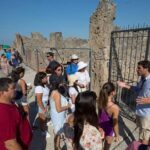
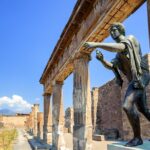

A guide who brings Campania context (and real stories)
This is led by a licensed guide from Campania Region, and that credential matters in practice. You’ll get explanations tied to local expertise, plus a way of organizing what you see so you’re not stuck trying to interpret everything by yourself.
The name you may hear in connection with this experience is Lucia. Her tours come up in strong terms for being professional, with a sense of humor, and packed with details that make the ruins easier to understand. One reviewer also noted that Lucia was able to arrange a driver to and from Pompeii, which can be a big help if your transportation plans are still fuzzy.
Even if you don’t need extra transport support, the guide’s storytelling style changes the tone of your walk. Pompeii becomes less like a checklist and more like a place with a voice.
Private group up to 8: better questions, less crowd pressure
This experience is private, meaning only your group participates. If you’re the kind of person who likes to ask questions and adjust the route based on interests, private touring is a strong fit.
Group size is up to 8, which is small enough that you can actually hear the guide and keep momentum. It also means your tour doesn’t feel like a mass procession where you only catch details in passing.
This setup is especially useful in Pompeii because the ruins reward attention. When you have a guide managing pacing and context, smaller group dynamics help you stay engaged instead of constantly stepping aside.
Price and ticket math: when $335.48 makes sense
The price is $335.48 per group (up to 8) for a tour lasting about 3 hours. That sounds high if you compare it to a generic self-guided entry, but you have to compare it to what you’re buying: a licensed guide, a structured route, and interpretation in the ruins themselves.
For groups, the cost can work out well because you’re splitting the guide experience across multiple people. If you’re traveling as a pair, you’ll pay more per person than a bigger group—but you still get the benefit of a plan that saves time and frustration.
Two important money points:
- Admission to Pompeii is not included, so you’ll need to purchase the park ticket separately.
- Fees and taxes are also listed as not included, so your final total may depend on what’s added at checkout.
The “value” here is the difference between seeing buildings and understanding them. Pompeii can chew up hours fast when you don’t know what to prioritize. A good guide helps you spend your time on the most meaningful parts of the site.
Who should book this Pompeii ruins special?
You should book this tour if you want a focused Pompeii experience with just enough time to build understanding. It’s a good match for archaeology and history fans who don’t want a full-day marathon.
It’s also ideal if you’re visiting for the first time and want the essentials—Forum, theatres, thermal baths, plus street life details—without turning your day into a chaotic search mission. If you’d rather trade guessing for clear explanations, this route does that job.
If you’re traveling with a small group and you’d like flexibility for questions, private touring here is a practical upgrade. And if you like art details, the frescoes and mosaics stop helps you see more than architecture.
If your ideal day is purely wandering with zero structure, you might prefer a self-guided approach. But if you want Pompeii to make sense quickly, a guided plan like this is a smart use of time.
Should you book Pompeii Ruins Special?
Yes—if you want a structured, high-impact way to see Pompeii in about three hours. The combination of major public areas (Forum, theatres, baths) plus street-level life (fountains, homes, shops, bakery-related areas) is exactly what makes the ruins feel like a real town instead of scattered stones.
Book it if you value a licensed guide and want help noticing the details, especially the frescoes and mosaics that can be easy to overlook. You’ll also appreciate the small private group setup if you like asking questions and staying oriented.
Just be sure you plan for the extra cost of admission, since it’s not included. And if parts of the site are closed during your visit, trust that your guide will help you still get the core story of Pompeii.
FAQ
How long is the Pompeii Ruins Special tour?
The tour lasts approximately 3 hours.
Is the Pompeii archaeological park admission ticket included?
No. The admission ticket is not included.
Is this a private tour?
Yes. It is private, and only your group will participate.
What is the group size limit?
The tour is priced per group up to 8 people.
Who is the guide?
A tour guide is included, and the guide is described as being licensed from the Campania Region.
Do I need to bring a printed ticket?
No. You’ll receive a mobile ticket.
Where does the tour start?
It starts at Pompei Scavi Villa Dei Misteri, 80045 Pompei, Metropolitan City of Naples, Italy.
When will I receive confirmation after booking?
Confirmation is received within 48 hours of booking, subject to availability.
Can I cancel and get a full refund?
Yes, free cancellation is available. You can cancel up to 24 hours in advance for a full refund.