REVIEW · POMPEII
Pompeii tour with archaeologist
Book on Viator →Operated by Pina Esposito · Bookable on Viator
Pompeii makes more sense with an archaeologist. This 2.5-hour route is built for real understanding: you walk key zones of the ancient city while the guide explains how Pompeii worked and why 79 AD changed everything. I especially like the small group size (up to 15) and the fact you get a trained archaeologist style of storytelling, not just dates on plaques.
One possible drawback: you’ll cover a lot of ground, so if you want to linger at every wall painting or mosaic, this pace may feel a bit fast.
In This Review
- Key highlights you will notice right away
- The route starts at Villa dei Misteri and ends at the Forum
- Getting your bearings fast at Foro di Pompei
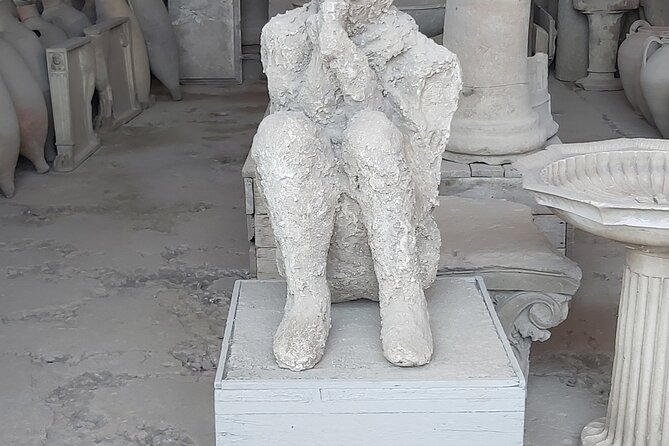
- Granai del Foro and the plaster casts that make it real
- The Basilica: where public business happened
- Temple of Apollo: original finds and Roman religious architecture
- Hotel Vittoria and the city gateway feeling
- Cave Canem mosaic at the House of the Tragic Poet
- House of the Faun: the dancing bronze and Alexander’s mosaic
- Thermopolium at Regio VI: ancient fast-food and social life
- Temple of Vespasian: imperial power made visible
- Via dell’Abbondanza and the theater district: movement and entertainment
- Doric Temple and Stabian Baths: old worship and everyday wellness
- Lupanar: the brothel rooms and the art that survived
- Price and value: what $42.01 buys you in Pompeii
- Best for who: first-timers who want context and direction
- Final call: should you book this Pompeii tour with an archaeologist?
- FAQ
- What’s included in the Pompeii tour price?
- How long is the tour, and where does it start and end?
- Is the tour offered in English?
- Do I need to buy Pompeii entrance tickets separately?
- What happens if the weather is poor?
- How big is the group, and are service animals allowed?
Key highlights you will notice right away
- A tight, high-impact route: Forum, temples, major houses, baths, and the Lupanar, all in about 2.5 hours
- Plaster casts at the Granai del Foro: the victims are brought into clearer focus through what’s preserved
- Iconic Roman details: the Temple of Apollo and the imperial cult stop at the Temple of Vespasian
- House mosaics with big wow-factor: the Dancing Faun bronze and the Mosaic of the Battle of Alexander
- Daily life meets entertainment: thermopolium fast-food counter and the Teatro Grande area
- A guide who answers questions: you’re encouraged to ask as you move through the site
The route starts at Villa dei Misteri and ends at the Forum
This tour begins at Pompei Scavi – Villa dei Misteri and finishes at the Foro di Pompei. That matters because you end where many people want to keep exploring anyway—after the guided part, you can stay inside the excavations and wander further on your own if you have energy (and good shoes).
The duration is about 2 hours 30 minutes, which is a sweet spot for Pompeii’s scale. In practice, it means you get the “spine” of the city—main public spaces, religion, big homes, and the places people ate, worked out, and spent time.
You’ll also want to note that the tour includes the archaeologist guide, but it does not include entrance fees. So you should plan to purchase Pompeii admission separately before you go, then show up ready to focus on the interpretation.
You can also read our reviews of more tours and experiences in Pompeii.

Getting your bearings fast at Foro di Pompei
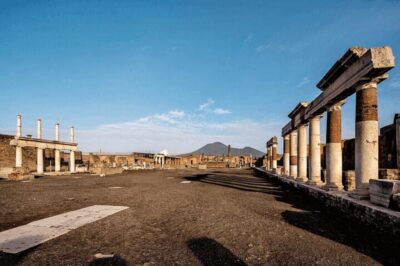
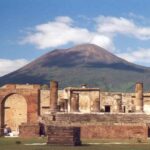
You start at the Foro di Pompei, Pompeii’s civic heart. The guide explains the Forum from the city’s origins all the way to the eruption of 79 AD, which is the best way to avoid the classic Pompeii problem: staring at ruins without a timeline.
This first stop sets the pattern for the whole tour: you’re not just looking at stones. You’re learning what each space was for—where public life happened, where people gathered, and how the city’s layout reflected status and power. Even in a short window, this stop helps your brain organize what you’ll see next.
Why it’s valuable for you: after this, the rest of the walk feels less random. You start connecting temples, streets, and homes to the same daily story.
Granai del Foro and the plaster casts that make it real
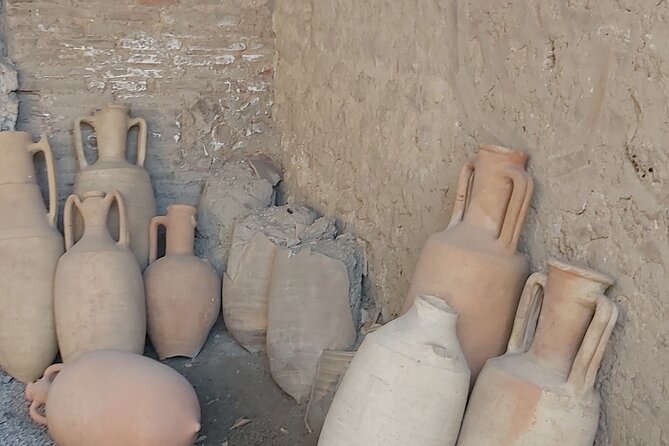
Next is Granai del Foro, the granaries tied to the Forum area. Here the guide points out finds connected to what was stored and traded—things like amphorae, sculptures, inscriptions, and other materials tied to the economy.
The emotional center of this stop is the plaster casts of the victims of the eruption. That’s not just a display—it’s a chance to understand how the disaster froze people in place and why these casts are such a powerful part of Pompeii’s modern interpretation.
A small consideration: this is one of the more intense moments on the tour. If you’re sensitive to tragedy, pace yourself and bring a moment of quiet if you need it.
The Basilica: where public business happened
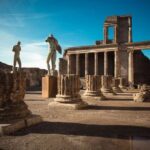
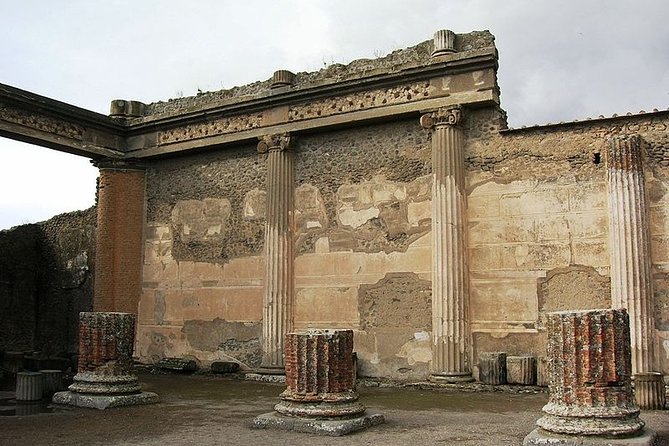
Then you hit Pompei La Basilica, one of Pompeii’s most monumental buildings. The guide explains its functions, helping you see why this place mattered to everyday life.
In Pompeii, buildings weren’t just impressive—they were practical. A basilica-type structure usually signals organized public activity, and when you understand what people did there (and who used the space), you can read the architecture with more clarity instead of treating it like a backdrop.
This stop is also good for learning how the Romans designed shared space: formal enough for civic display, functional enough for real use.
Temple of Apollo: original finds and Roman religious architecture
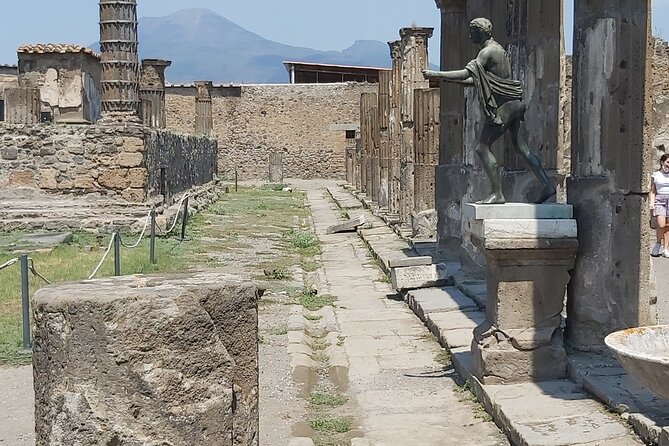
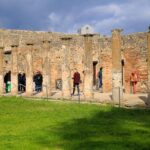
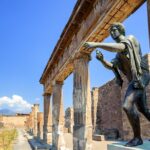
At the Temple of Apollo, the guide focuses on what makes this temple special: it’s rich in original finds such as sculptures, altar elements, a fountain, inscriptions, columns, and even a Roman sundial.
If you want Pompeii to feel like a living city, religion is the missing puzzle piece most people skip. This stop connects the temple’s details to the culture that created it—what people revered, how they marked time, and how worship worked in public life.
Possible drawback: if you’re expecting only wide views and photo ops, this is more detail-heavy. You’ll probably get the most out of it if you like learning how objects and inscriptions fit together.

Hotel Vittoria and the city gateway feeling
A quick pause at Hotel Vittoria looks like a small stop, but it helps with orientation. The guide explains the ancient gateway to the city and the surrounding area, which is useful because Pompeii’s entrance zones and edges can otherwise feel disconnected from the “main” highlights.
This is the kind of stop that makes you feel oriented in the next stretch. It’s short, but it helps your internal map click into place—how you entered, where you would have been funneled, and how the city boundary shaped movement.
Cave Canem mosaic at the House of the Tragic Poet
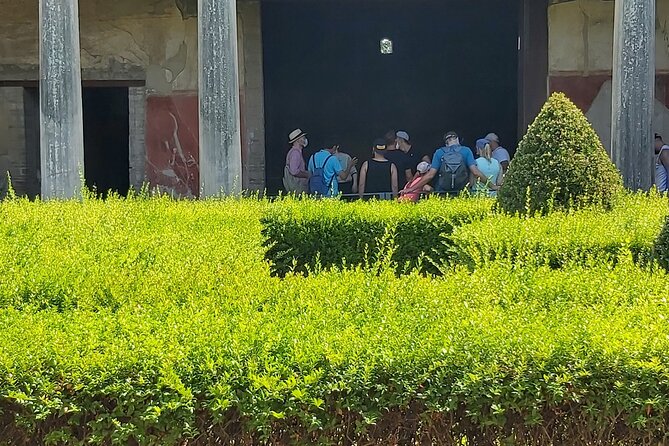
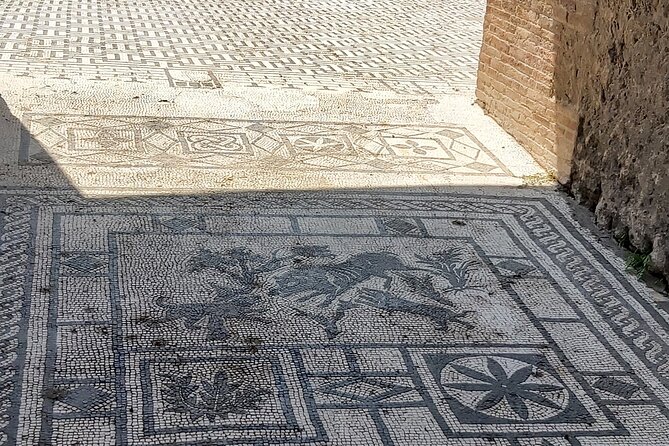
At Pompei Il Mosaico “cave Canem”, you’ll see one of Pompeii’s famous entrance mosaics. The guide places it at the entrance of the House of the Tragic Poet, tying the artwork to what the incoming visitor would have experienced.
This is a great stop for two reasons. First, mosaics are easier to “read” when you understand placement. Second, it shows how private homes mixed style and message—right where you’d step in, not hidden in a distant room.
Keep an eye on the surrounding context too. This is one of those moments where the guide’s placement-based explanation makes the mosaic feel less like a random icon and more like part of a lived environment.
House of the Faun: the dancing bronze and Alexander’s mosaic
The tour’s big house moment is Casa del Fauno, the largest house in Pompeii. The guide walks you through its history and points to the masterpieces found there, including the bronze sculpture of the dancing Faun.
Then comes the star: the Mosaic of the Battle of Alexander, made of more than a million tiny colored tiles. The key value here isn’t only the visual wow. It’s how you learn what this kind of display signals—taste, wealth, and cultural reference points in a city that liked to show off.
A practical note: this area can be visually busy. If you tend to get overwhelmed when there’s too much to look at, focus on what the guide highlights: one sculpture, one room idea, and one mosaic story at a time.
Thermopolium at Regio VI: ancient fast-food and social life
Next you visit Thermopolium Regio VI, Insula VIII, 8—a preserved thermopolium, the ancient equivalent of a fast-food counter. The guide explains it as a slice of social life and nutrition in Pompeii.
This stop is valuable because it shows you food culture without romanticizing it. Pompeii wasn’t only theaters and temples—it was also people grabbing something to eat and move on with their day. When you understand how these counters worked, you start noticing how the city catered to daily needs.
Possible consideration: this part of the tour can feel smaller and more “practical” than the grand buildings. If your ideal visit is all big monuments, you might appreciate it most when you accept it as daily-life history.
Temple of Vespasian: imperial power made visible
At the Temple of Vespasian, also known as the Temple of Genius Augusti, the guide connects the site to the Roman imperial cult. This is one of the most important interpretive shifts on Pompeii tours: you stop treating religion as only local tradition and start seeing how Rome’s authority was displayed.
The guide helps you understand why an imperial-focused religious site would matter in a conquered or heavily influenced city. It’s political messaging in sacred clothing—Roman power made comfortable and familiar.
This stop is quick, but it carries weight. If you leave Pompeii thinking you now understand the political layer underneath everyday life, this is a major reason why.
Via dell’Abbondanza and the theater district: movement and entertainment
Then you walk through Via dell’Abbondanza, a major street. The guide uses it to explain Pompeii’s road network and urban plan, which is the backbone for understanding how people moved and how the city functioned.
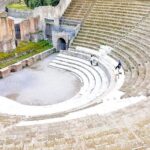
After that, you reach the theater district at Teatro Grande and learn about the nearby Teatro Piccolo and the Quadriportico dei Teatri. This is one of those places where the architecture practically teaches you how performances were part of social life.
If you like seeing how leisure and public life connect, this is a strong pairing: you learn the street system, then you see entertainment spaces close by.
Doric Temple and Stabian Baths: old worship and everyday wellness
The tour includes the Doric Temple, described as the oldest temple in Pompeii, plus the so-called Triangular Forum. This is where the city feels layered—early sacred space in the same urban fabric as later public and private life.
Then the guide heads you to the Stabian Baths (Terme Stabiane), an extraordinary example of an ancient thermal building. Baths in Pompeii were not just for washing. They were for socializing, routine, and relaxation.
This combination works because it contrasts two kinds of public rhythm: spiritual routine and bodily routine. After these stops, you can see Pompeii as a place with consistent habits, not only a tragic snapshot.
Lupanar: the brothel rooms and the art that survived
The last stop is the Lupanar, Pompeii’s most spectacular example of an ancient brothel. The guide explains it and points out the exceptional state of conservation of the bedrooms and the erotic frescoes showing various amorous positions.
This is not a “skip it” stop. It’s part of how Pompeii tells the truth about Roman life—messy, commercial, and very human. If you go in expecting only polite history, this may surprise you.
Practical consideration: go at your own pace here. The material is adult in subject matter, and not everyone wants that tone at the end of a long walk.
Price and value: what $42.01 buys you in Pompeii
At $42.01 per person for about 2 hours 30 minutes, the question is value, not just cost. Here, you’re paying for one big thing: an archaeologist-style guide who helps you connect sites into one story.
If you wander Pompeii on your own, you’ll see highlights—but it’s easy to miss the why. This tour helps you build that why fast: civic core at the Forum, economy at the granaries, religion through Apollo and imperial worship, daily routines at the thermopolium and baths, and the city’s entertainment culture.
One more cost reality: entrance fees are not included. So your total day cost will depend on what ticket you buy. Still, the guide’s interpretation is the main reason this price can make sense, especially if it’s your first time at Pompeii.
Best for who: first-timers who want context and direction
This tour is a strong fit if you:
- want a structured walk with a real explanation, not a self-guided scavenger hunt
- like understanding how people lived, worshiped, worked, ate, and spent time
- prefer smaller groups (max 15) so questions can actually get answered
- are visiting in English and want the narration in that language
If you’re the type who loves reading every plaque slowly and taking 200 photos per minute, you might feel rushed. In that case, you may want to treat this as the best “first pass,” then return later for a slower second visit—starting right where this tour ends at the Forum.
Final call: should you book this Pompeii tour with an archaeologist?
I think it’s worth booking if you want Pompeii to make sense quickly. The itinerary focuses on the places that teach the most: the Forum’s civic logic, Apollo’s religious detail, the House of the Faun’s art power, everyday life at the thermopolium and baths, and the brothel at the Lupanar that shows the city’s adult reality.
Book it if you want direction and context more than sheer unstructured time. Skip it (or add your own free time) if you know you need long pauses to study every surface. Either way, planning for the separate Pompeii entrance fee will keep your day smooth.
FAQ
What’s included in the Pompeii tour price?
The tour includes a guided experience with an archaeologist. Food, drink, tips, and the Pompeii entrance fee are not included.
How long is the tour, and where does it start and end?
The tour lasts about 2 hours 30 minutes. It starts at Pompei Scavi – Villa Dei Misteri and ends at the Foro di Pompei.
Is the tour offered in English?
Yes. The guided tour is offered in English (as well as Italian or German).
Do I need to buy Pompeii entrance tickets separately?
Yes. Entrance fees are listed as not included, even though the route includes stops that are shown during the visit.
What happens if the weather is poor?
This experience requires good weather. If it’s canceled due to poor weather, you’ll be offered a different date or a full refund.
How big is the group, and are service animals allowed?
The group is capped at a maximum of 15 travelers. Service animals are allowed.