REVIEW · NAPLES
Private Pompeii Tour With Guide and Transfer Included
Book on Viator →Operated by Naples bay tour · Bookable on Viator
Pompeii hits different with a private plan. I love the round-trip pickup from Molo Beverello and the smooth private driver that spares you the logistics headache. I also love the licensed guide for the 2-hour walking portion, because you’re not just looking at stones, you’re understanding them.
This setup is interesting because it’s built around how Pompeii worked day to day: a food market, grain storage, public entertainment, the Forum, baths, a brothel, and then a wealthy home. You also get a mobile ticket, so you spend less time figuring out what goes where.
One possible drawback: it’s a 4-hour experience, so each highlight is relatively short. If you want lots of time for wandering and long photo stops, you may feel a bit time-pressured.
In This Review
- Key highlights and what they mean for your visit
- The Four-Hour Sweet Spot for First-Time Pompeii
- Pickup From Molo Beverello: Less Stress, More Pompeii
- Macellum Market: How Romans Bought Food (and What to Look For)
- Granai del Foro: Grain Warehouses and Archaeology Displays
- Anfiteatro Romano: The Oldest Surviving Roman Amphitheater
- Forum de Pompeya and Terme del Foro: Politics, Belief, and Hot Water
- Lupanar: The Brothel with Frescoes You Can Actually See
- Casa del Fauno: Elite Living, Dancing Faun, and the Alexander Mosaic
- Pacing, Comfort, and What to Bring for This Route
- Tickets, Mobile Access, and What’s Included (and Not)
- Price and Value: What You Get for $358.86 Per Person
- Who This Tour Fits Best
- Should You Book This Private Pompeii Tour?
- FAQ
- How long is the Pompeii tour?
- Does the tour include pickup from Naples?
- Are Pompeii tickets included?
- Is this tour private?
- What stops does the tour include?
- Is food or drink included?
- Is there a mobile ticket?
- What are the cancellation terms?
Key highlights and what they mean for your visit
- Private transfer from Naples (Molo Beverello) keeps your day moving without the stress of public transport timing
- A 2-hour guided walk gives you the context that makes Pompeii feel real instead of just impressive
- Tickets included means you don’t need to juggle entry plans before you even start
- Stops cover daily life plus elite living: market, grain, Forum, baths, Lupanar, and Casa del Fauno
- Short time per stop (10–20 minutes) is great for orientation, but you’ll need to prioritize what you want most
The Four-Hour Sweet Spot for First-Time Pompeii
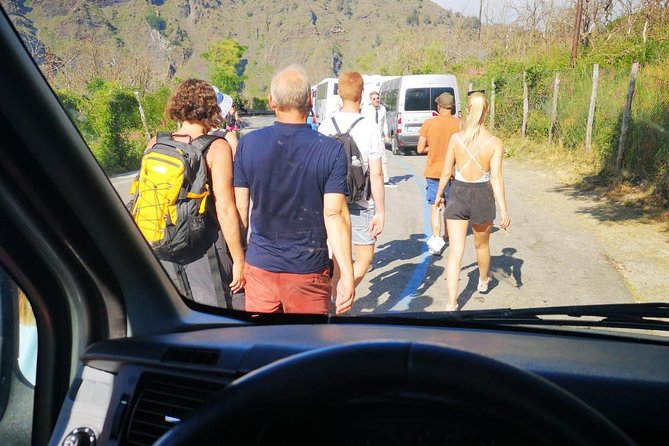
This is a practical Pompeii format: fast enough to fit into a short Naples stay, but structured enough that you don’t lose the plot once you’re at the site. The magic is the mix of “public life” and “personal life.” You see places tied to food, work, entertainment, religion, and social behavior—then you close with a glimpse into how the well-off lived.
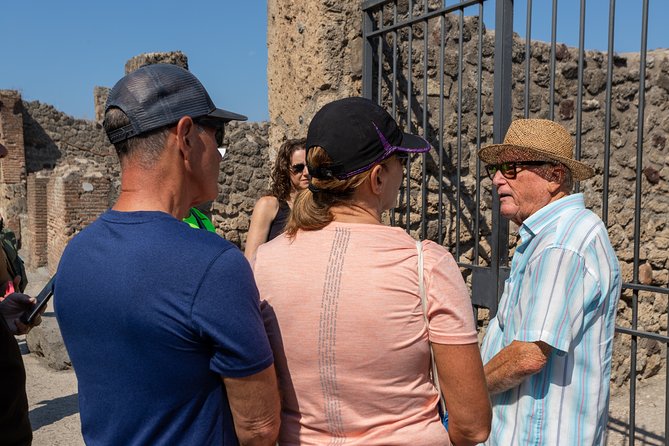
A guided Pompeii works especially well if it’s your first time. The ruins can be overwhelming, mostly because everything looks like “the next arch” until someone explains the purpose of each building. With a guide, you get the city’s rhythm: what people did in the morning, where they met, what they argued about, and where they relaxed.
You also have the benefit of a private arrangement. That means you can ask questions when something clicks—without waiting for the group pace to catch up.
You can also read our reviews of more guided tours in Naples


Pickup From Molo Beverello: Less Stress, More Pompeii
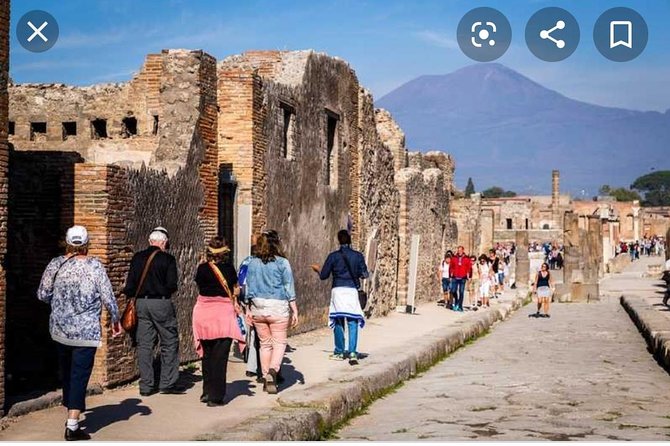
Your day starts back at Molo Beverello (Naples). The tour runs with pickup offered at your accommodation, then returns you to the same meeting point at the end. In plain terms: you avoid the most annoying part of Pompeii day trips, which is trying to sync trains, buses, and ticket lines with your own energy level.
Clear communication matters here. Past experiences with this operator have highlighted that the team coordinates well and stays in touch. That’s not glamorous, but it’s the difference between a smooth morning and a last-minute scramble while your brain is still half on vacation.
Also, you’re not “discovering Naples transport” on the way to an archaeological site. If you’re traveling with family or just want the day to be predictable, this transfer-first approach is a big plus.
Macellum Market: How Romans Bought Food (and What to Look For)
Your first stop is the Macellum, Pompeii’s main food market. This is where the city’s daily needs meet architecture. Meat and fish were sold here, and your guide explains how the market layout supported business life.
What I like about this stop is how quickly it makes Pompeii feel normal. People didn’t live in museums—they ate, bargained, and ran errands like everyone else. Even if the building is stone and the stalls are long gone, you can still sense the flow of trade.
Time note: you’ll only spend about 10 minutes here. That’s enough for orientation and key ideas, but not enough for slow browsing. If you care most about economy and everyday routines, put your questions here.
Practical tip: at markets in open-air ruins, shade can be hit-or-miss. Wear sun protection and plan to hydrate, even if you’re only there briefly.
Granai del Foro: Grain Warehouses and Archaeology Displays
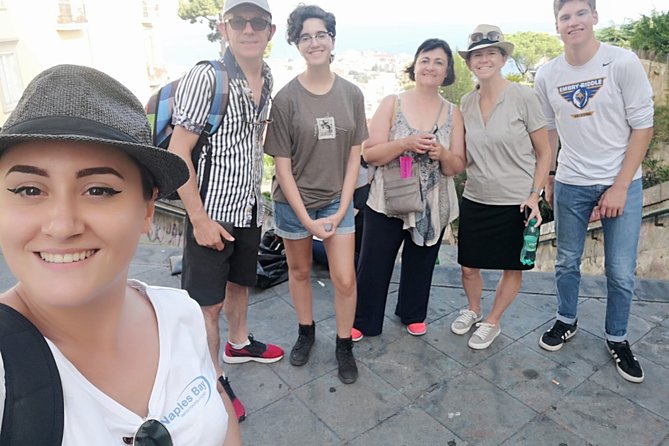
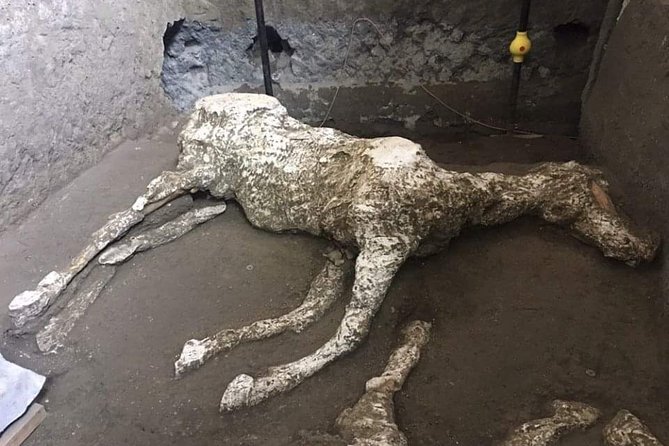
Next up: Granai del Foro, ancient warehouses that stored grain and supplies. This stop isn’t just about storage—it’s also about how modern archaeology helps us see what we lost. The warehouses are also used to display casts connected to the eruption and other finds.
Why this matters: grain storage was survival. A city the size of Pompeii couldn’t run on luck. Seeing the warehouses after you’ve visited the market is a clean mental loop. Food has a pipeline, and Pompeii had one.
Another useful thing your guide can do in this stop is connect “stuff in buildings” to city systems: who managed supplies, how food moved, and why the city’s layout mattered. Even in a short visit, the context can make the ruins feel like an operating city rather than scattered structures.
This segment is also about balance. Pompeii can feel heavy, and the casts display adds a stark emotional layer. If you’re visiting with kids, this is usually where a guide’s framing helps—keeping it respectful and understandable.
Anfiteatro Romano: The Oldest Surviving Roman Amphitheater
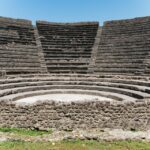
Then you head to the Anfiteatro Romano, built in 70 BC. This is the oldest surviving Roman amphitheater. Your stop focuses on gladiatorial games, public life, and entertainment.
Here’s the translation to your experience: you’re stepping into a space that was designed for crowds and spectacle. Even though you’ll only be there around 10 minutes, it’s one of the easiest places to “see” Roman culture. The shape of the building tells you how people gathered, and the guide helps connect that geometry to real events.
A quick consideration: if you’re sensitive to violent spectacle themes, the gladiator talk may feel intense. The guide likely frames it historically, but it can still be emotionally heavy. If you prefer a gentler pace, you might ask for the social context first—why these events mattered politically and culturally.
You can also read our reviews of more private tours in Naples






Forum de Pompeya and Terme del Foro: Politics, Belief, and Hot Water
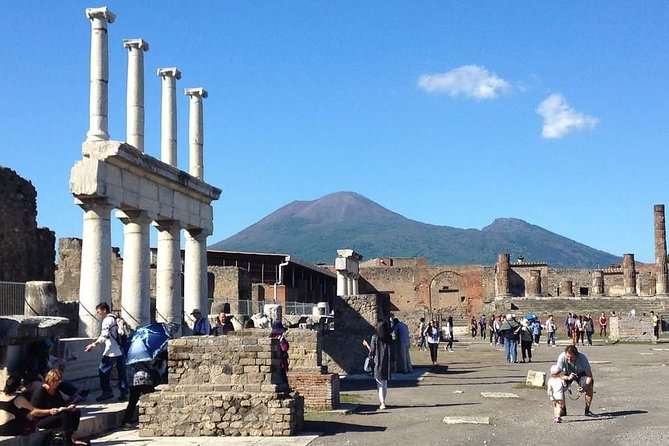
The Foro de Pompeya is the central square, surrounded by temples, administrative buildings, and markets. This is where the city’s power and daily business overlap. You get about 20 minutes here, which is longer than most stops—so it’s often a highlight for people who want “the big picture.”
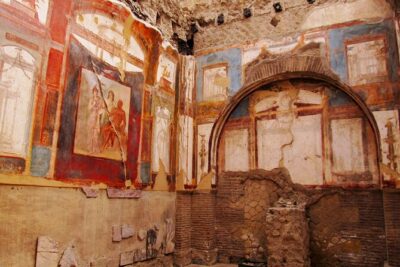
After that, you move to Terme del Foro, the Forum Baths. This stop is one of the best reasons to choose a guided version: Roman baths are more than baths. They include changing rooms, heated pools, and decorative frescoes. You see how public space could also be comfortable and artistic.
If you’re wondering why baths belong on a Pompeii tour, here’s the value: the baths show how Romans mixed social life with routine. People came for hygiene, but also for conversation and relaxation. Add fresco decoration, and it stops being strictly functional.
Time note again: about 10 minutes at the baths. That means your guide will likely point out the biggest visual and functional elements quickly. If you’re particularly interested in Roman interior design or how heated water worked, this is where you should ask targeted questions early.
Lupanar: The Brothel with Frescoes You Can Actually See
Your next stop is the Lupanar, one of Pompeii’s best-preserved buildings. It’s famous for its vivid fresco cycle. Your guide also shares the commonly discussed idea that the images may relate to Dionysian rites.
This stop can surprise people. Pompeii is often marketed as grand monuments, but the Lupanar is about something more human and awkward and very real. That’s what makes it powerful: Pompeii records the everyday parts of society, even the parts we’d rather sanitize.
A consideration: this isn’t a “PG only” stop. The fresco subject is sexual. The tour data doesn’t specify how the guide handles tone, so use your own comfort level to decide if you want extra context or a lighter explanation. A good guide will adapt without skipping the historical facts.
Even if you focus on art and symbolism rather than the subject matter, the building’s preservation makes it one of the most visually memorable parts of the itinerary.
Casa del Fauno: Elite Living, Dancing Faun, and the Alexander Mosaic
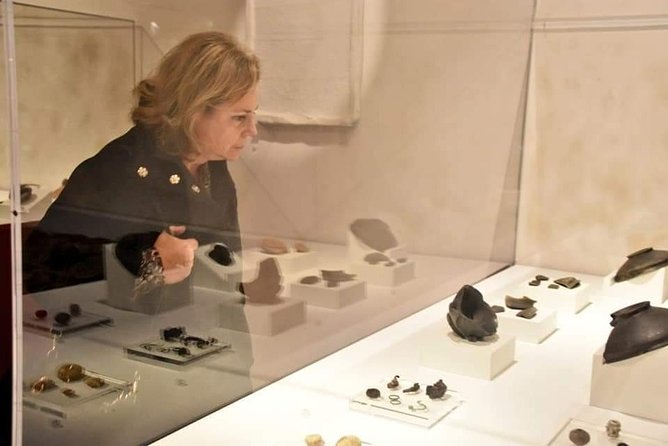
The final architectural star is the Casa del Fauno, a luxurious home that belonged to Pompeii’s elite. This stop is famous for the statue of the dancing faun and the Alexander Mosaic.
This is where Pompeii stops being only about crowd life. You get contrast: market noise and public squares on one end, private wealth and curated art on the other. The dancing faun makes the home feel animated, and the Alexander Mosaic gives you that “someone spent serious money on beauty” moment.
Time note: about 10 minutes here. That means you won’t tour the whole mansion in a deep way, but you should still come away with clear takeaways: how elite Romans arranged space, what kind of art they displayed, and how homes broadcast status.
If you love mosaics, arriving with the mindset that you’ll see the best-known features quickly will make the stop feel satisfying instead of rushed.
Pacing, Comfort, and What to Bring for This Route
Because this is a compact itinerary, the pacing matters. Expect 10 minutes at several key stops and about 20 minutes at the Forum. That’s enough for orientation, and it works well if you want your guided portion to set you up for a return visit later.
What to bring:
- Comfortable walking shoes with good traction
- Sun protection (Pompeii can be bright even when ruins feel cooler)
- Water, since food and drink aren’t included
- A small bag you can manage easily for photos and quick movement
Also, since this is a private tour, you can often tolerate the pace better because your attention isn’t split across a big group schedule. You’re still walking at a site that has steps and uneven ground, so you’ll want a steady footing plan.
If you’re visiting as a couple or with family, this is a good structure: everyone gets the major landmarks without needing to coordinate “who wants to stay longer” every 10 minutes. If your group has one serious history buff and one person who mainly wants photos, the guide can often redirect the time so both are happy.
Tickets, Mobile Access, and What’s Included (and Not)
This tour includes Pompeii tickets, private transport, private guide service, and pickup. You also get a mobile ticket, which is convenient if you don’t want to fuss with paper vouchers.
What’s not included: tips and food and drink. That sounds obvious, but it’s worth planning for. There’s no mention of a meal stop, and the entire experience is short, so bring a strategy for when you’ll eat (before or after). A quick snack can also help you keep your energy steady, especially if the sun is strong.
Admission at stops is included as listed in the itinerary, so the money part stays simple once you arrive.
Price and Value: What You Get for $358.86 Per Person
At $358.86 per person for a roughly 4-hour experience, this is not a budget Pompeii day trip. You’re paying for two main things: private logistics and a licensed guide.
Here’s the value logic that makes sense:
- You get round-trip private transport with pickup offered, which saves time and reduces stress.
- You get a private guided walking portion that gives meaning to what you see, not just entry to the site.
- Tickets are included, which removes a common “extra step” cost and hassle.
Where you should be realistic: Pompeii is big, and you won’t cover everything in 4 hours. So if your goal is maximum time on every street corner, this format may feel like a highlight reel rather than a full exploration.
But if your goal is to leave Pompeii with a clear understanding of the city’s layout and daily life, and you like the idea of asking questions while you walk, the price can feel fair. Private tours are expensive because you’re buying attention and time. This one focuses attention on the city’s most important zones.
Who This Tour Fits Best
This tour is a great match if you:
- Want a guided orientation to Pompeii’s daily life and key buildings
- Prefer private pickup and a set schedule over public transport guesswork
- Are visiting as a couple, family, or small group and want flexibility for questions
- Don’t want to spend your whole day trying to plan and navigate the site alone
It may be less ideal if you:
- Want hours of free wandering without guided explanations
- Plan to linger at every wall painting and mosaic for a long time
- Are trying to see Pompeii at “everything included, no tradeoffs” speed
The itinerary is designed to hit the essential emotional and historical beats: market life, grain supply, public entertainment, the Forum, baths, social spaces, and elite homes.
Should You Book This Private Pompeii Tour?
If you want a smooth Pompeii day with meaningful context, I think it’s a strong choice. The private transfer reduces friction before you even reach the ruins, and the structured stops help you understand what you’re looking at. The mobile ticket and included Pompeii admissions also remove common friction points.
Book it if your top priority is getting the most understanding per hour. Consider a different option if you know you want a long, self-paced day and you’re happy handling transport and interpretation on your own.
If you’re on the fence, my practical advice is this: choose a guided format like this when you’re short on time in Naples. Pompeii rewards time, yes—but it rewards good context even more.
FAQ
How long is the Pompeii tour?
The tour is listed as approximately 4 hours, including transport time.
Does the tour include pickup from Naples?
Yes. Pickup at your accommodation is offered, and the meeting point is Molo Beverello, Napoli.
Are Pompeii tickets included?
Yes. Pompeii tickets are included in the price, and admission is listed for each stop.
Is this tour private?
Yes. It’s a private tour/activity, and only your group participates.
What stops does the tour include?
It includes Macellum, Granai del Foro, Anfiteatro Romano, Foro de Pompeya, Terme del Foro, Lupanar, and Casa del Fauno.
Is food or drink included?
No. Tips, food, and drink are not included.
Is there a mobile ticket?
Yes. A mobile ticket is included.
What are the cancellation terms?
Free cancellation is available up to 24 hours in advance for a full refund. If you cancel less than 24 hours before the start time, the amount paid is not refunded.