REVIEW · NAPLES
Visit to the Lapis Water Museum in Spanish
Book on Viator →Operated by GRAND TOURS ITALY · Bookable on Viator
Naples changes the mood fast when you go underground. At the LAPIS, Museo dell’Acqua you’re not just looking at ruins—you’re walking through a real restoration project that brings Greco-Roman water cisterns back to life (the WATER MUSEUM initiative launched in 2021). I love the scale of the water infrastructure, especially the ancient cistern area nicknamed the prince’s pool, and I love how the guide makes the story human with clear explanations and supporting films.
One catch: this is a guided tour in Spanish only. If you were hoping for a kids-first format or English guidance, you may feel the mismatch, especially with very young children. The upside is that the group stays small (up to 20), so the pace doesn’t turn into a stampede.
You’ll start at Piazza Dante and finish at the museum itself in Piazzetta Pietrasanta. The visit runs about 1 hour 15 minutes, and the admission ticket is included in the price, so you’re not piecing together multiple entries while your day is already busy.
In This Review
- Key points
- Naples Under Your Feet: What Lapis Really Is
- From Piazza Dante to the Underground: The Timing and Feel
- Santa Maria de la Pitra Sagrada: The Start of the Story
- The Greek and Roman Aqueduct and the Prince’s Pool
- WWII Shelter Space: When Water History Turns Human
- Price and Value: Is $46.34 Worth It?
- Who Should Book This Spanish Guided Tour
- Book It or Skip It?
- FAQ
- Where does the tour meet?
- What is the exact meeting location and where does the tour end?
- How long is the guided tour?
- What language is the tour guided in?
- Is admission included in the price?
- How many people are in the group?
- How far down do you go?
- What will you see during the underground portion?
- Is it suitable for most people?
- What is the cancellation policy?
Key points
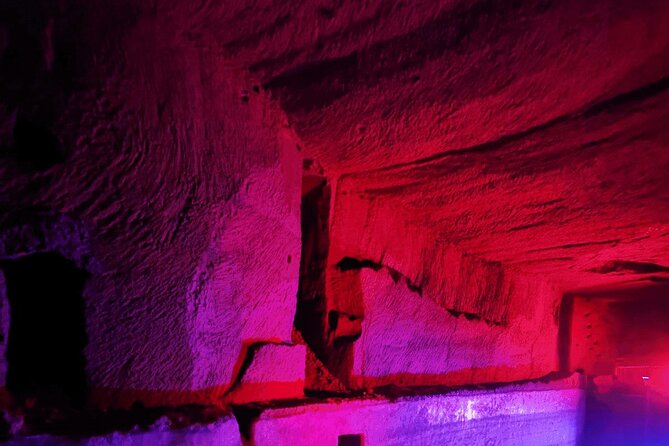
- Greco-Roman water cisterns revived through the WATER MUSEUM project launched in 2021
- 35 meters down to see the Greek and Roman aqueduct and underground storage spaces
- Church + underground in one tour, starting with Santa Maria de la Pitra Sagrada
- WWII shelter area adds a powerful human layer to the water story
- Small group (max 20) helps the Spanish narration land instead of getting lost
- Admission included, so you’re paying for guided access, not just a ticket
Naples Under Your Feet: What Lapis Really Is
Lapis is one of those places where Naples stops being a postcard and starts being practical. You’re in the middle of a city that has kept building on itself for centuries, so the underground isn’t some separate attraction—it’s part of the same Naples that’s above your head.
This museum centers on water infrastructure from Greco-Roman times. The project uses the ancient cisterns and aqueduct spaces as the backbone, then recreates streams and cistern functions as they were, helped by collaboration with a Neapolitan water company. That matters because it turns dry archaeology into a working system you can understand.
The other reason you’ll enjoy Lapis is the mix of layers. You begin with an architectural complex tied to Pietrasanta, then move into the deep underground where you can see the ancient water system and later the wartime shelter area. You’re basically watching how one city reuses the same spaces across eras.
You can also read our reviews of more museum experiences in Naples



From Piazza Dante to the Underground: The Timing and Feel
Your tour starts at Piazza Dante, where the guide waits at your chosen time. When the group number is reached, you walk together to Piazzetta Pietrasanta 17 to begin at the Lapis site, and the tour ends right at the museum—no extra return leg required.
Plan for a total time of about 1 hour 15 minutes. That’s short enough to fit into a busy Naples day, but long enough to give you context and let you see the key underground elements without rushing.
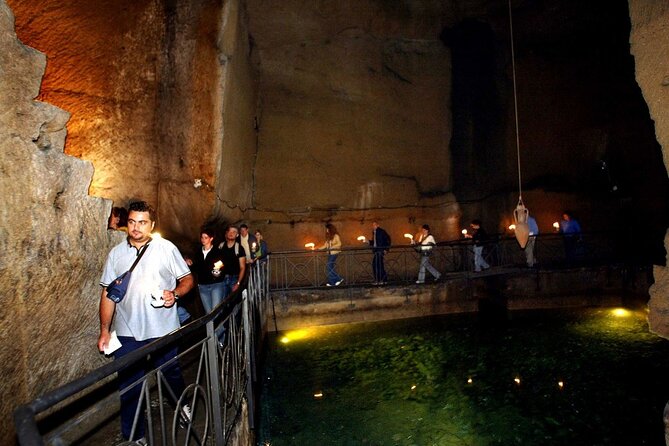
The biggest physical detail is the descent: you go down 35 meters. Even if the route is managed well, that change in temperature and the sense of enclosed space is part of the experience. If you get uncomfortable in tight or dim places, consider that factor early rather than waiting to decide once you’re already underground.
Also, because it’s guided in Spanish, your experience will feel best if you’re comfortable catching history and explanations in another language—or if you don’t mind relying on visuals while your guide narrates. The support from films mentioned in feedback helps a lot here.
Santa Maria de la Pitra Sagrada: The Start of the Story
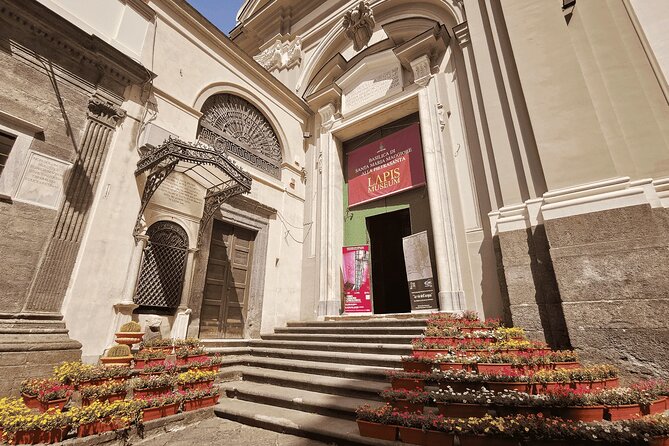
The tour begins at the basilica area: Santa Maria de la Pitra Sagrada (the name is presented as part of the Pietrasanta complex). This isn’t a random prelude. It’s where you set the historical stage before you go down into the water works.
From there, you transition into the underground spaces, which gives the experience a clear narrative arc. You go from the kind of architecture people can see and recognize above ground, then step into the quieter, cooler world where Naples stored water—and later hid people.
The Pietrasanta complex itself has Greco-Roman origins, according to the tour context you’ll hear. The first settlers used the name Partenope for the city, and that name is linked to the basilica area where Pietrasanta stands today. It’s one of those details that makes you look at the surface buildings differently: they’re sitting on top of older ideas and older naming.
The Greek and Roman Aqueduct and the Prince’s Pool
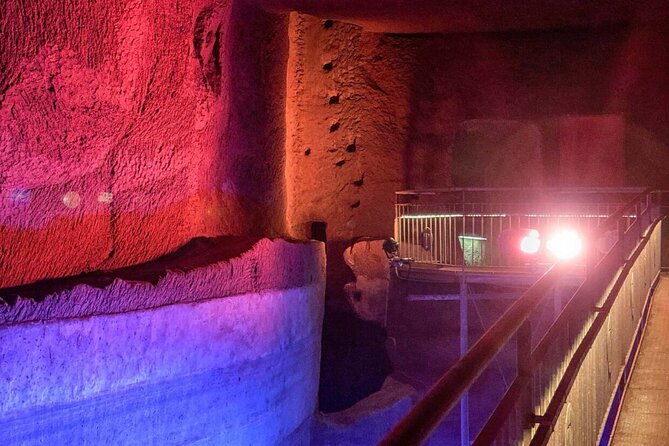
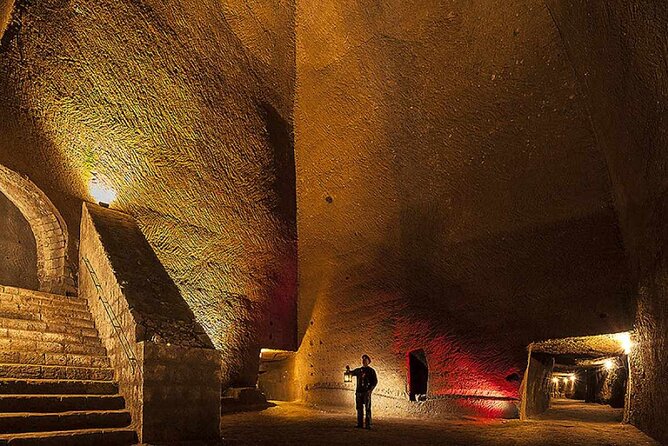
Once you’re down, the core of Lapis comes into focus. You’ll see the Greek and Roman aqueduct of ancient Neapolis, plus the ancient cistern structures built to store water. This is the part that feels most like a “how did they do that?” moment—because you’re not only seeing stone, you’re seeing function.
The museum project’s point is to recreate how streams and cisterns worked in ancient times. You should walk in expecting to connect the dots between visible channels and the stored-water spaces. The goal is comprehension, not just sightseeing.
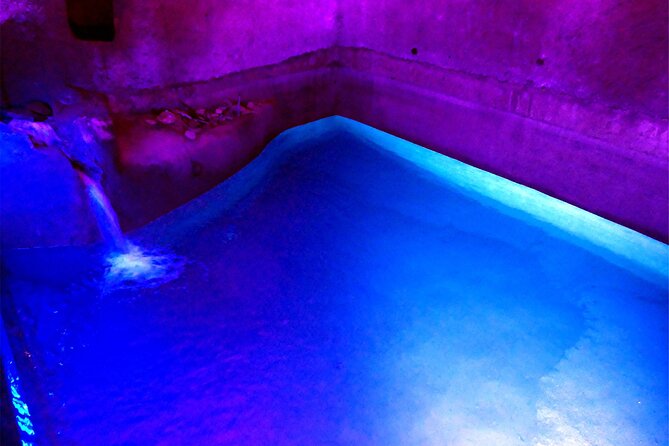
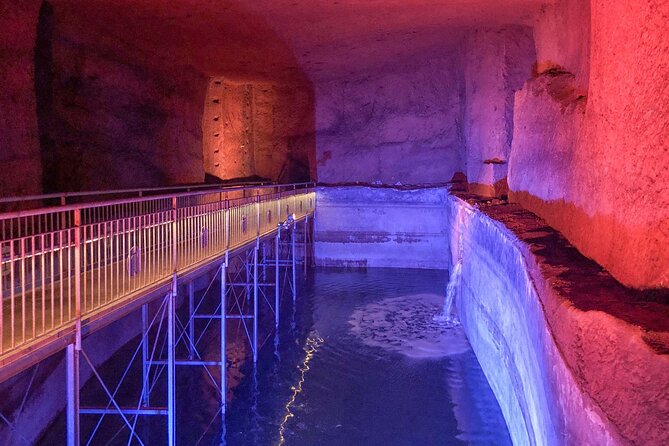
One highlight is the cistern area called the prince’s pool, identified as the largest underground pool in Naples. That scale is easy to feel once you’re standing in it. It’s the kind of space that explains how a big city survives: not by luck, but by infrastructure.
This is also where the museum’s restoration style helps. When the water story is presented with the underground geometry in mind, you’re more likely to remember it. You might even start noticing how Naples above ground follows the logic of water needs below ground.
WWII Shelter Space: When Water History Turns Human
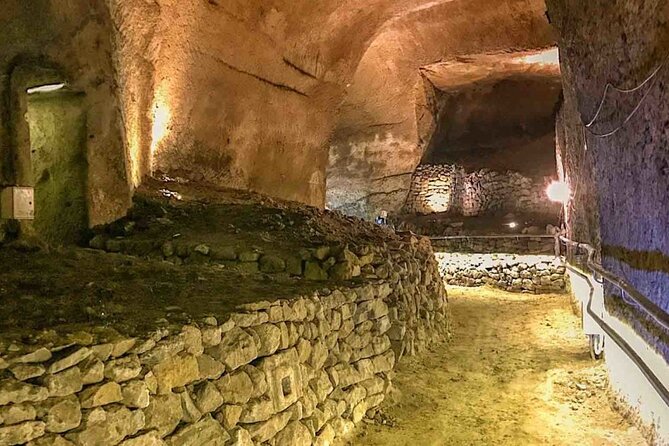
Naples underground did more than hold water. In the same subterranean world, the tour also points out an area used as a shelter during the Second World War.
This part of Lapis can hit harder than the ancient water system, because it connects the underground to real fear and real survival. It’s not just an interesting historical fact—it’s a shift from engineering to emergency.
In feedback about the experience, people specifically praised the way the films and explanations help you understand what life was like in these underground cellars during difficult moments. That pacing choice matters. You’re not thrown into a heavy topic without preparation, and you get context rather than just a quick mention.
If you like history that has a human edge, this section is a strong reason to book. Just be ready for the tone to change from ancient city logistics to wartime vulnerability.




Price and Value: Is $46.34 Worth It?
The listed price is $46.34 per person, with an admission ticket included. You’re also getting a guided visit in Spanish, lasting about 1 hour 15 minutes, and capped at 20 people, which usually means less crowd pressure.
So how do you judge value in plain terms? Ask yourself what you want most from Naples. If you want a quick stop, Lapis won’t feel like a simple “in and out.” You’re paying for guided access to a specific kind of site—underground water infrastructure tied to a restoration project—plus interpretation and story structure.
Where the value becomes clearer is this: you’re combining multiple elements that cost time and effort if done separately—church context above, then down into the aqueduct and cistern system, then the WWII shelter layer.
If you’re comparing costs, I’d treat this as a specialized guided experience rather than a museum ticket you can wander through on your own. And if language is a concern, that’s your other value check: Spanish-only tours can still be worth it when the visuals and films support the guide’s explanations, but you’ll feel the language gap if you rely only on words.
Who Should Book This Spanish Guided Tour
This is a good fit if you:
- Like Naples with real depth, not just the surface sights
- Want a guided story that connects architecture, water, and wartime use of underground spaces
- Prefer smaller groups (up to 20) over long, impersonal lines
- Enjoy historical explanations backed by visuals and films
Feedback also suggests the tour can work for people with disabilities, saying it’s suitable even for that audience. Since you’re descending 35 meters, it’s still smart to ask ahead about practical details that affect you personally.
If you’re traveling with very young children, you may need to manage expectations. One negative note mentions that the visit didn’t match what was promised for young kids. That doesn’t mean kids can’t enjoy it, but it’s a sign to think carefully about attention span, comfort with underground spaces, and what you’re expecting from a history outing.
Book It or Skip It?
Book Lapis if you want the Naples “under the street” experience done in a guided, story-driven way, with a clear connection between Greco-Roman engineering and the human reality of WWII shelter. The underground water system, the prince’s pool, and the way the tour explains them are the big selling points.
Skip it if Spanish narration is a dealbreaker for you, or if you’re looking for a kids-first activity that keeps attention mostly through play. Also skip if the idea of going 35 meters down makes you uncomfortable.
If you’re flexible on language and you like history that you can stand inside, Lapis is the kind of booking that can become one of your Naples memories for the whole year.
FAQ
Where does the tour meet?
The meeting point is Piazza Dante (P.za Dante, 80135 Napoli NA, Italy). The guide waits there at your chosen time.
What is the exact meeting location and where does the tour end?
After meeting in Piazza Dante, you go to LAPIS Museum – Museo dell’Acqua Napoli in Piazzetta Pietrasanta, 80138 Napoli. The tour ends directly at the museum.
How long is the guided tour?
The tour lasts about 1 hour 15 minutes.
What language is the tour guided in?
The guided tour is in Spanish.
Is admission included in the price?
Yes. Admission Ticket Included is part of this experience.
How many people are in the group?
The tour has a maximum of 20 travelers.
How far down do you go?
You go down 35 meters to reach the deepest part of the city for the underground sights.
What will you see during the underground portion?
You can see the Greek and Roman aqueduct, an ancient cistern, including the prince’s pool area, and a part used as a shelter during the Second World War.
Is it suitable for most people?
The information provided says most travelers can participate.
What is the cancellation policy?
You can get a full refund with free cancellation if you cancel up to 24 hours in advance of the experience start time.