REVIEW · NAPLES
Naples: National Archaeological Museum audio guide
Book on GetYourGuide →Operated by ITGUIDES · Bookable on GetYourGuide
Hercules in stone deserves better than guesswork. This self-guided National Archaeological Museum Naples tour uses a smartphone audio guide to help you “read” the museum room by room, with photos, maps, and short explanations for big-name masterpieces. It’s built around an 85-stop route, so you aren’t wandering aimlessly in a building that’s famous for being huge.
I love the 85 point-of-interest structure: you get audio plus photos and descriptions for the works you actually want to find. I also like that you can start before you even walk in, so you’re not figuring out your phone while you’re trying to enjoy the art.
One caution: this is fully online on the front end. You need to have your access set up and your phone ready before you arrive, or you’ll lose the whole experience.
In This Review
- Quick highlights to help you decide
- Why the Naples Archaeological Museum audio guide fits the building
- Before you go: get your phone ready like it matters (because it does)
- The 3-hour flow: how the audio guide keeps you moving
- Hercules (3 meters tall), and why it’s the right first wow
- Venus Callipigia: grace, expression, and the way the audio handles tone
- House of Fauno mosaics: seeing Roman art with the right pacing
- Alexander vs. Persia: why battle scenes work well with audio
- The Egyptian collection and the Gabinetto segreto
- Finding your next stop: the good map, and the limits of phone navigation
- Price and value: $4.70 for a lot of museum time
- Who should book this Naples museum audio guide
- Final call: should you book it?
- FAQ
- Do I need an entry ticket to visit the museum?
- Is there a meeting point for the audio guide?
- How long is the Naples museum audio tour?
- Can I use the audio guide offline?
- What do I need to bring?
- Which languages are included?
- Does the audio guide work only inside the museum?
- Is the app the same as an audio guide sold at the ticket office?
- Can I cancel for a refund?
Quick highlights to help you decide
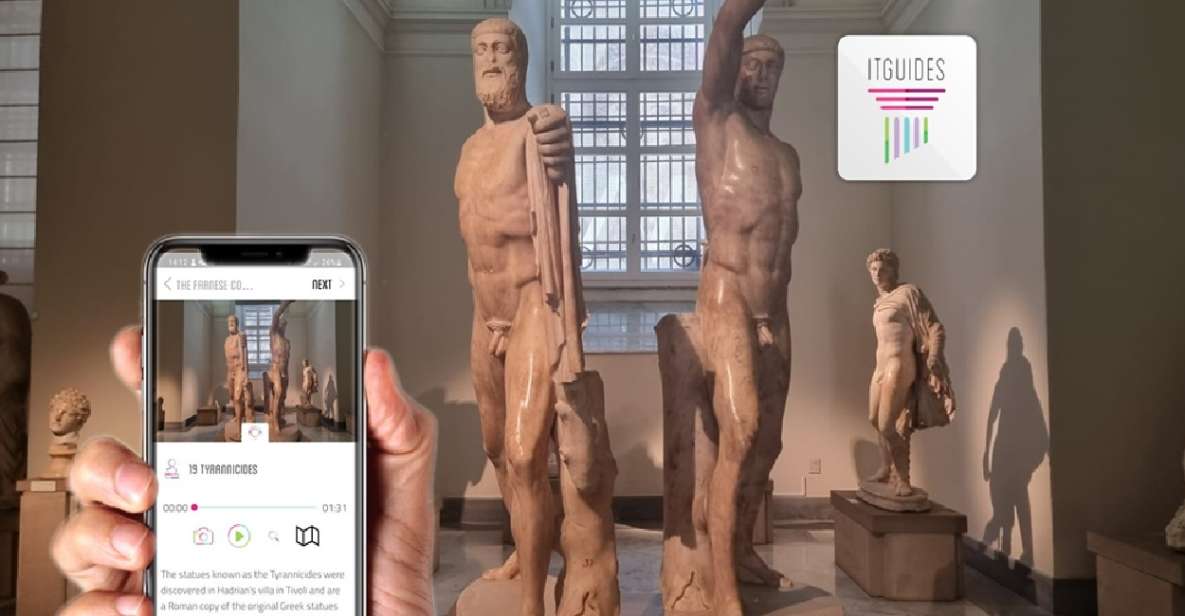
- 85 point-of-interest audio route with audio, photos, and photos-based context for key objects
- Start before you enter the museum, so you arrive oriented and ready to move
- Work offline, as long as you download the content ahead of time
- Map included to help you locate works inside a very large building
- Multiple languages: Italian, English, French, German, Spanish
- Covers big hits like the 3-meter Hercules, Venus Callipigia, and the House of Fauno mosaics
Why the Naples Archaeological Museum audio guide fits the building
The National Archaeological Museum in Naples is the kind of place where you can either rush and miss a lot, or you can slow down and let each room make sense. A standard visit can feel like a blur of statues and cases, especially if you don’t have captions everywhere.
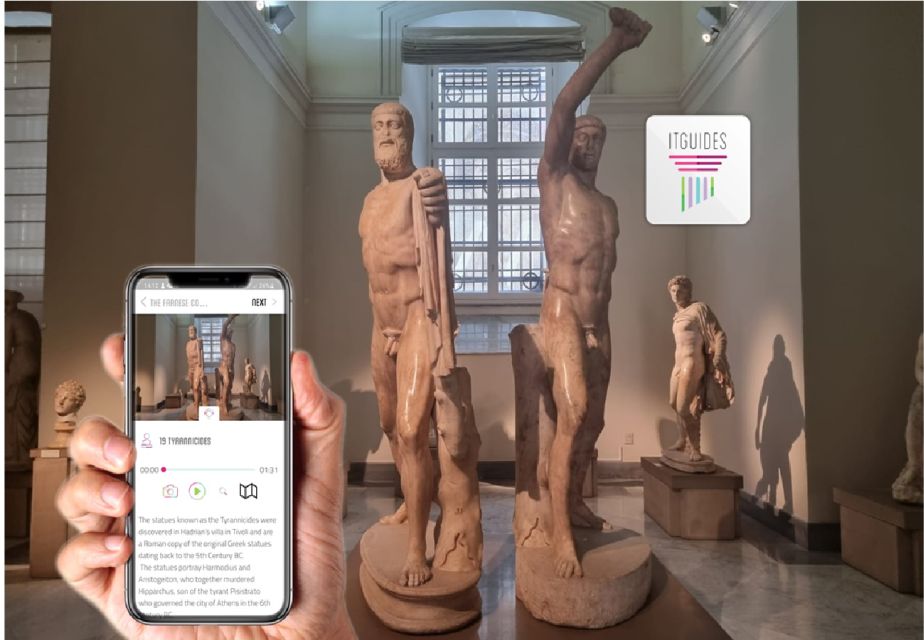
This audio guide is designed to solve that problem with a guided trail of stop-by-stop points of interest. You get the audio plus visual aids (photos and maps), which matters because museum signage can’t always keep up with how fast you move or how spread out the galleries are.
The best part is that the route is meant for a ~3-hour visit, so it doesn’t ask you to “do everything.” It nudges you toward the works people actually come to see, while keeping you moving at a human pace.
You can also read our reviews of more guided tours in Naples


Before you go: get your phone ready like it matters (because it does)
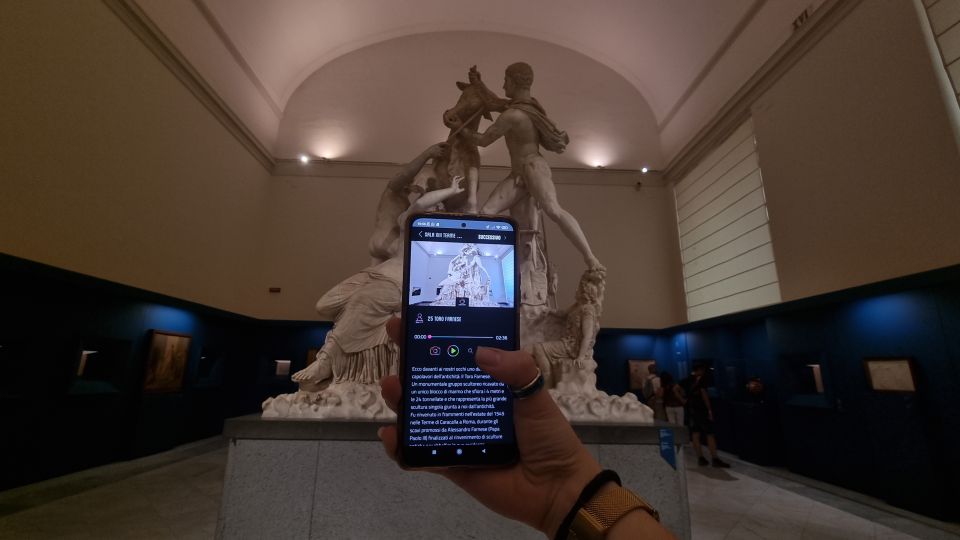
This guide is delivered through the Itguides app, and it’s a “real phone trip,” not a paper plan. The content is accessible through the app, and you should plan to do the setup with enough time to handle tech.
Here’s what you should do before your museum visit:
- Charge your phone to a strong level and bring a power bank if you can
- Download the guide content using good cellular signal or Wi‑Fi before you start walking
- Download everything before you enter so you’re not hunting for a signal inside the museum
- If you’re unsure, try the free demo in the app before buying
Also note this important detail: the audio guide can only be accessed online, and it’s not the same thing as an audio device or audio sold at a ticket office. In practice, that means you want your access set up and ready before you reach the galleries.
If you don’t want any last-minute stress, I’d treat the setup like part of your museum plan: ten minutes of preparation outside saves you thirty minutes of frustration inside.
The 3-hour flow: how the audio guide keeps you moving
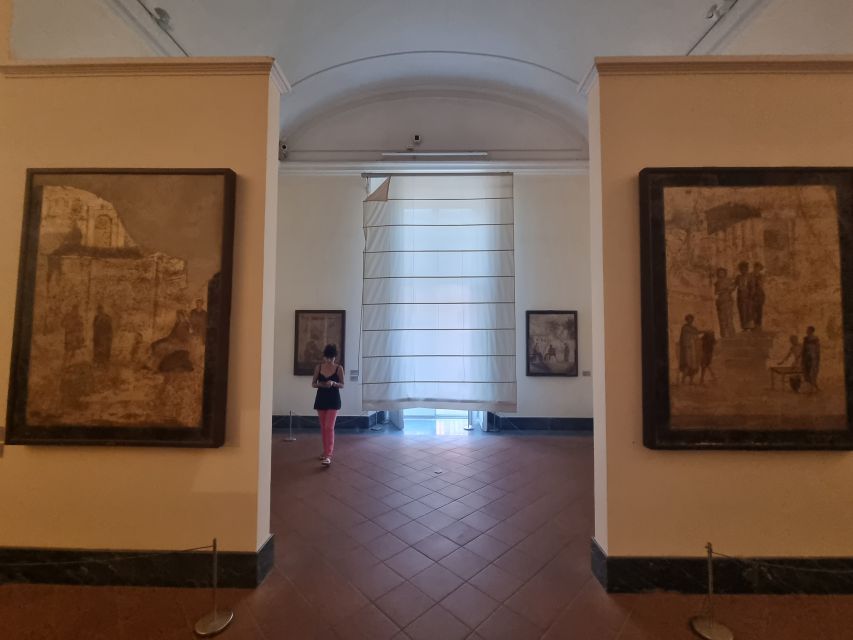
The guide is built for about 3 hours, which is a sweet spot for this museum. You’ll have time to stop for audio, look at key works, and still move through the major collections without feeling trapped.
You should expect the experience to work like this:
- You follow the guide’s points of interest in order (or close to it).
- For each stop, you listen to the audio and use the included photos and map to find the next work.
- You keep going until the route naturally ends or you feel you’ve hit your personal must-sees.
Because the guide includes photos and descriptions, it’s helpful for artworks where you can’t easily get the full story from the object label alone. It’s also helpful in galleries where signs may feel sparse or where you need context to tell what you’re looking at.
Hercules (3 meters tall), and why it’s the right first wow
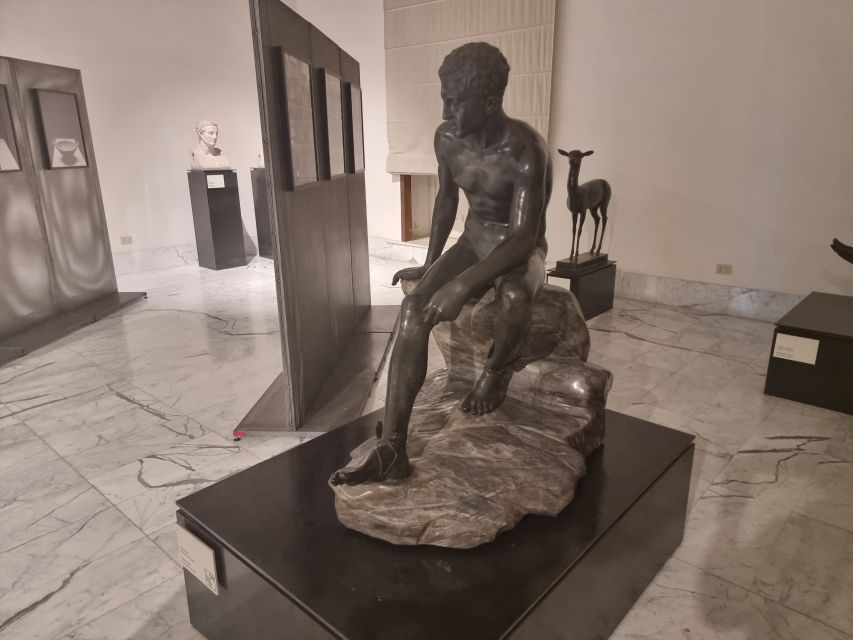
One of the headline stops is the 3-meter tall resting Hercules. That kind of scale can be startling in person, and the audio context helps you notice things your eyes might otherwise skim past.
When you stand in front of a giant sculpture, it’s easy to think: okay, it’s big. The audio nudges you to look deeper—pose, mood, and what the work represents—so your first “wow” becomes more than a quick photo moment.
If you start with Hercules, you set your expectations for the museum. This is not a “one-room” building; it’s a collection-heavy place where the big names anchor your route.
Venus Callipigia: grace, expression, and the way the audio handles tone
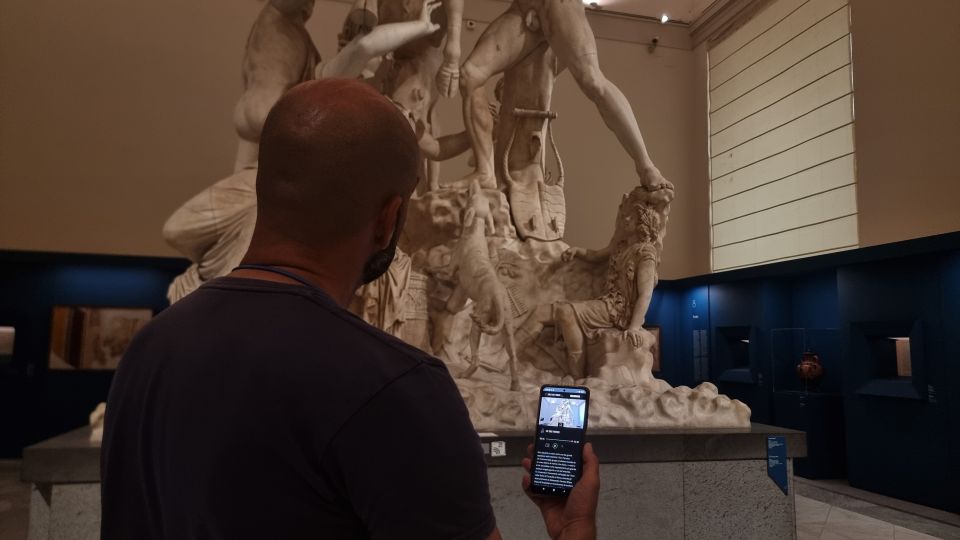
Another standout is Venus Callipigia, with its famously described pose. This is the kind of artwork where you can’t always read the full meaning from distance, and audio explanations make it easier to appreciate the details without feeling lost.
One smart thing about this guide is that it keeps the focus on what you’re actually viewing. Instead of long lectures, it gives you enough context to understand what you’re looking at and why it mattered to the people who made and collected it.
This is also a good stop if your museum visit depends on momentum. A striking object near the top of your route helps you stay engaged for the rest of the collection.
You can also read our reviews of more museum experiences in Naples






House of Fauno mosaics: seeing Roman art with the right pacing
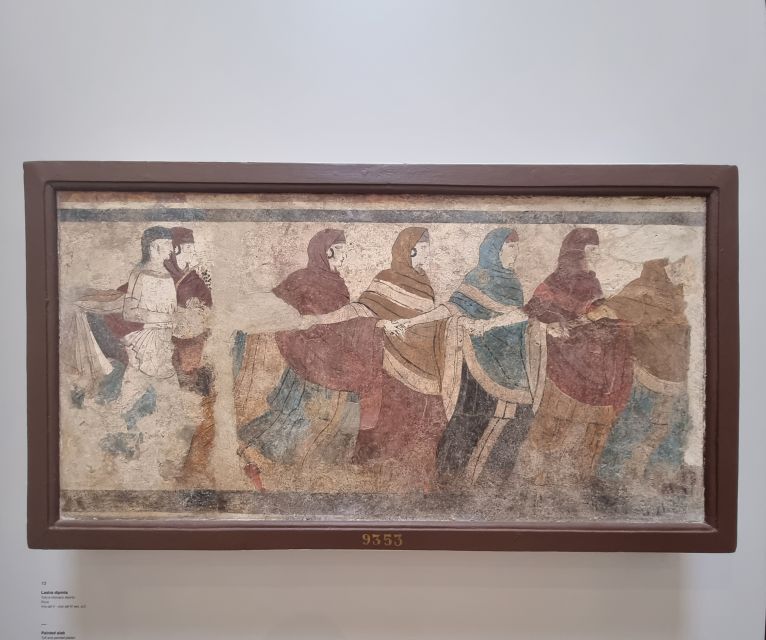
The audio guide includes the Mosaics of the House of Fauno. Mosaics can be tricky inside a museum because lighting and distance affect how quickly you can take in details.
With an audio guide, you can control your pace: you pause when you need to, listen while you look, and then move on when the room feels readable. The guide’s structure also helps you avoid the common problem of spotting the mosaic but skipping the explanation because you’re already on the move.
This stop is especially valuable if you’re the type of person who enjoys visual storytelling. Mosaics reward patient looking—and the guide gives you permission to slow down.
Alexander vs. Persia: why battle scenes work well with audio
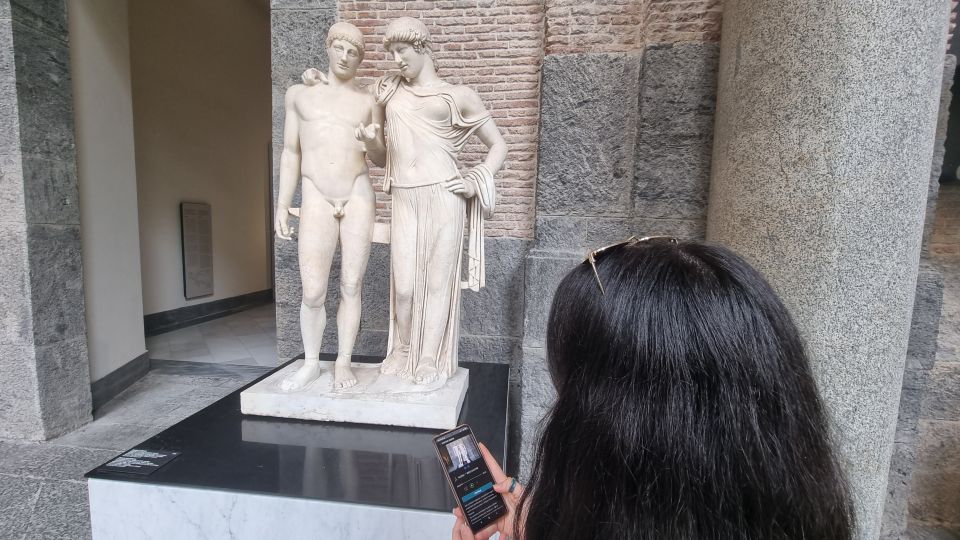
The guide points you to Alexander in battle against the Persian king. Battle scenes in art tend to be visually busy, and they can feel chaotic if you don’t know what to look for.
Audio helps by turning visual clutter into a sequence: who’s doing what, what’s emphasized, and how the scene is composed. It’s the difference between seeing figures and actually understanding the drama.
If you enjoy narrative art—moments frozen in time—this is one of the stops where audio adds the most value.
The Egyptian collection and the Gabinetto segreto
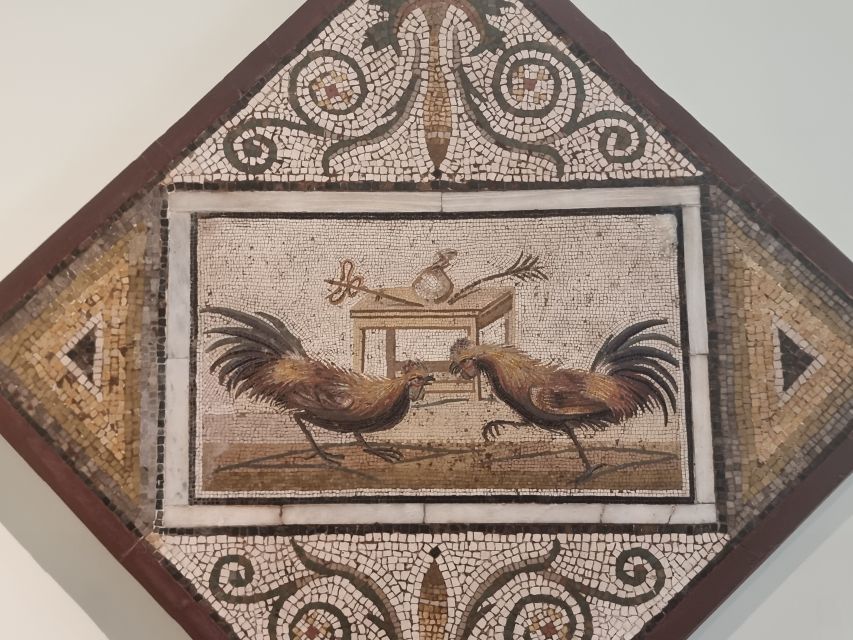
Don’t skip the Egyptian collection. Museums often treat Egypt as a separate “realm” inside a larger building, and having an audio guide helps stitch it into your overall visit instead of treating it as an afterthought.
The guide also includes the famous Gabinetto segreto. That name alone signals that this is part of the museum’s legend, and having audio context can make it easier to interpret what you’re seeing without guessing.
This part of the museum is a good reason to plan your route instead of just drifting. If you save your energy for these sections, you’ll leave with a more rounded visit—Roman and Greek highlights plus the Egyptian material and the museum’s more talked-about corners.
Finding your next stop: the good map, and the limits of phone navigation
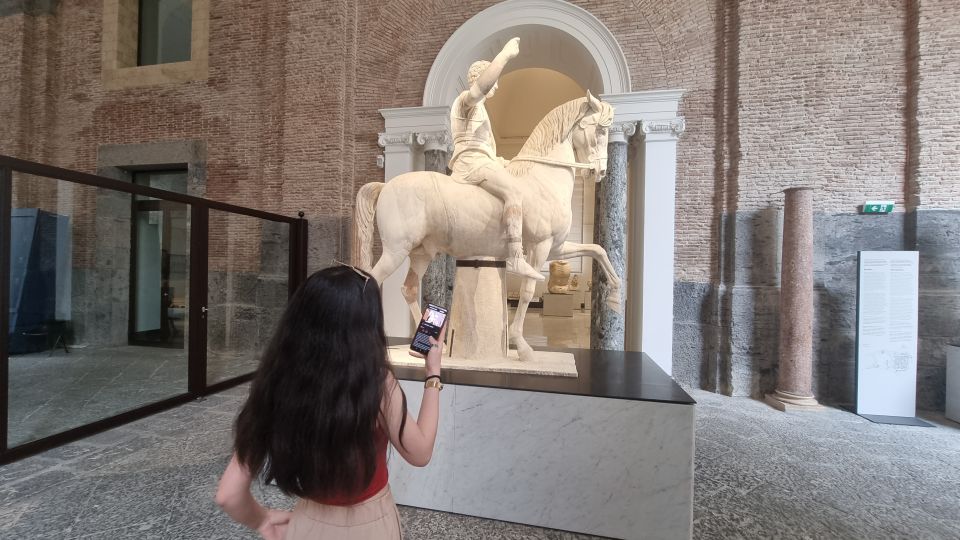
The audio guide includes a map, and that helps a lot. It’s particularly useful in a museum where galleries and rooms can feel like they all start to look the same once you’ve been walking for a while.
That said, there’s a real-world navigation limitation with any phone-based POI system: if the museum layout and your phone’s screen don’t match what you expect, you can lose time getting from stop to stop. Some people found the navigation isn’t as interactive as they’d prefer, and that there’s no easy way to jump around by exhibit number—you tend to follow the sequence.
My practical advice: treat the map like your compass, but also give yourself a few minutes’ buffer between major rooms. Don’t plan to speed-run everything. This route works best when you let your eyes and your audio share the workload.
Price and value: $4.70 for a lot of museum time
At $4.70 per person, this audio guide is a strong value—especially because the bundle isn’t just audio. You also get a map plus multi-language support (Italian, English, French, German, Spanish), and the guide is built around a structured set of points of interest.
The big “value” question isn’t just price. It’s whether the guide saves you from two common museum problems:
- You miss key objects because you can’t find them quickly.
- You stand in front of something important but don’t get enough context to enjoy it.
Based on how the product is described, this guide is meant to reduce both problems by telling you what to look at and helping you locate it. And because the museum visit is typically hours-long, saving even a little time and confusion can easily make the small cost feel like money well spent.
Also, it’s a smart option when on-site audioguides are sold out. If you want your museum experience locked in before you arrive, this sort of pre-planned phone guide does the job.
Who should book this Naples museum audio guide
This fits you well if:
- You want a self-guided route but still need structure.
- You like audio explanations and want more than what labels alone provide.
- You’re comfortable using your phone in busy indoor spaces.
- You want a multi-language option without hiring a private guide.
It’s also a good pick if you’re traveling with someone and you’re okay sharing tech (for example, using Bluetooth headphones). The idea is that the guide can be used in pairs with a bit of planning.
If you dislike relying on your phone, or you know you’ll struggle with battery life, then you should think twice. This experience depends on a charged smartphone and downloaded content.
Final call: should you book it?
Yes, I’d book this if you want a guided, high-hit museum visit at a tiny cost. The combination of 85 points of interest, a built-in map, and audio for major works like Hercules and Venus Callipigia makes it much easier to enjoy the museum without feeling like you’re playing scavenger hunt.
I’d hesitate only if you can’t reliably prepare your phone (charging, downloading with signal, and staying powered up). In that case, the museum is still worth it—but you’ll need either an on-site alternative or more time and flexibility.
FAQ
Do I need an entry ticket to visit the museum?
Yes. This audio guide does not include the entry ticket. You’ll need to buy museum admission separately.
Is there a meeting point for the audio guide?
No. This is a self-guided experience with no meeting point.
How long is the Naples museum audio tour?
The experience is set for about 3 hours. Starting times depend on availability.
Can I use the audio guide offline?
You can use it offline, as long as you download the contents in advance (using good cellular signal or Wi‑Fi).
What do I need to bring?
Bring comfortable shoes and clothes, plus a charged smartphone. A power bank can be useful.
Which languages are included?
The audio guide is available in Italian, English, French, German, and Spanish.
Does the audio guide work only inside the museum?
You can start using it before you go into the museum. It’s designed so you can begin setup and listening ahead of time.
Is the app the same as an audio guide sold at the ticket office?
No. This guide is accessed via the Itguides app and is not the ticket office audio guide. You need to have your online access set up before your visit.
Can I cancel for a refund?
Yes. You can cancel up to 24 hours in advance for a full refund.