REVIEW · POMPEII
Exclusive Pompeii with Wine and Lunch on Vesuvius-Skip-the-line
Book on Viator →Operated by Leisure Italy · Bookable on Viator
Pompeii is big, but this tour keeps it manageable. What I love most is the skip-the-line entry plus a private guide who turns scattered ruins into a clear story. I also like the door-to-door feel, with pickup and drop-off that makes a long day easier. The one drawback to plan around: there’s no actual climb up Mount Vesuvius—think views and wine on the slopes, not hiking.
This is built for people who want to feel oriented fast. You get a smart pace, enough time for photos, and a tour that highlights the places most visitors miss when they wander on their own. You’ll cover a lot of ground in a short window, so bring good walking shoes and expect some uneven paths.
If you’re a history fan and a wine-and-food person, this combo works well. The Pompeii portion is a focused guided walk, then you head to Cantina del Vesuvio for tastings and a full 3-course lunch that leans into local ingredients.
In This Review
- Key points I’d bank on before you book
- Skip-the-line entry and hotel pickup that saves real time
- Pompeii with a private guide: how the ruins get a plot
- Your Pompeii core route: Forum, temples, market, and baths
- The Forum of Pompeii: the city’s daily stage
- Basilica and Temple of Apollo: power and belief in stone
- Macellum: Pompeii’s food market
- Terme del Foro: bathing as public life
- Homes and streets you can picture: Casa dei Vettii and the Insula
- Casa dei Vettii: elite home, real visual impact
- Insula dei Casti Amanti: workshops and daily routines
- Theater time at Teatro Grande (and why it’s more than “just a building”)
- Porta Marina and the city wall vibe: Pompeii meets the sea
- Antiquarium first: why it changes how you feel inside the ruins
- Premium Plus upgrade: the Villa dei Misteri stop that fans love
- Vesuvius views and the wine-and-lunch portion at Cantina del Vesuvio
- Timing and walking reality: what 5 to 7 hours means on the ground
- Value check: why this can be worth $575.35 per person
- Who this tour suits best (and who might want a different plan)
- Final call: should you book this Pompeii with wine and lunch tour?
- FAQ
- How long is this Pompeii with wine and lunch tour?
- Is skip-the-line entry included?
- Will I see Mount Vesuvius during the day?
- What’s included in the wine portion?
- What does lunch include?
- Are there options for dietary restrictions?
- Does the Premium Plus option add anything?
- Where can pickup happen?
- What kind of walking is involved?
Key points I’d bank on before you book
- Skip-the-line tickets help you avoid the worst waits and use your time inside Pompeii.
- Private, certified guidance keeps the site from feeling like a maze of stone.
- Vesuvius views all day connect the eruption story to what you’re tasting later.
- Cantina del Vesuvio wine tasting includes 5 wines, not just a quick pour.
- A real lunch on-site: 3 courses plus vegetarian, vegan, and gluten-free options.
Skip-the-line entry and hotel pickup that saves real time
Pompeii can eat a day. Even when you’re excited, long entry lines and slow-moving crowds make it harder to absorb anything. This tour’s big advantage is getting you in with skip-the-line tickets so you’re not burning your energy waiting at the gate.
Then comes the other practical win: pickup and drop-off. The tour operates pickups from Naples, Sorrento, Pompeii (and others like train stations, airports, and cruise terminals/ports). That matters because Pompeii is easier when you treat it like an organized day trip, not a logistics puzzle.
The tour also runs in English and is described as private—so it’s only your group. In a place like Pompeii, that typically means fewer stops broken up by strangers’ questions and a more natural pace.
You can also read our reviews of more wine tours in Pompeii


Pompeii with a private guide: how the ruins get a plot
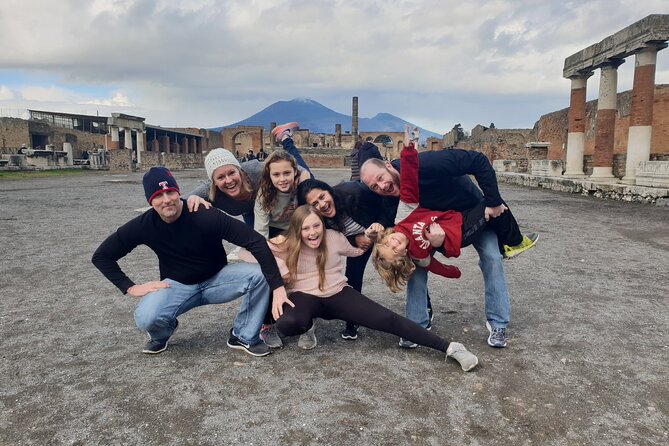
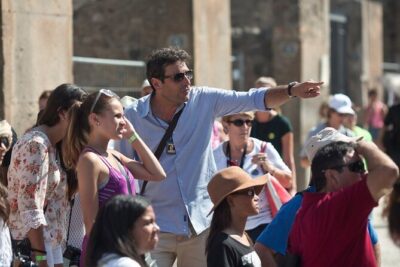
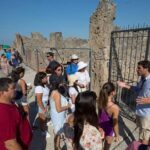
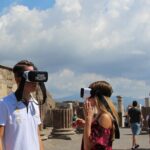
Your first stop is the Archaeological Park of Pompeii, where you’re met by a private certified guide. Instead of letting you loose with a map and a vague sense of where things are, the guide focuses on the highlights and explains what you’re seeing as you move.
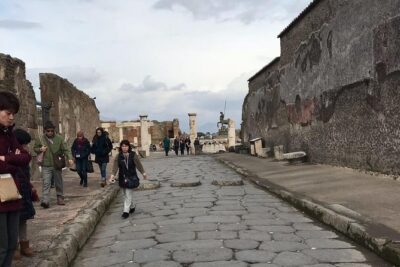
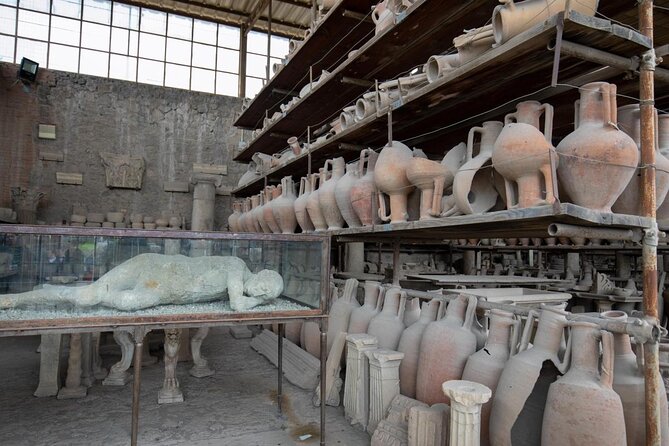
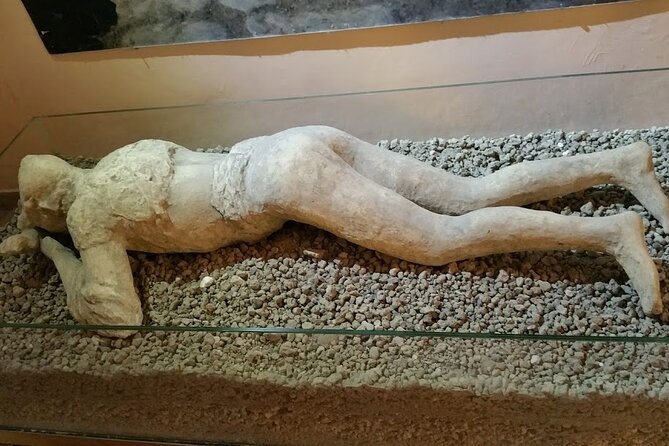
This is where the “private” part is worth paying for. Pompeii is larger and better preserved than most first-timers expect. With a guide, you get context for things like plaster casts of victims, the layout of public buildings, and what daily life looked like right before AD 79.
I also like that the walking pace is flexible. The tour is at your own pace, and you can share special requests or needs in advance. That’s important because Pompeii isn’t just walking—it’s walking on history with a lot of “stop and look” moments.
Your Pompeii core route: Forum, temples, market, and baths
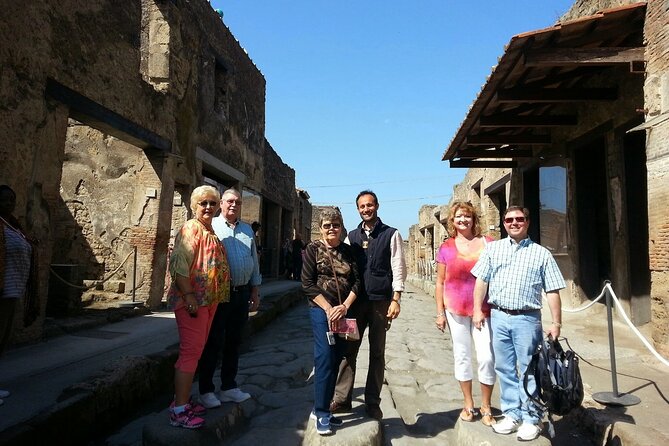
After Pompeii’s main orientation, the tour moves through the civic and social heart of the city—places that tell you how Romans organized work, worship, and leisure.
The Forum of Pompeii: the city’s daily stage
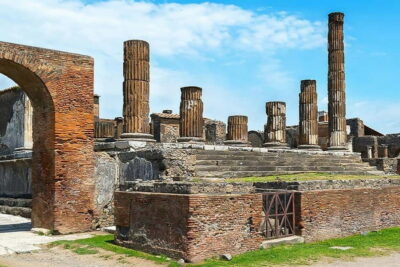
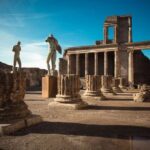
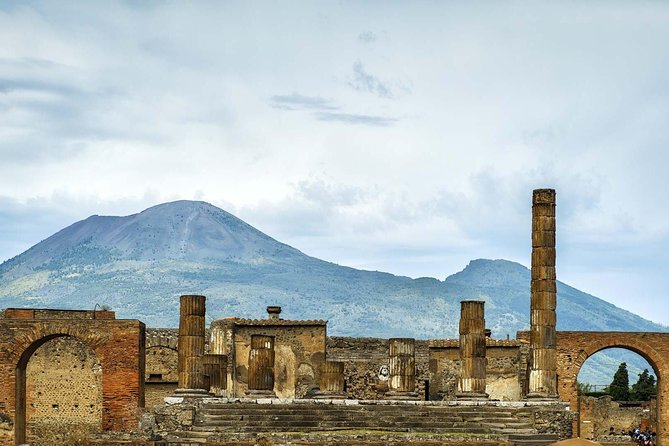
The Forum is the center of civic life. You’ll get an elevated perspective from modern walkways and terraces, which helps you understand how the square was arranged—temples, administrative buildings, and market structures in one monumental space. It’s also the kind of place where you can see multiple landmarks at once, which makes the big-picture view come together quickly.
You’ll also learn how announcements, deals, and festivals would have played out around these buildings, with Mount Vesuvius looming in the background.
Basilica and Temple of Apollo: power and belief in stone
Next, you’ll step into two major anchors:
- The Basilica, one of the most imposing public buildings, dating back to the 2nd century BC. It’s a key example of early Roman public architecture.
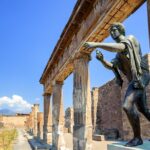
- The Temple of Apollo, dedicated to Apollo as sun, music, and prophecy. This helps you connect religion to everyday civic rhythm. Even when you’re looking at remnants, the guide’s explanations make it feel like a living spiritual center.
You can also read our reviews of more tours and experiences in Pompeii



Macellum: Pompeii’s food market
From the Forum, you move toward the Macellum, Pompeii’s covered food market. This is one of the best stops for understanding “life stuff.” You’ll see how vendors sold fish, meat, fruit, and imported delicacies, and you’ll get a sense of the market’s layout: stalls, storerooms, counters, and decorative elements.
This is a great moment to slow down. Food markets are where you can picture the noise, the bargaining, and the daily routines that never show up in a textbook.
Terme del Foro: bathing as public life
Then you head to the Forum Baths (Terme del Foro). What stands out here is the organization: separate men’s and women’s areas, changing rooms, warm and hot bathing halls, and a cold plunge pool. The hypocaust heating system is a reminder that Romans didn’t do “casual” when it came to engineering.
If you’ve ever wished Pompeii felt more human, public bath complexes are your best friend. You can almost imagine conversations and routine visits in the same spaces.
Homes and streets you can picture: Casa dei Vettii and the Insula
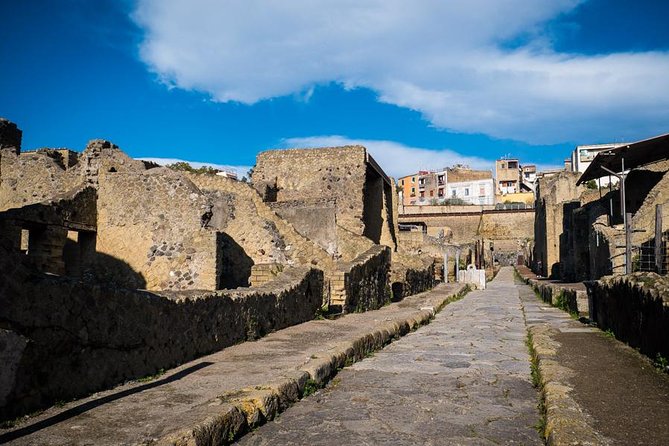
Pompeii isn’t only temples and markets. It’s also private life—status, art, shopping, and work happening side by side.
Casa dei Vettii: elite home, real visual impact
The Casa dei Vettii is one of the finest aristocratic residences in Pompeii, known for its frescoes and refined design. You’ll see how wealth expressed itself through painted mythological scenes, decorative motifs, and the way the house is organized around atria and peristyle gardens.
This stop is especially strong if you like art and domestic architecture. It also gives you a clean contrast to the market and Forum—public life versus the curated world behind a wealthy household’s walls.
Insula dei Casti Amanti: workshops and daily routines
The Insula dei Casti Amanti is named for a famous fresco showing a couple sharing an affectionate moment. What makes it fascinating is the way you view it: you access the site via elevated ramps that let you look into workshops, storerooms, and domestic rooms below.
The guide’s framing helps you understand something big: in Pompeii, trade and home life were tightly linked. Even the preserved signs and half-finished renovations help recreate the city’s routine right up to the eruption.
Theater time at Teatro Grande (and why it’s more than “just a building”)
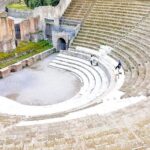
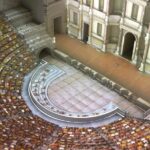
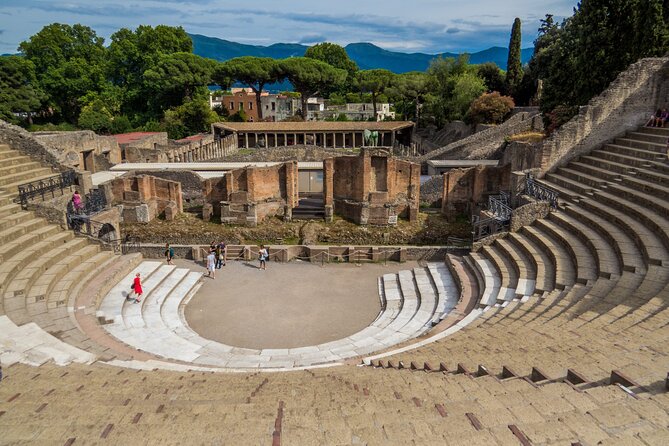
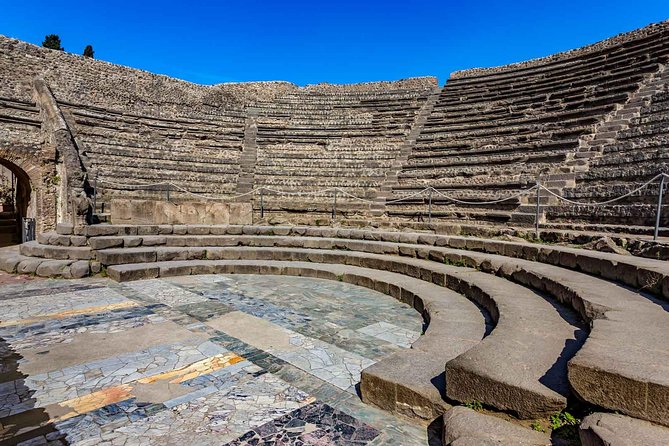
The Teatro Grande pulls you into Roman entertainment and public ceremony. From the upper terraces and modern walkways, you can look down at sweeping seating tiers, the stage building, and the orchestra area.
This is another stop that rewards a guide. When you understand how performances worked and why acoustics mattered, it becomes easier to picture crowds, costumes, and the shared energy of public drama.
It also helps you see Pompeii as a functioning city with culture, not only a preserved disaster site.
Porta Marina and the city wall vibe: Pompeii meets the sea
At Porta Marina e cinta muraria, you’ll step near one of Pompeii’s main gateways. This area connects to the defensive walls and shows how the city controlled access—especially important given Pompeii’s connection to the port area and the Bay of Naples.
You can walk along an original stone ramp and see fortifications that once welcomed merchants, sailors, and visitors arriving by sea. This is a quick stop, but it adds a strong “outside-in” feel to the day.
Antiquarium first: why it changes how you feel inside the ruins
One of the most emotionally effective parts of the experience is the Antiquarium di Pompei. It’s essentially the prequel to the street-level ruins.
You move through organized galleries with statues, household objects, inscriptions, jewelry, and artifacts recovered during excavations. From glass cases and elevated viewing platforms, you get a closer look at delicate items that wouldn’t survive as well in the open air.
Then you reach rooms that present plaster casts of victims and eruption material. Even if you’re the type who likes facts more than feelings, this section helps you understand the scale and tragedy behind what you’ll soon see outdoors.
Premium Plus upgrade: the Villa dei Misteri stop that fans love
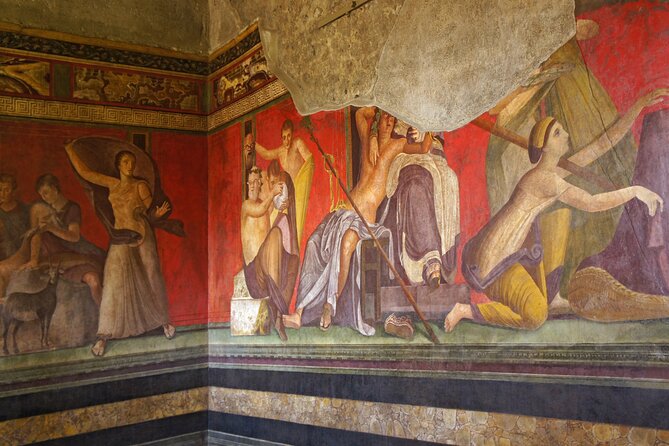
If you choose the Premium Plus option, you get an extra highlight: Villa dei Misteri. This villa sits just outside the ancient city walls and is famous for its remarkably preserved frescoes depicting a mysterious Dionysian ritual.
The big practical change is that Premium Plus includes an extended 3-hour private guided tour of Pompeii with more relaxed time. If you’re a repeat-ruins visitor (or just want more depth), this is the upgrade that most clearly affects what you’ll feel at the end: less rushing, more lingering with the guide’s explanations.
Vesuvius views and the wine-and-lunch portion at Cantina del Vesuvio
No, you’re not climbing Vesuvius on this tour. Instead, you get the volcano as a constant presence—views during the day, then a tasting and meal on the slopes.
At Cantina del Vesuvio (Russo Family Winery, family-run since 1930), you’ll enjoy:
- A guided tour of the vineyard and cellar
- A tasting of 5 wines (classic or superior)
- A 3-course lunch with traditional local dishes
The lunch menu is built around local flavors. You’ll have an appetizer with salami and cheeses (provolone and ricotta), casatiello, roasted eggplant, and bruschetta with Piennolo tomatoes. The main course is pasta with Piennolo cherry tomatoes and basil. Dessert is Neapolitan pastiera with ricotta, cooked wheat, and candied fruit.
They also offer vegetarian, vegan, and gluten-free options, which is a huge help if you’re traveling with food needs.
If you like your wine with a story, the setting matters. This winery is perched above the Bay of Naples, and that backdrop makes the tasting feel connected to the geology and history you just learned.
Timing and walking reality: what 5 to 7 hours means on the ground
The overall duration is about 5 to 7 hours. Pompeii itself is the time magnet, with major stops adding up quickly, even when each visit segment is brief.
The tour is marked with short segments at many locations, but the true “time cost” is in moving between stops and absorbing what the guide is pointing out. If you want photos, plan for extra seconds here and there. The guide’s pacing helps, but your shoes will still do the work.
Also note the practical guidance: you should have moderate physical fitness, wear appropriate shoes, and use sun gear especially from May to September. Pompeii is a sun-and-stone environment, and even a short scramble feels longer in heat.
Value check: why this can be worth $575.35 per person
At $575.35 per person, this isn’t a budget play. But it’s not just a ticket price, either.
You’re paying for a bundle of things that are hard to replicate well on your own:
- Private guide time inside Pompeii (not just self-guided ruins)
- Skip-the-line tickets to reduce wasted hours
- Round-trip transportation from your area (Naples/Sorrento/Pompeii and other listed pick-up points)
- Admission coverage for multiple Pompeii stops
- A structured winery visit with 5 wine tastings plus a 3-course lunch
If you add up what a private guide plus transportation plus a winery experience would cost separately, the package starts to look more reasonable—especially if you care about pace, comfort, and interpretation.
This is also a strong choice if you don’t want the stress of coordinating tickets, finding meeting points, and building your own route through a sprawling site.
Who this tour suits best (and who might want a different plan)
This tour is a great match if:
- You want Pompeii explained clearly, not wandered through
- You value time-saving logistics like pickup and skip-the-line entry
- You want local wine and lunch without turning it into a separate half-day plan
- You prefer a guided day with room to pause for photos
It might be less ideal if:
- You want the full Mount Vesuvius experience via climbing or long hiking (this tour doesn’t include that)
- You hate walking long days. Even with pacing, you’re on your feet for much of the route.
Final call: should you book this Pompeii with wine and lunch tour?
I’d book it if you want Pompeii to feel legible from the start and you’d rather spend your time learning than solving logistics. The combination of private guidance, skip-the-line entry, and a structured winery stop makes it a smooth “big sights plus local flavor” day.
Look for the best-fit day and then pack for comfort: solid walking shoes, sun protection in warm months, and a mindset of short segments that add up to a big picture. If that sounds like your kind of travel day, you’ll likely come away feeling like you actually understood Pompeii, not just visited it.
FAQ
How long is this Pompeii with wine and lunch tour?
It runs about 5 to 7 hours, depending on the pace of the day and transfers.
Is skip-the-line entry included?
Yes. The tour includes skip-the-line tickets to help you pass the busiest crowds outside Pompeii.
Will I see Mount Vesuvius during the day?
You won’t climb it, but you’ll enjoy stunning views of the volcano during the visit and on the way to the winery.
What’s included in the wine portion?
You’ll visit Cantina del Vesuvio and enjoy a guided vineyard and cellar tour plus a tasting of 5 wines.
What does lunch include?
Lunch is a 3-course meal using traditional local ingredients, with an appetizer, pasta main, and Neapolitan pastiera dessert.
Are there options for dietary restrictions?
Yes. Vegetarian, vegan, and gluten-free options are available.
Does the Premium Plus option add anything?
Yes. Premium Plus includes an extended 3-hour private guided tour in Pompeii and adds the Villa dei Misteri stop (not included in the standard option).
Where can pickup happen?
Pickup is offered in Naples, Sorrento, Pompeii, and also from places like train stations, airports, and cruise terminals/ports. You pick your pickup point when booking.
What kind of walking is involved?
The tour notes moderate physical fitness and recommends appropriate shoes. It’s best if you’re comfortable with steady walking across archaeological paths.