REVIEW · POMPEII
Pompeii 360° – 4-hour tour with an expert Guide in archaeology
Book on Viator →Operated by Guide Centre Sorrento · Bookable on Viator
Pompeii deserves more than a quick walk. This Pompeii 360° private, English-language tour is built for a smart 4-hour sweep with an expert archaeology guide. You’ll see some of Pompeii’s most famous buildings, plus the little details that make the place feel real.
I like how the pacing is timed so you don’t lose the whole day to wandering. I also like that it hits both the big public landmarks (amphitheater, forum, baths) and the house interiors (mosaics, frescoes, and garden spaces).
One thing to factor in: the Archaeological Park entry ticket costs €20 per person and is not included in the tour price. It’s easy to handle, but you’ll want that number in your total budget from the start.
In This Review
- Key highlights worth your attention
- How this 4-hour plan actually helps you enjoy Pompeii
- Meeting at Piazza Esedra and getting into the park without stress
- Pompeii’s oldest amphitheater: Anfiteatro Romano
- Orto dei Fuggiaschi: refuge, survival, and the plaster casts
- Temple of Jupiter and the Vesuvius photo moment
- The Foro de Pompeya: where politics, religion, and business meet
- Casa del Fauno: mosaics and scale (and yes, the Faun)
- Temple of Apollo and the sun-and-moon theme
- Casa del Cinghiale and Via dell’Abbondanza: daily life along the main street
- Odeon – Teatro Piccolo: small theater, detailed surfaces
- Stabian Baths: gym, pools, and the Roman wellness routine
- Casa dei Vettii: one of the best-preserved domus
- The Basilica: courthouse, not a church
- Venus views and the House of Venus in the Shell
- Lupanar: the optional adult-oriented stop
- Price and value: what you’re really paying for at $203.70
- Who this Pompeii 360° tour fits best
- Should you book this Pompeii 360° tour?
- FAQ
- Do I need to buy the Pompeii Archaeological Park ticket separately?
- Where do I meet for the tour?
- How long is the Pompeii 360° tour?
- Is this a private tour?
- What language is the tour offered in?
- Can I choose whether to visit the Lupanar?
- Is there any ticket price discount for younger visitors?
- What’s the recommended dress code?
Key highlights worth your attention
- Private group only so your guide can slow down or speed up for your interests
- Licensed archaeology guide in English, with clear explanations for major sites
- Anfiteatro Romano + Foro area focus for a strong first impression of Roman Pompeii
- Plaster casts at Orto dei Fuggiaschi and the human side of the eruption story
- Art-first moments at the Casa del Fauno, Casa dei Vettii, and the House of Venus in the Shell
- Optional Lupanar stop if you want the famous, adult-oriented frescoes
How this 4-hour plan actually helps you enjoy Pompeii
Pompeii is so big and so photo-friendly that it’s easy to feel busy but not really understand what you’re looking at. This tour is structured to keep your brain switched on without turning the day into a sprint.
At about 4 hours, you’re given a compact path through the park, including major stops and smaller ones that add texture: theaters, temples with views toward Mount Vesuvius, public baths, and Roman homes with mosaics and paintings. It’s the kind of route that works well when you only have one shot at Pompeii, or when you want to avoid the awkward guesswork of trying to figure out what matters first.
Another advantage is the format: it’s a private tour (your group only), with mobile tickets and a clear meeting point. That reduces the usual on-site stress, especially in busy seasons when finding the start of a guided visit can turn into a scavenger hunt.
You can also read our reviews of more guided tours in Pompeii

Meeting at Piazza Esedra and getting into the park without stress
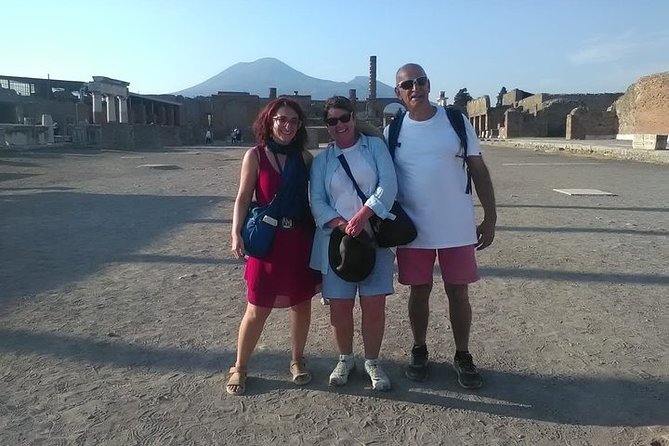
The meeting point is Piazza Esedra, 80045 Pompei NA, Italy, and the tour ends back there (or at the exit at the discretion of the customer). I like that the start and end are tied to the same hub—less time retracing steps at the end when your legs are tired.
You’ll need to plan for the separate €20 per person Archaeological Park ticket. The good news: several of the stops in the route include admission ticket time during the visit, so you’re not juggling tickets for every single building. Still, when you’re budgeting, treat €20 as part of your Pompeii total.
Practical tip: wear comfortable shoes and consider lighter layers. The park can be hot and exposed, and the tour encourages sunglasses and a hat for a reason. Also note the pack limit: backpacks no larger than 30×30×15.
Pompeii’s oldest amphitheater: Anfiteatro Romano
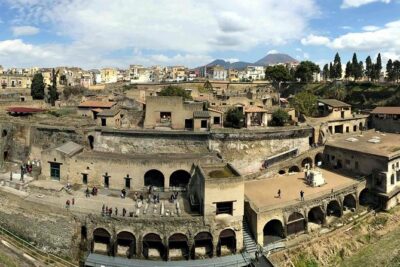
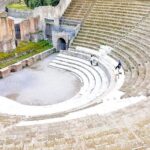
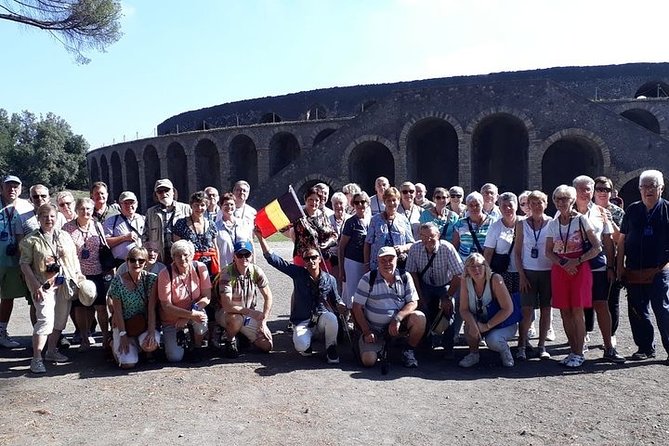
You’ll start with the Anfiteatro Romano, described as the oldest amphitheater in the Roman world and noted as very well preserved. This is a smart opening stop because it immediately gives you the scale of entertainment and civic life in Pompeii.
What to look for here:
- How the space is shaped for crowds and views
- Any worn edges or preserved surfaces that hint at constant use
- The feeling of open-air architecture that still reads clearly centuries later
This is also a good spot to get your bearings. Once you’ve stood inside or near the amphitheater and understood what it was for, the rest of your walk starts to feel more connected—less like random ruins and more like a functioning city plan.
Orto dei Fuggiaschi: refuge, survival, and the plaster casts
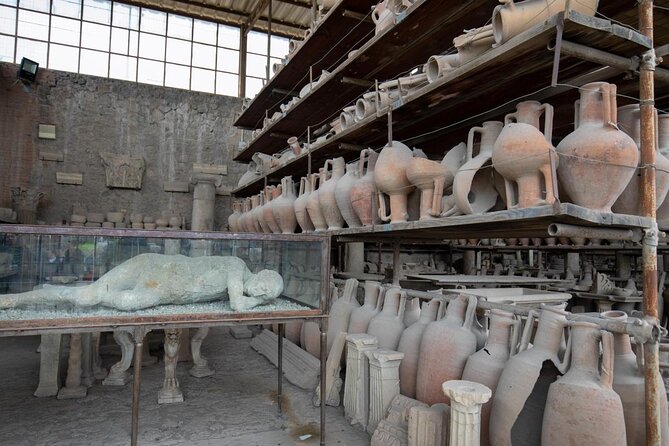
Next comes Orto dei Fuggiaschi, where people from Pompeii took refuge during the eruption. The highlight isn’t only the location—it’s what you can learn from the plaster casts.
This stop tends to land emotionally because it takes Pompeii from a distant story and turns it into something human. It’s also one of those moments where a guide makes a difference: you don’t just look at figures, you understand what they represent and why this site is so important for learning how the eruption affected people.
Timing is tight (about 15 minutes), so my advice is simple: listen first, then look closely a second time after the explanation. The time window is short, but the message is strong.
Temple of Jupiter and the Vesuvius photo moment
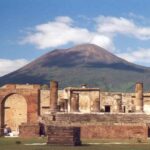
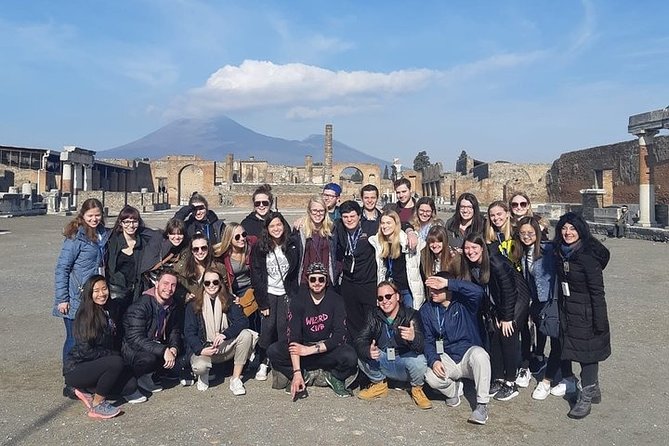
Then you’ll head to Tempio di Giove Capitolino, the temple of Jupiter, Juno, and Minerva. It’s famous here not only for its identity but also because of the view—your route specifically calls out the chance to get a picture with Mount Vesuvius behind the temple.
I love this kind of stop because it helps you understand that Pompeii’s builders didn’t live in a sealed-off world. They chose locations with sightlines—so when you see the ruins placed against Vesuvius, it adds context fast.
If you’re the type who likes to photograph while still learning, this is a good balance. The guide’s explanation gives the temple meaning, and the view gives your camera something worth capturing.

The Foro de Pompeya: where politics, religion, and business meet
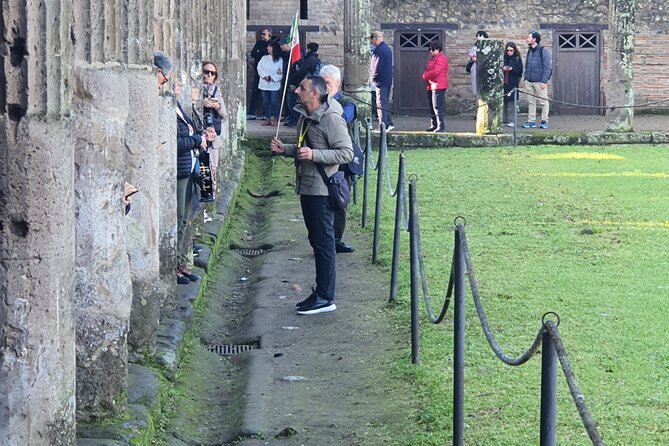
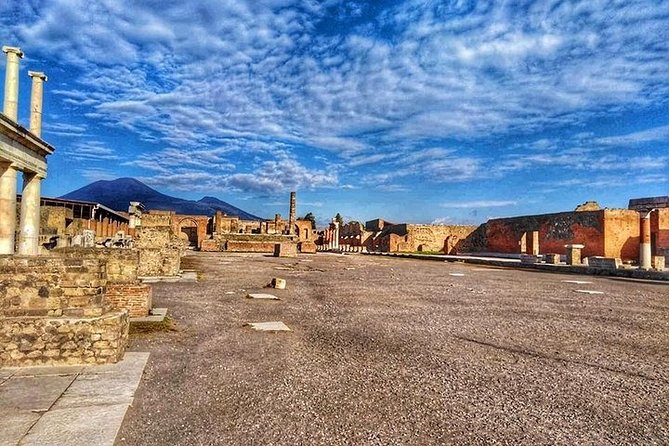
The route then takes you into the Foro de Pompeya—the center of political, religious, civil, and economic life. In about 10 minutes, you’ll see key public buildings and temples tied to daily power structures.
This is one of the stops that helps your visit make sense overall. Once you’ve seen the forum area, you start to recognize how Roman cities were organized: public ritual and worship in the same zone as civic decisions and commercial activity.
Expect a photo stop with Vesuvius in the background. If you want a clean shot, stand where your guide points—angle matters when you’re photographing ruins with a big mountain in frame.
Casa del Fauno: mosaics and scale (and yes, the Faun)
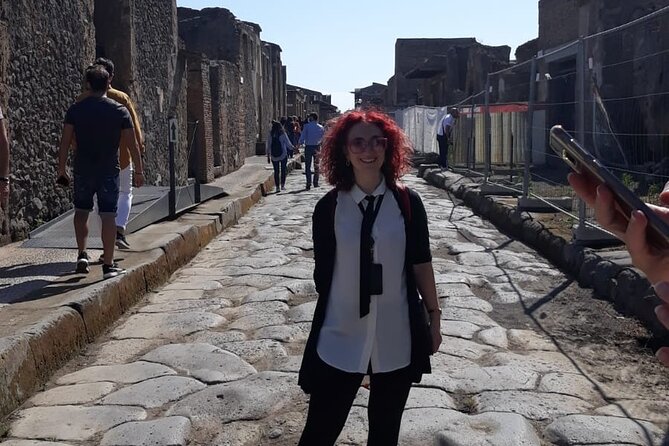
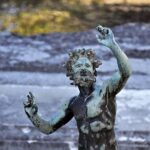
Next is Casa del Fauno, described as the largest house of ancient Pompeii, with around 32,000 square feet. It’s also connected to two of Pompeii’s most famous artistic references in this tour: a mosaic of Alexander the Great and the statue of the Faun.
This is where Pompeii changes from city ruins into art you can almost feel under your fingertips. Mosaics here aren’t just decoration; they signal taste, wealth, and identity. You also get gardens and multicolor mosaic work that helps you picture how elite homes functioned beyond a few wall fragments.
The tour includes time for multiple highlights associated with this house (you’ll return to the idea of the house’s largest highlights), so don’t rush. Even if you’re tempted to zoom in on photos, pause long enough to let the guide point out what makes the mosaic or statue important.
Temple of Apollo and the sun-and-moon theme
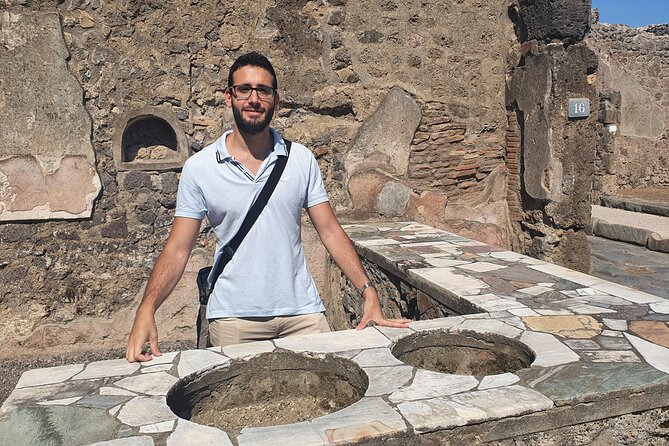
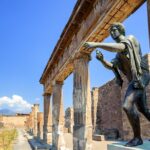
You’ll also visit the Temple of Apollo, one of the most ancient temples in the city. It’s been restored not long ago and offers a strong view toward Mount Vesuvius.
The tour notes the temple’s dedication: Apollo (god of the sun) and his twin sister Diana (goddess of the moon). That simple myth pairing makes the space easier to remember later, especially when you’re comparing multiple temples around Pompeii.
This is a stop of short timing (about 10 minutes), so again: listen, then look for what the guide tells you to notice. The restored elements can be striking, but they’re more meaningful once you know who the temple was honoring and why the location matters.
Casa del Cinghiale and Via dell’Abbondanza: daily life along the main street
After the temples, the walk shifts into “how people lived” territory.
Casa del Cinghiale is near the forum along the main street and is known for a beautiful mosaic floor. It’s a quick stop, but it’s valuable because it shows how art and daily movement were blended in Pompeii.
Then comes Via dell’Abbondanza, the commercial street. Here you can see shops, houses, and public fountains as you move through the city’s everyday rhythm. This is one of those stretches where the guide helps you read the buildings like a map: what likely functioned as a business space, where people would have passed, and how public fountains fit street life.
If you’re going to buy into the Roman city plan, this is the part that makes it click.
Odeon – Teatro Piccolo: small theater, detailed surfaces
Next you’ll visit Odeon – Teatro Piccolo, the small theater. The highlight is the kind of detail people often miss when they’re rushing: the tour specifically calls out a precious marble floor, plus the theatre’s use for music and poetry.
This stop feels different from the amphitheater. It’s smaller, more intimate, and focused on performances that likely mattered to elite and cultural life. Spend a moment looking at the floor design and imagine the acoustics. Even without a performance, the space still reads as built for art.
Stabian Baths: gym, pools, and the Roman wellness routine
Then you’ll step into Terme Stabiane (Stabian Baths). This is a great Pompeii stop because it’s both civic and practical—Roman baths were part of social life, exercise, and relaxation.
Your tour time includes rooms dedicated to sauna and massages, plus a gym and swimming pool. That mix of functions helps you understand baths as a whole lifestyle setting, not just a soak-and-go place.
A quick practical note: baths areas can involve standing in open zones and walking on uneven surfaces, so comfortable shoes matter even more here.
Casa dei Vettii: one of the best-preserved domus
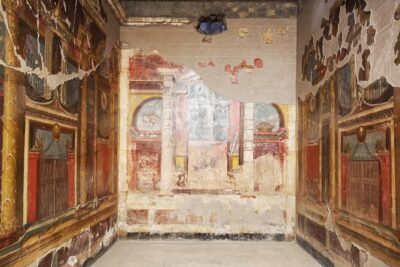
The route includes Casa dei Vettii, described as one of the best-preserved Roman domus examples, with mythological subject frescoes and mosaics.
This is one of the stops that turns Pompeii into a lesson about Roman domestic art. Frescoes and mosaics weren’t limited to public spaces; they showed identity and education inside private rooms.
With 30 minutes allotted, you get a more breathing-space window than many other stops. My suggestion: don’t treat it like a photo checklist. Let the guide explain what you’re seeing, then look again with that context in mind.
The Basilica: courthouse, not a church
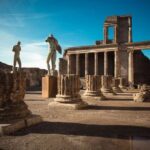
At the Basilica, don’t assume it’s religious just because of the name. The tour frames it as an ancient Roman courthouse, and that context is a big part of why this stop works.
It’s a reminder that Roman civic power often lived in impressive architecture. Look for details the guide points out, since this is where “stone meaning” shows up: the shape and design are tied to function and legal life.
Even in a short 10 minutes, the courthouse idea helps you understand why certain areas were central to authority and decision-making.
Venus views and the House of Venus in the Shell
You’ll visit Tempio di Venere, dedicated to the main goddess of Pompeii, and located in a panoramic spot. Views matter here because they connect the temple’s importance to where it sits in the city.
After that, the tour includes House of Venus in the Shell, described as a domus near the amphitheater, famous for its garden and a fresco representing the birth of Venus.
This is the kind of stop where Pompeii’s art choices feel playful and intentional rather than purely formal. Even if you only have a few minutes, pay attention to the garden setting and how the fresco theme connects back to Venus worship and symbolism.
Lupanar: the optional adult-oriented stop
One stop is clearly marked as optional based on your interest: Lupanar, the house of pleasure with erotic frescoes. The tour notes this visit happens at the discretion of the customer.
That discretion matters. If you’re curious about how far Roman art went in private spaces, this can be a memorable and historically important stop. If you’d rather skip adult content, you can still get the main Pompeii overview without losing the flow.
My advice: if you’re unsure, ask your guide what you’d see before you commit. You’ll know fast whether it fits your comfort level.
Price and value: what you’re really paying for at $203.70
The listed price is $203.70 per person, with a licensed archaeology guide, taxes, and a private tour included. The park entry ticket is €20 per person extra.
So what makes it feel like good value instead of just pricey? Two things:
- You’re buying time. Pompeii can overwhelm your attention. This route gives you a strong sequence of highlights in a focused 4-hour window.
- You’re buying interpretation. The best Pompeii moments aren’t just seeing a mosaic—they’re understanding why that mosaic is there and what the site was used for.
Also, a private setup means your guide can respond to your pace. That’s hard to get with larger group formats, especially when you want questions answered on the spot.
Finally, the experience is offered in English, with mobile tickets and a start point that’s easy to find: Piazza Esedra.
Who this Pompeii 360° tour fits best
This tour is a strong fit if you:
- Want an organized Pompeii visit with a guide explaining what you’re looking at
- Like a mix of public monuments and domestic art (mosaics, frescoes, gardens)
- Prefer a private group format where you’re not pushed forward by strangers
- Need a plan that works within about half a day
It also sounds like it works well for families. The guidance style is described as patient and educational for kids, which matters in a place where everyone can get tired or overwhelmed quickly.
If you’re the type who wants hours alone to wander and get lost, you might feel the time pressure. But if you want the city’s big ideas and key artworks without wasting energy guessing, this route is a practical choice.
Should you book this Pompeii 360° tour?
Yes, I’d lean toward booking if you want a guided Pompeii visit that respects both your time and your attention span. The best part here is the structure: a focused tour that hits major sites, explains what matters, and still gives you enough time at standout locations like the Casa dei Vettii and Casa del Fauno.
Book with confidence if you care about interpretation—this is the sort of tour where the guide’s clarity can turn ruins into a story you can actually follow. It’s also a good call if you only have one afternoon and you’d rather arrive at the forum area, temples, baths, and houses with meaning already in your head.
Just go in knowing the €20 park ticket is on top, and wear shoes that can handle a lot of walking. If you do that, you’ll come away with Pompeii feeling less like a checklist and more like a real Roman city.
FAQ
Do I need to buy the Pompeii Archaeological Park ticket separately?
Yes. The Archaeological Park of Pompeii entrance fee is €20 per person and is not included in the tour price.
Where do I meet for the tour?
The tour starts and ends at Piazza Esedra, 80045 Pompei NA, Italy. The end can be at the exit of Piazza Esedra at the customer’s discretion.
How long is the Pompeii 360° tour?
It lasts about 4 hours.
Is this a private tour?
Yes. It’s private, and only your group will participate.
What language is the tour offered in?
The tour is offered in English.
Can I choose whether to visit the Lupanar?
Yes. The Lupanar visit is at the discretion of the customer.
Is there any ticket price discount for younger visitors?
Under 18, the archaeological park ticket is free. EU visitors aged 18 to 25 with a valid ID pay €2 per person.
What’s the recommended dress code?
Wear sunglasses, a hat, comfortable clothing and shoes. Backpacks should not be larger than 30×30×15.