REVIEW · NAPLES
Pompeii & Herculaneum Guided Tour – High Speed Train from Rome
Book on Viator →Operated by Askos Tours · Bookable on Viator
Two vanished cities, one packed day. This Pompeii & Herculaneum guided tour uses a high-speed train and transfers so you lose less time and see more. I also like the skip-the-line entrance setup and the fact you get headsets on the ground, so you’re not guessing what the guide is saying.
The big win is the on-site guidance by an archaeologist. I like that guides can be very specific about what you’re looking at, and I’ve seen names like Michele, Alfredo, Raphael, and Carmine tied to this tour style of teaching. In particular, Herculaneum’s preserved mosaics and frescos are the kind of thing you can’t fully understand from photos.
One possible drawback: it’s a long day and you’ll walk a lot, including exposed Pompeii areas with very little shade. If you have knee or leg issues, or you like to linger slowly in every room, this schedule may feel tight.
In This Review
- Key things that make this tour worth your time
- High-Speed Train Rome-to-Naples: Your Day Starts Moving
- Starhotels Terminus Meet-Up: Easy Link Between Train and Guides
- Porta Marina to Via dell’Abbondanza: Pompeii’s Core Sights on a Tight Script
- MaxiMall Pompeii Break: A Shopping Center Pause That Actually Helps
- Herculaneum’s Archaeological Park: Smaller City, Often Better Preserved
- Day Trip Reality Check: Timing, Group Size, and Headset Limits
- Price and Value: What You Pay for vs. What You’d Pay Alone
- Who Should Book This Tour (and Who Might Prefer Another Plan)
- Should You Book This Pompeii & Herculaneum Day Trip?
- FAQ
- Are the Pompeii and Herculaneum entrance tickets included?
- How do the Rome to Naples train tickets work?
- Where do you meet the guide in Naples?
- How much time do you spend at Pompeii and Herculaneum?
- Is there a break during the day?
- What’s the group size?
- What should I bring for the tour?
Key things that make this tour worth your time
- High-speed rail from Roma Termini plus a driver shuttle in Naples, so the “getting there” part is handled.
- Porta Marina entry to Pompeii with a licensed archaeologist leading the walk.
- Headsets provided (use them often), especially when the group moves through bigger spots.
- MaxiMall Pompeii stop for a real break, plus a welcome kit and discount card.
- Herculaneum in focused detail (the smaller city often feels more complete in less time).
- Small group cap (20 travelers), which helps the guide keep control of timing.
High-Speed Train Rome-to-Naples: Your Day Starts Moving

This tour makes the smartest choice for a one-day Pompeii plan: you ride the fast train from Rome to Naples. You get the roundtrip train tickets from Roma Termini, and the operator sends them to you the day before the tour, so you can board independently. That means no early-morning bus pickup in Rome and fewer chances for chaos.
In practice, this route turns Pompeii and Herculaneum from a “wish I could” dream into something doable without sacrificing your whole trip. You also avoid the slow, stop-and-go road transfer that can eat half a day.
One small tip that matters: trains can have multiple Naples stops. I’d make sure you’re on the correct one before getting ready to exit, because missing your spot can throw off your timing.
You can also read our reviews of more guided tours in Naples


Starhotels Terminus Meet-Up: Easy Link Between Train and Guides
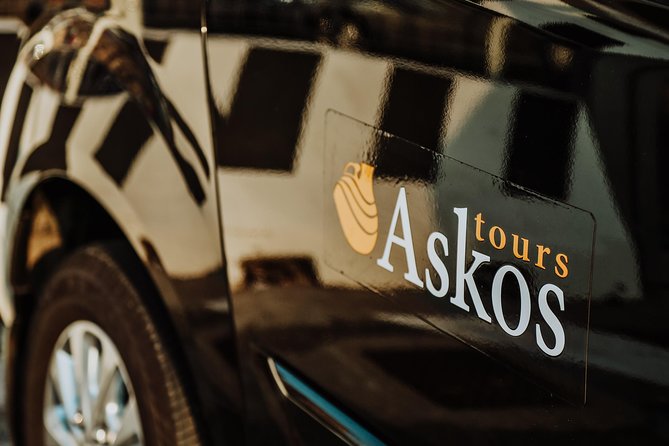
When you arrive in Naples, you’ll walk across the street (basically) to Starhotels Terminus in Piazza Giuseppe Garibaldi. This is near Naples Central Station, so you’re not navigating the city blindly. Your local guide and the Askos Tours driver meet you here and take the group onward to the archaeological sites.
This part is underrated. Most Pompeii days fail because the meeting point is unclear or the group splits and regroups. Here, the meeting spot is in the station area, which keeps the “from train to minibus” transition simple.
Also, you should plan to carry your valid ID/passport with you. It’s a small thing, but it saves stress when you’re checking in for day tours.
Porta Marina to Via dell’Abbondanza: Pompeii’s Core Sights on a Tight Script
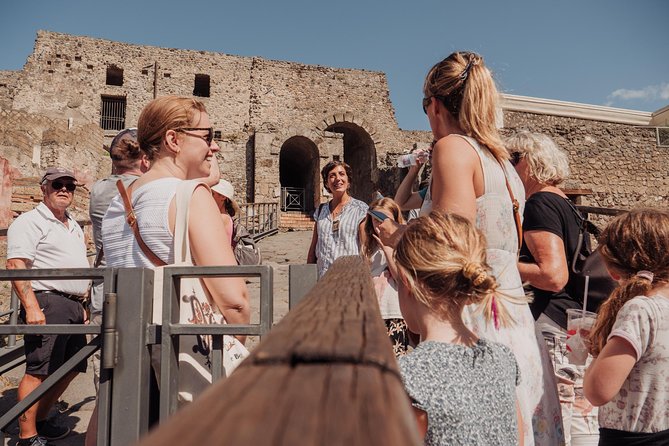
Pompeii is big. Even if you love ruins, you can’t see everything in one day without turning it into a sprint-through museum. This tour tackles that reality head-on by selecting key streets and buildings that explain how the city functioned.
You start at Porta Marina, one of the main gateways into Pompeii, and the guided portion begins there. From the start, you’re not just walking randomly. The archaeologist frames Pompeii’s layout and daily life before you hit the major stops. That matters because Pompeii can otherwise feel like scattered columns.
Then you move along areas including:
- Via dell’Abbondanza, a classic street walk that sets the scene for the city’s urban rhythm.
- House of Menander, where you see how wealthy domestic life worked in stone and decoration.
- Granaries of the Forum, a reminder that bread and logistics were the city’s heartbeat.
- Stabian Baths (Terme Stabiane), which helps you understand bathing culture and social space.
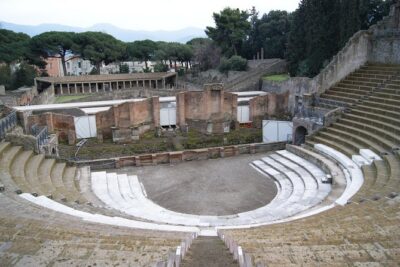
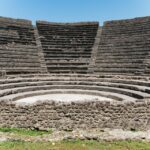
From there, the tour goes deeper into the kinds of buildings that make Pompeii feel human instead of just historical. You’ll see the Lupanar (brothel of Pompeii), plus the House of the Faun, and then the theater area: Teatro Grande and Odeon (Teatro Piccolo).
A practical note: Pompeii can be rough on your feet. Streets and uneven ground add up fast. If you’re imagining a casual stroll, calibrate expectations. Wear shoes you’d trust on cobblestones, not just “cute walking sandals.”
MaxiMall Pompeii Break: A Shopping Center Pause That Actually Helps
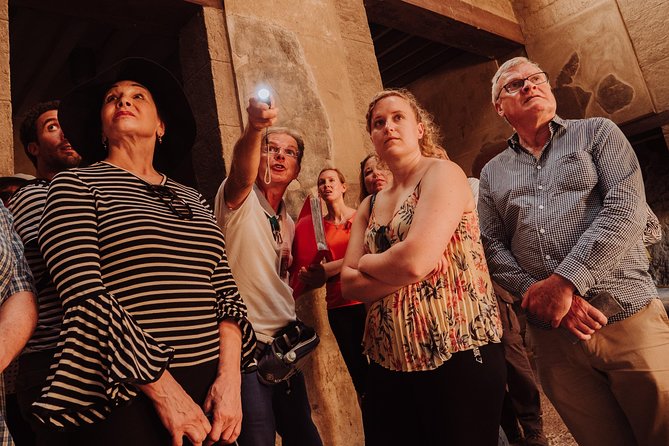
There’s a scheduled break at MaxiMall Pompeii, one of the region’s larger shopping centers. It’s there for a reason. Pompeii doesn’t offer much shade, and you’re moving between sites. This stop gives you time to cool down, use restrooms, and reset your brain before the second half of the day.
You’ll also receive a branded welcome kit and a discount card tied to MaxiMall Pompeii. Even if you don’t plan on shopping, it’s nice to have a built-in reason to stop rather than trying to hunt down food options on the fly.
For many people, this is the difference between enjoying the whole day versus getting cranky right before Herculaneum.
Herculaneum’s Archaeological Park: Smaller City, Often Better Preserved
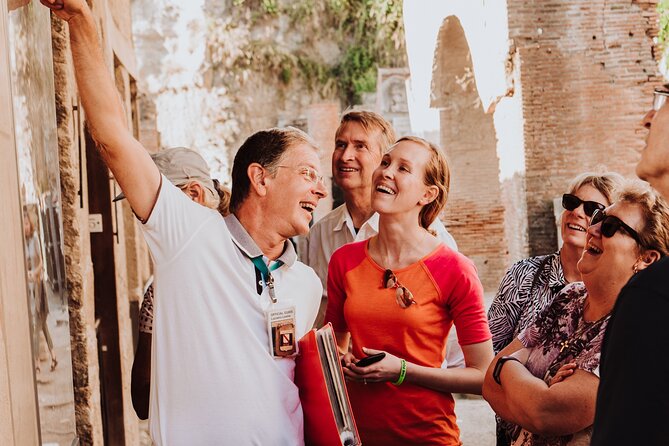
After Pompeii, the tour shifts to Herculaneum, with about two hours at the archaeological park. Herculaneum is quieter and more compact than Pompeii, and that’s a huge reason it can land with more impact. It’s also known for preservation quality, including real mosaics and frescos that are still there for you to see.
In this time window, you get a focused run through residential and public spaces, such as:
- Partem Domus lignea (Casa del Tramezzo di Legno), including the wooden partition theme.
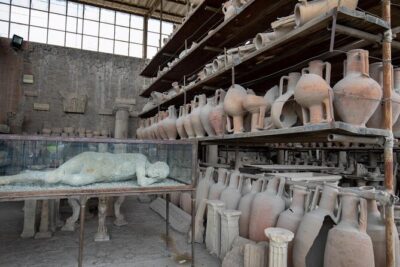
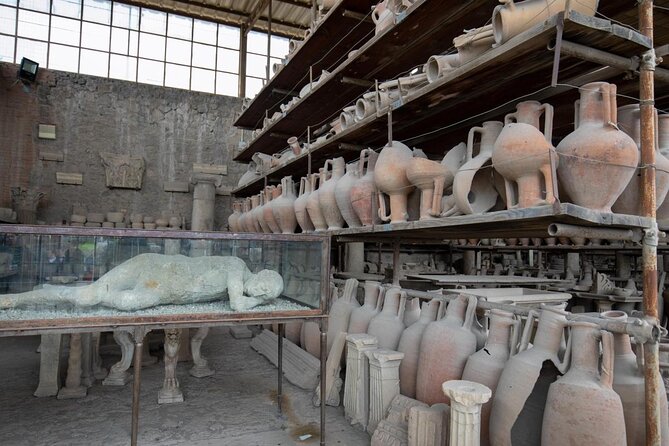
- House of the Skeleton, a dramatic stop that helps you feel the event’s immediacy.
- Central Thermae, so you can compare bath culture between the two cities.
- Casa del Rilievo di Telefo, with its relief focus.
- Smaller houses like Casa Sannitica, Casa del Bel Cortile, House of the Grand Portal, and House of the Black Salon.
One theme you can feel as you walk: Herculaneum reads like a city that was stopped mid-life. You’re still seeing devastation, but you’re also seeing homes and decoration with more intact surfaces than what you’ll find across Pompeii’s larger, more exposed zones.
Also, I appreciate that the Herculaneum segment is guided, not just a “walk around and good luck” situation. The archaeologist guidance helps you connect what you see to how people lived, ate, worked, and spent time inside these spaces.



Day Trip Reality Check: Timing, Group Size, and Headset Limits
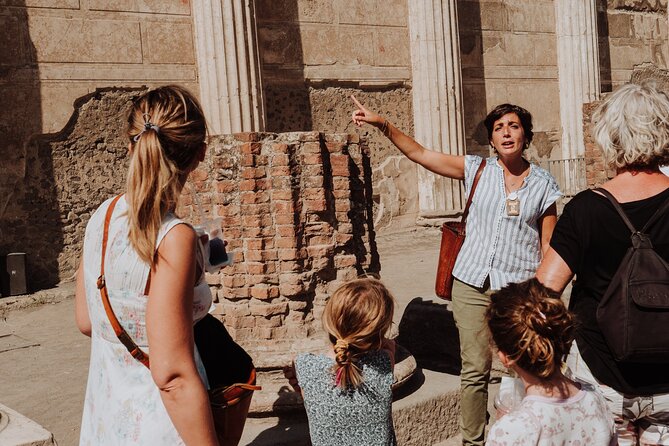
This is an 11.5-hour day, give or take, and it’s structured to fit two major archaeological sites plus train transfers. That means the group moves. It’s not a slow, leisurely day.
Group size is capped at 20 travelers, which is a good thing. Smaller groups mean you’re less likely to feel like one face in a crowd. Still, even with a small group, Pompeii’s scale forces the “highlights only” approach.
Headsets are included, which helps a lot—especially when you’re walking through larger areas. One consideration: if the guide moves too quickly ahead, you might lose audio. You can fix this by sticking closer and using the headset volume early rather than after you’ve already started missing pieces.
Also, Pompeii’s sun exposure is real. You may want to plan for heat and bring water where you can. If you’re someone who gets tired in hot walking days, the Pompeii portion can feel longer than the clock says.
Price and Value: What You Pay for vs. What You’d Pay Alone
At $204.38 per person, this tour bundles several costly pieces into one plan:
- roundtrip high-speed train tickets from Roma Termini
- minibus transportation from Naples Central Station area to the sites and back
- skip-the-line style entry tickets for Pompeii and Herculaneum
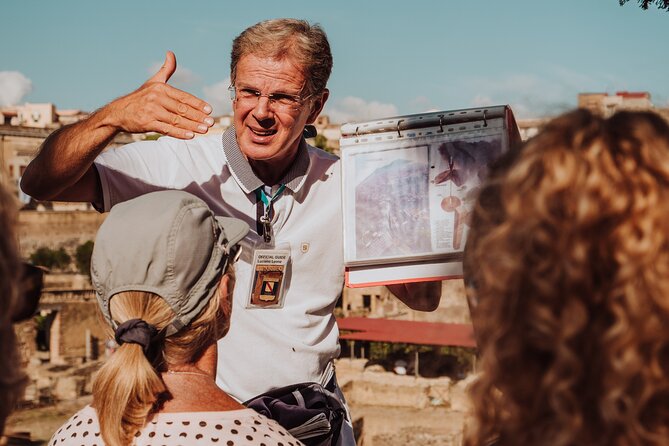
- guidance by an archaeologist during the Pompeii and Herculaneum visits
- headsets
- a MaxiMall welcome kit and discount card
The ruins admissions are listed as 16 euros for Herculaneum and 20 euros for Pompeii in the tour info, and those costs are covered through the included ticket arrangement. So you’re not paying separately for each site’s entry just to show up and then figure out the rest.
If you were building this day yourself, the expenses stack fast: train tickets, transfers, timed entry tickets, and the cost of hiring your own expert guide (or settling for audio-only tours). Here, the value is in removing decision fatigue and timing risk. You pay to have a plan that runs on rails.
That said, some people want more time per site. If you’ve visited Pompeii before or you’re hoping to follow your own slower route through “every corner,” this format may feel rushed even when it’s well organized.
Who Should Book This Tour (and Who Might Prefer Another Plan)
I think this tour fits best if you:
- want both Pompeii and Herculaneum in a single day from Rome
- like learning on-site from an archaeologist guide, not just reading signs
- appreciate skip-the-line convenience and headsets
- prefer a smaller group (20 maximum) with structured timing
It may not be ideal if:
- you have mobility limits or need frequent breaks. The walking load is real, and Pompeii can be tough.
- you’re expecting a “complete Pompeii” exploration. The day is built around key highlights, not every street and every house.
- you need extra quiet time or you tend to linger for long photo sessions. This schedule will push you forward.
One surprising plus from the reviews: it can work for families when kids can handle walking. Still, you’ll want to judge based on your group’s stamina, not just the itinerary’s time.
Should You Book This Pompeii & Herculaneum Day Trip?
If your goal is an efficient, guided day that hits the biggest Pompeii landmarks and then gives you a strong Herculaneum experience, I’d say this is a smart booking. The rail-plus-transfer setup removes a lot of stress. The archaeologist guidance turns the ruins into something you can actually interpret while you’re standing in front of it. And the headsets help keep you connected to the story.
If you’re the type who wants to wander slowly, chase smaller details, and spend extra time in Pompeii’s deeper corners, you might feel boxed in. In that case, consider a longer stay day or separate visits.
My call: book this when you want maximum value from a single Roman day and you’re comfortable with a full day of walking.
FAQ
Are the Pompeii and Herculaneum entrance tickets included?
Yes. The tour includes entrance fee tickets for both Pompeii and Herculaneum ruins, plus skip-the-line style entry.
How do the Rome to Naples train tickets work?
You receive the high-speed train tickets from Roma Termini one day before the tour, and you board independently. The guide meets you after you arrive in Naples.
Where do you meet the guide in Naples?
You meet at Starhotels Terminus in Piazza Giuseppe Garibaldi, across the street from Naples Central Station.
How much time do you spend at Pompeii and Herculaneum?
Your guided visit at Pompeii is structured through multiple stops with a break at MaxiMall Pompeii, and your guided visit at Herculaneum is about two hours at the archaeological park.
Is there a break during the day?
Yes. You get a break at MaxiMall Pompeii for about 50 minutes, which also includes a welcome kit and discount card.
What’s the group size?
The maximum group size is 20 travelers.
What should I bring for the tour?
Bring a valid ID/passport. Also, wear comfortable shoes, since both sites involve significant walking. If you travel with suitcases, you may need to store them in a luggage deposit since not all minivans have a luggage compartment.