REVIEW · POMPEII
Pompeii and Mount Vesuvius Small Group Tour
Book on Viator →Operated by Askos Tours · Bookable on Viator
Pompeii and Vesuvius in one packed day. I like that you get archaeologist-led Pompeii plus a guided hike to the crater edge without juggling tickets or buses. The main thing to consider is that the Vesuvius walk is genuinely uphill and weather can change fast.
You’ll spend about 2 hours in Pompeii with a guide who helps you read the city instead of just pointing at walls. After that, the day shifts to volcano terrain, including a steep final push toward the crater. If you hate steep, rocky climbs or you’re traveling with mobility limits, you’ll want to rethink this plan.
In This Review
- Quick hits before you go
- Why this Pompeii-and-Vesuvius combo works for your time
- Where the day starts: Porta Marina and getting oriented fast
- Pompeii with an archaeologist guide: how the ruins become a city
- The Forum vibe: public space that set the rules
- Granaries, fountains, and plaster casts of the moment
- Wealth and style in the House of Menander
- Stabian Baths: the oldest thermal complex in town
- The Lupanar: what a famous brothel tells you
- The House of Faun: big private residence, strong impressions
- The small theater and the big theater
- How you get from Pompeii to Vesuvius without losing the day
- Mount Vesuvius crater access: what to expect on the walk
- What you’re hoping to see at the top
- Weather reality: why some days feel different
- If Vesuvius is closed: Herculaneum as your Plan B
- Guides make the difference: archaeologists and a licensed hiking guide
- Price and logistics: is $119.77 a good value?
- Who should book this Pompeii and Vesuvius tour
- Should you book this tour?
- FAQ
- How long is the Pompeii and Mount Vesuvius small group tour?
- What’s included in the tour price?
- What isn’t included?
- Where do we meet, and where does the tour end?
- Is the Mount Vesuvius hike difficult?
- What happens if Vesuvius is closed due to weather?
- What should I wear or bring?
- Are children allowed?
- Is the tour offered in English?
Quick hits before you go
- Small group size (max 14) makes it easier to move through Pompeii and keep the pace manageable
- Two guided phases: archaeologist for Pompeii, licensed hiking guide for Vesuvius
- Crater-edge payoff: views over Naples and the islands when weather cooperates, plus the crater area itself
- Comfort-first footwear matters: closed-in shoes for the steep segments
- Plan B to Herculaneum if Vesuvius can’t be accessed due to force majeure
- Tickets handled: Pompeii Express and Vesuvius admission are included in the tour price
Why this Pompeii-and-Vesuvius combo works for your time
If you have just one day around Naples, this is the kind of plan that saves you from the “separate tour, separate logistics” headache. Instead of figuring out how to get from ruins to the volcano on your own, you get a coordinated day with transportation and two guided experiences.
What makes it practical is the split: Pompeii is complex and easy to wander through in the wrong direction. Vesuvius is the opposite problem: it’s hard to slow down on your own, and the walk is physically demanding. This tour keeps both parts moving so you’re not spending the day trying to stay oriented.
The tradeoff is that you’re moving all day. It’s not a slow, long lunch-and-stroll style itinerary.
You can also read our reviews of more tours and experiences in Pompeii.

Where the day starts: Porta Marina and getting oriented fast
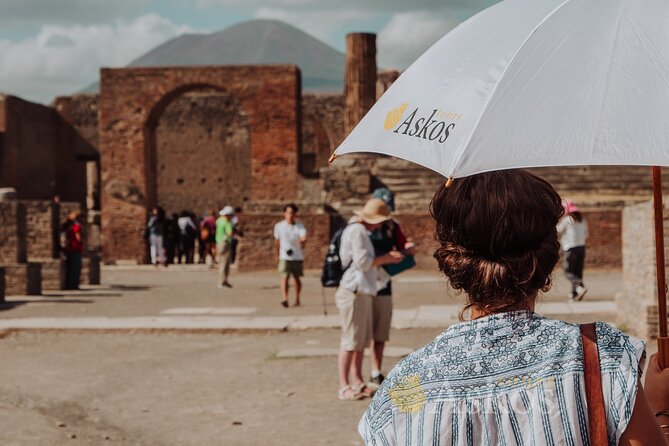
You meet at Via Villa dei Misteri, 2 in Pompeii. From there, the Pompeii part begins at the main entrance of the archaeological site called Porta Marina Superiore, and the guide meets you holding an Askos Tours sign.
That “meet at the entrance” detail sounds small, but it changes your first hour. Pompeii can feel like a maze if you arrive without a game plan. Starting together helps you avoid the common mistake of seeing a few pretty corners while missing the structures that explain how the city worked.
This is also where the small-group size helps. In a group that doesn’t balloon, you spend less time waiting and more time actually learning.
Pompeii with an archaeologist guide: how the ruins become a city
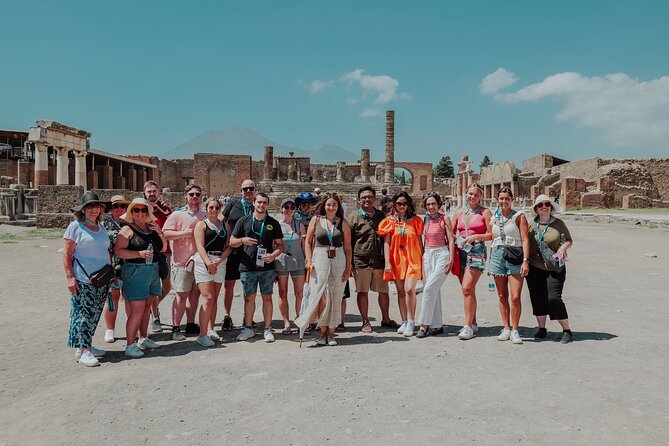
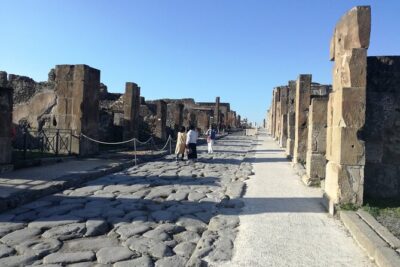
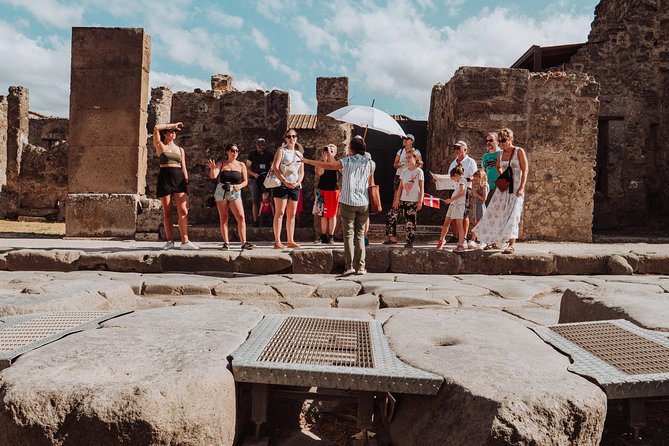
You’ll get a 2-hour guided walk through the Pompeii archaeological park with an archaeologist guide (for groups up to 20). The point isn’t to rush every block. The point is to help you read Pompeii like a living place: where people gathered, how they bathed, what the architecture says about wealth, and how everyday life fits into the eruption story.
Pompeii is huge, so this route-style approach works well. You’re not trying to “do Pompeii.” You’re trying to understand the highlights that connect to daily life.
The Forum vibe: public space that set the rules
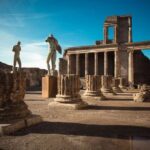
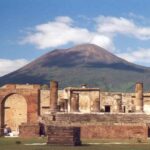
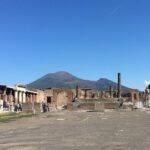
The tour includes a look at the Foro de Pompeya, Pompeii’s ancient main square. It’s one of the fastest ways to grasp how the city organized power and public life. When you see the layout in context, you start to understand why certain buildings mattered.
Then you move through key spaces around the Forum area, where you can spot details tied to the city’s functioning—storage, public design, and the ways people displayed status.
Granaries, fountains, and plaster casts of the moment
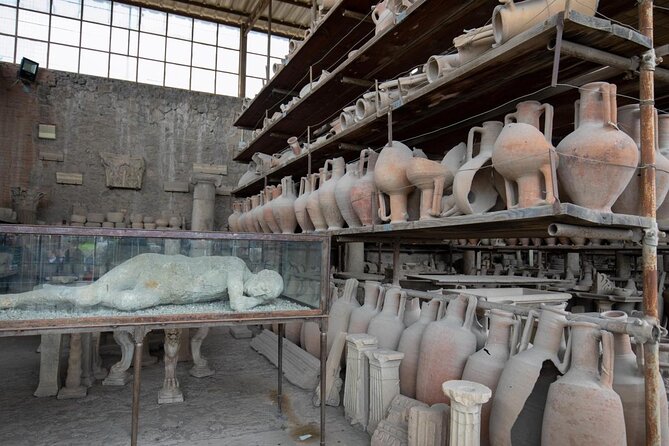
At the Granaries of the Forum, you get a look at marble tables and baths for fountains that adorned entrances of houses, plus plaster casts related to the eruption. Even if you’re not a tragedy-tour person, these casts make the eruption’s impact feel immediate and human.
It’s also a reminder that Pompeii is more than street corners and views. It’s a city frozen mid-event, which is exactly why a guide matters here.


Wealth and style in the House of Menander
Next you’ll visit the House of Menander, known for its richness in architecture, decoration, and contents. This stop helps you see how homes expressed identity. The way rooms are arranged and decorated can tell you a lot about priorities—comfort, display, and social standing.
If you like “what would daily life feel like here?” thinking, this is one of the stops that turns ruins into imagination.
Stabian Baths: the oldest thermal complex in town
The Stabian Baths (Terme Stabiane) take you into Pompeii’s public bathing culture. These cover a vast area and are described as the oldest thermal complex in the city. You start noticing how baths weren’t just about hygiene—they were social hubs where people talked, exercised, and passed time.
This is also the kind of place where a guide’s explanations make a big difference. Bathhouses are built for movement through rooms with different purposes, and it’s easy to miss that on your own.
The Lupanar: what a famous brothel tells you
The tour includes the Lupanar, the most famous brothel in the ruined city. It’s not a stop everyone expects to feel so tangible, but Pompeii’s details make it oddly specific.
I’d treat this as a perspective-builder: it helps you understand the social realities of Roman city life, not just its grand temples and theaters.
The House of Faun: big private residence, strong impressions
In the House of the Faun, you’ll see one of Pompeii’s largest private residences. This kind of home can feel overwhelming at first—too much to take in. With a guide, you can focus on what matters most: the design choices and why this home signals power and status.
The small theater and the big theater
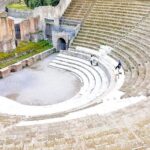
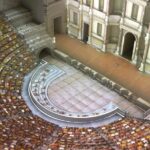
The route also includes views of the Teatro Piccolo and then Teatro Grande, the most important theater in Pompeii. Theater stops are useful because they connect architecture to entertainment and community.
You get a quick but meaningful sense of how public culture worked. And since theaters are built to be seen from specific angles, it’s easy to connect what you see with how people likely experienced performances.
How you get from Pompeii to Vesuvius without losing the day
After the Pompeii portion, you’ll transfer by modern minibus to Mount Vesuvius. The group size stays small (transport is up to 14), which helps keep the flow calm.
You’ll have time between the two major portions, but food and drinks aren’t included. I’d plan for a practical lunch break—something quick near Pompeii or during the transition—so you don’t spend the day hunting for snacks while you’re tired.
Also, remember the temperature shift. Pompeii can already feel hot, but Vesuvius will feel different—windier at the top, and colder when the weather turns.
Mount Vesuvius crater access: what to expect on the walk
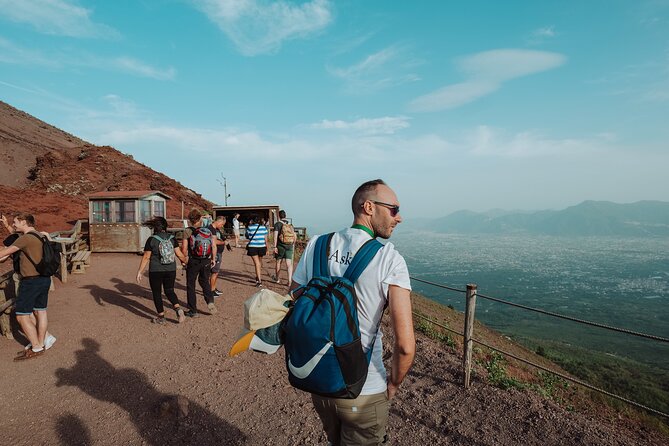
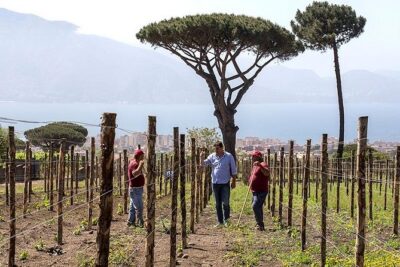
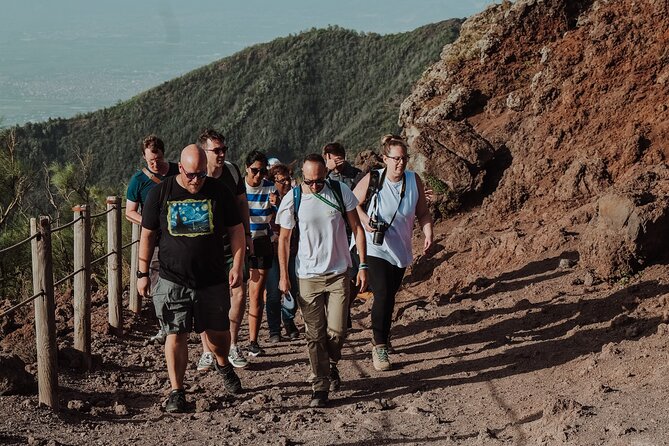
This part is the main physical event. You drive to the volcano area, then hike to the crater viewpoint. The route includes a steep uphill final stretch of about the last 500 meters, and closed-in shoes are essential.
The tour also notes that from the entrance, the first 30 minutes is a step-walking section leading toward the crater area. That matters if you’re planning your footwear and pacing. It’s not the time to wear flimsy sandals or shoes with no grip.
What you’re hoping to see at the top
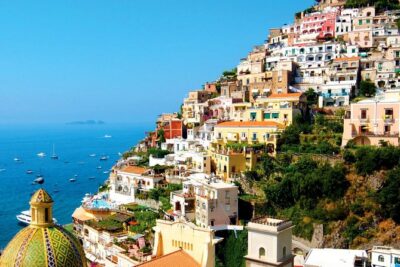
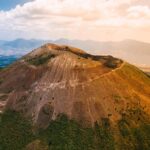
At the crater edge, you’re there to see the volcano crater itself, described as still smoking slightly, and to take in panoramic views over the Bay of Naples. On clear days, you can look toward Capri, Ischia, and parts of the Sorrento coast.
Even when visibility drops, the climb still gives you the geology story in a real-world way—rock layers, steep slopes, and the way the terrain changes with elevation.
Weather reality: why some days feel different
Vesuvius is famous for quick changes. Fog, rain, and wind can show up fast. One key thing: sometimes the crater trail can be closed at the top due to weather conditions beyond the guide’s control.
When that happens, the tour’s backup is important. If Vesuvius isn’t accessible due to force majeure, the plan includes visiting Herculaneum instead.
If Vesuvius is closed: Herculaneum as your Plan B
This tour is set up so you’re not left stranded with half a day. If Vesuvius can’t be accessed, you’ll visit Herculaneum instead.
That swap is more than a consolation prize. Herculaneum is smaller and often feels more intimate than Pompeii, and it helps complete the bigger picture of what that eruption meant for the region. It’s also a smart choice if your priority is understanding Roman life preserved under ash and conditions that changed how the sites survived.
If you’re the type who gets stressed by weather, I’d lean into the mindset that Plan B is built into the experience.
Guides make the difference: archaeologists and a licensed hiking guide
This is one of the strongest parts of the tour. The Pompeii section is led by an archaeologist guide, and you can run into guides like Simona, Raffaela, Anna Sorrento, Teresa, Daniela, Guilia, Antonella, or Nicoletta (names vary by departure). In practice, that means the explanations connect architecture to real daily life, not just a list of dates.
On the volcano side, you’ll have a licensed hiking guide. Guides like Mario show up often in the experience, and the tone tends to be supportive—encouraging people who need a slower pace. Some departures also include help from a trained volcanic expert at the top, which adds a science layer to what you’re seeing.
What this means for you: with a good guide, the walk feels less like a test and more like a guided lesson. With a rushed or unclear guide, it can feel harder than it needs to be.
Price and logistics: is $119.77 a good value?
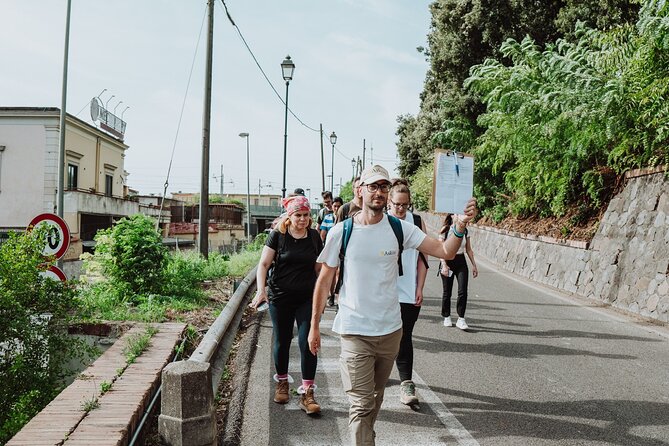
At $119.77 per person for an 8-hour day, the value hinges on what’s included. You’re getting:
- Pompeii guided time with an archaeologist
- Pompeii Express and Mount Vesuvius admission fees handled
- Round-trip transportation by modern minibus
- A licensed guide for the hike on Vesuvius
That’s a lot packed into one price, and it’s especially useful if you’d otherwise have to book separate tickets and arrange transport twice. And since food isn’t included, you’re only paying for what you add on your own, like lunch.
The one cost you might still plan for is that Mount Vesuvius entry is listed at 11 euros, but the tour indicates those fees are included in what you pay. I’d still double-check your confirmation details so you don’t worry about last-minute surprises.
Who should book this Pompeii and Vesuvius tour
This works best if you want a guided day that combines archaeology and geology in one go. It’s also a good fit if you like structured touring—so you’re not staring at maps all day.
It suits people with moderate physical fitness, because the Vesuvius segment includes steps and steep uphill sections. It’s not recommended for travelers with mobility or walking issues, and children under 6 aren’t allowed.
It also tends to work well for families with older kids and teens who can handle a long day. If you’re traveling with a group where some people are slower, you’ll appreciate a guide-led pace and encouragement on the climb.
Should you book this tour?
I’d book it if you want the most efficient way to do Pompeii plus Vesuvius and you’re okay with a long, active day. The biggest reason is the pairing: Pompeii becomes understandable with an archaeologist, and Vesuvius becomes doable (and more meaningful) with a licensed hiking guide.
I would pause before booking if:
- you know you struggle with steep uphill walking or stairs
- you’re traveling with mobility limitations
- you’re traveling in a season when fog and rain are common and you don’t like dealing with weather changes
If you go in prepared with sturdy shoes, sunscreen, and a realistic lunch plan, this is the kind of day that sticks with you—because you’re not just seeing famous places. You’re learning how a volcanic event reshaped an entire world you can still walk through today.
FAQ
How long is the Pompeii and Mount Vesuvius small group tour?
The tour runs about 8 hours.
What’s included in the tour price?
It includes a 2-hour archaeologist-guided visit at Pompeii, admission fees for Pompeii Express and Mount Vesuvius, and round-trip transportation by modern minibus. It also includes a hiking licensed guide for Mount Vesuvius.
What isn’t included?
Food and drinks aren’t included.
Where do we meet, and where does the tour end?
You start at Via Villa dei Misteri, 2, 80045 Pompei NA, Italy. The activity ends back at the same meeting point.
Is the Mount Vesuvius hike difficult?
It’s not described as easy. You should have a moderate physical fitness level, and you’ll do step walking and a steep uphill section. Closed-in shoes are essential.
What happens if Vesuvius is closed due to weather?
If Vesuvius isn’t accessible due to force majeure, the tour includes a visit to Herculaneum instead of Vesuvius.
What should I wear or bring?
Wear comfortable shoes (closed-in shoes are essential for Vesuvius). In summer, bring sunglasses and sunscreen. If you want to be comfortable at the top, plan for wind and cooler conditions.
Are children allowed?
Children under 6 years old are not allowed.
Is the tour offered in English?
Yes, the tour is offered in English.