Pompeii hits fast, in the best way. This 2-hour private guided walk focuses on the parts of the ruins that help you picture daily life in 79 A.D., from major public spaces to intimate homes and the Lupanare brothel. You’ll also go where crowds often thin out, including the southern route with the plaster casts.
I especially like how the guide steers you through both the big-name sights (like the Forum and thermal baths) and the more personal, human details that make the city feel lived-in. I also like that you’re not stuck with just a checklist; you get a structured stroll that includes “moment pauses,” like the chance to slow down in the southern area and really take in what you’re seeing—then continue toward the theaters and north side.
One consideration: tickets aren’t included in the price, and the visit is outdoors. If weather is rough, you’ll still want to dress for wet, slippery walking, and you should plan for a moderate pace.
In This Review
- Key points to know before you go
- Meeting at Porta Marina and keeping your day on track
- What you’re really paying for: an authorized local guide with a plan
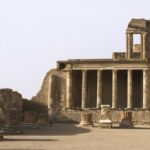
- Forum, Thermal Baths, and Menandro’s House: the daily-city foundation
- The Lupanare stop and the plaster casts: why these moments stick
- Theaters, the north side, and the goal of feeling present
- Price and logistics: how the math works in real life
- Timing windows, walking comfort, and weather reality
- Who this Pompeii tour fits best (and who might want another format)
- Should you book this buried-city tour?
- FAQ
- How long is the Pompeii guided tour?
- Is the archaeological park admission included in the price?
- How much is the tour?
- Is this a private tour?
- Where do we meet for the tour?
- What time does the tour run?
- What should I do about tickets for under 18?
- What happens if weather is poor?
Key points to know before you go
- Small-group private feel: only your group participates, so the guide can keep things flowing.
- Off-the-beaten-path routing: you spend time in the quieter southern stretch of the ruins.
- Highlights plus daily-life details: Forum, thermal baths, Menandro’s House, and more.
- The Lupanare and its erotic frescoes: a specific stop that adds context about social life.
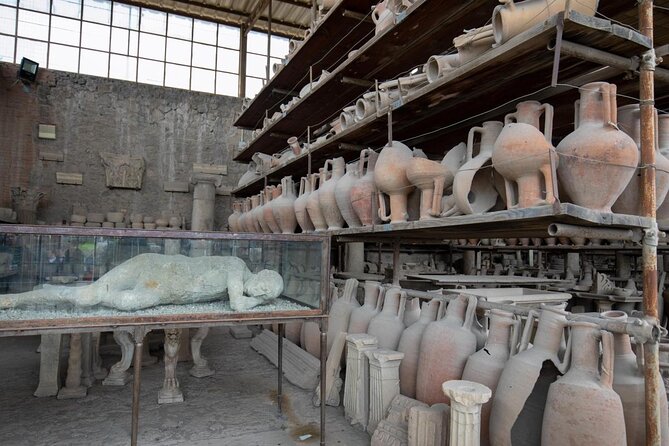
- Plaster casts in the south: a powerful visual anchor for what happened in 79 A.D.
- A 2-hour practical timeline: enough time for major sights without turning into a marathon.
Meeting at Porta Marina and keeping your day on track
Your tour starts at Pompei-porta Marina (scavi), 80045 Pompei. It ends back at the same meeting point, which is handy in a place where you don’t want to waste time figuring out transport while your brain is still catching up to ancient stone.
The experience runs about 2 hours. That duration matters because Pompeii is huge in your mind and enormous on the ground. With a time-boxed route, you’re more likely to actually enjoy the walk rather than speed through it. Also, because it’s private, the guide can pace your group and steer you toward the most meaningful buildings on that day.
Price is set per group, up to 6 people, at $229.28 per group. That can be a good value if you’re traveling as a group, because the guide is doing the same work whether you have 2 people or 6. The flip side is what you already know: if you’re only a couple, the cost per person climbs.
You can also read our reviews of more city tours in Pompeii
What you’re really paying for: an authorized local guide with a plan
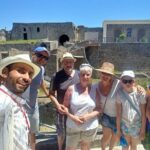
This tour is guided by professional local tourist guides authorized by the Campania Region authorities. That shows up in how the walk is structured. You’re not just wandering; you’re moving from major sites to smaller, more specific stops, with explanations that help you understand what you’re looking at.
In the reviews, Ilaria stands out as a guide who gives clear insights about what life was like in Pompeii, and who answers questions with confidence. That kind of back-and-forth is worth more than you might expect. Pompeii can feel like a pile of ruins until someone helps you connect the dots: public vs. private buildings, how spaces were used, and why certain stops hit harder than others.
Also, this is built around “off the beaten path” parts of the park. That doesn’t mean you’ll be totally alone in the ruins. It does mean your route is designed to feel more like a city walk than a theme-park shuffle.
Forum, Thermal Baths, and Menandro’s House: the daily-city foundation
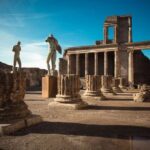
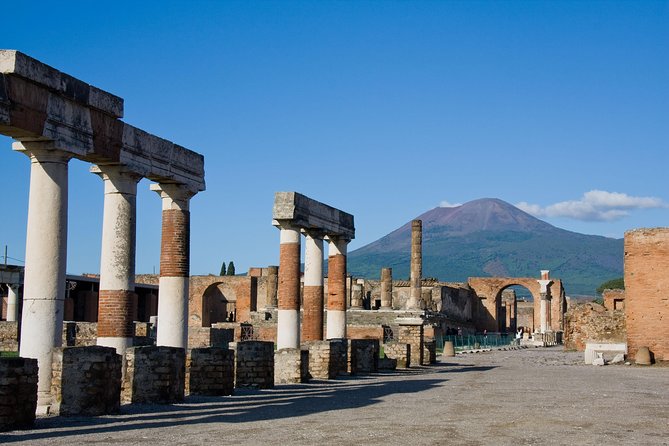
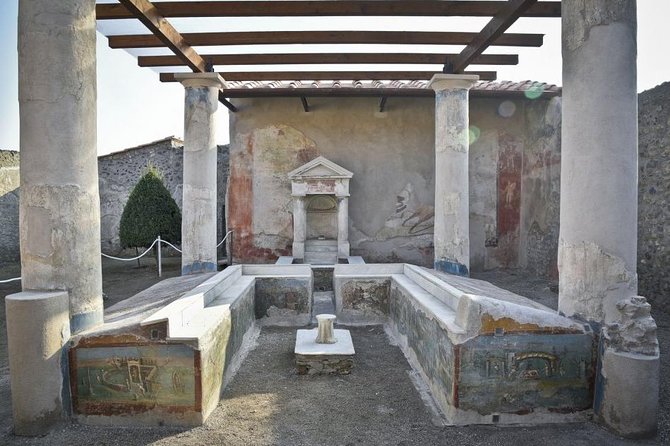
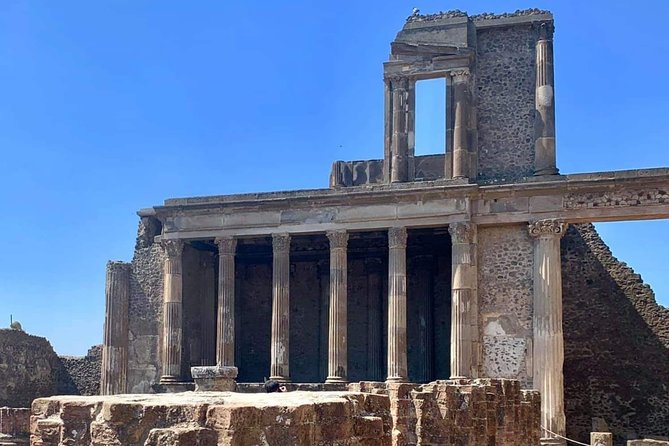
Your visit begins at the Pompeii Archaeological Park, and the guide takes you around the ancient city’s most important public and private buildings. Expect the big classics first: the Forum, the thermal baths, and Menandro’s House.
Why this works well: the Forum and thermal baths give you anchors. They’re the kinds of spaces that help you understand the rhythm of the city—where people gathered for public life and where daily routines played out in shared settings. Menandro’s House adds the other side: domestic space. Together, they help you stop thinking of Pompeii as only a tragedy and start seeing it as a functioning community.
You’ll also see both public and private edifices, which is a key reason this tour feels different from the shortest “hit the big ruins” versions. Instead of only viewing what’s famous, you get a sense of how Pompeii blended social life, routine, and private space.
One practical drawback: you’ll be walking. The tour notes a moderate physical fitness level, so if you have knee issues or tire quickly, you should plan for breaks and slower pace with your guide. The upside is that the route is designed to keep things manageable while still covering a lot of ground.
The Lupanare stop and the plaster casts: why these moments stick
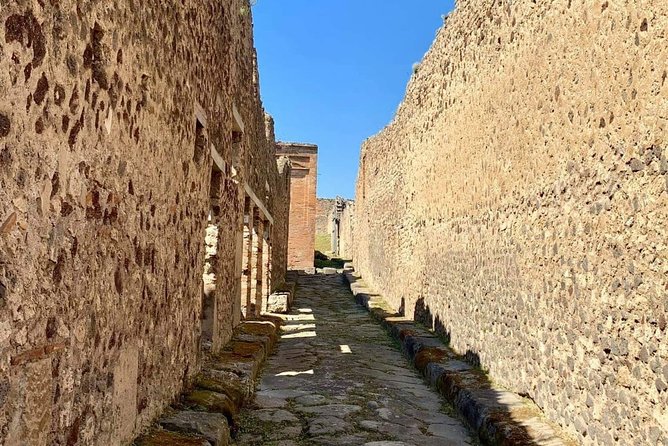
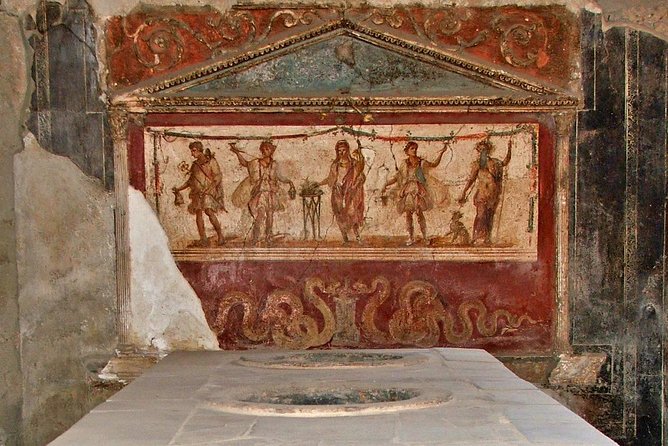
Next comes one of the tour’s most talked-about stops: the brothel called the Lupanare, including its erotic frescoes. This isn’t an optional “maybe” stop. It’s listed as a specific part of the visit, and that specificity matters because it shapes how you understand Pompeii’s social world. It’s not only stone walls and collapsed roofs—you’re looking at painted details that reflect how people communicated and expressed themselves.
Then you head into the quieter southern part of the ruins, where you’ll see the famous plaster casts: the bodies of those who died during the eruption of Mount Vesuvius on 79 A.D. This is the emotional center of most Pompeii visits, and the southern route timing helps. When you’re not constantly pushed by crowds, the casts land differently. You get space to absorb what you’re seeing rather than snapping photos and moving on.
A balanced way to think about it: the casts are not “a spectacle.” They’re an on-site record of a catastrophe. The guide’s job here is important. With the right framing, you remember that this is human loss etched into the city’s history, not a detached photo stop.
Theaters, the north side, and the goal of feeling present
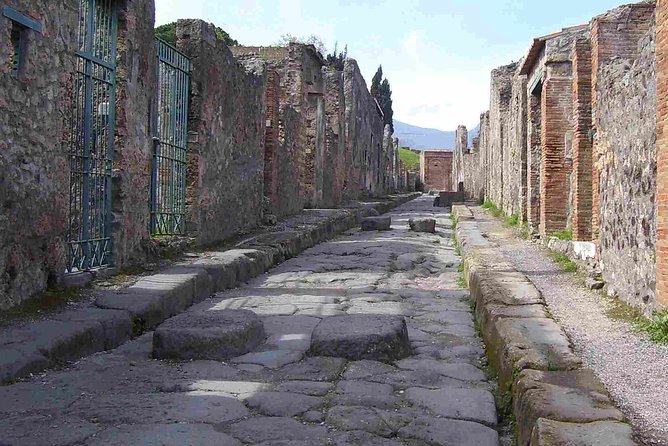
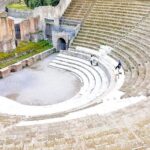
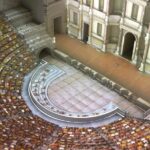
After the southern stretch, you continue toward the theaters and then cross the streets along the north side. The tour description even points out a specific payoff: for part of the walk, you may feel as if you are in Pompeii with its ancient inhabitants.
That line is more than marketing. Pompeii can feel unreal, especially when you’re surrounded by preserved angles of rooms and street layouts. A guided path helps you recreate that sense of movement—where you’re likely to imagine people walking, talking, and going about normal life before everything changed.
You also tend to enjoy the theaters stop more when you don’t rush it. With only about two hours total, you’ll want the guide to keep the route tight and the explanations focused. The “private group” setup helps, because your guide can adjust to your pace and keep the story coherent instead of spending time herding a larger group.




Price and logistics: how the math works in real life
The tour itself is $229.28 per group (up to 6), and the guided service is included. But tickets to enter the archaeological park are not included. You should expect 16 euro per person for admission. Under 18 can get free entry with valid ID.
So how much does it cost in practice?
- If you book for a full group of 6: $229.28 ÷ 6 ≈ $38.21 per person, plus 16 euro admission each.
- If you book for 2 people: $229.28 ÷ 2 ≈ $114.64 per person, plus 16 euro admission each.
That makes this tour a classic “best value with friends or family.” If you’re solo or a couple, it can still be worth it if you care deeply about having a guide steer you through the city. But if you’re cost-sensitive, you’ll likely want to compare against group tours or flexible self-guided time.
Also, the tour uses a mobile ticket, which is convenient. You’ll still want to keep your park entry day straight, because the experience runs in a limited window of hours and dates.
Timing windows, walking comfort, and weather reality
The listed opening hours are Monday through Sunday, from 9:00 AM to 1:00 PM for the season covering 01/10/2025 to 11/30/2026. Since the tour is about 2 hours, you’ll want to start early enough that you don’t feel rushed or stuck in the middle of a peak time squeeze.
Weather is outdoors, period. The experience notes it requires good weather, and if it’s canceled due to poor weather you’ll be offered a different date or a full refund. That said, Pompeii can often still be visited in less-than-perfect conditions, as long as you’re prepared for wet stone and slippery paths.
My practical advice: pack for the worst 20 minutes of your day. Wear shoes with real traction. Bring a layer even if it feels warm when you leave the hotel. And if storms hit, don’t fight it—use the guide’s rhythm and stay flexible.
Who this Pompeii tour fits best (and who might want another format)
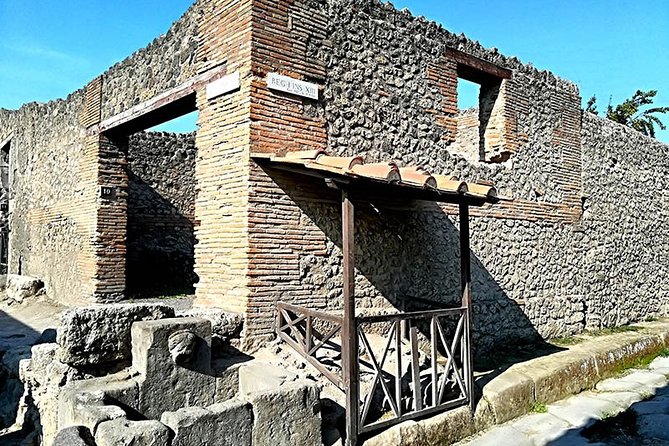
This is a great fit if you want a guided Pompeii experience with structure, not a free-for-all. It’s also ideal if you value specific stops like the Lupanare and the plaster casts, because those are built into the route and time.
It’s also a nice option if you’re not trying to do everything. Two hours is long enough to hit major buildings and get the emotional anchor of the casts, but short enough that you’re not exhausted beyond enjoyment.
It may be less ideal if you want a long, slow, “I’ll read every inscription” day. There’s just not enough time to do that kind of deep lingering. If your goal is maximum wandering, you might prefer self-guided time. But if your goal is to leave with a clear sense of how Pompeii functioned—public spaces, private homes, and the human shock of 79 A.D.—this format is a strong match.
Should you book this buried-city tour?
If you’re willing to budget for a guided experience, yes, you should book this tour if you want Pompeii with a plan. The private setup, the off-the-beaten-path southern route, and the combination of Forum/thermal baths/domestic spaces plus the Lupanare and plaster casts make it feel more meaningful than a quick highlights walk.
I’d especially book it if:
- you care about not missing the stops that tell a fuller story of Pompeii
- you want a guide who can answer questions and keep the walk organized (Ilaria-style energy shows up in the feedback)
- you’re traveling with up to 5 others and can spread the group price
I’d think twice if:
- you’re very budget-focused and would rather pay only for admission
- you want a long, independent, hours-long drift through the park
If you’re on the fence, here’s the simple decision rule: you should book if you want help making sense of what you see. You should skip if you want maximum time to roam without guidance.
FAQ
How long is the Pompeii guided tour?
It’s about 2 hours.
Is the archaeological park admission included in the price?
No. Admission is 16 euro per person and is not included in the tour price.
How much is the tour?
It costs $229.28 per group (up to 6 people).
Is this a private tour?
Yes. Only your group will participate.
Where do we meet for the tour?
The meeting point is Pompei-porta Marina (scavi), 80045 Pompei, Metropolitan City of Naples, Italy.
What time does the tour run?
The available hours listed are 9:00 AM to 1:00 PM, Monday through Sunday, during the stated season dates.
What should I do about tickets for under 18?
Free entrance for under 18 is provided with a valid ID document.
What happens if weather is poor?
The experience requires good weather. If it’s canceled due to poor weather, you’ll be offered a different date or a full refund.