REVIEW · POMPEII
Discover Pompeii on this Guided Walking Tour of the Buried City
Book on Viator →Operated by Gray Line I Love Rome by Carrani Tours · Bookable on Viator
Pompeii can feel huge. This guided walk turns the UNESCO site into a story you can follow fast, with headsets and a guide in your language. I like that you get a focused 2-hour visit and that the tour is built to save time by helping you avoid the long ticket line.
Two things stand out for me: the guide-led format (so you’re not guessing what you’re looking at) and the language support, including audio guides in more languages. My main caution is language reliability on the day—French and German live tours require a minimum group size, and if that threshold isn’t met you may be placed with an English-led tour.
In This Review
- Key things that make this Pompeii tour work
- Two hours in Pompeii: what you’re really paying for
- Meeting at Piazza Esedra and getting oriented quickly
- The language setup: headsets, live guide, and the German or French minimum
- Stop inside Pompeii Archaeological Park: Vesuvius lava and the city’s first walls
- Following the guide through UNESCO ruins: “daily life” in a city built for people
- Mount Vesuvius context: why the eruption matters to what you see
- Included extras that reduce frustration on site
- Price and value: is $63 a smart use of time?
- Who this tour is best for (and who might want a different plan)
- Should you book this Pompeii walking tour?
- FAQ
- How long is the Pompeii guided walking tour?
- Where do we meet, and where does the tour end?
- What is included in the price?
- Which languages are available for the live guide?
- Are audio guides included, and in what languages?
- Do I need ID or a passport?
- How big is the group size?
- What happens if the German or French tour doesn’t meet the minimum participants?
- Is there a way to avoid the ticket line?
- Can I cancel for a full refund?
Key things that make this Pompeii tour work
- Small group size (max 15) keeps the pace manageable inside the ruins
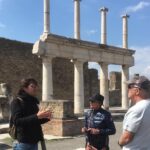
- Headsets included help you hear your guide clearly while you walk
- Live guide in English, Spanish, German, or French (based on confirmation and group size)
- Audio guides in extra languages depending on the season
- Skip the long ticket line on arrival so you start seeing Pompeii sooner
Two hours in Pompeii: what you’re really paying for
For $63, you’re not just buying admission. You’re paying for a structured route through a preserved Roman city that’s easy to misunderstand if you go on your own—especially when you’re trying to grasp why it was built where it was, and what daily life looked like before the eruption.
The tour lasts about 2 hours, which is a practical chunk of time. Pompeii is large, and even motivated self-guided plans can stretch. Here, the guide keeps the visit tight and purposeful, so you’re not spending your vacation time wandering between highlights without context.
A big value point is the time-saving element: the tour is designed to help you bypass the long ticket line when you arrive. If you’ve ever watched people lose an hour to ticket queues at major sights, you’ll understand why that matters.
You can also read our reviews of more walking tours in Pompeii



Meeting at Piazza Esedra and getting oriented quickly
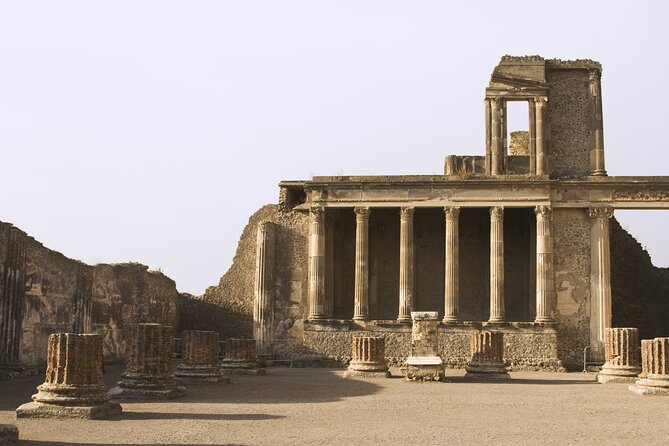
You meet at Piazza Esedra, 2, 80045 Pompei NA, Italy. The tour also ends back at the same meeting point, which keeps your afternoon from turning into a logistics puzzle.
This matters more than it sounds. When a tour returns you to the start area, you can plan your next stop without guessing how far you’ll be from your bus, train, or parking situation. In Pompeii, where walking routes can feel unpredictable, that kind of “back to the same place” finish is a relief.
You’ll use a mobile ticket, and you’ll want to have your phone ready. Also note that you need to provide full passenger names at booking, and you should bring a valid ID/passport for entry verification. Doing that ahead of time avoids last-minute stalls right when you’re trying to start the tour.
The language setup: headsets, live guide, and the German or French minimum
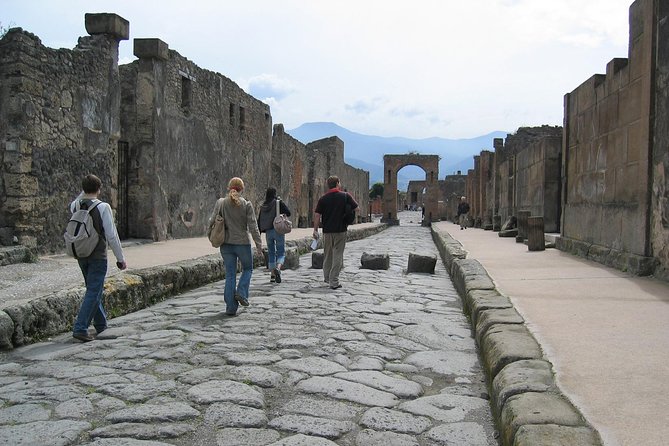
This is one of the most important parts of the experience, because Pompeii rewards attention—and attention depends on hearing the guide clearly.
The tour includes:
- Professional live guides in English, Spanish, German, and French
- Headsets to help you hear while walking
- Audio guides in additional languages, with seasonal availability
Here’s the practical twist: French and German live tours require a minimum of 10 participants to confirm the tour in that language. If there aren’t enough people, the tour runs in English instead. The tour notes that you should contact the reservations team to confirm the language option within 24 hours before departure. That’s a smart step if Pompeii is a learning trip for kids, teens, or a family member who needs the information in a specific language.
If language clarity is a deal-breaker for you, don’t gamble. When your chosen language is available, the combination of headsets + a live guide is exactly what helps you catch details without repeatedly losing the thread when the group pauses.
Stop inside Pompeii Archaeological Park: Vesuvius lava and the city’s first walls
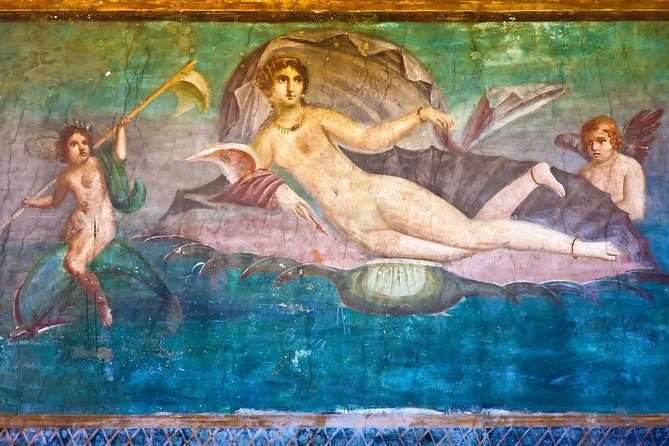
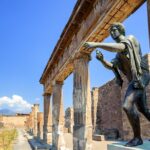
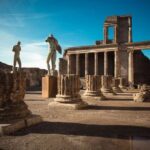
The tour focuses on Pompeii Archaeological Park, and that’s the right choice if you want the “Romans lived here” feeling without turning the day into a long haul.
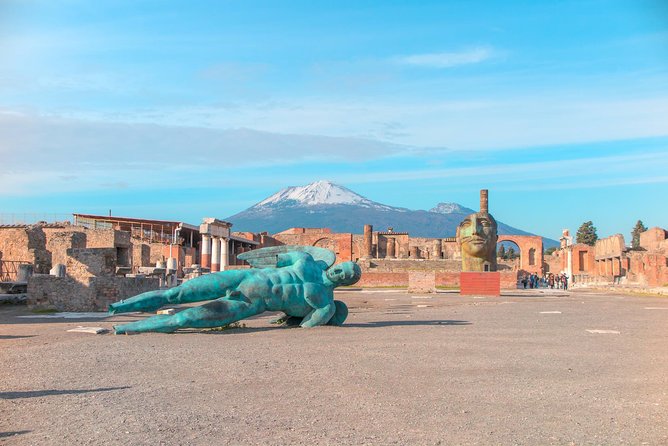
At the start, you’ll get a foundation for how the city was shaped by the volcano. Pompeii sits on a plateau formed by lava flows from Mount Vesuvius. The guide also frames how the city dominated the valley around the Sarno River, with the port being hosted by the delta area. Even if you’re walking through ruins that look stone-still, this context helps you understand that Pompeii wasn’t random. It was positioned for land and sea connections.
Then you’ll hear how the earliest story of the city isn’t crystal clear. The oldest trace dates back to the 7th–6th centuries BC, when people built early tuff walls called pappamonte to enclose an area of about 63.5 hectares. That one detail—the idea of enclosing a large planned area with tuff walls—helps you see the city as something that was organized, not just a scatter of buildings.
You’ll also learn that Pompeii’s development involved a mixed population, including Etruscans, Greeks, and other Italic peoples. That matters because it explains why you may notice different cultural influences when you’re trying to picture what daily life was like. Even without listing specific buildings, this cultural setup gives you a clearer mental map of the people who lived here.
Following the guide through UNESCO ruins: “daily life” in a city built for people
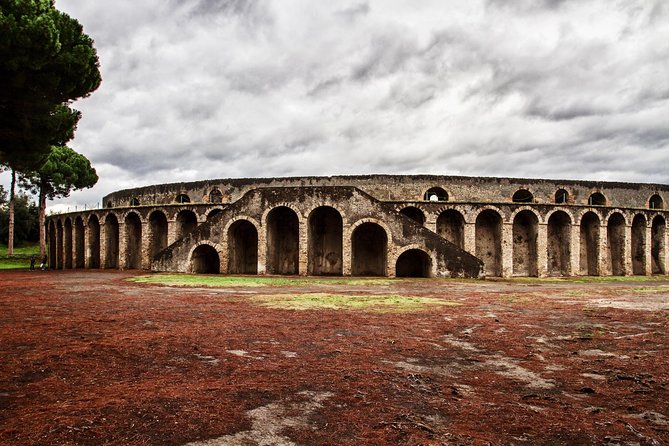
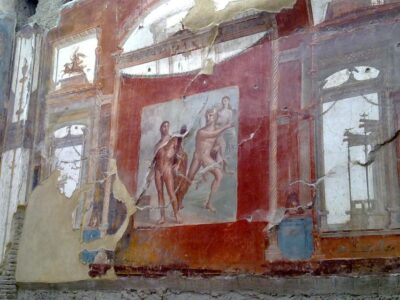
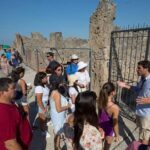
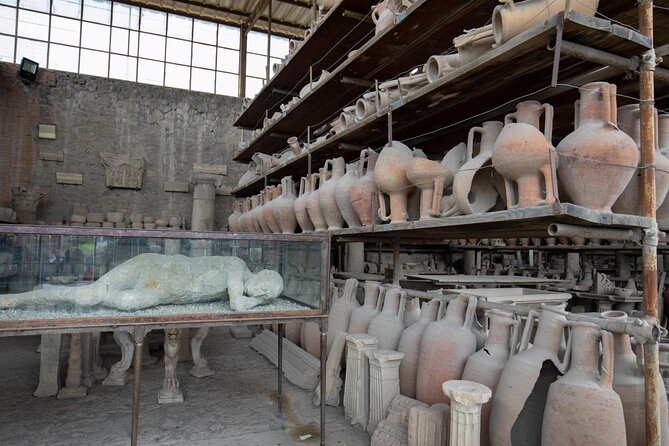
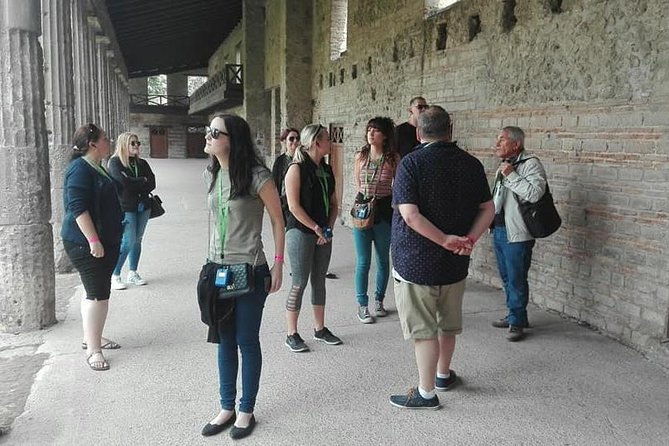
The tour is designed around the essence of the buried city: you follow the guide through the remains of the UNESCO listed city and get an insider view of the Romans’ daily lives.
What I like about this approach is that it prevents the common mistake of turning Pompeii into a pile of objects. When a guide connects what you see to how people lived—habits, spaces, routines—it’s easier to remember details after you leave.
Also, the time structure helps. With only about 2 hours, the guide is unlikely to overload you. That’s a plus if you’re traveling with limited energy, want something meaningful but not exhausting, or you just have a day planned around multiple stops.
A possible drawback is that “2 hours” can feel short if you’re the type who likes to linger and read every inscription. In that case, you’ll probably want to save extra time for a return visit later. This tour is most valuable as the first “understand what you’re seeing” pass.
You can also read our reviews of more guided tours in Pompeii



Mount Vesuvius context: why the eruption matters to what you see
Even though the guided portion is centered on Pompeii, the tour gives you the necessary Mount Vesuvius context so the story lands.
You’ll learn that Vesuvius is a somma-stratovolcano in the Gulf of Naples, about 9 km east of Naples, and described as part of the Campanian volcanic arc. You’ll also hear how Vesuvius includes a large cone partially encircled by the steep rim of a summit caldera, formed by the collapse of an earlier, much higher structure.
Why does that geology matter for your walk? Because it explains why Pompeii was preserved the way it was. When you understand that this wasn’t just some distant mountain in a postcard, you’re more prepared for the emotional contrast of seeing a city that once functioned normally, then became a frozen record of daily life.
Included extras that reduce frustration on site
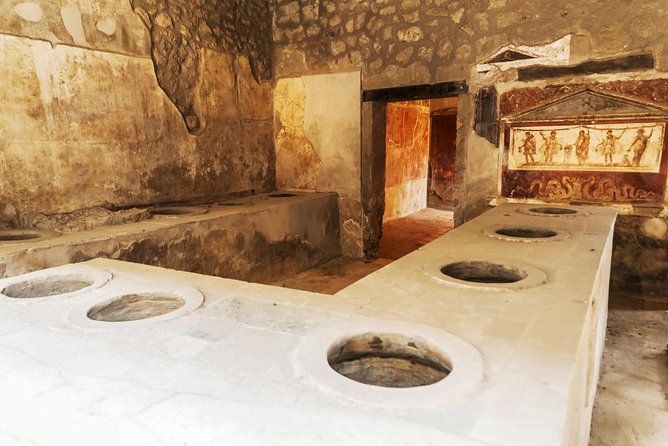
You get several small things that add up to a smoother experience:
- Headsets: helpful when you’re outdoors, walking, and the group pauses in sections where sound can drift.
- Audio guides in multiple languages (based on season): useful if your language option isn’t perfect or if you want a second layer of explanation at your own pace during pauses.
- Max 15 travelers: this tends to keep the group compact enough for the guide to manage questions and to keep the walk from turning into a slow moving crowd.
There’s also a practical operational advantage: the tour is offered in multiple languages, and you’re told upfront what to do if a language option doesn’t meet the minimum group size. Clear expectations usually lead to fewer disappointments later.
Price and value: is $63 a smart use of time?
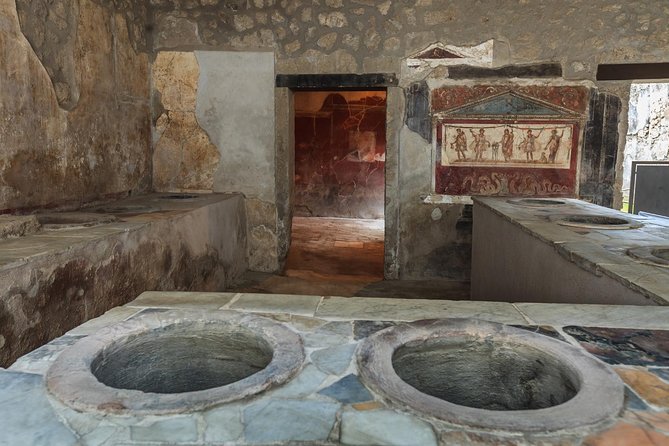
At $63 for about 2 hours (with admission ticket included), the value is strongest for people who want Pompeii to make sense quickly.
If you’re going DIY, you can still learn a lot. But Pompeii requires interpretation. You’re surrounded by remains, and without a guide you can end up with a head full of fragments. This tour pays for the guide’s ability to connect the site to the big themes you actually care about: where the city came from, how it relates to Vesuvius, and how Romans lived day to day.
You’re also buying back time. The tour’s promise to avoid the long ticket line can be the difference between enjoying Pompeii and spending your precious hours stuck waiting. Even if you’re not a slow traveler, queues steal momentum, and momentum is what helps ruins feel “alive” rather than chaotic.
My recommendation on value is simple: if you’re here for a limited number of hours and you want Pompeii to be educational, this price makes sense.
Who this tour is best for (and who might want a different plan)
This Pompeii guided walk fits well if:
- you want a structured, time-efficient visit
- you care about understanding Roman daily life rather than just taking photos
- you need language support and want to use headsets
- you’re traveling in a small group size environment (max 15)
It may be less ideal if:
- you’re the type who wants hours and hours at a single spot and doesn’t mind sorting your own questions
- your chosen live-guide language is critical and you can’t be flexible if French or German doesn’t meet the 10-person minimum
The good news: the tour gives you enough guidance on what can shift, so you can make a clean decision before you show up.
Should you book this Pompeii walking tour?
I’d book this tour if you want Pompeii to feel understandable fast. The combination of live guiding, headsets, and a time frame that won’t swallow your day is a strong match for most visitors.
I’d think twice or do extra confirmation if language choice is central to your experience—especially for German or French—because the tour can switch to English if minimum numbers aren’t met. If that matters to you, contact the reservations team within 24 hours of departure as suggested, and show up with your ID/passport ready for entry verification.
Overall, this is a practical way to see a UNESCO site without wasting vacation time. You leave with a clearer story of the city—lava, port, early walls like pappamonte, and the tragic eruption context that makes Pompeii so unforgettable.
FAQ
How long is the Pompeii guided walking tour?
The tour runs for about 2 hours (approx.).
Where do we meet, and where does the tour end?
You meet at Piazza Esedra, 2, 80045 Pompei NA, Italy, and the tour ends back at the meeting point.
What is included in the price?
The tour includes a professional guide, headsets, and an admission ticket. Audio guides may also be included in additional languages depending on the season.
Which languages are available for the live guide?
Live guides are offered in English, Spanish, German, and French, with language confirmation subject to minimum participation.
Are audio guides included, and in what languages?
Audio guides are included in additional languages. From November to March, they include Italian, Portuguese, Chinese, Russian, and Japanese. From April to October, they include Italian, German (Mondays to Fridays), French, Portuguese, Chinese, Russian, and Japanese.
Do I need ID or a passport?
Yes. You should bring a valid ID/passport for entry verification.
How big is the group size?
This tour has a maximum of 15 travelers.
What happens if the German or French tour doesn’t meet the minimum participants?
The tour notes that a minimum of 10 participants is required to confirm the tour in German or French. If the minimum isn’t met, the tour will be conducted in English. The guidance is to contact reservations to confirm within 24 hours before departure.
Is there a way to avoid the ticket line?
Yes. The tour is described as helping you bypass the long ticket line on arrival.
Can I cancel for a full refund?
Yes. You can cancel up to 24 hours in advance for a full refund. If you cancel less than 24 hours before the start time, the amount paid is not refunded.