REVIEW · POMPEII
Pompeii and Herculaneum small group tour – skip the line
Book on Viator →Operated by PompeiIn · Bookable on Viator
Two cities, one buried day. This small-group tour links Pompeii and Herculaneum with skip-the-line access and a guide who turns ruins into real daily life. You’ll hop from one UNESCO site to the next, with timed stops built for learning instead of wandering.
I especially love how the skip-the-line entry keeps you out of slow-moving lines, so you spend more time inside the archaeological park. And I like that you get a guided sweep through the places people actually used: streets, porticos, markets, baths, theaters, and big domus with frescos and mosaics.
One consideration: this is a walking-heavy day. Even with a small group, the ground is uneven and the pace includes plenty of steps, so a stroller won’t work well and mobility limits may be a real factor.
In This Review
- Pompeii and Herculaneum in One Day, With Skip-the-Line Flow
- Meeting at Porta Marina: Where the Day Starts Smoothly
- The Pompeii Sweep: Streets, Squares, Baths, and Big Houses
- Basilica Portico and the Merchant-Activity Feel
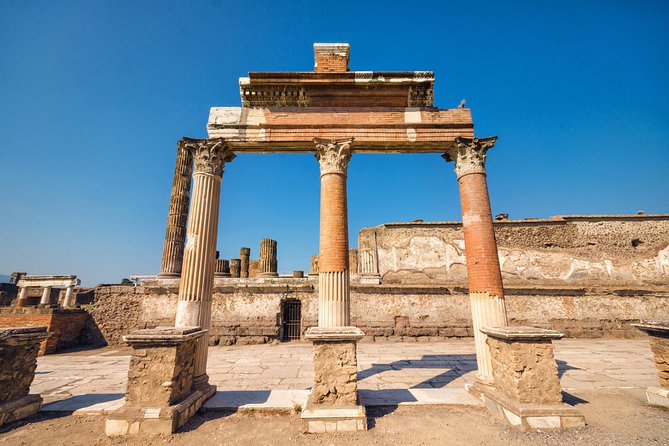
- Foro de Pompeya: The Main Square Energy
- Casa del Menandro: Frescos, Mosaics, and Layout Clues
- Granai del Foro: Storage, Water Sounds, and Casts
- Terme del Foro: Oldest Thermal Complex in the City
- The Famous Brothel: Sex Work as a Visible Part of City Life
- Main Street Walk-Through: The Best Kind of Break
- Teatro Piccolo and Teatro Grande: Public Entertainment Scale
- Switching Cities: The Included Train Ride to Herculaneum
- Herculaneum Turns Up the Intimacy: Houses, Baths, and Charred Wood
- Casa dei Cervi, Balbo’s Terrazza, and the Meaning of Name
- College of the Augustales: Status and Civic Identity
- Casa del Rilievo di Telefo: A House With a Private Doorway Story
- Partem Domus lignea: The Wooden Partition You Can Still Imagine
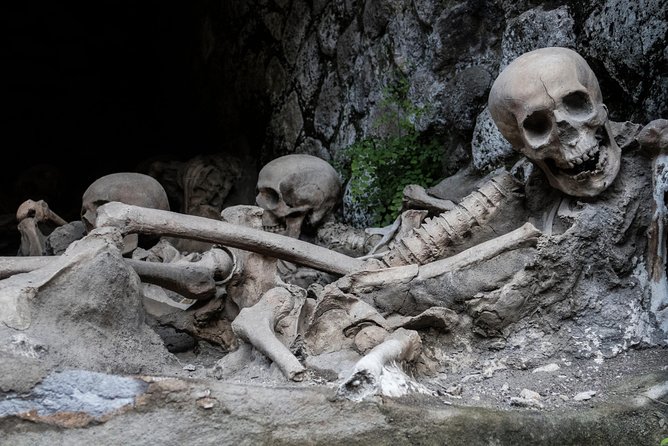
- House of the Skeleton: The Eruption’s Human Evidence
- Central Thermae: Separate Entrances Built Into Daily Routine
- Casa del Salone Nero: Charred Door Remains and Monumental Entry
- Casa Sannitica and Casa del Bel Cortile: Atrium vs. Courtyard Thinking
- House of the Grand Portal: Frescos, Colonnati, and Charred Wood
- What Makes the Guides Matter: Stories, Humor, and Archaeology Notes
- Walking Pace, Timing, and Comfort: Plan Smart for the Ruins
- Skip-the-Line and Ticket Value: Is $119.85 a Good Deal?
- So, Should You Book This Pompeii and Herculaneum Tour?
- FAQ
- How long is the Pompeii and Herculaneum small group tour?
- What’s the group size limit?
- What language is the tour offered in?
- Where do we meet in Pompeii?
- Is skip-the-line included?
- How do you get from Pompeii to Herculaneum?
- Are admission tickets included in both sites?
- Is lunch included?
- Is this tour stroller-friendly or easy for mobility limitations?
- What’s the cancellation policy?
Pompeii and Herculaneum in One Day, With Skip-the-Line Flow
- Skip-the-line entry in both sites to protect your time
- Small group max 20 for questions and a more human pace
- Roman daily life focus, from baths and squares to rich houses
- Train transfer included (Circumvesuviana one-way) to reach Herculaneum efficiently
- A second, less crowded rhythm: the Herculaneum half tends to feel calmer than Pompeii
- Bring water tip is consistent, and you’ll be glad you listened
Meeting at Porta Marina: Where the Day Starts Smoothly
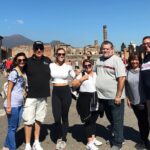
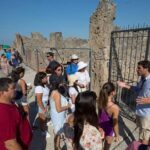
Your morning starts in Pompeii with a guide holding an Askos Tours sign. The meeting point is Piazza Esedra, 4, and from there you head to the main entrance of the archaeological site called Porta Marina Superiore. The format matters here: you’re not just buying access, you’re getting a plan and a person who can point out what’s easy to miss.
You’ll also notice the tour’s rhythm is built around time boxes—many stops are short. That can sound rushed on paper, but in practice it keeps you moving through the biggest highlights without letting the day dissolve into aimless roaming.
The tour is offered in English, and it uses a mobile ticket. That’s handy if you’re juggling a few reservations during your Sorrento or Amalfi days.
You can also read our reviews of more tours and experiences in Pompeii
The Pompeii Sweep: Streets, Squares, Baths, and Big Houses
Pompeii is huge. The trick is choosing the right slices, and this tour hits a smart blend: public spaces first, then “what people lived like” in the homes.
Basilica Portico and the Merchant-Activity Feel
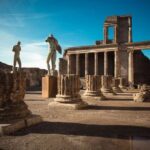
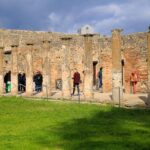
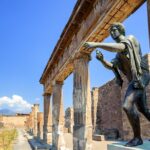
Early on, you pass the Basilica, an open portico that functioned as shelter and a place for commerce and everyday business. It’s easy to stand in a ruin and think, ancient people just lived here. The Basilica helps you do the opposite. You start picturing merchants waiting out the sun, people negotiating, and ordinary transactions happening right under those arches.
Foro de Pompeya: The Main Square Energy
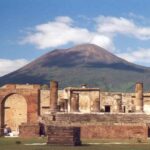
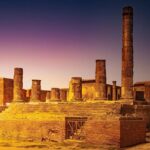
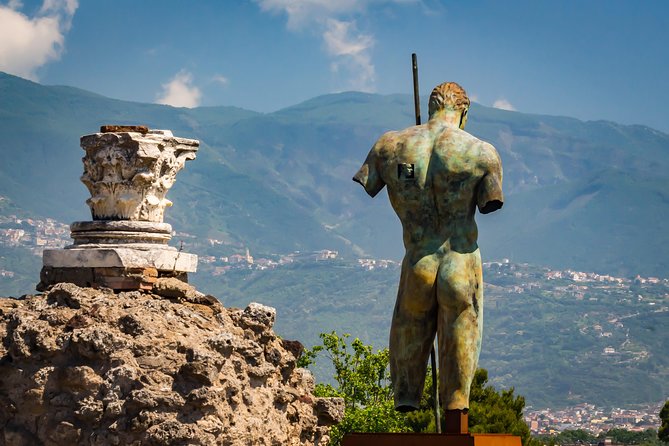
Next comes the Foro (Forum) of Pompeii, the city’s main square. This is where the day’s sounds would have gathered: footsteps, chatter, and the movement of people between commerce and ceremony. Even when you only get a brief stop, the Forum gives you a mental map fast—so later, when you see residential areas, you can connect them back to the center.
Casa del Menandro: Frescos, Mosaics, and Layout Clues
The Casa del Menandro is one of the richest houses in Pompeii. The draw here is how the architecture and decoration work together: you get a sense of status through layout and visual detail, not just through size. When you’re walking through, I like how these house stops explain the “why” behind Roman design—courtyards, room sequencing, and display spaces.
A quick heads-up: the best parts are also the most tempting. You’ll want time to linger, but your schedule keeps it moving.


Granai del Foro: Storage, Water Sounds, and Casts
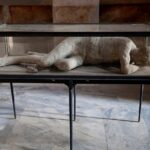
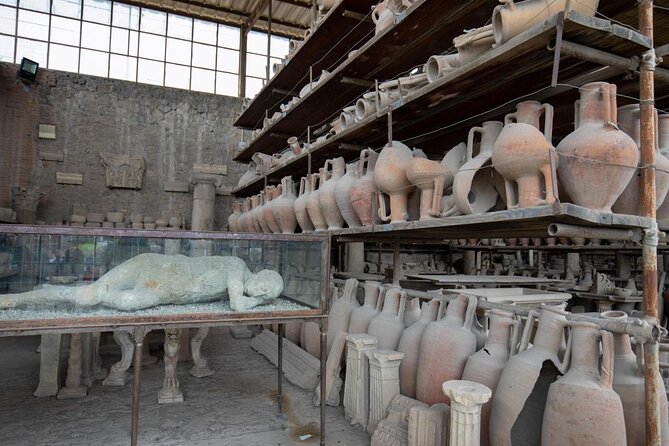
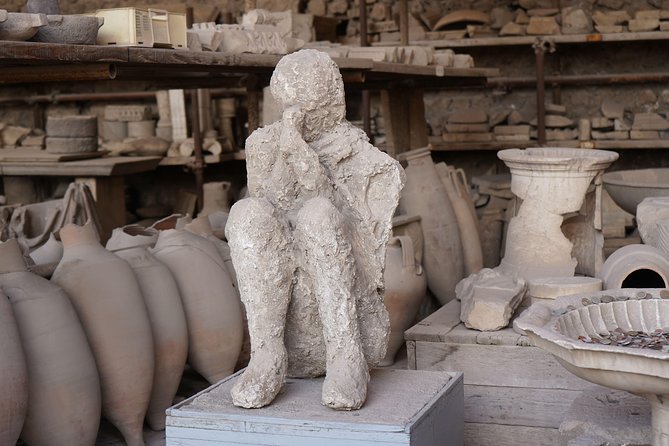
Then you see the Granai del Foro, tied to storage and the practical needs of the city. There are marble tables and baths for fountains at house entrances, plus casts showing victims of the eruption—along with a dog and a tree. That mix is sobering. It also does something useful: it reminds you that this wasn’t just “art and architecture.” It was a functioning city where the disaster hit real people and real animals.
If you’re sensitive to the darker material, brace yourself for it as part of the Pompeii story—not a random add-on.
Terme del Foro: Oldest Thermal Complex in the City
The Terme del Foro sit across a large area and represent the oldest thermal complex in Pompeii. Baths were a social hub, not just hygiene. Standing in the remains, you can almost sense the routine: separate spaces, noise, gossip, and the slow rhythm of daily life.
This is a good spot for your guide’s explanations, because the ruins don’t label themselves. You’re relying on someone to translate what you’re seeing into how Romans used these spaces day after day.
The Famous Brothel: Sex Work as a Visible Part of City Life
You’ll also pass the most famous brothel area in Pompeii. Even though you’ll only spend a limited time, it’s important historically because it shows how visible and organized aspects of daily life could be in the city. If your goal is “understand the Romans,” this stop fits the theme.
It’s not a moral judgment tour. It’s a “this existed, and here’s what the remains suggest” tour.
Main Street Walk-Through: The Best Kind of Break
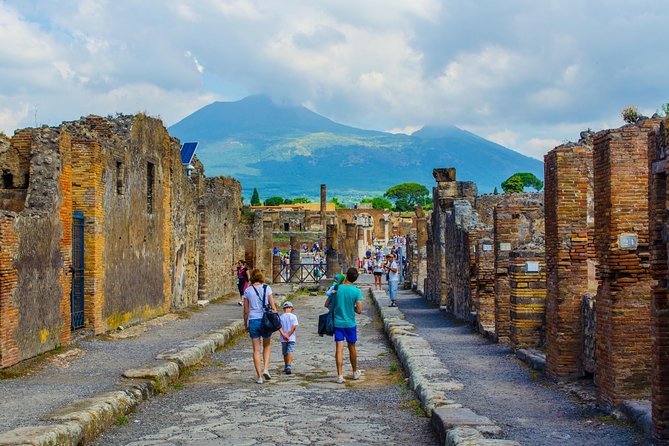
Midday, you get a walk through Pompeii’s main street. This is where you get your bearings fast. After a string of themed stops, the street time helps you reset and connect dots across the city.
Teatro Piccolo and Teatro Grande: Public Entertainment Scale
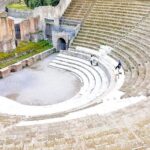
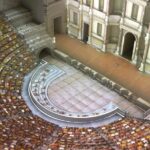
You’ll look at Teatro Piccolo and then visit Teatro Grande, the most important theater in Pompeii. The theater part is usually where the scale clicks. Romans didn’t just build pretty houses—they built big public spaces for performance and gathering.
The Teatro Grande stop is longer (15 minutes), which helps. With theaters, you want a moment where you can understand seating shape, sightlines, and the idea that a crowd gathered here for staged stories.
Switching Cities: The Included Train Ride to Herculaneum
After Pompeii, you transfer by train to Herculaneum. The Circumvesuviana one-way train ticket from Pompeii to Herculaneum is included. The ride time is about 30 minutes, plus about 10 minutes of walking to reach the meeting point at the ruins.
There’s also time for a quick lunch break if you need it. Meals are not included, so plan to snack or eat on your own during that break.
One practical note: the Herculaneum ruins meeting point is the ticket office area. From the exit of the site, you’ll be walking uphill toward the station, so keep that in mind when you’re planning your day and water.
Herculaneum Turns Up the Intimacy: Houses, Baths, and Charred Wood
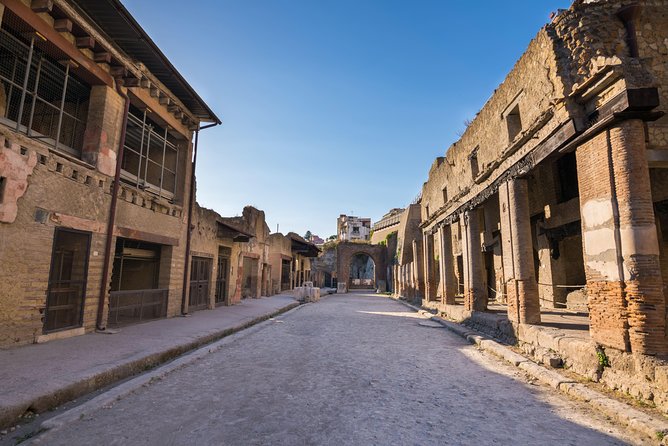
Herculaneum has a different feel than Pompeii. Pompeii is spread out and big. Herculaneum is tighter, and you start noticing textures: carved details, carbonized wood, and the way rooms connect.
Even when stops are short, you’re shown many different domus. That variety helps you see how “a Roman house” changes based on wealth, purpose, and design choices.
Casa dei Cervi, Balbo’s Terrazza, and the Meaning of Name
You’ll visit Casa dei Cervi, named for marble statues of stags/deer found in the peristyle. Then there’s La Terrazza di M. Nonio Balbo. The names here aren’t just trivia. They tell you what to look for while you’re standing there.
In Roman remains, it’s easy to stare at stone and miss the “clue object.” A guide naming what the room is known for makes the visit feel sharper.
College of the Augustales: Status and Civic Identity
Next is the College of the Augustales. It’s a shorter stop, but it’s part of the broad Herculaneum picture: community institutions weren’t far from everyday homes and routines.
If you like architecture and social context, this is a nice way to break up the flow between private residences.
Casa del Rilievo di Telefo: A House With a Private Doorway Story
At Casa del Rilievo di Telefo, you’ll hear it was possibly linked to a leading benefactor, Marcus Nonius Balbus. What I like about this stop is the unusual feature: it’s somewhat unusual because it has its own private access to the adjoining Suburban Thermae to the south. That single detail makes the whole place feel more like a system—how wealthy residents connected to public amenities privately.
Partem Domus lignea: The Wooden Partition You Can Still Imagine
The tour highlights Partem Domus lignea – Casa del Tramezzo di Legno, important for an elegant wooden partition that remains. Even when wood is carbonized, you can still sense how space was divided and how the house managed privacy and movement.
House of the Skeleton: The Eruption’s Human Evidence
The House of the Skeleton is named after human remains found in a second-floor room in 1831. This stop carries heavy weight, but it’s also part of why Herculaneum matters. You’re not just seeing “architecture saved by chance.” You’re seeing evidence of people caught in the disaster.
If you want to keep your day light, you may find this moment emotionally intense. But it’s handled as one stop in a day that still gives you plenty of other context.
Central Thermae: Separate Entrances Built Into Daily Routine
You’ll see the Central Thermae, built around the beginning of the 1st century AD. Here the tour points out that they were divided into men’s and women’s baths with separate entrances. That detail helps you understand that privacy and routine weren’t side thoughts—they were designed into the architecture.
Casa del Salone Nero: Charred Door Remains and Monumental Entry
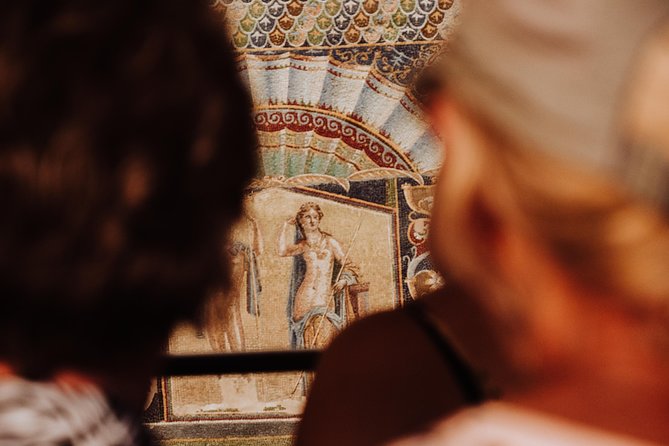
The House of the Black Hall (Casa del Salone Nero) is one of Herculaneum’s more luxurious mansions. The tour mentions a monumental entrance with carbonised remains of the doorposts and lintel. I love stops like this because you can’t fake it with imagination. Even if your brain wants to romanticize ruins, the burned wood and door structure keep it grounded.
Casa Sannitica and Casa del Bel Cortile: Atrium vs. Courtyard Thinking
You’ll visit Casa Sannitica, where fresco-decorated rooms and an atrium feel typical of the Samnites. Then Casa del Bel Cortile brings a different layout idea: a courtyard with a stairway and a stone balcony instead of an atrium.
Those comparisons matter. They teach you that Roman domestic architecture wasn’t one-size-fits-all.
House of the Grand Portal: Frescos, Colonnati, and Charred Wood
Finally, you’ll see the House of the Grand Portal, a beautiful domus in the center of the archaeological area. Expect various environments, colonnati, frescos everywhere, and charred remains of wooden parts. This is the kind of stop where your eyes start working differently. Instead of only looking at what survived, you try to picture what used to be there—stairs, doors, and daily traffic through rooms.
What Makes the Guides Matter: Stories, Humor, and Archaeology Notes
Small-group tours rise or fall on the guide. The best part here is that you can get a guide who really explains the “why,” not just the “what.”
In the feedback you’ll see names like Amadeau, Vince, and Sergio—with Sergio described as an archaeologist who works on the site. People also cite guides such as Paulo, Vincenzo, Diego, Michele, and Alfredo for mixing structure, clear explanations, and even humor.
That mix matters because you’ll be absorbing a lot of details in a short day. A good guide helps you filter the information so it sticks instead of spilling out.
Practical tips from the day also show up again and again: use the toilet before you start, bring water, and don’t forget the uneven walking. There’s also a neat detail about filling your bottle up at a Roman water spring during Pompeii—if that’s available when you go, it’s a nice bonus.
Walking Pace, Timing, and Comfort: Plan Smart for the Ruins
This is not a sit-and-stroll tour. The duration is about 5 hours 30 minutes. Pompeii takes the first half, and Herculaneum follows with the train transfer included.
Most stops are roughly 10 minutes, with a longer theater moment at Teatro Grande. That pacing works if you like highlights and context without spending your whole day inside one section.
Comfort realities:
- Expect uneven ground and plenty of stairs or steps in ruins.
- A stroller isn’t a great idea. The terrain is rough, and you may end up carrying anyway.
- Bring water. Pompeii and Herculaneum can feel brutally hot in summer, and you’ll be grateful for any chance to refill.
- Wear shoes you trust. Your feet will do more work than you think.
If you have mobility limitations, you might want to reconsider or confirm how your route will be handled on the day. The tour itself is doable for most people, but the ground is real.
Skip-the-Line and Ticket Value: Is $119.85 a Good Deal?
At $119.85 per person, you’re paying for three things: time saved, guidance, and bundled logistics.
You get skip-the-line tickets in both Pompeii and Herculaneum. That matters because time is the real currency on a day like this—waiting at entrances is the easiest way to lose the best parts of your schedule.
You also get guided access for the whole duration in both sites. And you get the one-way Circumvesuviana train ticket from Pompeii to Herculaneum. Transportation sounds minor, but it removes a headache and keeps the day on track.
One catch to double-check before you go: Pompeii includes admission for the listed stops, while the Herculaneum segment notes admission ticket not included. Since skip-the-line tickets are listed as included for Herculaneum, the exact mix can be confusing. When you book, confirm what you’ll pay on-site versus what’s already covered.
Meals aren’t included, so budget for a snack or lunch during the break.
Still, for a plan that hits two UNESCO sites with organization and reduced waiting, this price can be strong value—especially if you’re traveling with limited time on the Amalfi Coast or around Naples.
So, Should You Book This Pompeii and Herculaneum Tour?
If you want a structured, high-value highlights day with less waiting and more explanation, I think this tour makes sense. It’s especially good if you want to see Pompeii’s public spaces and big-name houses, then switch gears to Herculaneum’s intimate interiors and preserved details like carbonised wood and mosaics.
I’d skip or carefully reconsider if you:
- Don’t handle a lot of walking well
- Need stroller support
- Want a slow, photo-first day with long house time (this tour is timed and moves)
Also, you can cancel for a full refund up to 24 hours in advance, so if your plans are flexible, you have room to adjust.
Bottom line: if your goal is learning fast, seeing two UNESCO sites, and keeping the day moving without line chaos, this is a solid booking choice.
FAQ
How long is the Pompeii and Herculaneum small group tour?
It lasts about 5 hours 30 minutes.
What’s the group size limit?
The maximum group size is 20 travelers.
What language is the tour offered in?
The tour is offered in English.
Where do we meet in Pompeii?
The start meeting point is Piazza Esedra, 4, 80045 Pompei NA, Italy. The guide meets at Porta Marina Superiore holding an Askos Tours sign.
Is skip-the-line included?
Yes. Skip-the-line tickets are included for Pompeii and for Herculaneum.
How do you get from Pompeii to Herculaneum?
You take the Circumvesuviana train one-way from Pompeii to Herculaneum (about 30 minutes), followed by about a 10-minute walk to the ruins meeting point.
Are admission tickets included in both sites?
Pompeii admissions for the listed stops are included. For Herculaneum, the admission ticket is listed as not included, so check what’s covered when you book.
Is lunch included?
No meals are included, but there’s mention of a quick lunch break if required during the transfer.
Is this tour stroller-friendly or easy for mobility limitations?
It’s not very stroller-friendly because there’s a lot of uneven walking in the ruins, and you may need to carry a baby. If mobility is a concern, plan carefully.
What’s the cancellation policy?
You can cancel up to 24 hours in advance for a full refund. If you cancel less than 24 hours before the start, the amount paid isn’t refunded.