REVIEW · POMPEII
PompeiI Exclusive Tour with your Archaeologist in a Small Group
Book on Viator →Operated by Grand Tour Experience · Bookable on Viator
Pompeii feels close when the right guide leads. This archaeologist-led small-group tour gets you into the site efficiently and then walks you through the ruins in a way that makes the places connect, from temples to markets to streets.
Two things I like a lot: the priority line setup cuts down gate time, and the plan hits the most meaningful areas inside Pompeii without turning it into a marathon. You’ll walk out with a clearer picture of what daily life looked like, not just a list of stone names.
One thing to consider: this tour does not include the Pompeii entry ticket, and the 2-hour route is selective. If you want a deep, slow pass through every major highlight, you’ll likely need extra time on your own.
In This Review
- Quick reasons this Pompeii VIP tour works
- Pompeii VIP in 2 hours: how an archaeologist changes what you see
- Meeting point at Via Villa dei Misteri and the priority-line advantage
- Porta Marina Superiore: the western entrance and the first clues
- Temples early on: Tempio di Venere and the Sanctuary of Apollo
- The Forum core: Basilica, Forum main square, and the Temple of Jupiter
- Macellum, Forum Baths, and the thermopolium: daily life, not just monuments
- Casa del Fauno and the House of the Vettii: what the houses teach you
- Via dell’Abbondanza and Teatro Grande: streets and entertainment
- Price and value: $30.25 tour fee plus the site ticket
- Who should book this Pompeii VIP tour
- Practical tips: shoes, questions, and how to get the most from 10-minute stops
- Should you book this Pompeii VIP small-group tour?
- FAQ
- Is the Pompeii archaeological park ticket included in the tour price?
- How long is the Pompeii VIP tour?
- What group size should I expect?
- Where do we meet, and where does the tour end?
- What if weather is bad?
- Can I cancel for free?
Quick reasons this Pompeii VIP tour works
- Separate priority entry helps you avoid the long crush at the gate.
- Max 15 people keeps the pace calm and leaves room for questions.
- Archaeologist-style explanations focus on how we know what we know, not just what things are called.
- Forum-to-street routing ties temples, government space, markets, baths, and daily streets into one story.
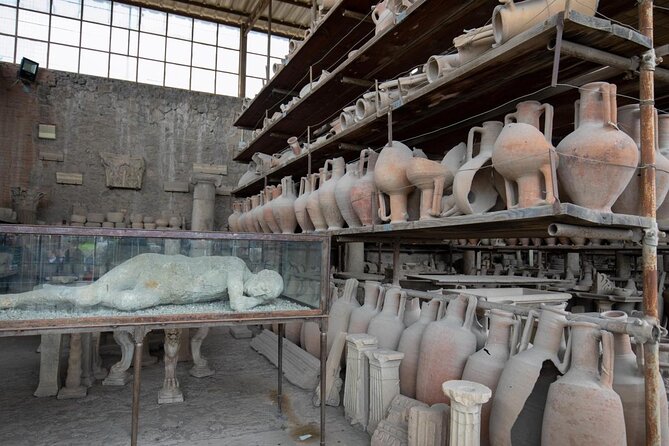
- Hands-on feel at the Macellum area, including plaster cast references such as bodies.
Pompeii VIP in 2 hours: how an archaeologist changes what you see
Pompeii can feel like a pile of big ruins until someone gives you a map for the mind. That’s where this tour shines. Instead of letting you wander, the guide builds a logical route so each stop answers the next question: Who used this space? What was it for? How did archaeologists figure that out after the eruption?
The small-group format matters, too. With a group capped at 15, you get less standing around and more time looking closely. It also helps that the tour moves at a steady tempo—quick enough to cover the main sights, not so rushed that you can’t take photos or ask, Can you explain that part again?
You can also read our reviews of more tours and experiences in Pompeii.

Meeting point at Via Villa dei Misteri and the priority-line advantage

You meet at Via Villa dei Misteri, 1, 80045 Pompei NA, Italy, and the tour ends back at the same point. Expect to start outdoors with your guide coordinating the group before you head to the archaeological park entry.
Here’s the practical win: you’re set up to enter through a separate priority line. That sounds like a small thing, but it changes the day. Pompeii’s ticketing line can sap energy, and you don’t want to spend your only two hours waiting with everyone else.
Also, remember this key detail: your tour ticket is not the same as the entry ticket for the Pompeii archaeological park. The tour provides help with buying online and offers guidance for a smooth skip-the-line ticket purchase, but you still need to pay the site admission for entry.
Porta Marina Superiore: the western entrance and the first clues
The tour begins at the Archaeological Park of Pompeii, specifically at Porta Marina Superiore. Your guide meets you outside the park, holding a sign with Pompei Vip. This matters because Pompeii is big and signage can be confusing when you arrive on your own.
Porta Marina Superiore is also a smart first stop because it frames where you are in the city. It’s described as the western entrance, and the name “Marina” links to the road that led toward the sea. Even in the opening minutes, the guide is basically saying: pay attention to how the city was connected—roads, movement, and access shaped everything.
Temples early on: Tempio di Venere and the Sanctuary of Apollo
After you settle in, you hit two worship sites that help you understand the religious grid behind everyday life.
Tempio di Venere (Temple of Venus) is quick but worth your attention. The point here is not just “a temple exists,” but that Pompeii had patron gods woven into public identity. Venus is tied to the city’s story, and your guide will help you connect that devotion to what Pompeians valued.
Next comes the Sanctuary of Apollo. This is one of Pompeii’s older places of worship and sits along a strategic stretch of street leading up from Porta Marina toward the city’s public center. In other words, it’s not hidden away. It’s positioned where people would pass—religion and city life in the same flow.
A timing note: each stop is allotted about 10 minutes, so you’ll want to decide early what you want to look at—inscriptions, layout, scale, or what the guide points out about the site’s location.
The Forum core: Basilica, Forum main square, and the Temple of Jupiter
Now you get to the heart of Pompeii—the zone where politics, business, and public order happened.
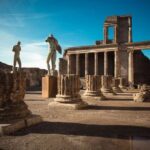
The Basilica was among the most lavish buildings in the Forum. It served as a space for managing business and for administration of justice. That means it’s not just architecture for decoration. It’s where rules met real life, and the guide helps you visualize people moving in and out for official needs.
Then you walk into the Forum main square, the daily center of city activity. If you’ve ever wondered why a Forum exists in almost every Roman city, this is the answer in stone: gatherings, announcements, commerce, and public identity all happened here.
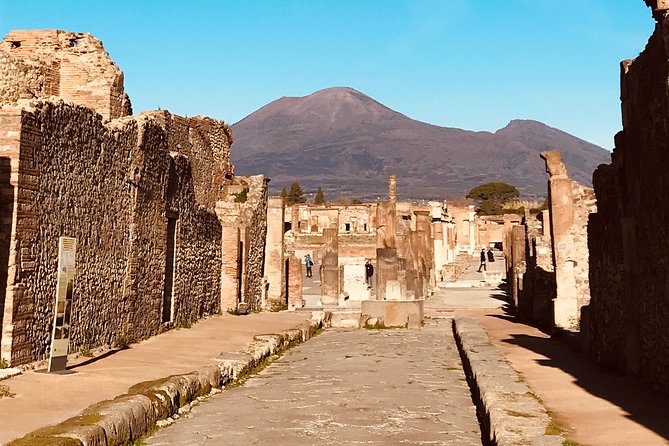
On the northern side of the Forum sits the Temple of Jupiter (Tempio di Giove Capitolino). One of the most useful parts of the tour is how it sets your bearings. You’re told it dominates that side and that Vesuvius rises behind it in the view. That sightline is important because it reminds you Pompeii wasn’t isolated. It lived under a looming natural reality.
If you’re hoping to spend a long time inside the Forum area, plan to add independent time afterward. This tour hits the essentials, not every corner.
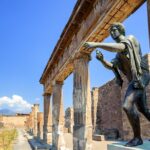

Macellum, Forum Baths, and the thermopolium: daily life, not just monuments
This is where Pompeii becomes human. Monuments are impressive, but food, washing, and quick meals are what you can almost smell when you know what you’re looking at.
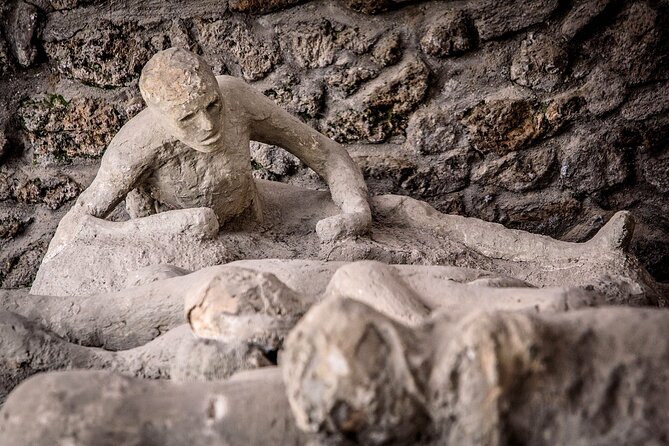
The tour passes the Macellum, described as a monumental building used for the sale of food and daily consumer products. There’s also a reference point here for plaster casts of bodies—an archaeological method used to understand what victims looked like at the moment of the eruption. Even if you don’t see every detail in a small stop, the guide’s context makes this area feel less like a museum label and more like a marketplace where people argued, traded, and ate.
Next you visit the Forum Baths (Terme del Foro), one of the best-preserved elements of the city. The tour highlights that there were separate areas for female and male entrances, which tells you a lot about Roman routines and social structure. Baths weren’t just cleaning. They were part of daily rhythm.
Then comes the Thermopolium (the old diner type). You’re shown how it functioned as a refreshment spot for inhabitants. This helps you shift from “what was built?” to “how did people actually get through the day?”
Casa del Fauno and the House of the Vettii: what the houses teach you
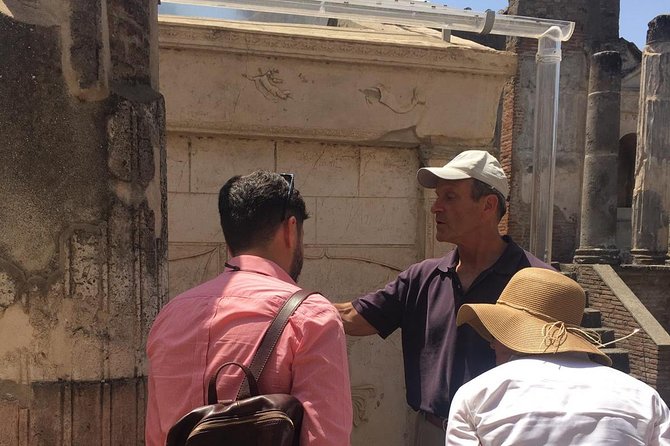
Next, you move into residential Pompeii with a pair of major house stops. This is a good section if you like social context—how wealth, household roles, and symbolism appear in architecture.
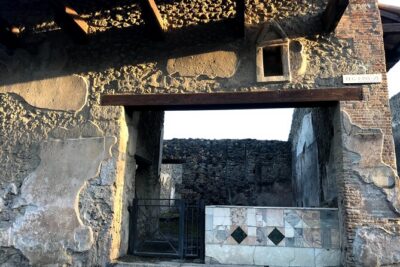
The Casa del Fauno is noted as one of the largest houses in Pompeii. There’s also a mention of an inscription at the sidewalk reading HAVE in Latin. Your guide uses stops like this to show how even text and floor-level details mattered for residents and visitors.
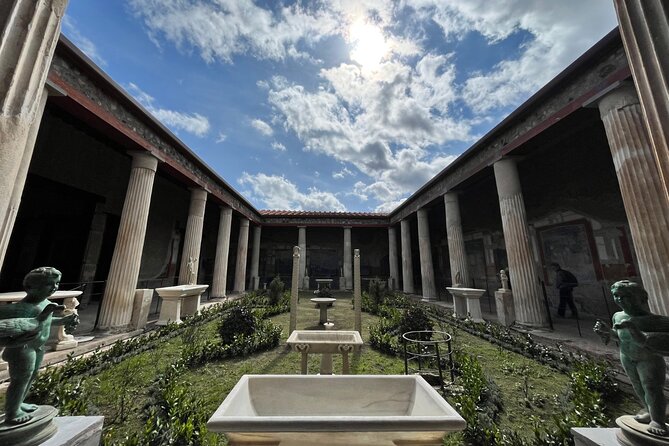
Then you move to the House of the Vettii, one of Pompeii’s richest and most famous houses. This is where the tour leans into meaning: it’s placed under the protection of Priapus, tied to prosperity. The guide helps you interpret what the household “wanted you to notice,” not just what the walls are made of.
Important practical detail: these houses can be subject to seasonal openings and closings. If interiors aren’t accessible on your date, you still get the structural and symbolic context, but you may not see everything you expect. That’s not a problem—just set your expectations.
Via dell’Abbondanza and Teatro Grande: streets and entertainment
You then walk Via dell’Abbondanza, the ancient main street (decumanus maximus). This is a classic Pompeii move for a reason. When you’re on the street, you finally understand the scale of the city and how shops and movement lined up. It’s also an easy moment to take a step back and let your guide’s earlier points click into place.
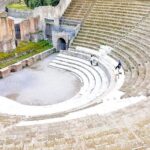
Finally, you reach Teatro Grande. Comedies and tragedies in the Greco-Roman tradition were performed there. The guide typically frames it as entertainment with social weight: people gathered, watched, judged, and belonged to a public culture bigger than their home.
A realistic note: the tour ends after the key stops. If you were hoping to hit the amphitheater or other big draws not on this route, you’ll likely need a second visit window or extra self-guided wandering time.
Price and value: $30.25 tour fee plus the site ticket
The tour price is listed at $30.25 per person, and the Pompeii entry ticket is not included (about €19 per adult, with free entry under 18). So your total cost for an adult will be roughly €19 plus the tour fee.
Is it worth it? For many first-timers, yes—because you’re paying for interpretation and efficient logistics in a place where self-guided browsing can feel like looking at puzzles without the picture on the box. You’re also getting a real archaeologist-led approach and a route that targets the Forum and daily-life areas in a short window.
If you’re visiting from Naples and you want a high-impact Pompeii experience without spending the whole day inside, this format is a strong value. If you’re the type who wants to linger at each site for an hour and read every panel, you might get more satisfaction by mixing this tour with additional solo time.
Who should book this Pompeii VIP tour
This tour fits best if you:
- Want a 2-hour highlights plan that doesn’t leave you lost.
- Like learning the “how we know” side of archaeology, not just name-and-date facts.
- Prefer a smaller group (max 15) so questions don’t get swallowed.
- Are traveling with kids or teens who can handle a focused walk; the pace is usually friendly for families, and some guides adapt well to different attention spans.
If you’re a hardcore Pompeii scholar who wants every corner, every inscription, and every major theater or side complex in-depth, you’ll probably want a longer guide or multiple sessions.
Practical tips: shoes, questions, and how to get the most from 10-minute stops
Pompeii is uneven, stone-footed, and slippery when wet. Wear comfortable walking shoes with good grip. This is not the stop on your trip for fancy footwear.
For photos, remember you’re moving every few minutes. The best strategy is simple: decide your photo priority for each area—street views on Via dell’Abbondanza, the Forum sightlines around the Temple of Jupiter, and market/house entrances where context matters.
Bring questions. The guides are set up for interaction—some are especially good at answering follow-ups and explaining how archaeologists reach conclusions from evidence. If your focus is Roman daily life, markets, religion, or household wealth, say so at the start.
One more tiny but real tip: if an earpiece system is used for your language comfort, test it early. In at least one experience, audio gear failed and the replacement didn’t arrive in time. You can’t control that, but you can catch it quickly.
Should you book this Pompeii VIP small-group tour?
I’d book it if you want Pompeii explained in plain terms, with an archaeologist guiding your route, and you only have about two hours. The priority entry helps you start fast, and the stops hit the city’s big story beats: religion, governance, food and daily services, and the homes and streets that make it feel like a real place.
I would not book it as your only Pompeii plan if you’re craving a slow, total coverage visit. This tour is designed to be focused. You’ll finish with a strong grasp—and then you can choose what to return to on your own.
FAQ
Is the Pompeii archaeological park ticket included in the tour price?
No. The tour price is for the guided experience, while the Pompeii park admission ticket (about €19 per adult) needs to be purchased separately.
How long is the Pompeii VIP tour?
The tour lasts about 2 hours.
What group size should I expect?
The tour has a maximum of 15 travelers.
Where do we meet, and where does the tour end?
You meet at Via Villa dei Misteri, 1, 80045 Pompei NA, Italy, and the tour ends back at the same meeting point.
What if weather is bad?
The experience requires good weather. If it’s canceled due to poor weather, you’ll be offered a different date or a full refund.
Can I cancel for free?
Yes. You can cancel up to 24 hours in advance for a full refund. If you cancel less than 24 hours before the start time, the amount paid isn’t refunded.